Direct knowledge

Today’s post is taken directly from my subscription to Ocean of Dharma quotes from Chogyam Trungpa Rinpoche. How timely! His writings are so clear and elegant.

In the study of Buddhist philosophy, from the start one tries to transcend concepts, and one tries, perhaps in a very critical way, to find out what is. One has to develop a critical mind that will stimulate intelligence. If one cultivates intelligent, intuitive insight, then gradually real intuitive feeling develops, and any imaginary or hallucinatory element is clarified and eventually dies out. Finally, the vague feeling of discovery becomes very clear, so that almost no doubt remains. Even at this stage, it is possible that one may be unable to explain one’s discovery verbally or write it down exactly on paper. In fact, if one tried to do so, it would be limiting one’s scope and would be rather dangerous. Nevertheless, one finally attains direct knowledge, rather than achieving something which is separate from oneself. This can only be achieved through the practice of meditation, which is not a question of going into some inward depth, but of widening and expanding outward.

In other words, you can know about something and you can experience something, and they are not the same. Critical mind and intuitive insight are code for left and right hemispheres of the brain, in my opinion. Much of the growth from meditation is actually experiencing more right-brain awareness, which is, hmm, not encouraged in most of our modern educational systems and workplaces and culture.

The yoking of left brain intelligence and right brain intelligence is perhaps a “side effect” of yoga and meditation. Or perhaps the real purpose. Who can say?

If you want more brain balance, you can start with a pranayama practice, nadi shodhana, alternate nostril breathing. 

To subscribe to Ocean of Dharma quotes, go here:  http://oceanofdharma.com.

To learn how to do nadi shodhana, there are small distinctions, but this video teaches the gist of it in two minutes: http://www.metacafe.com/watch/1849263/breathing_practice_for_stress_nadi_shodhan_pranayama/

Absorbing a loss

Last Monday I went into work, and my boss came around, closed the door, and told me she had some sad news: my colleague Val had passed away on Sunday.

Val dead? I could not imagine those two words used in the same sentence. It was truly a shock.

This past week has been a tough week, absorbing the loss of someone I saw often over the past 6 years, someone I liked and admired. During this week, I witnessed my denial and acceptance dancing together, sometimes one leading, sometimes the other.

Val was one of my favorite people in the office where I work. All we had been told was that Val was out on “temporary but indefinite” leave. Somehow I had the impression that he was taking care of a seriously ill loved one.

I couldn’t imagine Val sick. When I was walking on the Town Lake trail regularly on weekends, I’d nearly always see Val running. He and his girlfriend took wonderful vacations — hiking on the Olympia peninsula, scuba diving in the Great Barrier Reef, a camel ride to the Great Pyramids.

My boss told me Val learned he had lung cancer in May and took leave, that he’d been on chemo, that he’d come through the first round with encouraging signs of improvement, that he’d been in a lot of pain on Friday, had a good day on Saturday, and died Sunday due to a problem with his stent (where they put the chemo drugs in). He was 50.

I found some old emails from Val with links to his vacation photos. I found one of him in Olympic National Park, wearing a floppy hat, smiling hugely. I printed that photo and taped it to the now-closed door of his office. It  just felt right. I wanted to remember him happy.

A director later sent an email about Val’s passing and used the phrase “absorbing this loss.” I like that. Absorbing a loss is a gradual process, like a sponge soaking up water.

We bring our losses into our memories, and they become part of who we are.

I went to bed that night vividly remembering Val — the way he teased me after seeing me out on a date — how I was so wrapped up in the conversation, I didn’t notice him (Val) trying to get my attention. Seeing him running on the trail on Saturday mornings. How he laughed when I demonstrated lion pose in yoga class last spring. That was the last time I remember seeing him laugh.

I remembered many smaller moments, of passing him in the hallway, a conversation in the kitchen or across his desk, being in a meeting with him. These memories were more about remembering his physical presence.

Tuesday morning when I arrived at work, I immediately noticed a new sound, a cricket. It was in the kitchen, not visible but very audible.

For a split second, I felt annoyed, and then that feeling dropped completely, replaced by happiness that this cricket had decided to visit and hang out in our kitchen and serenade us.

On Wednesday, someone told me that more photos had been added to Val’s door. By Thursday there were maybe a dozen photos of Val. His door had become a shrine.

On Friday my acupuncturist noticed my grief. It manifests on the lung meridian. She helped me with talk and bodywork, but some part just did not want to give it up yet. It was about more than just Val’s death. It was about change: accepting change and making changes.

I took a solitary walk Friday night, reconciling, integrating, absorbing. I needed that.

I remembered seeing Val before he went on leave and noticing that he seemed stressed, tense. I thought it was about a project he was working on.

With hindsight, I know that he was feeling physical discomfort. Pain from lung cancer.

Friday night I had a dream in which a helicopter crashed in front of me. Usually that means dropping denial.

Val must have gotten so fragile in those 10 weeks of battling cancer.

Saturday I attended a celebration of Val’s life at the Umlauf Sculpture Garden. His large family and many people from work came.

Words were said, smiles and hugs shared, tears shed, photos and mementoes displayed, poems read, songs sung, and hands held, under the trees and the big Texas sky.

I am grateful for having lived through this difficult, emotional, contractive and expansive week. I am grateful to Val for sharing my path a little way.

It seems that with every death, we process every previous death and every future death, including our inevitable own. We are more fragile than we like to believe, held together by an arrangement of chemicals and electrical currents, and when our life force moves outside that narrow range, we dissolve and disperse.

I’m so sorry about you losing your health, Val. You are free of pain and suffering now, and for that I am happy for you. I am grateful that you lived a good life, of work and love and adventure, and that I knew you. Thank you for sharing your many gifts.

I am getting out on the river today, doing some paddle-boarding, and doing it for me, doing it because of the model Val provided.

You never know what the future holds.

Buddhism in two words

Came across this yesterday and thought I’d share Suzuki Roshi’s response to the questions, “Can you put Buddhism in a nutshell? Can you reduce Buddhism to one phrase?”

http://www.elephantjournal.com/2010/08/what-is-buddhism/

I’m doing it, I’m teaching yoga!

This week I taught three yoga classes. I substituted for my teacher at my regular Tuesday yoga class. No newbies showed up, so I was teaching mid-beginners, advanced beginners, and maybe even intermediate level yogis.

I brought something to use as a script but ended up winging it.

My pacing was a little off. I started the wind-down a little too early and led them through a lot of twists and an extra-long savasana in order to fill out the hour.

I don’t think they minded.

I’m learning to go with the flow. I notice what people are doing when it’s time to start. Are they lying down, sitting, or standing? I’ll start with what most of them are doing.

I also ask if there’s anything people would like to work on.

The Wednesday night class was the second of my four-class series, Yoga for Novices. It is harder to teach true beginners, especially if they haven’t had dance, Pilates, martial arts, and other similar experiences with their bodies. There are some fundamentals that underly yoga. You teach body awareness, and you break asana down into small chunks.

My teacher helped me teach that class. Her 11-year-old son attended too, and he made it more fun. He is a creative kid. Can’t wait to see what he’ll be like in 6 or 7 years!

The class today was small, and again, I went with the flow. These people have been doing yoga for months or years and are fit. One woman wanted to focus on opening up her shoulders. The others wanted a variety of asanas and some inversions. Everyone got what they wanted.

I had no problem thinking up poses or pacing. I observed the students, and it just came to me what to do next.

I feel happy about this. I’m halfway through my yoga teacher training, and I can teach yoga without a script.

I’ve moved into conscious competence.

Poem about expanding your awareness

The gift of poetry: Anticipate the unexpected. Imagine the unimaginable, and don’t make it so dire, if I know you at all. What if gravity didn’t exist? And what if you were much, much larger in spirit than you think you are? What if you contained universes?

I’m liking this Robert Bly poem, Things to Think, a lot. Here’s the link to it on Panhala: http://www.panhala.net/Archive/Things_to_Think.html.

Most of us think too small too much of the time. Be large for a day.

West Texas water

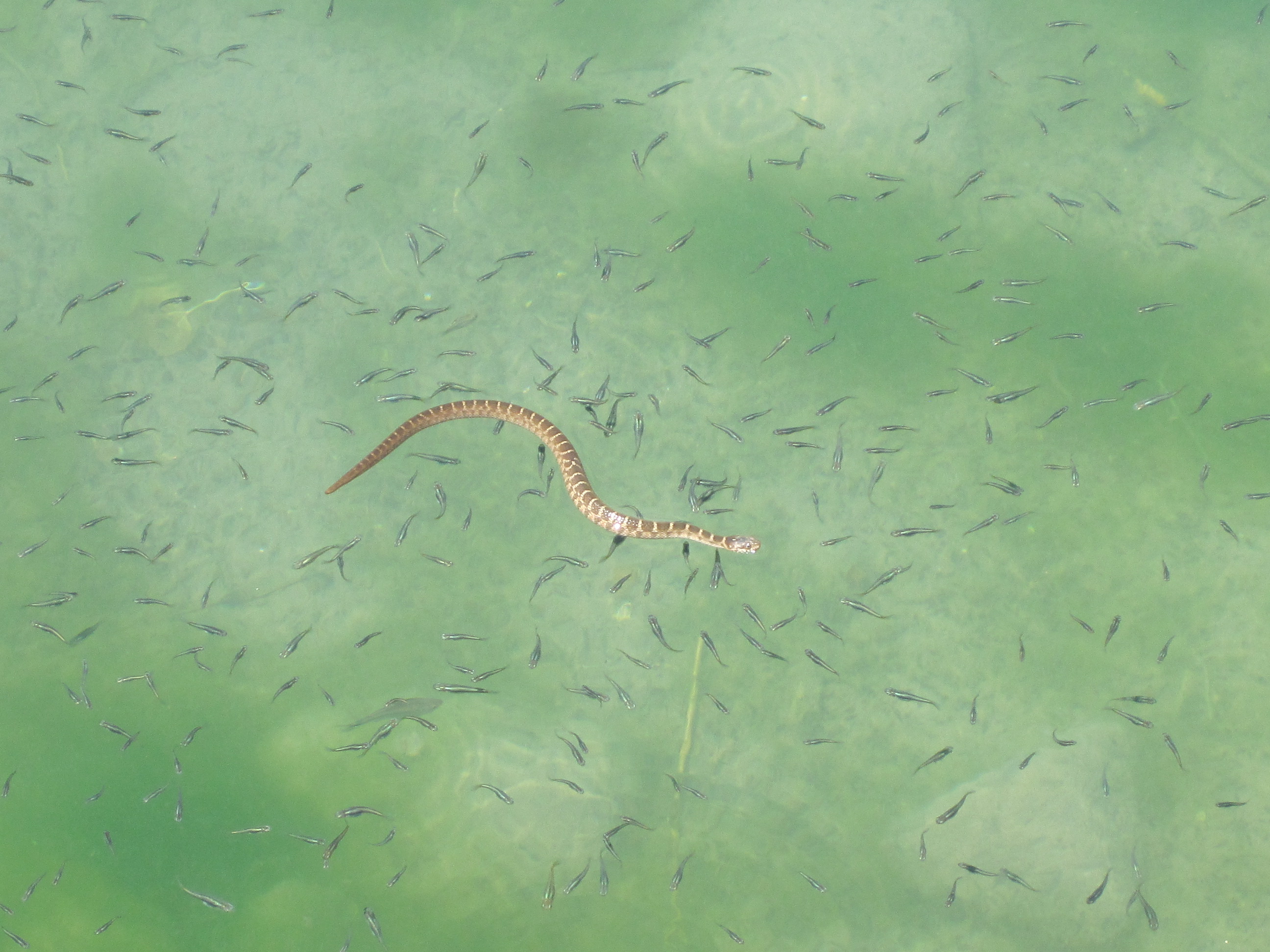
Minnows and water snake, cienaga at Balmorhea State Park, Texas.

West Texas earth

On the road from Fort Davis to Balmorhea, Texas.

West Texas sky


Hummer, McDonald Observatory, Fort Davis, Texas

Is pain necessary for growth?

The reason I bring this question up is that today, my left leg hurts, and I have a story about it.

The story starts small. My left leg hurts. Specifically it hurts above my knee and on my inner shin and on my outer calf. It’s a dull achiness that comes and goes.

The story gets bigger. I attribute this pain to adhesions in the fascia between muscles in my leg, and I attribute these adhesions to misalignments in my body’s structure. I’ve already straightened my spine with NUCCA. Working with my AK chiropractor to align my body is going well, but my leg is where the twist is showing up now that my pelvis is getting more aligned. My leg needs to unwind. And it’s Saturday.

(By the way, it feels true to me that the musculo-skeletal system is arranged in spirals. I dreamt a couple of months ago of seeing my left leg skinless, bloodless, with all the muscles showing individually and the bones visible. Then I went to the Our Body exhibit and saw a body with a leg just like in my dream.)

Here the story grows. My pelvis and spine have been twisted due to several factors. A car wreck in 1996 created much soft tissue injury around my sacrum and sacroiliac joints. Long before that, I experienced a severe shock to my system in my childhood, a sudden violent death of a family member. Trauma has deep and sometimes unpredictable affects on the human energy field.

And now the story gets even bigger. I was born prematurely, and it seems that I had an injury to a nerve going from my sacrum down my left leg from the time I was born, or before I was born, or shortly after I was born. I don’t remember, and my parents are gone. I do not know what happened or why I entered my lifetime with this nerve shut down.

I’m aware that some people claim to know all about past lives and karma and would probably be more than happy to tell me in a way that would alienate me from them. (You know what I mean: “I was just being honest, trying to be helpful.” I’ve done that kind of thing myself, and it’s usually deeply out of rapport with the recipient. You may be right, but you’re an asshole.)

The good news is, the nerve can come back alive. It’s not dead, it’s just been dormant. How much of our potential is like that?

Pain is a teacher, a signal that something is out of congruence, out of alignment, misfunctioning. And it is instinctive to want to avoid it. That’s why it’s such a good teacher. Pain is a kind of feedback that’s hard to ignore.

Pain is not bad. It’s just pain. It’s the nervous system doing its job. Pain feels yucky, but it has some positive points to it.

Pain motivates change. Pain motivates me to do something different, to learn something new. My specific SI joint-spine-leg pain has motivated me to do yoga, to get rolfed, to go to chiropractors, to work with Alexander Technique and Feldenkrais practitioners, to experience an array of alternative healing methods.

It’s motivated me to hang upside down and surrender to gravity pulling my body from the other direction. It’s motivated me to learn the trauma releasing exercises, and it’s drawn me to work with Patrice, my acupuncturist, who first told me to hang like a bat and to hold pigeon pose twice as long on the left side and who does myofascial release on me. (And who I can’t get hold of now either.)

I think I’ll go hang, do pigeon, and do the trauma releasing exercises.  Pain provides contrast. How would you know how good you felt if you didn’t have anything to compare it to?

Cat love

Woke this morning as I often do, to my pushy but loving cat Mango snuggling up close to me, then gently touching me with his paw (claws out), to which I recoil and push him away because it hurts. Repeat several times. He loves to snuggle. His claws are too long. I don’t think he knows that it hurts.

How much patience he has with me, getting pushed away morning after morning. He usually just keeps coming back. Occasionally he leaves the room, and then I feel bad. I’ve driven him away when all he was doing was trying to love me and be close. (And get me out of bed to feed him his favorite cat treats — he’s always got plenty of dry food in the bowl, so he’s not starving.)

I make sure that I don’t pet him in my bedroom very much. I’d like for him to get a clear idea that petting, scratching, and massage are for when we’re on the sofa, and the bedroom is just for sleeping. But it’s not working very well.  He loves my hands. They are the source of love, and he seeks them out. I hide my hands from him under the covers or pillows until I’m ready to get up. It’s a little game we play.

He loves me for my hands.

Yeah, I’m okay with that. He gives good eye contact , shows his appreciation, and loves a good cuddle. Sometimes he even drapes himself across my chest with his head over my shoulder, just to get more body contact. He hugs! (I think maybe he has abandonment issues — he was a stray that I adopted, and he seems to show me his gratitude every day, which I love.)

But I don’t love his paws because of his sharp, long claws.

I could lock him out of my bedroom and sleep a little later. Or I could trim his claws. Not my favorite thing to do because I don’t do it well and have hurt previous cats, accidentally cutting into the quick. Since he spends a lot of time outdoors, I assumed he didn’t need his claws trimmed. But hmmm. Mango is not a tree climber, not an athletic cat. My daughter makes fun of his fat-boy walk. I tell her he’s not fat any more, just big. (He overate when I first adopted him from the streets, but he’s slimmed down a bit.) She still loves to watch him walk.

If I trim his claws, he’s the perfect cat. Affectionate, snuggly, sweet.

I think I’ll do it. Learn how to do it without hurting him. I can do that. I can do that.