Using my superpowers for good

You know that very famous quote from Marianne Williamson about how it’s not our darkness that we fear, it’s our light?

Well, here it is again:

Our deepest fear is not that we are inadequate. Our deepest fear is that we are powerful beyond measure. It is our light, not our darkness that most frightens us. We ask ourselves, Who am I to be brilliant, gorgeous, talented, fabulous? Actually, who are you not to be? You are a child of God. Your playing small does not serve the world. There is nothing enlightened about shrinking so that other people won’t feel insecure around you. We are all meant to shine, as children do. We were born to make manifest the glory of God that is within us. It’s not just in some of us; it’s in everyone. And as we let our own light shine, we unconsciously give other people permission to do the same. As we are liberated from our own fear, our presence automatically liberates others.

She is so brilliant.

For most of my life I’ve been afraid of my light. I’ve played small.

See, the thing is, I stayed in a job too long and picked up on the belief of others that good jobs are really hard to come by, that it was safer to stay where I was– until basically, something happened that brought me to a fork in the road, and I took the road less traveled. I quit a decent, stable, secure job seventeen months short of retiring and being able collect a pension.

My gut told me I needed to do something else.

A couple of months later, I decided to seek a contract job. I didn’t know how long it would take for my house to sell. I spent a day updating my resume, and the next day I responded to one ad, and before the day had ended, the recruiter who placed that ad called me about interviewing for the job.

So I interviewed and got the job. (And got a contract on my house right after that!)

Proof that if you have skills and a track record, you can find another job “even in this economy.” It just takes one yes.

That job ended at the beginning of June. I’ve been in massage school since the end of June, living on my savings. I was sort of looking for a part-time technical writer job. Part-time jobs in that field do exist, but they are few and far between.

Last week I decided to get serious: I updated my resume and made sure that each place it was posted had the same version with the same objective: part-time technical writing work.

The next morning I got a call from a recruiter about a part-time job at a very prestigious technology company.

Holy manifesting, Batman, I am powerful beyond measure. When I put a message out there, stuff happens.

I interviewed with a local team that was screening the job candidates. This team would be training me. The hiring manager was in San Jose and would do phone interviews with the top candidates submitted by the local team.

I made the cut.

Then I began to have doubts. I could not put my finger on why. It’s a good company and a good job, from all I know. But when I thought about actually doing the work, something inside me balked.

I bailed on the phone interview 10 minutes before it was to start. I’ve never done that before. I couldn’t give a coherent reason why, either. My body just gave me a very clear “no” signal. I didn’t want this job, and it seemed insane to go through with the interview knowing that.

The other parts of me besides this gut decision-maker weren’t entirely behind my action, either, and it took the rest of the day to integrate what I had done.

Part wondered if I was throwing my technical writing career away. Thirteen years. It’s been very good to me. I’ve found niches that I enjoy and am good at (that have to do with teaching people how to do things), but it just doesn’t feel satisfying to me any more.

Part said, “Maybe you need to work with a different kind of technology, such as medical technology.”

Part said, “It’s too hard to switch back into deep left-brain work while going to massage school three days a week.”

Part said, “Whew, even if you could have telecommuted from home after the initial training, you would still have had to drive 20-plus urban miles each way twice a week for the first few weeks to get trained. That is stressful. Good decision.”

Part said, “You are exactly on track, receiving training to do work that you love. You made loving your work your primary criteria. You cannot make exceptions and do work that you don’t love.”

Part said, “You are in-between, finding your way. Much is unknown, but you know it’s a path with heart. Trust it. Jobs may come that get you closer to where you want to be. It’s all an adventure anyway! Enjoy it and have fun.”

Part said, “Okay, now you know you can manifest. You have super powers. You must use them for good. Get centered and clear about your intentions. Allowing yourself to exist peacefully in the space of not knowing is the real challenge here. Your basic needs are met. You needn’t fear. You would be wise to meditate every day.”

And part said, “Your brilliant, gorgeous, talented, and fabulous self is unfolding! Enjoy the blossoming!”

Oh, yes, and the recruiter placed the other candidate she submitted who also made the cut. She said she appreciated my honesty, and it wasn’t a big deal. (I felt terrible about behaving like this, so those were welcome words.) The company got someone who really wanted the job, and I got…a new path.

Several hours later, all my parts had caught up with the decision-maker, and my own little private, personal drama became boring and a thing of the past. Next!

Here’s to more happiness!

A five-year study by National Geographic fellow Dan Beuttner identified the world’s healthiest places and researched what made the residents healthy. His book The Blue Zones: Lessons for Living Longer from People Who’ve Lived the Longest contains the results of his research.

Beuttner’s new book Thrive: Finding Happiness the Blue Zones Way describes his findings about how people in those places find happiness — and how you can too. He was interviewed on NPR. (You can find links to his other interviews on NPR. This is some pretty fascinating research.)

In some places people were happy because of government policies, such as a high tax rate that pays for education through college, health care, and retirement in Denmark — a safety net for everyone that relieves financial stress and maximizes creativity and happiness, and tax breaks for adults whose aging parents live with or near them in Singapore — because socializing with parents increases happiness too.

Here are a few tips that you can implement on your own to increase your happiness, without waiting for government to do anything:

  • Live around happy people. If you’re unhappy, move where the people are happier. Here’s a list of happy (and sad) cities. I’m happy to say that Austin is the second happiest large city in the nation.
  • Work smarter: Working to earn more than $75,000 (for a family of four) does not equate to more day-to-day experiences of happiness. So if you’re making $75,000 now, working harder might net you more money but it probably won’t make you feel better. Go do something fun instead of putting in that overtime!
  • Shorten your commute by moving near work or working nearer (or from) your home.

I also like to remember this awesome quote:

Now and then it’s good to pause in our pursuit of happiness and just be happy. ~ Guillaume Apollinaire

There is a crack in everything

Today I’m acknowledging the crack, still waiting for the light to get in.

I don’t know what’s going on astrologically, but since a couple of days ago I’ve felt a disturbance in my equanimity.

Anyone else feeling that way?

I hate naming names and casting blame, so I’ll just say that unknowingly, innocently, I subjected myself yesterday to an experience with another person that I never want to repeat. It threw me off, rattled me, and I’m still not centered.

A couple of other incidents before and after that have piled it on, that feeling of being uncentered.

One of them that I feel okay writing about here was listening to part of Fresh Air with Terry Gross this afternoon while running errands in my car. She was interviewing a writer on economics who said that Goldman Sachs helped Greece hide its debt in order to be admitted to the European Union.

Once admitted, Greece had access to very low interest rates and proceeded to borrow lots of money and do things like raise salaries without any accompanying rise in income.

Now Greece has no way of repaying its debt, and it could affect the European Union and the world economy, which as we know is already not in good shape.

“This was not a one-off situation,” he says. “You look at the financial crisis in Europe, and the fingerprints of American investment bankers are everywhere. The financial collapse encouraged the worst sort of behavior. At the same time they were making bad loans in the United States, they were encouraging the same sort of behavior at the government level in Europe. The basic problem was, historically the role of the financier was to vet risk and make sure risk was evaluated. That got perverted in recent times, and instead the financier helped disguise risk.”

I’m feeling a lot of empathy for the OccupyWallStreet movement. Most of us feel it, that “things aren’t right.” Corporations are not people. Best bumper-sticker I’ve seen recently:

I refuse to believe that corporations are people until Texas executes one.

I’ve felt for a while that I want to live sustainably on something close to a cash basis, with no mortgage and as little debt as possible.

I want to grow some of the fresh produce I eat, and I want to grow it organically from non-GMO seeds.

I want a skill I can barter.

Because I don’t know what’s coming, and it may get worse before it gets better.

That said, I’m going to meditate for a spell and get myself recentered.

The acrobat and the meditator

Here is today’s quote from Tricycle Daily Dharma, to which I subscribe.

We are so used to projecting our attention out into the world around us, it is a noticeable shift when we face inward and feel the subtle swaying of the head on the shoulders, along with all the muscular microcompensations keeping our body centered in gravity. The acrobat, like the meditator, is bringing conscious awareness to a process that is always occurring but is generally overlooked, which is a vital first step to learning anything valuable about ourselves.

Andrew Olendzki, “Keep Your Balance” (my bolding)

Might as well say “the yogi” rather than “the acrobat”.

From what I’ve read and understand, the very simple act of shifting one’s attention from “out there” to “in here” actually changes one’s brainwaves from beta state to alpha, from stressed to more relaxed.

So you can try this right now, if you like. You’re reading this blog post, which is an “out there” experience.

Read the following sentence, do what it says, and notice how your experience changes:

Bring your attention to the space between your eyes.

What happened when you did that? Did your breathing change? Did your sense of pleasure change? What else did you notice?

It could be your left pinkie finger or the top of your head or the soles of your feet or the center of your belly. Anywhere on or in your body suffices.

It’s not about how far you can back-bend, it’s about harnessing your attention within, which is, as Olendzki says above, “a vital first step to learning anything valuable about ourselves.”


Is maze brightness in rats an equivalent of enlightenment in humans?

I thought you might like to read an excerpt from the book I’m reading in a book group. The book is called Life in the Labyrinth, by E.J. Gold, who is in the Gurdjieffian Fourth Way lineage of teaching awareness expansion.

As a child of thirteen and fourteen, I found my bedroom overrun with lab rats, and more or less as an afterthought — I had no other use for them, not being particularly attracted to vivisection and the like — built a few mazes to study rat behavior.

One item stood out clearly in my observations of dozens of rats stumbling, bumping and sniffing their way toward their final reward as they learned to synthesize experiential data through a primitive form of deduction…or didn’t learn, and nearly starved to death.

I discovered, independently of texts on behavioral sciences, something which I later learned was by convention called maze brightness, which could be defined for the moment as “becoming able to find new paths through the maze toward the reward-point through sheer repetition”, from which we could, if we weren’t overly concerned about how far we could quantum leap, deduce that some rats eventually become aware of the general rules of maze construction, of course only on a purely subjective-instinctive nose-and-gut level.

I discovered through this a special learning process which could enable the rat to solve not only one known maze but virtually any maze it may thereafter happen to encounter by accident or design.

I also concluded, probably rightly, that such a rat would, eventually — having blundered its way through a sufficient number of mazes — in spite of itself, begin to dimly recognize the inescapable fact that it is in a maze and that moreover, it cannot — at least by present means — remove itself to parts unknown.

Once this first all-important recognition has been achieved, without which nothing further is possible in any direction except down, it can begin to perceive and analyze its surroundings as they actually are, and not as its unexamined fears and perceptual occlusions have caused it to imagine them to be.

Because the perceptual-emotional will have, for the moment, been resolved, it will no longer exhibit the compulsion to maintain a self-constructed veil of confusion and disorientation.

One would think the thrill of observing that single rat, which out of dozens, suddenly gave indications of having become aware of the maze would soon pall, but au contraire…the excitement of this simple yet magnificent discovery never failed to strike me as anything less than downright apotheotic*, and any behavioral scientist worth his or her weight in potassium nitrate who says anything different is spouting pure scoria*.

A rat achieves maze brightness, and its eyes seem somehow at once both older and younger; general posture and behavior toward the environment and toward itself show radical signs of alteration. It seems less frantic, more self-assured, and noticeably less self-destructive.

At the same time, one can see visible signs of excitement as a new sense of freedom descends overwhelmingly upon it, the same sense of freedom which humans who have discovered what they call “enlightenment” experience.

E.J. Gold is a good storyteller, and I’ve just ordered two more of his books, Practical Work on the Self and The Human Biological Machine As a Transformational Apparatus. The book group I joined has already read them, so I have some catching up to do.

*apotheosis means to exalt a person to the rank of God

*scoria means the scum left after melting metal

Poetry, reciprocity, feeling absolutely useless and enjoying it

I used to post poems I liked to this blog, but I stopped a while back and removed them (well, all except for Shoveling Snow with Buddha by Billy Collins, widely available online).

By the way, Shoveling Snow with Buddha is a wonderful poem to read in August when it’s over 100 degrees. Just saying.

The major reason is that poets are often impoverished and yet the best ones give us the beautiful gifts of lifting spirits and expanding worldviews, maybe shifting our  identities for the better, touching our hearts and souls.

Somehow they manage to use words, which are a left-brain tool, to convey right-brain experiences of intuition, wonder, and new associations.

Every poem available online is also available in a book, and when you buy a book of poems, the poet makes money. They don’t make money from having their poems published online.

Buying a book of poems reciprocates the poet for his or her talent, sweat, and generosity. They need to eat too. (I think Billy Collins is doing pretty well, though, and I have bought a handful of his books. Billy, if you disagree, please let me know.)

I still subscribe to Panhala, which sends me a daily email with a poem in it. Each poem includes the poet’s name and the printed source — so you can buy the book or find it in a library, if you choose.

I have a hunch that Panhala, even though it posts poems for free, probably steers more people to poetry in general, to particular poets, and to buying poetry books than anything else online. Joe Riley does it as a labor of love. No advertising, just poems, photos, and music.

Today’s Panhala poem makes me want to make an exception to my rule. It’s by David Ignatow, is titled For Yaedi, and is from New and Collected Poems, 1970-1985.

It’s a short poem, and I’m going to only quote part of it.

…When I die
I want it to be said that I wasted
hours in feeling absolutely useless
and enjoyed it, sensing my life
more strongly than when I worked at it.

Thank you, David Ignatow. Thank you for that poem. I love that sentiment. I find myself longing for some hours to waste. I’m so used to being productive, to forging ahead, to getting things done.

My shoulders tight, especially my right shoulder, which seems to be where that forging ahead energy resides in my body. 

I got my grades in massage school, and I’m doing so ridiculously well that I realized I could afford to slack off a little. I stayed home half a day, turned in an assignment a day late, and made 80 on a quiz. So there.

Thoughts have been swirling about finishing the work on the trailer, big expenses coming up (tuition, car repairs or replacement, finishing the next four months of massage school), dwindling savings, finding work, and this intensely hot drought that seems to be unending.

I am going to set aside several hours tomorrow to waste while I sense my life strongly. Maybe a little shaking medicine, sitting, breathing, yoga, toning, journaling, walking — no, wait, that’s useful. I’m going for useless.

Hmm.

I think tomorrow is the day to let my feet lead me. They’re already telling me they plan to take me to Barton Springs.

My hunch is that I will probably have more resources to draw on to solve my problems after taking a useless day than I would have if I had a useful day.

I’ll post the outcome on Monday.

Need help finding source of quote that 90% of disease is stress-related

Note: I first published this post in 2011. Be sure to read Tom Beckman’s comments and click the link if you’re looking for the source of the quote. Thanks so much to Tom, who is the associate director of the Health Professionals Program at the HeartMath Institute, a great program for stress reduction, for this persevering research!

Note: It’s November 2022, and I want to add something about how stress and disease are related. Our autonomic nervous systems react to threats (severe, mild, and even imagined threats) by preparing us to take action (to run, fight, hide).

When this happens, our heart rate increases, pupils dilate, lungs take in more air, digestion slows, cortisol and epinephrine/norepinephrine are released.

In other words, stress prevents our systems from resting, repairing, restoring, regulating, and digesting — the functions that keep us healthy.

~~~

I’ve heard this statistic for several years. I’ve seen various forms of it in print, too, often attributed to the Centers for Disease Control but sometimes to the American Medical Association.

I’ve searched the CDC and AMA websites but haven’t found it.

I also searched Snopes.com, but it doesn’t include it.

Because there are variations (some say doctor visits, and the numbers range between 60 and 99 percent), it’s been difficult trying to hunt down the source of the quote.

That’s why I’m posting this. If any readers can shed some light on this, I would sure appreciate hearing from you. I’d love to have verification of the actual original quote and the date it was first published.

I’d like to use the quote with integrity.

Also — if this is close to true, is it possible that we’ve been chasing the rabbit down the wrong hole? That we’ve been addressing symptoms and not the cause?

Sonic pleasures from Austin, Texas, USA: Loping Buzzard and Libby Kirkpatrick

I’ve gotten comments and/or blog subscriptions from South Africa, Australia, England, and elsewhere overseas, and what overseas readers (and perhaps some in the U.S.) may not know is that my hometown of Austin, Texas, is well-known for music.

A national television show, Austin City Limits, is filmed here, and the city plays host to the Austin City Limits Music Festival each fall and the South by Southwest (SXSW) music festival in the spring. Austin’s official slogan is “Live Music Capital of the World.”

It’s a musicians’ town, and the music here is eclectic. I’m using this blog post to recommend a couple of CDs by local musicians. They are very different, but each one wakes you up in its own way and keeps on giving by offering enough variety and depth to keep it fresh on repeated listenings.

~~

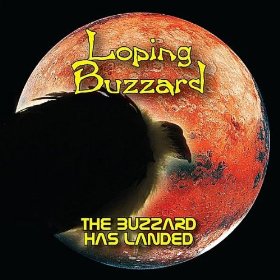
When I first heard The Buzzard Has Landed by Loping Buzzard, the Biblical quote “Make a joyful noise unto the Lord” came to mind, and I wanted to laugh with joy. Loping Buzzard’s business card has two descriptors: didjeridu and noisician.

 This is a collection of audio projects completed from 2005 to 2010 with a vast number of didjeridus along with gopichand, berimbau, danmo, cajon, cuica, bilma, a variety of flutes, drums, homemake noise makers, and electronics. The styles range form impromptu drum circles to pure musique concrete to Dada pop to horror to comedy to surreal.

I don’t even know what some of those instruments are, but they must be fun, judging by the sound. It’s not traditional music, but it is artful sound, interesting to the ear (to my ear, anyway).

I think of this as “wake up” music, not something you would listen to when you need soothing, but fantastic for times when you need some sonic inspiration. (Okay, I mostly listen to music in my car. It’s fantastic during traffic gridlock!)

When I listen to this CD, I imagine the joy Loping Buzzard must have experienced when he was creating this music, and I feel it too.

I notice more each time I listen.

You can get The Buzzard Has Landed as a digital download or a CD from CD Baby ($9.99, and they make it fun, too), and as mp3 files from Amazon.com ($8.99). It’s available on iTunes too.

~~

My other recommendation, a different kind of wake-up music, is Heroine by singer-songwriter Libby Kirkpatrick, who’s lived in Austin for 10 years and has recently relocated to Boston.

Every song but one is an original, and that exception is her cover of Alice by Tom Waits. I certainly understood her homage to TW as recognition by one original, unique, lyrical songwriter of another, a master, and Libby is well on her way to mastery. She’s someone to follow.

I feel the joy here too. With lyrics connecting the Big Bang to the sound of a woman yelling (Heroine), warning her girlfriend away from some appealing but no-good Lothario (Devil Inside), singing about the black hole inside us all (Neverland), mentioning her personal star (you have one too, I know you do), and so much more, Libby has a way with words and tunes that is just plain heart and soul satisfying. Full of lyrical delight, Heroine goes into your ears, gets under your skin, enters your heart, and wakes you up.

The transition to motherhood is a journey of heroism for every woman ~ necessity being the mother of invention! These songs are the slow release of the ‘maiden self’ and the build up to the realization of ‘mother’ in layers; song by song there is a story told of the subsequent degrees of letting go.

Yes. It’s about self-realization and letting go. Repeatedly I detected a mature Buddhist philosophy about life underlying Libby’s lyrics — Big Mind, Big Heart, topped with loads of fun.

If you enjoy well-written, fresh lyrics, soulful depth, and artful arrangements (it’s rare to hear the level of creativity in the arrangements on a CD by a local/regional artist), you’ll enjoy this. I notice more each time I listen.

You can buy Heroine at CD Baby, iTunes, and Amazon.com, as well as from Heart Music.

Your meditation cushion is your body

I’m sharing a link to an Elephant Journal article, an interview with meditation master Reggie Ray. It’s part 1 of 3, and after reading this, I will be looking for the rest of it.

This section of the interview particularly caught my attention. See if it catches yours.

When I found out that I was going to do this interview with you, I sat down and listened to some other interviews you had done. On your website I found an interview entitled, “The Body As The Guru.” In it you were talking about the spiritual path and daily life.  The host of the show said, “We have to take our practice off of the cushion,” which I have heard a thousand times. But your response was a new one on me. You said, “Or we have to redefine what it means to sit on a cushion.” You didn’t really go into what you meant in that interview… So, I am asking you to do elaborate on it now.

Reggie Ray: When we’re sitting on the cushion we are actually extending our awareness into our bodies. We are in a way present within the totality of our being, which on the surface is a somatic being. The information we need for our life arises within us, it becomes clear.

If you get up off the cushion and there is a transition into something else, which might be a lot heavier or disembodied that means you are not present in your life. Your cushion is your body. That happens whether you are sitting on a zafu or you are in your daily life.

You mentioned the transition from the cushion to the front door, so to speak. Basically, one is meditation, but the other is not. Is it fair to say that if there is a transition taking place, not only is there something off about the way that you are being present in your daily life, but also in your sitting practice? Is it possible that in such situations meditation is contrived? Is the transition happening because we are trying to zone out on the cushion or create some sort of meditative trance? Or are we present in the body while we are on the cushion, and then migrating into our head as we walk out of the door?

Reggie Ray: That’s a good point. If you sit down to meditate with some idea about a state of mind you are trying to get to, or have memory of some pleasant experience from the past, then you’re not doing anything different than sitting in a meeting and trying to make a good presentation, trying to impress the people around you. Only in this case, you are trying to impress yourself. That is not meditation. Meditation is when you sit and let go of all your effort, and allow yourself to be present.

That’s what meditation is.

So, as you’ve mentioned, joining your practice with your daily life—9 to 5, wife or husband, kids, and work—from the vajrayana’s point of view, this is the ideal situation. These aspects of our daily life have a capacity to break through our defenses, push our buttons, and invite us to unfold. You’ve said that spirituality is the unfolding of human personality towards its perfection. I am assuming that by “perfection” you do not mean some static idea about perfection. So what exactly do you mean when you say “perfection?”

Reggie Ray: Actually, instead of the term perfection, I would rather say, “fulfillment” or “realization.” In the same way that an animal goes through it’s life-cycle—from being an embryo, all the way to death—at the moment of death the biological, and I would say, spiritual imperative of being a lion or a worm is fulfilled.


So with human beings, we could use the analogy of initiation in indigenous societies. In indigenous societies, at a certain point people go through an initiation, which introduces them to the fact that life is much bigger than what they might have thought when they were children or even during adolescence. Our natural human awareness is limitless. Everything in creation has a life-cycle, and when people are allowed to unfold—when they are allowed to follow the natural, biological, and genetically driven cycle of what it means to be human—our understanding and awareness becomes bigger and bigger. We have more appreciation for other people’s points of view, for the world beyond our world—the animal world, the plant world, and the universe. That is what I am talking about.

There is a natural tendency towards what Buddhist call “enlightenment,” but it can also be seen in the indigenous societies. That is really what we are talking about.

In Buddhism we call it buddha-nature, but buddha-nature isn’t simply an established state. It is a process of being in the river of spiritual maturation that goes on-&-on, never reaching a static point. Perfection, in this case, refers to fulfilling the journey of the human life. When are fully and completely with what it means to be human, we have let go of any attempt to pin ourselves down, solidify ourselves, or encrust ourselves at any stage. It is an unending, open process. When we have completely let go of any attempt to withdrawal from life or freeze ourselves, that’s what I mean by perfection.

Each moment, life as it is, the only teacher: quotes from Joko Beck

Charlotte Joko Beck died yesterday, very peacefully, at the age of 94. She was a Zen teacher who made a major impact on American Buddhism.

Here’s a quote from an article that puts her work into perspective (no longer available online):

The Ordinary Mind School was among the first Zen communities to consciously engage the emotional life and the shadows of the human mind as Zen practice. The late Charlotte Joko Beck and her dharma heirs  adapted elements of the vipassana tradition — a relentless inquiry into the contours of the human mind—as unambiguous Zen discipline.

Here are some quotes from her:

With unfailing kindness, your life always presents what you need to learn. Whether you stay home or work in an office or whatever, the next teacher is going to pop right up.

Caught in the self-centered dream, only suffering;
holding to self-centered thoughts, exactly the dream;
each moment, life as it is, the only teacher;
being just this moment, compassion’s way.

Enlightenment is not something you achieve. It is the absence of something. All your life you have been going forward after something, pursuing some goal. Enlightenment is dropping all that.

One idea that really hampers us is to believe that people get ‘enlightened,’ and then they’re that way forever and ever. We may have our moments, and if we get sick and have lots of things happening, we may fall back. But a person who practices consistently over years and years is more that way, more of the time, all the time. And that’s enough. There is no such thing as getting it.

Wisdom is to see that there is nothing to search for. If you live with a difficult person, that’s nirvana. Perfect. If you’re miserable, that’s it. And I’m not saying to be passive, not to take action; then you would be trying to hold nirvana as a fixed state. It’s never fixed, but always changing. There is no implication of ‘doing nothing.’ But deeds done that are born of this understanding are free of anger and judgment. No expectation, just pure and compassionate action.

Practice is just hearing, just seeing, just feeling. This is what Christians call the face of God: simply taking in this world as it manifests. We feel our body; we hear the cars and birds. That’s all there is.

Life always gives us exactly the teacher we need at every moment. This includes every mosquito, every misfortune, every red light, every traffic jam, every obnoxious supervisor (or employee), every illness, every loss, every moment of joy or depression, every addiction, every piece of garbage, every breath. Every moment is the guru.

So a relationship is a great gift, not because it makes us happy – it often doesn’t – but because any intimate relationship, if we view it as practice, is the clearest mirror we can find.

Practice can be stated very simply. It is moving from a life of hurting myself and others to a life of not hurting myself and others. That seems so simple — except when we substitute for real practice some idea that we should be different or better than we are, or that our lives should be different from the way they are. When we substitute our ideas about what should be (such notions as “I should not be angry or confused or unwilling”) for our life as it truly is, then we’re off base and our practice is barren.

We have to face the pain we have been running from. In fact, we need to learn to rest in it and let its searing power transform us.

We learn in our guts, not just in our brain, that a life of joy is not in seeking happiness, but in experiencing and simply being the circumstances of our life as they are; not in fulfilling personal wants, but in fulfilling the needs of life.

Meditation is not about some state, it is about the meditator.

Zen practice isn’t about a special place or a special peace, or something other than being with our life just as it is. It’s one of the hardest things for people to get: that my very difficulties in this very moment are the perfection… When we are attached to the way we think we should be or the way we think anyone else should be, we can have very little appreciation of life as it is…whether or not we commit physical suicide, if our attachment to our dream remains unquestioned and untouched, we are killing ourselves, because our true life goes by almost unnoticed.