Manual for climbing mountains — Paulo Coelho’s Blog

1 min reading: Manual for climbing mountains — Paulo Coelho’s Blog.

What a great metaphor for living an adventurous, rewarding life! Start with the first step:

A] Choose the mountain you want to climb: don’t pay attention to what other people say, such as “that one’s more beautiful” or “this one’s easier”. You’ll be spending lots of energy and enthusiasm to reach your objective, so you’re the only one responsible and you should be sure of what you’re doing.

Continue until you get to the last step:

L] Tell your story: yes, tell your story! Give your example. Tell everyone that it’s possible, and other people will then have the courage to face their own mountains.

I’m so looking forward to finally reading Paulo Coelho’s book The Alchemist over my holiday break.

More on the Buddhist precepts

Here’s another jewel of a quote from Tricycle Daily Dharma. It’s been sitting in my inbox for a few days, and I have not been able to bring myself to delete it. Must mean I need to share it!

It’s a pretty good description of Buddhism’s precepts:

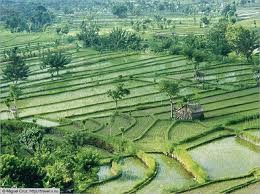
To be sure, as humans with a short life span, we cannot know the long-term results of our actions. But recognizing that what we say and do can have repercussions for months, years, or eons, and that we cannot know the “final” outcome of something we think, do or say, Buddhism, like all other major religions, has developed a set of precepts. The precepts have been compared to dikes in a rice field. They hold back and channel the rushing water of our passions so that our life is not flooded, so that smaller and more helpless creatures are not harmed and the harvest of our life’s efforts is not ruined. These precepts prohibit those actions that have a bad outcome and cause harm to ourselves or others almost all of the time.

– Jan Chozen Bays, “What the Buddha Said About Sexual Harassment”

I started taking a class on the precepts at Appamada Zen Center last year and was unable to complete the training due to family needs, but the precepts have stayed with me.

You can read what the late Robert Aitken Roshi said about them here.

I find that just being acquainted with the precepts begets self-inquiry and informs my decisions. A small example: last year I bought a fake leather jacket. I could have afforded a real leather jacket, but I thought about my relationship to the animals whose skins are used for leather and decided that if my purchase of a leather jacket encouraged people to slaughter animals for the economic value of their pelts, I could not feel any joy about buying leather products, and I probably won’t in the future.

Now I don’t really know that this jacket isn’t made of some petroleum-based product that involved some other method of harm to manufacture. It probably is. And I am not consistent about this — I own and wear leather shoes and boots and will continue to do so. I appreciate fine things, and sometimes they are made with leather.

But now I bring this precept into consideration when I make my own decisions, whereas I used to never think about it.

I cannot judge others’ decisions either. We all have our own paths in life. Serenity prayer: I change what I can, and usually that means me.

Having some familiarity with the precepts and examining my ethical beliefs and behaviors adds mindfulness to my life, deepens and enriches it, even as they call on me not to take the easy way out.

The ENEMIES Project by Nelson Guda — Kickstarter

The ENEMIES Project by Nelson Guda — Kickstarter.

My friend Nelson Guda is a peace geek. He went to Africa, where he met with and photographed people who were formerly enemies, like Hutus and Tutsis in Rwanda, now living together in peace.

How do people find peace after violence, even genocide? This is a great question to ask and collect answers in the form of photos and stories from people who’ve been through it.

Nelson would like to exhibit his photos at the United Nations headquarters as well as in various capitals around the world, and also publish a book of photos with the stories they go with.

This is not crazy, because Nelson is one smart guy. Not only does he have a Ph.D., but he’s already exhibited his photography in the U.S. Senate Building. He manifests.

Here’s what Nelson says:

Why on earth would anyone do this, and how do you know I will finish it?

I can’t explain why I need to take on big projects like this.  Maybe the simplest explanation is that I am an artist and have a tendency to work to obsession.  In my last major project about roadless forest lands in the U.S., I photographed National Forests across the country.  As a part of this project I designed and built a website that dynamically maps all the roadless lands in the country.  At the time there weren’t any good ways to quickly map and query that much data on a website, so I taught myself how to program and designed a system to do it.  The site is still up – it is called Roadlessland.org.  In former lives I have gotten a PhD and helped start an institute at a major university.  Will I finish this project?  Not counting time, I have already invested a lot of my own money into ENEMIES.  But even more importantly I think this is an important thing to do.  In my mind I can’t not finish it.

You can help Nelson fund his goal of $20,000 in 44 days by pledging as little as $1.

Here’s to the crazy ones: video of original ad and poster

View the original video with Steve Jobs’ narration below.

You can get this great quote as a poster here. They’re accepting orders through December 17. Your purchase benefits the Acumen Fund, a charity fighting poverty. Read more here.

Many different flavors of joy

Today’s post centers on a quotation I received this morning via email from Tricycle magazine’s Daily Dharma subscription service. I subscribe to several of these — The Universe, Tricycle Daily Dharma, and Ocean of Dharma are the main ones, and I’m currently testing one for my Enneagram type that I’ll write about later.

I enjoy opening my inbox in the morning and finding words of wisdom.

This is what I found this morning:

Joy has many different flavors. It might overflow from us in song or dance, or it might gently arise as a smile or a sense of inner fullness. Joy is not something we have to manufacture. It is already in us when we come into the world, as we can see in the natural delight and exuberance of a healthy baby. We need only release the layers of contraction and fear that keep us from it.

The author is James Baraz in Lighten Up! 

Joy. I seem to be in a groove in my life in which I often experience joy. It’s delightful and welcome.

Here are some ways joy has shown up for me recently:

  • Singing along with remastered Beatles songs in my car brings me joy.
  • Responding to an invitation to improvise my movements to music (aka dancing ecstatically); to seek a groove, release it, and find  another groove; continually discover the balances between ease and stamina, attention inward and attention outward, and staying in one place and circulating through the space; of connecting with others and choosing how much to engage; lying in a circle on the floor afterward in silent community.
  • Laughing with a certain friend whose laughter is loud, full, wild, and raucous. Her laugh makes me laugh.
  • Taking two road trips with dear friends recently. Road trips engender good conversation while barreling down the highway and exploring the destination.
  • Making chicken soup for my visiting grandchild who had a fever and sore throat and being comfortably together sharing our lives while it cooked.
  • Attending a house blessing for my friend who is bringing her aged parents to live with her until they pass or need more assistance, and literally filling the house with didgeridoo and rainstick and human sounds, filling every room, closet, and space with our presence and love and joy, decorating altars, and inviting our parents and grandparents, living or dead, and others with similar caretaking responsibilities to benefit from our work together.
  • Massaging people, experiencing the difference between before and after, and knowing I made a difference.
  • Waking to the sound of rain on the roof of my trailer.
  • Having Mango curl up on my chest and purr and put his “hand” on my face when I visit, knowing that my friends who gave him a home love us both. Yeah, kitty reiki!
  • Experiencing a long close embrace with someone special, breathing joy.

Being present and allowing life to unfold as it will inevitably brings moments of joy in some way, shape, or form. Letting joy go when it’s over instead of trying to hold onto it invites it back.

May your day hold many moments of joy, and may you savor each one fully, and let it go.

Amy Purdy: Living beyond limits | Video on TED.com

Amy Purdy: Living beyond limits | Video on TED.com.

If you are up against an obstacle in your life, watch this video for inspiration. Amy Purdy, 30, will inspire you, telling her story about losing her legs to an infection at age 19 and going on to become a world-class pro snowboarder.

I feel an affinity with her.

She asks the important question:

If my life were a book and I were the author, how would I want the story to go?

I really like what she says about facing fears head-on and living our lives beyond limits.

Our borders and our obstacles can only do two things. One, stop us in our tracks, or two, force us to get creative.

In my life, innovation has only been possible because of my borders. I’ve learned that borders are where the actual ends but also where imagination and the story begins.

Instead of looking at our challenges and limitations as something negative or bad, we can begin to look at them as blessings, magnificent gifts that can be used to ignite our imaginations and help us go further than we ever knew we could go.

It’s not about breaking down borders. It’s about pushing off of them and seeing what amazing places they might bring us.

I went to high school naked and people danced because I watched

Tonight at my book group, we read about the relationship between the Absolute and Creation, and it triggered the memory of a dream I had a few years back, maybe eight years ago, that I haven’t thought of for a long time.

I still think this was one of the most remarkable dreams I’ve had, and I want to share it. If you’ve ever had a dream like this, I would love to hear about it in the comments or via email. The dream just reeks of clarity.

In part 1 of the dream, I am back in high school. I am older and a high school student at the same time. I live off-campus in my own apartment. I go to class when I want to, and I actually do go to school because I want to learn.

In the dream, I don’t give a damn about the rules. Remember how many rules there were in high school? If I’m tardy, I miss out. If you want to penalize me further, that’s your stuff, not mine. I’m there to learn.

There is some problem with my schedule that I try to resolve with administrators, to no avail. I get very clear in my thinking that if people make something too difficult, that is, they let their power run away with them, I don’t have to get upset. I can just opt out or set my own course. And if people enjoy making things complicated for others, as administrators sometimes do, fuck them. (Pardon my language, but it was that kind of dream.)

I decide to blow off a class I’m supposed to be taking because somehow, taking it has gotten incredibly complicated, and I’m just not going to suffer about it. I feel confident that I’ll pick up what I need to know when I need to know it.

Also, I’m naked. I arrive at school naked, walk down the halls naked, sit in class naked, and I don’t care what anyone thinks. I don’t seem to have any clothes, and it’s not a problem. To me, anyway.

I do have long hair that keeps growing in the dream, brushing down my back as I walk. It feels pleasant, sensual.

I notice that most of the students have clothes on, and they are pretending not to notice naked me. They don’t talk to me. I probably scare them. A few other students are naked too. We see each other, recognize each other, feel a kinship, but don’t talk. I’m there for class.

Then a shift in scene occurs. I am standing outside the school looking toward a covered walkway on which a group of students are standing. They begin to move in unison, beautifully, silently. I am transfixed, watching them.

I realize that they are dancing because I’m watching, and that I’m watching because they’re dancing. The dancers and I feed each other in this way, joined into a holy union through mutual acts of attention and respect.

And that’s when the dream fades.

The first part of this dream showed me how I had changed over the course of my adult life. It showed me that I could live with a healthy attitude about learning and being myself and making decisions. Although I do wear clothes!

The second part of the dream I now understand as an invitation to explore how I use my attention and how I relate, and I have actually done that since I had this dream!

This part of the dream is like a koan. It’s about presence and awareness, and it’s not linear. This is the part of the dream that I first remembered from our reading about the Absolute and Creation and their relationship to each other.

Interestingly, dancing in unison is part of Gurdjieff’s legacy, and my book group is studying The Work too. I occasionally do ecstatic dance myself, and it is a great pleasure.

My naked self in the dream may very well represent my essential self. Or perhaps be my essential self.

Anyway, it’s totally worth sharing this dream, which still delights me years later. And now, I’m going to put my clothes back on.

Pins and needles: Austin Hakomi practitioner tames anxiety gorilla | CultureMap Austin

Pins and needles: Austin Hakomi practitioner tames anxiety gorilla – 2011-Nov-21 – CultureMap Austin.

Rupesh Chhagan, Hakomi acupuncturist and zendo and Facebook friend, profiled in CultureMap Austin.

Beauty.

Getting over trauma and moving on with your life: some core questions

I was revising the About Me page of my blog recently, the page where I tell you guys that I’ve mostly recovered from PTSD.

It occurred to me that if I shared a little more about that, it might be very, very useful to someone. PTSD is becoming more common, unfortunately.

What I’m coming to understand now is that it’s not so much what you specifically do to recover, although some ways of healing work better than others.

The bottom line is that you have to want to heal in order to heal. And nothing outside of you can get that wanting for you. It has to come from within, that desire to heal. You begin intending to heal, and healing begins to show up, and from then on, it’s a self-perpetuating cycle. It may be one step forward, 9/10th of a step back, but the spiral has begun.

Others can influence you to expand in that direction, though. For instance, believing it’s possible to heal. Some traumatized people are not in an environment where they hear that message. Sometimes everyone else has been traumatized, and no one has any resources to help. Some people have erected internal defenses that protect them from really hearing that message because suffering has become such a part of their identity that giving it up might leave a frightening void. Who would you be without your story? How can you intend to heal if you don’t believe it’s possible? 

Sometimes just knowing that another person has done it can make it possible for you. I can just encourage you to know that it’s possible to recover, to explore and discover, and use joy and expansion as navigation tools. Use your brain, too. 

What would it take for you to believe that recovering from trauma is possible for you? 

Honeys, so this is the thing about healing from trauma or loss: At some point, you realize that you’ve given enough of your life to suffering about that past event, and you’re still alive and likely have a good number of years left. What do you want for yourself? What do you really want? 

You can ask yourself these key questions:

  • Who would I be if that hadn’t happened to me? For sure, I’d be a lesser person if I had not suffered. At the same time, I grieve because it took me so long to get over it, to even know that I had PTSD and that I even could get over it. I cannot get those lost years of my life back, which makes my life now so much more meaningful. In the years I have left, I intend to make up for the lost time and be as happy and alive and myself as I can be. And, it is worthwhile to imagine your life if you hadn’t been sidetracked by trauma. What would you have gone on to do? I imagine that if I had really had the courage and confidence to develop my skills when I was a young woman, I might have gone to New York and worked in publishing and writing. So…guess what? I’ve worked in publishing and writing not in New York, and blogging was unimaginable back then. In some strange way, experiencing trauma did not derail my life as completely as I thought.
  • What gifts has your suffering brought? Although everyone’s story of suffering is different from mine, I do have a clue about how hard life can be, and it gives me a lot of compassion for people’s suffering, from war, famine, natural disaster, genocide, the many cruelties and tragedies that we all know exist and that some of us have experienced up close and personal — and the way these terrible events can influence beliefs about oneself, one’s fellow humans, and life in general, beliefs that can perpetuate the suffering, sometimes for generations.
  • How has your suffering shaped you? Knowing that one of the worst things that can happen — if you haven’t read About me, the brutal murder of my young sister when I was a child myself at a time when no one knew anything about PTSD — has already happened has helped me to have more courage. I spent years waiting for the other shoe to drop, and then one day I realized it probably never would. And…if it does, guess what? I have experience with trauma and now know so much better how to move through and beyond it.
  • If you choose not to have PTSD, where do you go from there? I recall a day after I had been diagnosed with PTSD, when I realized I didn’t like having it one bit. I actually was pretty clueless about it then. It was like being diagnosed with any incurable condition. I remember thinking to myself in a very surly manner that I want to beat the shit out of PTSD with a baseball bat. I didn’t ask for this, and I don’t want it! The mainstream psychiatric thinking (i.e., Judith Herman, DSM) back then, a mere 10 years ago, was that PTSD was incurable. Once you have it, you always do. Well, a lot has changed — notably, the work of Peter Levine and David Berceli showing that trauma resides in the body and can be released, and brain wave researchers finding signature brain wave patterns for PTSD that can be changed with brainwave optimization. I had to accept that the PTSD was in me, not outside of me, and if I were going to beat the shit out of it, I’d have to beat myself up! And I didn’t want to beat myself up in any way any more — which left me with this option: I’d need to somehow become sane and healthy. I gave up focusing on anyone but myself. I stopped blaming (including myself), and I put my heart and mind and body and spirit into examining and changing and updating my identity and map of reality. Not that that’s ever done and fixed. Now, I’m not immune to trauma. No truly alive person could be because being truly alive means being vulnerable. But I believe I could move through it now and not become stuck there, which is what PTSD is. Stuckness. Developing flexibility is the antidote.
  • What unknown joys await you? Yeah, I know. If you’ve experienced trauma, you may not be able to imagine them now, but they do lie waiting for you to want to experience them. You can just make a space for them now, and sooner or later, they will show up — maybe in your dreams at first, and then in your waking life. For me now, many of my joys are about relating to other people and connecting with them and loving them as deeply and unconditionally as I am able, being appreciated and recognized and accepted for who I am, and being able to use my gifts and talents to be of service in this world.

Serendipitously, a friend just emailed me this Native American quote:

Give thanks for unknown blessings already on their way.

These are just some thoughts I wanted to share with you guys today. I imagine I will have more thoughts on this topic, so please stay tuned. And of course, your feedback and comments are welcome.

What if the human species became really good at recovering from trauma and even preventing it when possible? What kind of world might we live in?

Dana Foundation Blog: Using Mirrors to Reduce Arthritis Pain

Dana Foundation Blog: Using Mirrors to Reduce Arthritis Pain.

I find it fascinating that by showing people a healthy limb in a mirror, they can remake their maps of their own bodies and gain functionality. Before now, mirror therapy has been useful for amputees. Now it’s being extended to those with osteoarthritis and rheumatoid arthritis.

I wonder what other kinds of mirror therapy are waiting to be discovered.