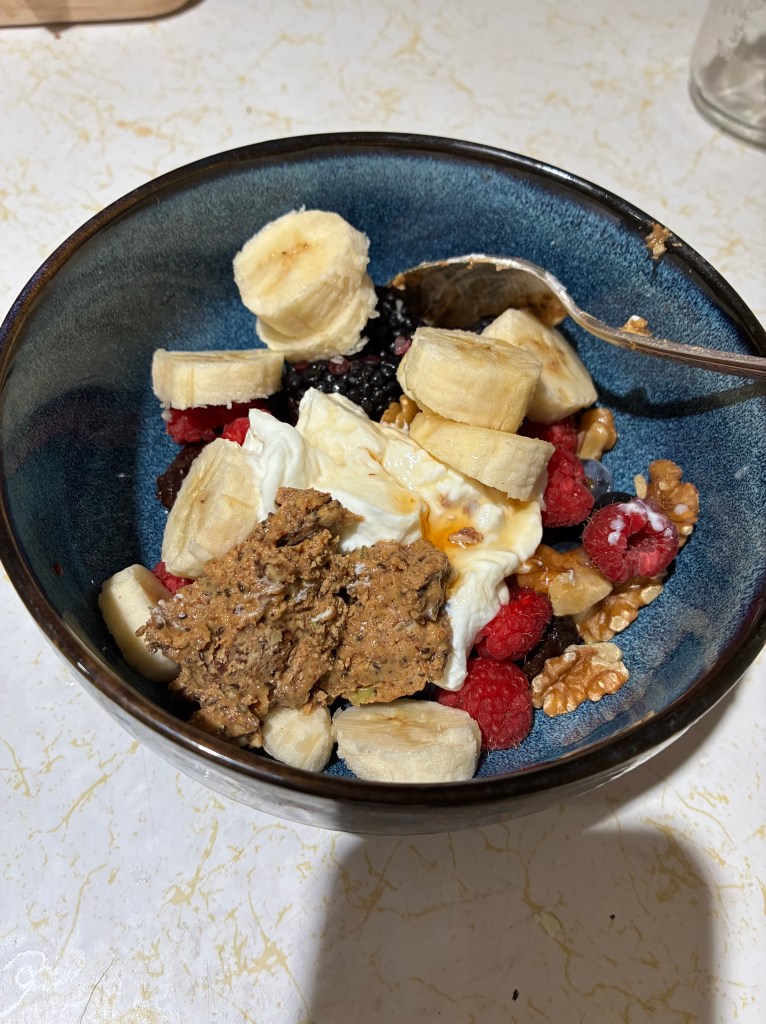
My superfood breakfast is yummy and super-nourishing, and one batch lasts 7 days

I used to not eat until 11 am or so, practicing intermittent fasting. I was usually eating yogurt with berries and walnuts, which was nourishing but not satiating, and I’d be hungry again in a few hours.

Nutritionists are now recommending that eating at least 30 plants a week is great for the gut microbiome, boosting the immune system, reducing inflammation, improving mood and mental clarity, and lowering the risk of chronic conditions like heart disease and type 2 diabetes. (Those healthy gut microbes play a much bigger role in our overall health and well-being than we thought!)

I switched a few months ago to eating a hearty breakfast early every morning, and I’m loving how that is working out for me: I cook once to make an oatmeal base with add-ins that provides 7 servings. Each day I add fruit, nuts and yogurt to one serving of the oatmeal base, and voila — I’m eating over 20 plants every single day.

Here are the details. I cook 3 servings of sprouted rolled oats as the package directs. I add 2-3 servings of hemp, flax, and chia seeds, and cacao, and maca powders to the hot cooked oats, stirring until well-mixed. Then I mix in 1/2 teaspoon each of Ceylon cinnamon, nutmeg, cardamom, and allspice.
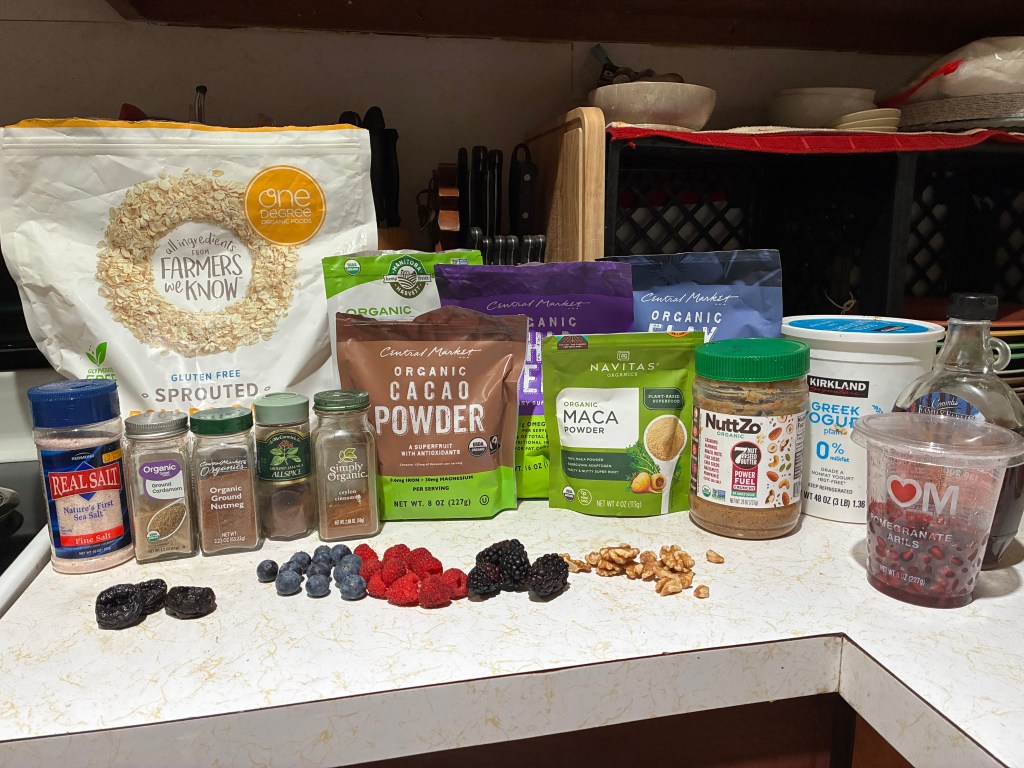
The ingredients, plus half a banana.

That adds up to 10 plant foods in the base. This step (day 1) takes about 20 minutes.

I put one serving (for me, that’s about 1/4 to 1/3 cup) into a soup bowl, add fruit, nuts, and yogurt, and put the rest into a storage bowl the refrigerator.

Once it cools, I slice it into 6 wedges like a pizza and put them into a space-saving ziplock bag.
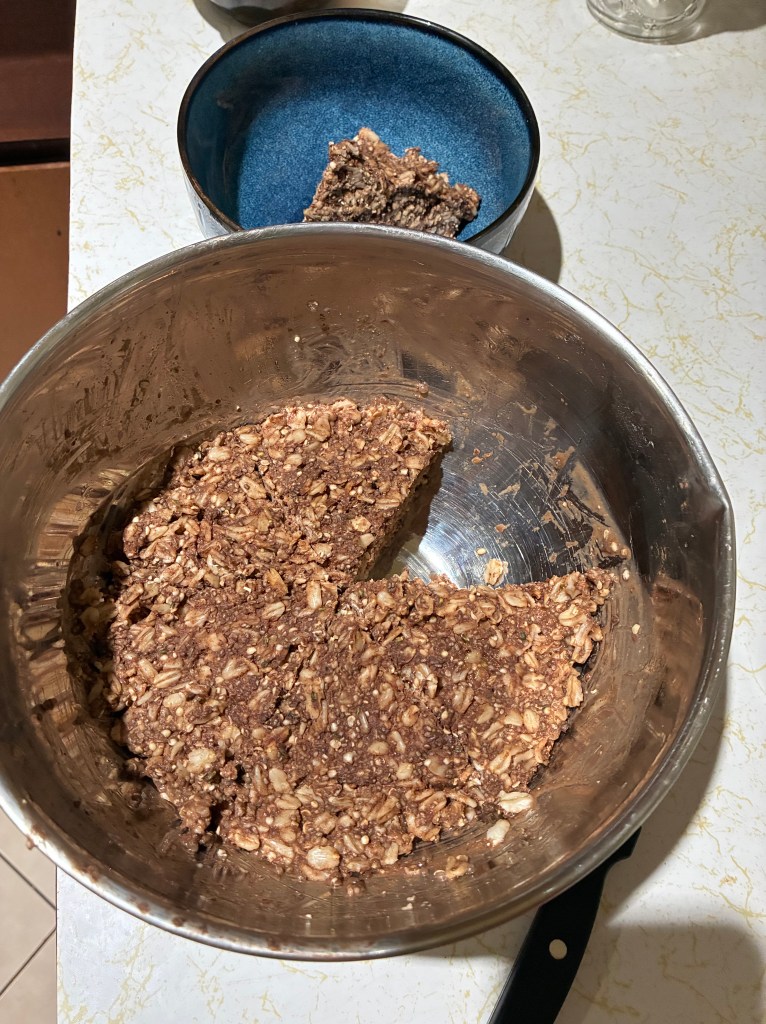
The cooked and cooled oatmeal base divided into 6 servings.

To one serving of the oatmeal base , I add the following:

  • blackberries
  • raspberries
  • blueberries
  • prunes (soaking them in water overnight softens them, and the water can then be used as a sweetener)
  • pomegranate seeds
  • half a banana, sliced
  • 1/4 cup Greek yogurt (not a plant food)
  • a handful of walnuts
  • 2 T raw almond butter OR Nuttzo
  • 1 tsp. maple syrup If needed
This is what I add to the oatmeal base.

That’s 18 with almond butter. If I use Nuttzo, I can add cashews, almonds, Brazil nuts, hazelnuts, and pumpkin seeds to the list of plants (it already includes flax and chia seeds).

When I reheat a wedge on the stovetop (we don’t have a microwave), I mash it up and add some 4-ingredient oat milk, heating until warm. (I’ve already counted oats.)

This step (days 2-7) takes about 10 minutes.
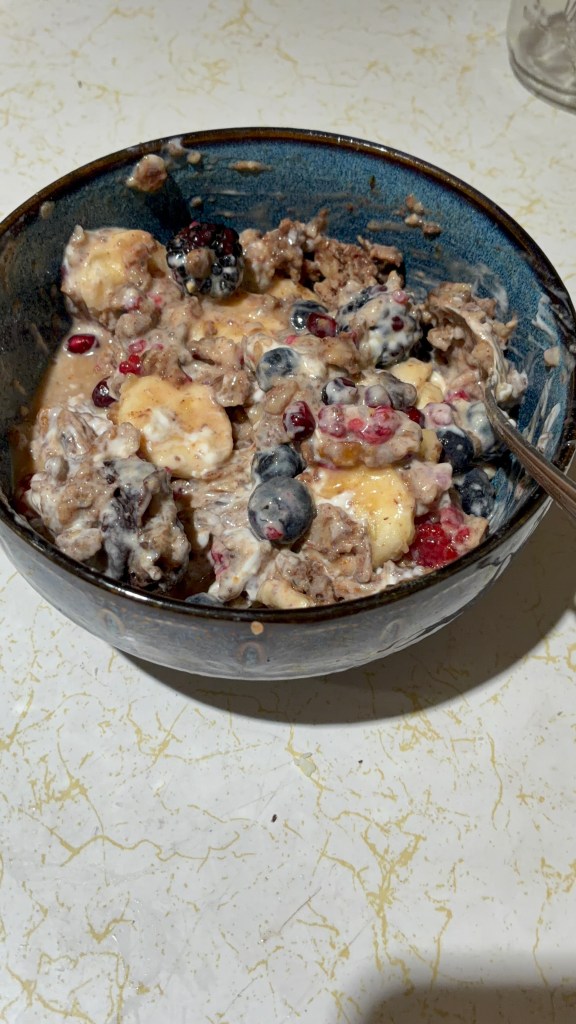
The oatmeal base with fruit, nuts, and yogurt makes a hearty breakfast.

That adds up to 22 plants in just one meal.

Some other benefits: this fiber- and nutrient-heavy meal digests slowly, keeping me feeling full for hours, and it also keeps me regular and energized. I’ll retest with Function Health soon and see how my biomarkers have changed. For the better, I hope!

My other meals are usually a vegetable-based soup, salad, Buddha bowl, or curry for lunch and dinner, and I often have wild-caught fish and either salad or a steamed or roasted veggie for dinner a couple of times a week, so I probably do average at least 30 plants a day.

I feel good. I hardly ever get sick. I work out at the gym, take 3 yoga classes a week, and work part-time in my Biodynamic Bodywork practice 3-4 days a week at the age of 73. I hope to be doing this for the foreseeable future.

Boundaries checklist for healthy relationships

Relationships : A Checklist on Boundaries in a Relationship.

I believe I have posted this before, but if I haven’t, here it is now. It contrasts relationships where you give up your boundaries and when your boundaries are intact. I’ve found it helpful and bookmarked it.

It includes skills like being clear about your preferences and acting on them (I heard Byron Katie say she’s constantly asking herself what she wants), doing more when it gets results, trusting your own intuition, and only being satisfied when you are thriving (rather than coping and surviving).

Some items that I’m resonating with now:

  • Having a personal standard, albeit flexible, that applies to everyone and asks for accountability.
  • Are strongly affected by your partner’s behavior and take it as information.
  • Let yourself feel anger, say “ouch” and embark upon a program of change.
  • Honor intuitions and distinguish them from wishes.
  • Mostly feel secure and clear.
  • Are living a life that mostly approximates what you always wanted for yourself.
  • Decide how, to what extent, and how long you will be committed.

About the last one, I’m liking the new law in Mexico City that allows time-limited marriages. The couple agrees how long they want to be married. The minimum is two years. When the time is up, they either go their separate ways without divorcing or remarry for another period of time.

Love that idea. Wouldn’t it be great to have no more expensive, difficult, embittered divorces? To have a built-in time to reassess how well a relationship is going and together decide whether and for how long to continue it without getting involved with lawyers and courts?

That’s civilized, in my opinion.

~~~

Aug. 20, 2013

I’m adding another resource to this post, which continues to get views long after its original posting. It’s an article about toxic relationship habits that most people think are normal.

The article points out:

…part of the problem is that many unhealthy relationship habits are baked into our culture. We worship romantic love — you know, that dizzying and irrational romantic love that somehow finds breaking china plates on the wall in a fit of tears somewhat endearing — and scoff at practicality or unconventional sexualities. Men and women are raised to objectify each other and to objectify the relationships they’re in. Thus our partners are often seen as assets rather than someone to share mutual emotional support.

A lot of the self help literature out there isn’t helpful either (no, men and women are notfrom different planets, you over-generalizing prick.) And for most of us, mom and dad surely weren’t the best examples either.

Fortunately, there’s been a lot of psychological research into healthy and happy relationships the past few decades and there are some general principles that keep popping up consistently that most people are unaware of or don’t follow.

Here’s the link: 6 Toxic Relationship Habits that Most People Think Are Normal.