My superfood breakfast is yummy and super-nourishing, and one batch lasts 7 days

I used to not eat until 11 am or so, practicing intermittent fasting. I was usually eating yogurt with berries and walnuts, which was nourishing but not satiating, and I’d be hungry again in a few hours.

Nutritionists are now recommending that eating at least 30 plants a week is great for the gut microbiome, boosting the immune system, reducing inflammation, improving mood and mental clarity, and lowering the risk of chronic conditions like heart disease and type 2 diabetes. (Those healthy gut microbes play a much bigger role in our overall health and well-being than we thought!)

I switched a few months ago to eating a hearty breakfast early every morning, and I’m loving how that is working out for me: I cook once to make an oatmeal base with add-ins that provides 7 servings. Each day I add fruit, nuts and yogurt to one serving of the oatmeal base, and voila — I’m eating over 20 plants every single day.

Here are the details. I cook 3 servings of sprouted rolled oats as the package directs. I add 2-3 servings of hemp, flax, and chia seeds, and cacao, and maca powders to the hot cooked oats, stirring until well-mixed. Then I mix in 1/2 teaspoon each of Ceylon cinnamon, nutmeg, cardamom, and allspice.
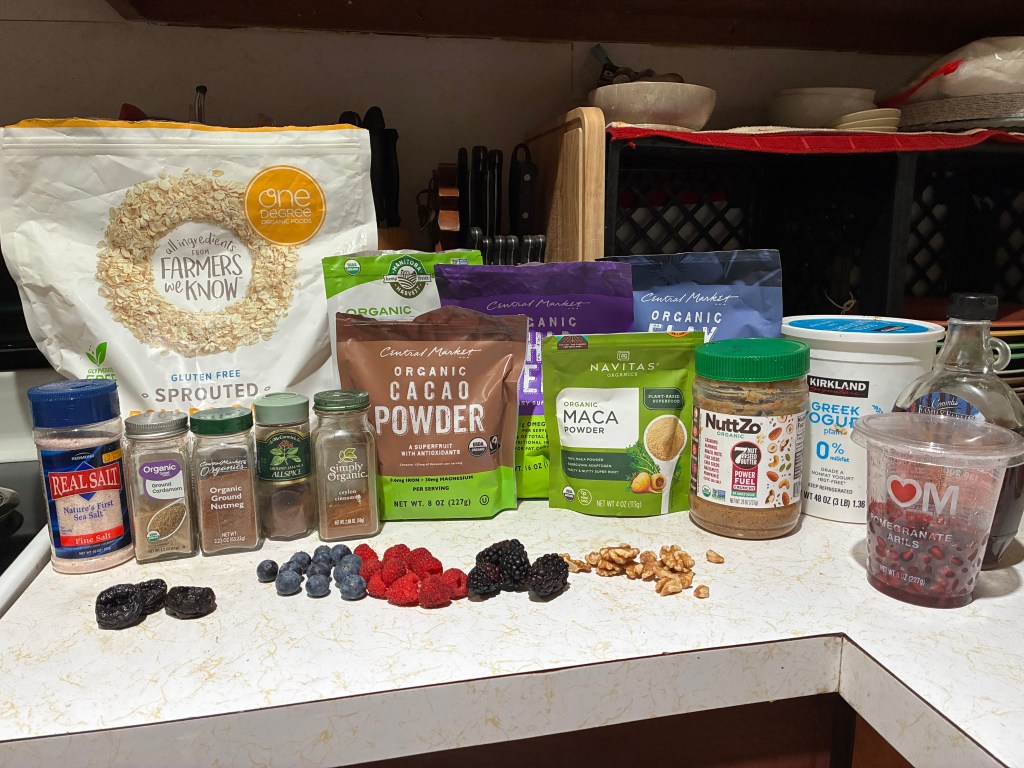
The ingredients, plus half a banana.

That adds up to 10 plant foods in the base. This step (day 1) takes about 20 minutes.

I put one serving (for me, that’s about 1/4 to 1/3 cup) into a soup bowl, add fruit, nuts, and yogurt, and put the rest into a storage bowl the refrigerator.

Once it cools, I slice it into 6 wedges like a pizza and put them into a space-saving ziplock bag.
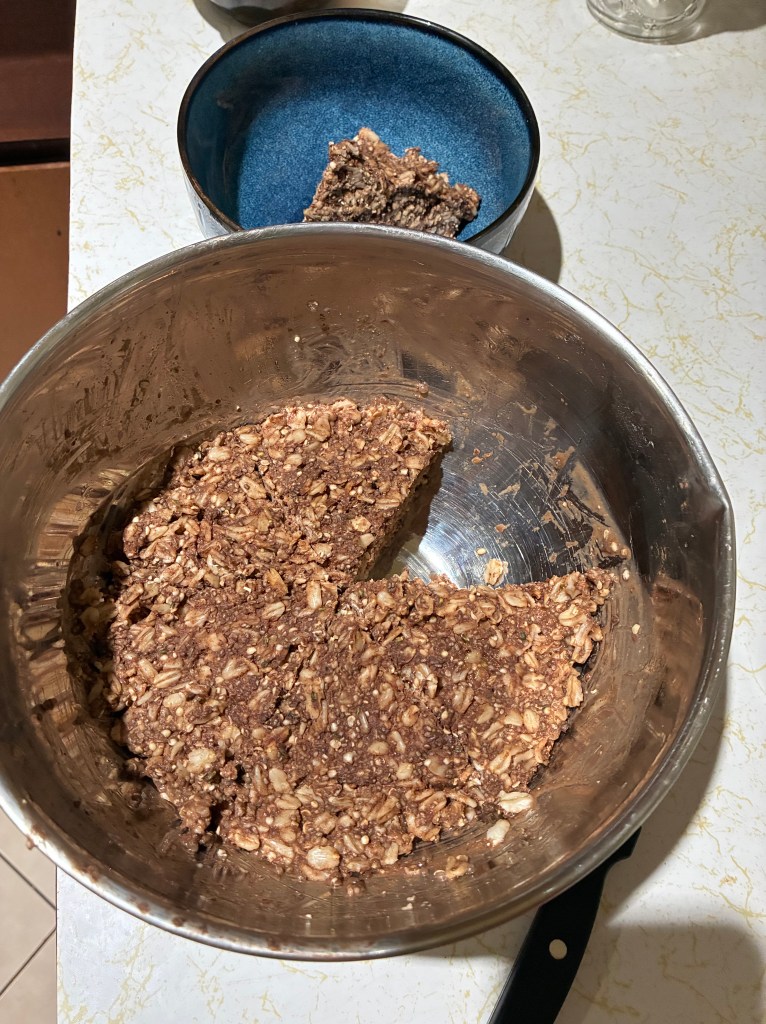
The cooked and cooled oatmeal base divided into 6 servings.

To one serving of the oatmeal base , I add the following:

  • blackberries
  • raspberries
  • blueberries
  • prunes (soaking them in water overnight softens them, and the water can then be used as a sweetener)
  • pomegranate seeds
  • half a banana, sliced
  • 1/4 cup Greek yogurt (not a plant food)
  • a handful of walnuts
  • 2 T raw almond butter OR Nuttzo
  • 1 tsp. maple syrup If needed
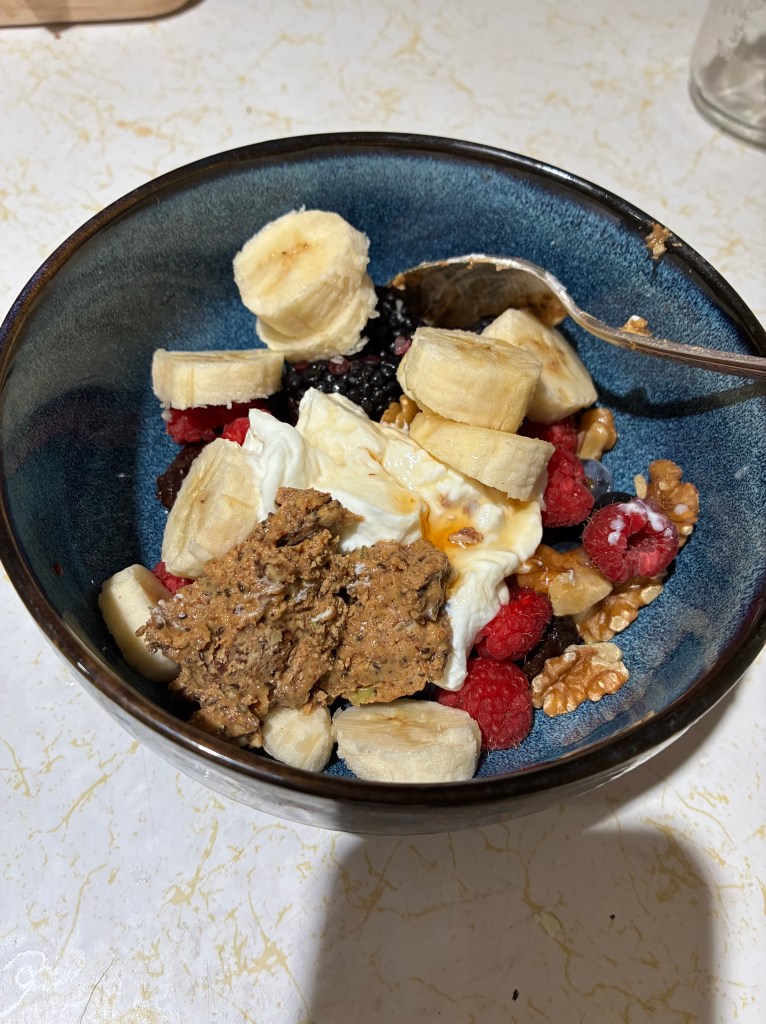
This is what I add to the oatmeal base.

That’s 18 with almond butter. If I use Nuttzo, I can add cashews, almonds, Brazil nuts, hazelnuts, and pumpkin seeds to the list of plants (it already includes flax and chia seeds).

When I reheat a wedge on the stovetop (we don’t have a microwave), I mash it up and add some 4-ingredient oat milk, heating until warm. (I’ve already counted oats.)

This step (days 2-7) takes about 10 minutes.
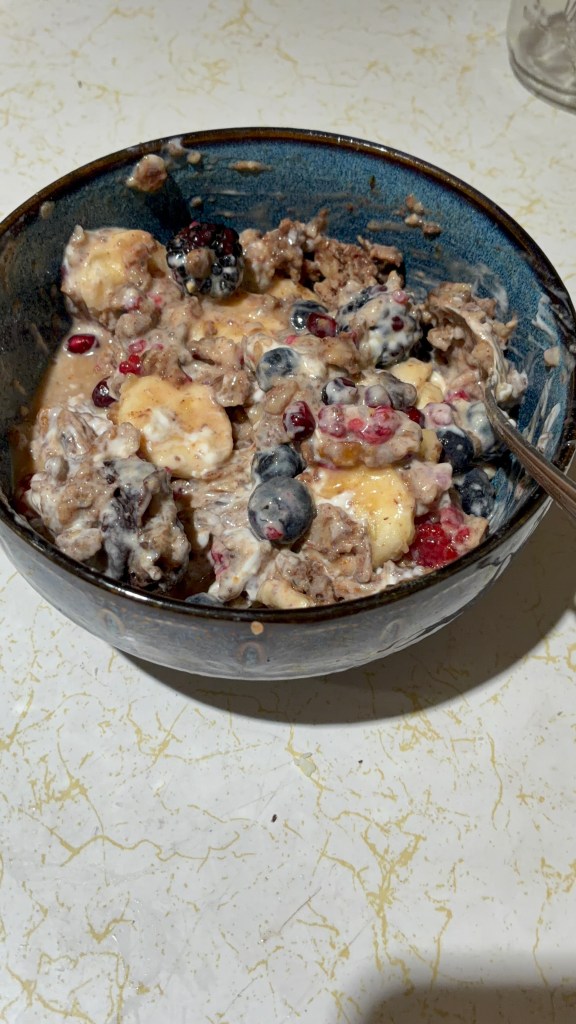
The oatmeal base with fruit, nuts, and yogurt makes a hearty breakfast.

That adds up to 22 plants in just one meal.

Some other benefits: this fiber- and nutrient-heavy meal digests slowly, keeping me feeling full for hours, and it also keeps me regular and energized. I’ll retest with Function Health soon and see how my biomarkers have changed. For the better, I hope!

My other meals are usually a vegetable-based soup, salad, Buddha bowl, or curry for lunch and dinner, and I often have wild-caught fish and either salad or a steamed or roasted veggie for dinner a couple of times a week, so I probably do average at least 30 plants a day.

I feel good. I hardly ever get sick. I work out at the gym, take 3 yoga classes a week, and work part-time in my Biodynamic Bodywork practice 3-4 days a week at the age of 73. I hope to be doing this for the foreseeable future.

Making and using umami powder


The Splendid Table podcast had a guest caller who shared her recipe for umami powder, in October 2017. She’d grown up in Japan, and after returning to the U.S. as an adult, experimented and came up with this flavor-enhancing powder that you can add to American favorites as well as East Asian ones.

Here’s the episode (the umami power segment starts at 41:30 and ends at 46:30), and here’s the recipe. I thought I’d share my experience making it, as well as ways to use it.

Ingredients:

  • 1-oz. package of bonito flakes (makes 6 tablespoons)
  • 1 oz. bulk dried shiitake mushrooms (or if not available in bulk, a small package — use the rest in soups)
  • small package of kombu (with what you don’t use for umami powder, add half a sheet when cooking dried legumes — it takes the gas out, and you can fish it out before serving )

Tools:

  • coffee/spice grinder
  • medium-size bowl
  • kitchen scale
  • scissors
  • small whisk

Instructions:

  1. Fill the coffee/spice grinder with bonito flakes and pulverize into a fine powder. Empty the grinder into the bowl. Repeat until all the bonito flakes are ground up.
  2. Do the same with the shiitakes. You may need to manually break large ones up to fit into the grinder. Repeat as needed. Add the shiitake powder to the bonito flake powder.
  3. Place sheets of kombu on the scale and add/subtract to get one ounce. Use scissors to cut 1/4″ strips of kombu lengthwise, and then cut across the strips to make 1/4″ squares. 
  4. Put these into the grinder and grind to a fine powder. Add to the bonito and shiitake powder.
  5. Whisk the three powders gently to mix well. 
  6. Makes 1 cup of light, fluffy powder. I stored it in a jar, and you could also put some in a spice container for sprinkling on food.

The originator of this recipe, Erica from Seattle, recommends adding the powder to burgers, meatloaf, and “a savory oatmeal that was phenomenal”.

She also mentions adding it to seafood soups to make them taste like they’ve simmered for hours.

Other ideas:

  • Sprinkle it on food as a seasoning.
  • Use it to add flavor to sauces and broths.
  • Add it to savory porridges like congee.
  • Sprinkle it on a piece of fish before cooking. 
  • Sprinkle on chicken before baking.
  • Add to ricotta with herbs to make spread for toast or crackers.

Have you made umami powder? How have you used it?

Homemade red cabbage sauerkraut

I just made my second batch of sauerkraut with a head of red cabbage. I’m getting into this, and I will never buy sauerkraut in a store again. It’s so easy and gratifying to make at home.

The first time, I used half a head of green cabbage, wakame (seaweed), and salt. It was good. Not that juicy, so I added a bit of sauerkraut juice from a jar of Bubbie’s!

This time, I used only two ingredients: cabbage and salt, and followed these easy steps: Continue reading

Spicy collard greens with tomatoes recipe

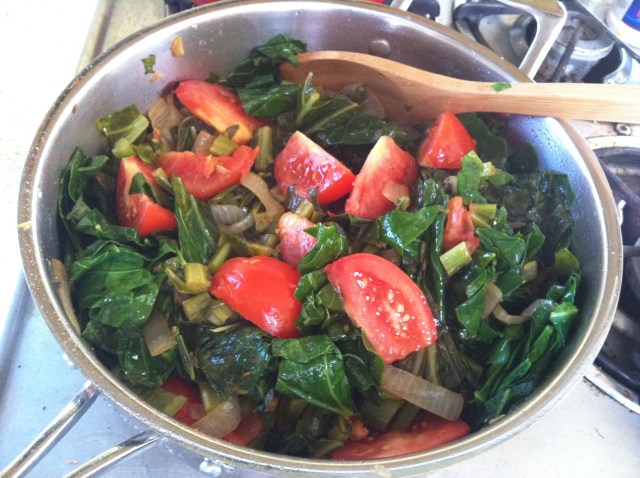
There’s a certain unnamed establishment in Austin that serves the best collard greens I’ve ever had. I’ve been trying to replicate the recipe because it’s nutritious, tasty, and quick —you spend as much time prepping as cooking — about 10 minutes!

Also, it looks gorgeous.

IMG_2968

Here’s my latest attempt:

2 T ghee (or a high-heat oil like coconut if you prefer vegan)
1 tsp mustard seeds
1 tsp cumin seeds
1 tsp coriander
1/4 tsp cayenne, or to taste
1 large onion, chopped
1-2 cloves garlic, minced
1 tsp ginger, peeled and minced
3-6 chopped fresh jalapenos to taste, seeded (wear gloves while handling or wash hands well before rubbing eyes)
3 bunches collard greens (stack and cut into thirds lengthwise, then chop the middle third with stems into smaller pieces than outer thirds)
2 T apple cider vinegar
4-6 fresh Roma tomatoes, cut into wedges
salt

Assemble ingredients. Chop, mince, peel, slice, and cut veggies in advance.

Heat oil over high heat in a large, deep skillet or pan. Add mustard seeds and cover. Listen carefully and when mostly popped, add cumin seeds and let brown for a minute. Lower heat to medium high. Add onion. Stir in coriander and cayenne. When onions are soft, add garlic and ginger.

Lower heat to medium. Add jalapenos and collard greens (let stem pieces cook for a couple of minutes covered, then add the rest). Add vinegar. Stir well.

Lower heat to simmer and cover. Check for doneness after 2 minutes.

When collards are almost done, add tomatoes, stir, cover, and cook for a minute. Taste and add salt as desired. Ready to serve!

Sprouted lentil salad with yummy Wheatsville dressing

Here’s another recipe for sprouted lentils. (Earlier, I posted about using them in a Greek salad.)

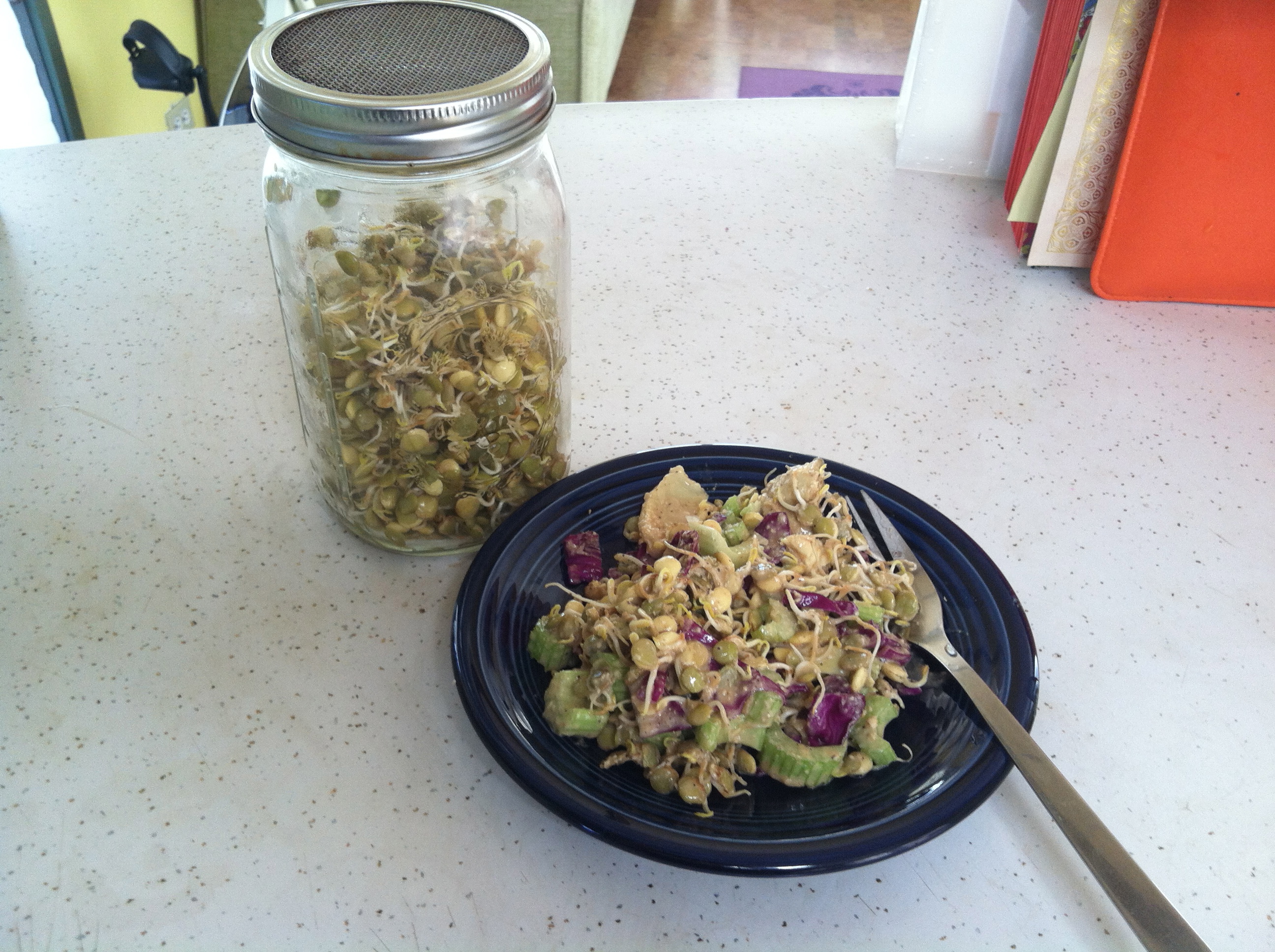
Today’s concoction includes these ingredients below. I didn’t measure, so use your own judgment about proportions:

  • sprouted green lentils (i.e., the plain brown lentils)
  • celery
  • artichoke hearts
  • shredded red cabbage
  • cashew-tamari-garlic salad dressing from Wheatsville Co-op (I love that stuff!)

I’m finding that sprouted lentils make a good basis for improvising quick hearty salads. I like to add ingredients with some color and crunch and different flavors. You could add red onion or scallions, marinated mushrooms, walnuts/pecans/slivered almonds, pumpkin or sunflower seeds, bell pepper, tomato, avocado, jicama, cooked beets, sprouts, greens cut in slivers, or whatever appeals to your tastebuds.

Tuna might be a good addition, or hard-boiled eggs, if you want extra protein. I feel less sure about salmon or chicken.

You could use almost any kind of salad dressing, mayonnaise, or yogurt to add flavor and nutrition and to hold it together.

Can you tell I get excited about improvising in the kitchen?

IMG_2596


The easiest, tastiest summer salad imaginable: insalata caprese

Last Sunday, it was my turn to cook dinner for my friend. I wanted to serve food that was healthy, seasonal, and delicious, and I went to the farmer’s market on Saturday for inspiration.

Heirloom tomatoes are in season, and they are exceptionally delicious. However, they don’t keep for a long time like the modern tomatoes do. Eat ’em right up is what I say, and never let them see the inside of your refrigerator. Buy organic, please. Support your health and the growers. Or grown your own.

I have been known to get home with an heirloom tomato and eat it immediately, standing over the sink to catch the juice.

In hindsight, I could have invited my friend to do the same—that would have made the dinner memorable, and it would have been a fun surprise—but alas, that didn’t occur to me at the time.

Instead, I served insalata caprese, which Wikipedia tells me means “salad in the style of the island of Capri.” Capri is an island off the coast of southern Italy (the front of the “ankle” of Italy’s boot). That area, Campania (where Naples and Mount Vesuvius are also located), has a rich gastronomic history, being the birthplace of pizza and spaghetti, as well as being one of the first areas of Europe to fall in love with that New World wonder, the tomato.

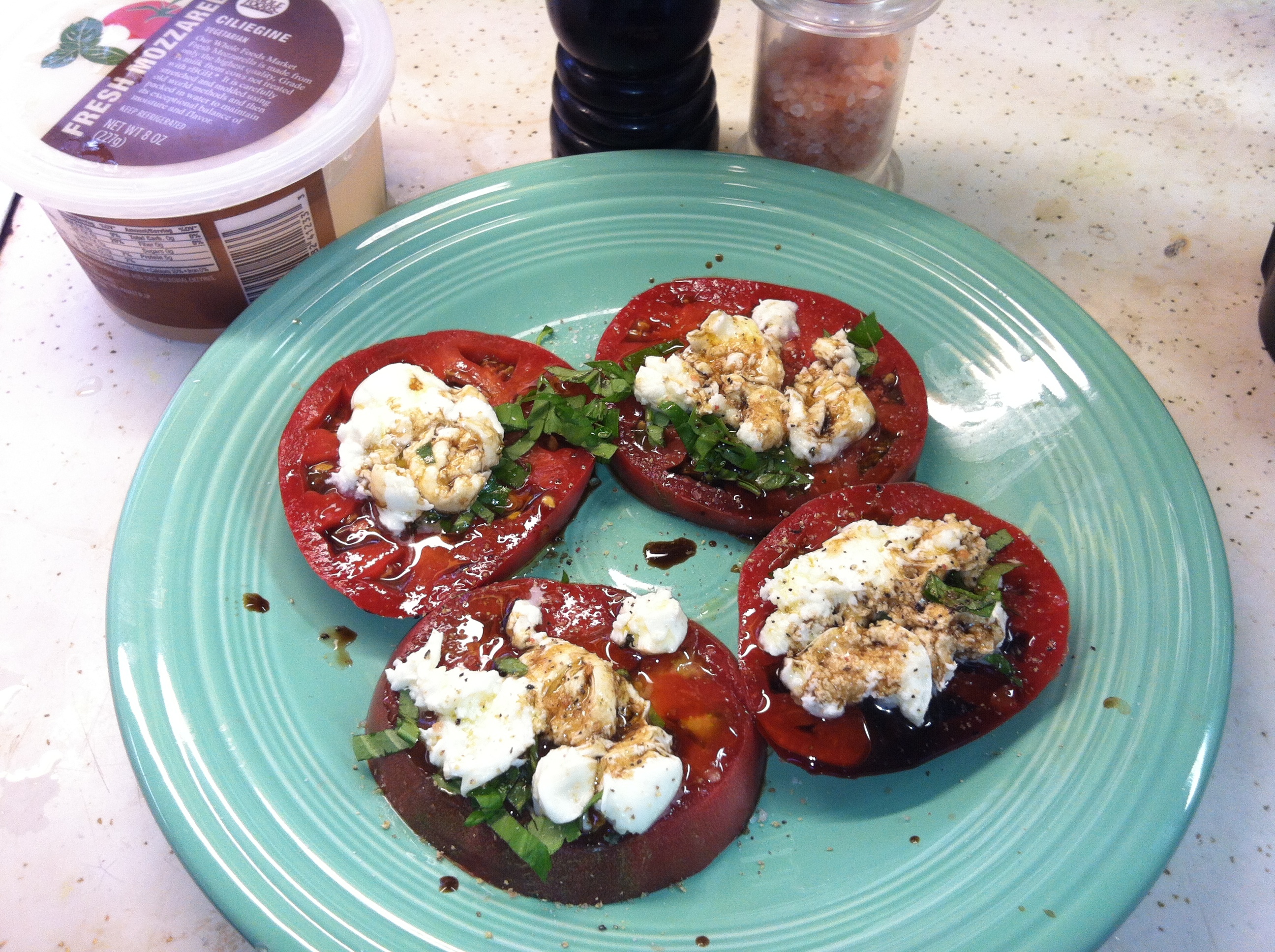
Insalata caprese sounds fancy, particularly when you say it with an Italian accent (try it: een-suh-LAHH-tuh kuh-PRAY-say), but it is almost as simple as eating over the sink. Here are the ingredients to assemble:

  • one large, ripe Brandywine tomato without soft spots
  • eight or so large fresh basil leaves
  • mozzarella cheese (I used Whole Foods brand without rBGH)
  • organic extra-virgin olive oil
  • balsamic vinegar (if you’re adventurous, try this version over the supermarket stuff—a little goes a very long way and although expensive, it’s not astronomical like some)
  • freshly ground salt (I love Himalayan pink salt)
  • freshly ground pepper
  1. With a serrated knife, slice the stem end off the tomato and cut the remainder into four thick slices. Put slices on plates (one or two per salad plate, or all four on a dinner plate for a full meal for one greedy tomato lover, ahem).
  2. Being careful not to crush them, slice the basil leaves crosswise and evenly distribute on top of the tomatoes.
  3. Slice the mozzarella and distribute evenly over tomatoes.
  4. Drizzle olive oil over each tomato slice.
  5. Drizzle balsamic vinegar over each slice.
  6. Season with freshly ground salt and pepper to taste.

That’s it. You will need a knife and fork. Now indulge in some summer bliss!

(You will want to drink the juices left on the plate and then lick the plate. I won’t tell.)

Ruth Reichl’s delicious deviled eggs recipe

My favorite food writer is Ruth Reichl, former food critic of the New York Times and the Los Angeles Times, editor of Gourmet magazine, book author (Tender at the Bone, Comfort Me with Apples, Garlic and Sapphires, Not Becoming My Mother, and more) and a wonderful tweeter to follow on Twitter.

Her tweets are poetry, jewels of sensual delight. Here’s a recent one:

Late spring. Damp green grass beneath my feet. A flock of tiny yellow birds. Local strawberries, so sweet, drenched in thick Jersey cream.

Doesn’t that make you want to hang out with Ruth, wherever she is? She’s so present, so alive, so appreciative.

She wrote about how to make deviled eggs, and I learned several things:

  • Fresh eggs do not peel well. Get farm or backyard organic eggs from free-range chickens and let them sit in the fridge for a week before hard-boiling.
  • The term “deviled” was used starting in the 18th century to refer to spicy foods, such as deviled eggs and deviled ham. They are also called “stuffed eggs” and “mimosa eggs”.
  • If you want perfectly centered egg yolks, store the eggs on their sides.
  • Bring cold water with eggs in it to a boil, then cover and turn off the heat for exactly 12 minutes.
  • After cooking, immediately chill the eggs in a bowl of ice water to prevent the greenish tinge on the outside of the cooked yolk.

I made deviled eggs yesterday, before I read this article. They are so easy and yummy in summer! I use store-bought mayo (made with olive oil—Ruth provides the recipe for homemade—click the link above) and topped each filled egg with paprika and exactly three capers.

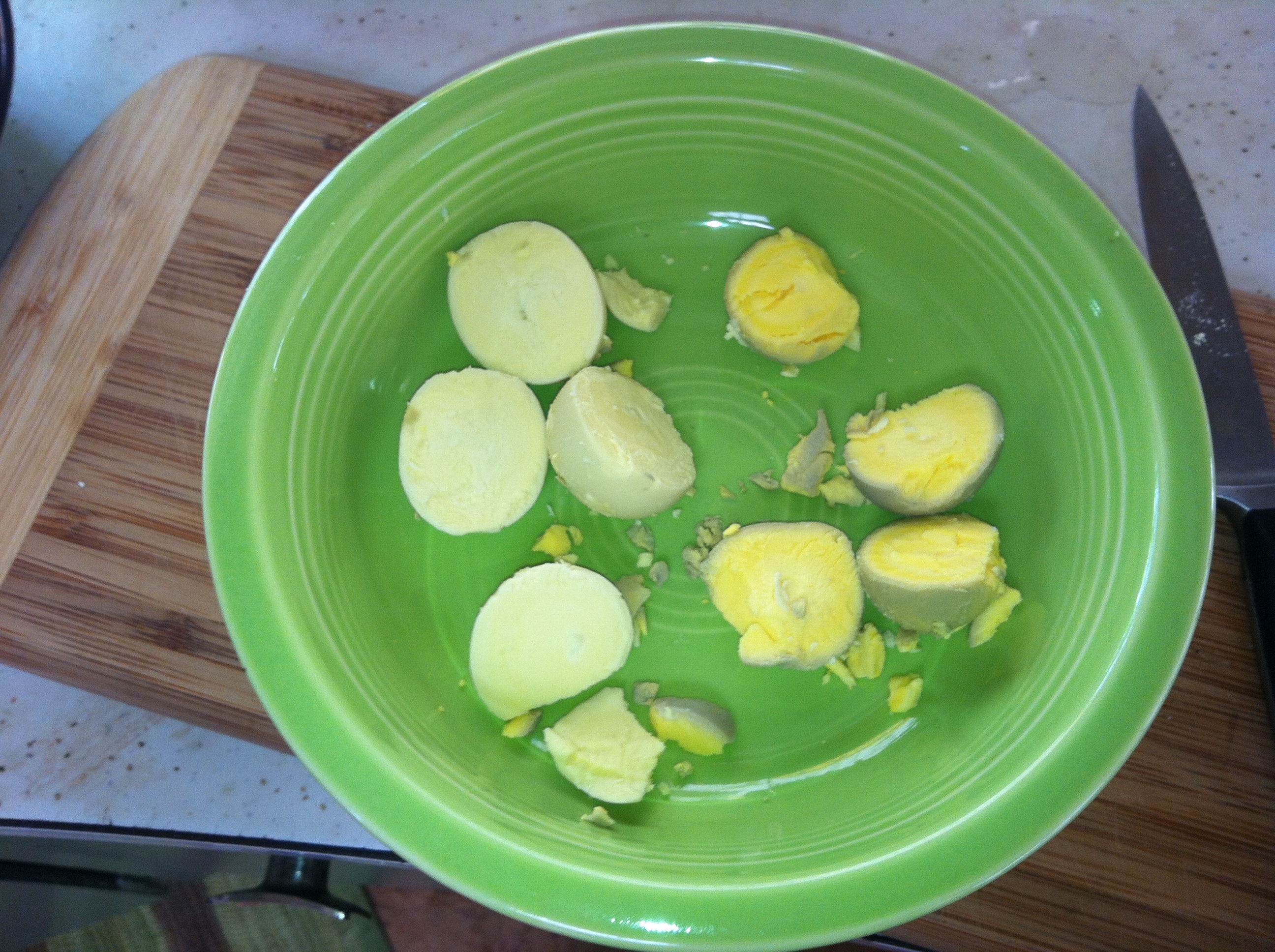
Below, two eggs are store-bought organic, and two are from Hal’s backyard chickens. Guess which is which? Also notice the greenish tinge on one of the yolks. That egg must not have cooled quickly enough!

My granddaughter, who turns 12 today, has a shortcut to get deviled egg flavor without the work: She peels a hard-boiled egg, cuts it in half, and smears a little yellow prepared mustard on it. Pop it in your mouth, and voila! Quick and easy!