How to bounce back

Sometimes in life, things are going well, and then something happens, and before you know it, you’ve gotten off track. Unpleasant surprises having to do with work, love, friendship, money, health, family, whatever we care about, can put us into an experience of suffering (aka “pain with a story”).

So what do you do to get back on track? Here’s what works for me:

  1. Realize it’s a process and there’s probably not an instant fix. Accept that you’re off track instead of pretending that everything is fine. Relax into it.
  2. Take care of your health. Go to bed and wake at the regular times. Eat healthy food, and not too much comfort food. Drink plenty of water. Exercise in whatever form you enjoy. Dance, run, do yoga, shadow-box. Move your body. A little sweat won’t hurt a bit, either. If you need inspiration, listen to this and try some of James Brown’s moves. You know he taught Michael Jackson how to dance:
  3. Let your emotions flow instead of suppressing them. Movement can help with this too. Walk around and make nonsense noises and start moving how you feel. Waaahhhhh! Grrrrrrr! Listen to music that helps you cry if tears feel blocked — this music can help:
     If you don’t feel safe expressing your feelings to another human being, write them out. Or get curious — what is the name of the emotion? Where in your body are you feeling it? How would your body like to move with this emotion? If you could dance it or see it dancing, what would that be like? What kind of music would it be dancing to? What color is it?
  4. Do something that will really make you feel better. There are tons of techniques that can be helpful. The Emotional Freedom Technique (EFT) works for a lot of people. Now, this may seem crazy, but an even simpler technique for restoring emotional equilibrium is to slowly toss a small ball from hand to hand. While tossing it, slowly look toward the ceiling, close your eyes, and return your head to normal position. (It will take some practice to do this.) If you drop the ball, pick it up and start over (it’s easiest to do over a bed or sofa). It induces the feeling of being centered. Even 2 minutes of it shifts me. For theory and details on this, see Mind Juggling on Nelson Zink’s awesome website Navaching.
  5. Set boundaries that work for you. They don’t have to be permanent, but if you need a break from something that drains your energy, just take one. You being drained contributes to no one’s well-being. One of my favorite films of all time is Office Space. Make like Peter and don’t give a damn. You don’t have to drink the Kool-Aid. Savor your own mojo, and don’t give it away to the unappreciative.
  6. Think happy thoughts, imagine happy pictures, feel the good experiences you’ve had again. Do you know someone who has a radiant smile? Imagine their wonderful face. Has someone been particularly kind to you? Remember that feeling. What words do you like to hear? “Everything is going to be all right” is very soothing. Really, who the hell knows how everything is going to be, but saying that to yourself can feel comforting. Also, I have a big envelope full of cards, letters, and photos that people have given me over the past few years. When I pull that out and look through it, I feel reconnected with the good will of these people who’ve cared enough about me to make that effort. (Reminds me to make more of an effort myself toward that end.)
  7. Do something spiritual. Could be meditation, an act of kindness, reading spiritual books or listening to audiotapes, feeling gratitude, forgiving those who’ve hurt you. Even laughing, because laughter is a gift from the gods. Here’s James Altucher’s hilarious blog post on 60 second meditations. (I love washing dishes.)

This has been my favorite blog post to write, because I wrote it to help myself bounce back. So I guess 8. would be to write up your own methods of bouncing back, testing each step.

Before you know it, you’ve returned to your healthy self.

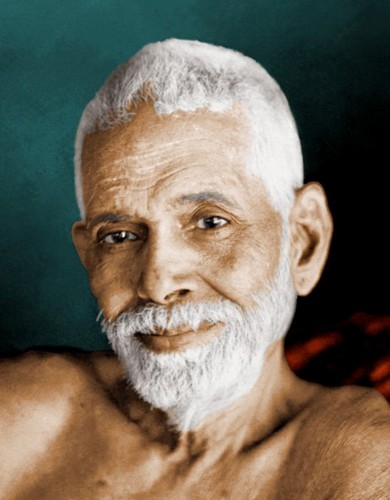
Ramana Maharshi’s eyes

I so love this photograph of Ramana. I love to make eye contact with him. Those eyes exude pure love and peace. I fall right into them.

Who is looking?

The Universe comes through!

After seeing someone being triggered by something I did, days of emotionally struggling with PTSD memories, processing all that it brought up (hopefully being of some use to someone somewhere), and being ill, here’s what I find in my inbox this morning:

When you finally get that call, meet that person, walk that walk, and live that dream, MaryAnn, do you think you’ll even care that there were a few dark and scary moments in a journey that made them all possible?

Trust me, you won’t even remember.

The Universe

Thanks, Universe. The percentage of time that you are right on target is amazing. Keep up the good work!

My PTSD manifesto

Occasionally people who have been traumatized have gravitated to me because I’m open about having experienced a serious trauma and (mostly) recovered, but they don’t seem to realize how deeply their past still affects them. They haven’t done any trauma recovery work, and they show up in my life.

I believe they show up because their unconscious is seeking healing. Or perhaps angels bring these people to me so they can see for themselves that recovery is possible. You know, I don’t mind being a role model for recovery from trauma. I’ve come a long way in 10 years. I’ve worked at it.

It’s not like traumatized people wear signs stating that. The sudden discovery that a new friend or love interest has been traumatized can create a huge amount of distress for me. Even though in hindsight, their craziness now makes more sense (“oh, of course that weird behavior was a trauma response”), it can still really be a shock.

So I just want to put this message out there:

If you’ve been traumatized and feel attracted to me because I’m open about having experienced trauma and having done a lot of work on my recovery, first of all, please tell me clearly and up front (or as soon as you realize) that you’ve been traumatized, emotionally abused, get triggered, have flashbacks or nightmares, are shell-shocked, or whatever history or symptoms are affecting you. There’s no shame in it — you didn’t ask for it. I’d rather know than not, and I just might be able to prevent you from making a big mess when your judgment isn’t very good. I will help you find help and support you emotionally — in a way that is healthy and not co-dependent.

If that’s what draws you to me, just own it. Do not be asking me out on dates and withholding information about your untreated trauma. That’s creepy, and the thing is, you can’t really hide a trauma in your history until you are healed. You may naively think you can, but it seriously disregulates your nervous system and makes it stuck in either dissociation or hyperarousal, sometimes both. Your trauma-related weird behavior will show up in your most intimate relationships sooner or later. Having untreated trauma is like having an elephant in your living room whose shit is piling up.

Secondly, if you’re not getting professional help, please do that — get professional help. And let me know that too, because I’m going to worry about you if you don’t, and I’d rather be happy than worried.

Please do not look to me to help you beyond being a friend and a cheerleader for your recovery work. I am a blogger who’s open about having experienced trauma and having done a lot of work on recovery. This blog (read About me, and do a search on PTSD or trauma to find related posts) describes some of my recovery experiences. Please feel free to ask me about them or try them yourself.

There is absolutely no need for you to just show me your wounds without any warning. Seeing you suddenly be triggered by your past trauma triggered painful memories of my long struggle of not knowing I had PTSD and then finding out, and then spending long months doing some intense processing, healing, and putting my life back together in a new, healthier way.

Your behavior freaked me out badly. It took acupuncture, herbs, and therapeutic assistance to start to get over it (at my expense, I might add, which you have ignored, which also makes me think less of you), and I really don’t trust you now.

After I witnessed your triggering and saw empathically how damaging your experience had been, it hit me hard. I emotionally dropped, rolled, and came up ready for combat. I was so ready to protect … someone … from something! And you had something to do with it.

Recovery from trauma doesn’t mean being bulletproof. It means being more embodied, emotionally present, and energetically open than before recovery, while still being an ordinary person who cannot read your mind. I have more compassion now and am more of a whole person, and I need to set clear boundaries to take care of myself.

It breaks my heart more than you can imagine that the innocent gesture I made triggered fear in you. It’s not anything I take casually or lightly. It’s emotionally disturbing to witness someone with their wires crossed, whose mind mistakes the present for the past, whose mind mistakes someone who has never traumatized them with someone who did.

I wish you’d told me as soon as you knew instead of showing me like that. That would have been important communication. You scared me, once again.

With help, you can heal your poor damaged nervous system and experience more peace and stability and aliveness in your life. I am recommending Somatic Experiencing Practitioners to people these days.

Please find your way to help. I wish you well.

So this is for everyone: if you know that I have had PTSD and you have had untreated trauma in your life, and you come around seeking a relationship, please tell me up front, do your own recovery work (I’ll be rooting for you), and get yourself in decent emotional and relational shape before you expect any intimacy from me, for both our sakes.

I look forward to talking with the healthy you.

Knowing whether you have PTSD, and how it affects you and your relationships

Regular readers of this blog and anyone who has read the About me page knows that I have had PTSD and (mostly) recovered. I’m pretty open about it. I hate that there’s a stigma about having PTSD, or any mental illness, when no one asks for it in the first place. At this point in my life, openness has way more to recommend it than shame and secrecy.

It’s actually an injury that affects the whole bodymindheartspirit.

I also posted about PTSD in November, in Getting over trauma and moving on with your life: some core questions. That post focused on the desire to heal, knowing that you have PTSD.

I’ve posted a lot about the trauma releasing exercises, brainwave optimization, shaking medicine, and other topics related to recovering from trauma.

Recently something happened that triggered my memories of what it was like to have undiagnosed PTSD for a long time and the two years of my life that I spent intensely working on becoming whole and reclaiming myself after I was diagnosed. There were still some holes, but I did feel like I got on top of it enough to function fairly well and keep filling in the holes as my awareness of them arose.

This post is about figuring out whether you have PTSD, what it’s like to have it, and how it affects your relationships.

How do you know you have PTSD? There’s an official diagnosis in the Diagnostic and Statistical Manual of Mental Disorders (DSM-IV, for the current version), a book used by psychiatrists to diagnose mental illness. The official cause of PTSD is this:

PTSD always follows a traumatic event which causes intense fear and/or helplessness in an individual.  Typically the symptoms develop shortly after the event, but may take years.  The duration for symptoms is at least one month for this diagnosis.

I had thought that the definition included something about violence. The current definition does not. I was wrong about that.

If you’re not sure if what happened to you is considered trauma, here’s a definition of trauma:

an event that is life-threatening or that severely compromises the emotional well-being of an individual or causes intense fear

The common denominator is feeling intense fear. Aka terror or horror. Or “severely compromised emotional well-being.”

If you’re not sure whether you have PTSD, ask yourself whether and when you have experienced intense fear in response to traumatic events or whether something happened to you that severely compromised your emotional well-being.

Of course, sometimes traumatized people may not remember a trauma, which is tricky — in PTSD, the memories of the actual feelings associated with a traumatic event are often suppressed (because they were intensely scary the first time).

Timeline work can be helpful. If in reviewing your life, there’s any event that some would consider to be traumatic or severely compromising to their emotional well-being, even if you don’t remember the actual feeling, you might have PTSD. Read on.

Also, ask yourself whether and when you have experienced a sense of helplessness. When you experienced a traumatic event, did you freeze in terror?

If your answer to one or both of those questions is yes, then you don’t need a psychiatrist to know that you probably have PTSD. However, if you’re still not sure, you can judge by your behavior.

How does having PTSD affect your behavior? People who have been traumatized often have flashbacks, in which something in the present situation triggers an emotional reaction from a past traumatic event. For example, someone may innocuously point a finger at you, and you suddenly feel fear because seeing the pointing finger has triggered the memory of someone else pointing their finger at you while angrily heaping emotional abuse on you. Never mind that the current person is not heaping emotional abuse on you and is in fact startled that their innocent finger has made you feel so visibly afraid.

Your past has kidnapped you emotionally.

I only had one flashback similar to that. The main type of flashback or time distortion that I experienced was regressing back to the age I was when my childhood trauma occurred. Sometimes social situations would make me feel like a child amongst grownups. Mostly I was quiet, but sometimes I would say inappropriately childish, immature things.

I could be talking to someone as a mature woman, and suddenly I became an awkward child again. I didn’t realize I was regressing for a long time. I just thought I was socially awkward. But the age I regressed to was usually 11 years old.

I have so loved that traumatized 11-year-old child, hugged, soothed, and comforted her for all the incomprehensible events she experienced, that she feels integrated and doesn’t pop out like that much any more. When people are baffling to me now, I note it, but it usually doesn’t send me back into childhood any more.

With PTSD, you may also have nightmares. I had them for years. Something terrifying was chasing me, and I couldn’t run fast enough, and I awoke feeling intense fear.

The last such dream related to my original trauma was about 10 years ago, when feeling on high alert, I clearly told a serial killer to put the huge sharp scissors down. By confronting him, I had overcome my helplessness.

In fact, a lot of my recovery was about overcoming helplessness. I imagined riding to my sister’s rescue — on a white horse — and blowing away the killer. It didn’t change the past, but it changed the way my nervous system processed that memory so that I felt empowered.

You may live your life avoiding situations, people, and/or objects that remind you about the event, such as avoiding driving after a serious car accident or avoiding someone who who emotionally abused you or who even just reminds you of them.

Another form of avoidance is that you may experience emotional numbness, which is a way of avoiding yourself. Trauma can make people want to isolate themselves. If you inexplicably regressed when socializing, or got triggered, wouldn’t you want to hide? I spent years of my adult life just working, raising my daughter, going to grad school, and being depressed with no social life to speak of.

Your anxiety levels are higher in general, and you may have a heightened startle response, jumping when you hear a sudden loud noise. (I still do this.) You may have insomnia, trouble concentrating, irritability, anger, hyperarousal.

In my opinion, people can experience anxiety, avoidance, and nightmares without necessarily having PTSD, but having flashbacks is unique to PTSD, as far as I know. If anyone knows different, please comment.

How does PTSD affect relationships? PTSD affects the relationships you value most — intimate relationships, with family, lovers, and close friends. You may be difficult to get close to. You may fear closeness and decide to move on when someone is becoming close, or others may distance themselves from you if you shut down emotionally.

You may have difficulty listening and making cooperative decisions. You may carry a sense of betrayal or grievance into nonabusive relationships. You may be blaming, punitive, passive aggressive, dissociative, cold, insensitive, insulting, under- or overreactive emotionally, and behave in other ways that make you a difficult, frightening,  or unpleasant person to relate to. Working out problems may seem impossible.

If you have it, I’m sorry for the suffering you’ve experienced. Really truly sorry you suffered in the first place, and that it continues. Finding out you have PTSD is not fun, but at least you have an explanation for your baffling behavior and can start your journey toward health.

I can only advise you that once you suspect you have it, get counseling as soon as possible. Get counseling as if your life depends on it, because the quality of every day of the rest of your life and the quality of your most valued relationships actually does. Go to the best counselor you can find.

I also recommend brain wave optimization to normalize your brain waves after trauma.

The post-PTSD life, the joy, the friendships and close relationships that await you, the presence, the freedom — I cannot tell you how good life can be.

Go for it. You’re worth it.

Leslie Kaminoff responds elegantly to yoga scandal

Here’s an elegant response from yoga teacher/anatomist Leslie Kaminoff, whom I studied with in January, to the recent yoga scandal involving John Friend and Anusara Yoga.

I’ve watched the headlines about the exodus of senior teachers and the revelations about Friend’s flaws with a measure of detachment. The headlines say enough — no details are needed.

This is an old story that often happens when power goes to a leader’s head, who is usually male. It’s the story of the flawed guru, the untrustworthy leader, the downfall of the powerful. It’s an archetypal story about human nature and usually involves sex and/or money, and sometimes substance abuse, and always, trust, betrayal, and loss of reputation.

It doesn’t have to happen. People are people. Attraction happens…and it takes self-aware teachers who are mindful of others and themselves and have enough personal resources to draw on to keep the trust given them, to notice when it/they may be slipping, to maintain the integrity of their teaching program.

It is part of the challenge of taking that path. The teacher is also the teaching.

If you want to catch up on what happened, check out WellandGood‘s coverage.

Disclosure: I take an Anusara class each week, and I love it and my Anusara-inspired teacher who has worked so hard for years to understand and teach yoga well and keep us safe and growing.

In my opinion, the quality of the yoga being taught includes the integrity of the teacher as well as the skill and knowledge. JF, as the founder of Anusara Yoga, did not have had much influence on me except in the body of work he created, and my teacher, who took classes from him and other Anusara teachers.

Anusara is good yoga, and I hope Anusara will still stand as an offering in the yoga world.

I’ve been lucky to have had some skilled, righteous yoga teachers whom I have trusted.

My respect for Leslie Kaminoff only increases. He talks about the suffering that occurs when a group gathers around a teacher whose human frailties prevent him from living up to the task he has been trusted with. (Yes, it’s usually men, but men hold more positions of power than women. And…the women involved made choices too.)

He relates how his teacher, Desikachar, who created Viniyoga, then decided to dissolve it because he was uncomfortable with the idea of branding. He found certification (which includes some standardization) to be antithetical to the traditional teacher/student relationship found in Indian yoga.

Desikachar resisted every opportunity to become a guru. He based his interactions with his students on his faith that the students could come up with the answers for themselves. He allowed them to struggle instead of giving them easy answers.

Daily email inspirations

I subscribe to several daily email services that enrich my well-being as I begin each day. I receive joy, encouragement, wonder, food for thought, and catalysts for expansion from these emails. I feel grateful for the people who thought these up and deliver day after day. It makes a difference.

For several years, I got a poem a day in my inbox from Panhala. That stopped a few months ago, and I don’t know why. Joe Riley did a great job of sharing some wonderful poems, and I hope he’s well. No one seems to know. I miss the poems. The link above is still a great repository of poems.

I also get quotes from Tricycle Daily Dharma about Buddhist practice. (Click the link, then the Your Daily Dharma Sign Up Now link to subscribe.) Here’s today’s quote:

Fear is not the Enemy
There are many ways to meditate on fear. One is to wait until it appears adventitiously. Another is to invite it in — when we send out invitations we can be a little better prepared for who shows up at the party. Perhaps for both methods of approach the first thing to bear in mind is that fear is not the enemy — it is nature’s protector; it only becomes troublesome when it oversteps its bounds. In order to deal with fear we must take a fundamentally noncontentious attitude toward it, so it’s not held as a problem, but as a visitor. Once we take this attitude, we can begin to work with fear. ~ Amaro Bhikkhu, “Inviting Fear”

Fear is a visitor to the guesthouse. Allow it in — it protects. Ask what it is protecting me from; ask what needs protection. It is only troublesome when it oversteps its bounds. Got it!

I get quotes from Chogyam Trungpa Rinpoche, the flawed but wise Tibetan Buddhist teacher, from Ocean of Dharma as well. Here’s the most recent:

THE THINKER. No one can stop or control your thought process or your thinking. You can think anything you want. But that doesn’t seem to be the point. The thinking process has to be directed into a certain approach. That does not mean that it should be in accord with certain dogma, philosophy, or concepts. Instead, one has to know the thinker itself. So we are back to square one, the thinker itself: who or what thinks, and what is the thought process?

Right now playing with how thoughts bubble into awareness, disappear, and new thoughts arise…the flowing mind, the full mind, the empty mind, the nature of mind to think.

The Universe (Mike Dooley) sends me a message of support, encouragement, humor, and expansion every day. I especially enjoy how playful The Universe often is. Playful has become one of my favorite energies.

What if every wrinkle, scar, or gray hair only made you more beautiful? What if every tear you’ve shed, mistake you’ve made, and challenge you’ve faced, only drew you closer to the light? And what if, MaryAnn, for every breath you’ve taken, every sentence you’ve spoken, and every path you’ve chosen, your fans in the unseen multiplied?

Well, I’d say it’s about time you found out.

Be proud, we are –
The Universe

Universe, I must be really beautiful and close to the light, with a multiplicity of unseen fans! Recently had an angel reading with Russell Forsyth, my first, and am feeling more aware of the angels around me than ever before.

Creative catalyst Lynn Scheurell sends me a Daily Catalyst quote each day. Here’s what Lynn sent today:

“God will not look you over for medals, degrees or diplomas, but for scars.” ~ Elbert Hubbard

Wow. Well, as my About Me page says, I’ve got ’em, scars. I do believe that life’s wounds can become spiritual currency and mistakes are for growth, so no matter what, you can’t lose.

The latest addition to my daily email habit is “EnneaThought for the Day,” a message for people of my Enneagram type, Five. Sometimes the messages are very inspiring, as today’s was:

Remember that at your best, you become an intrepid discoverer and explorer, broadly comprehending the world while penetrating it profoundly.

I’m really liking that description of the directions I move toward — broad comprehension and profound penetration. I enjoy using my mind and awareness in these ways.

I’m reflagging this post from Ben Howard’s One Time, One Meeting blog about the practice of Zen. Read Markus Koch’s comment below about learning yoga and changing his attitude.

One Time, One Meeting

If you have ever played a competitive sport, you have probably been exhorted to give 100 percent. Or, as the sports cliché would have it, “110 percent.” And the attitude embodied in that exhortation extends well beyond the arena of athletics. Whether the field of activity be business or law, selling cars or playing tennis, giving 100 percent of one’s effort and energy is widely regarded as a virtue, if not a moral imperative.

In the present American workplace, those fortunate enough to be employed might have little choice but to give 110—or 150—percent, day in and day out, to their jobs and sponsoring institutions. But for the conduct of everyday life, a wiser guideline may be found in the ancient Chinese practice of Tai Chi. At once a martial art and a contemplative discipline, Tai Chi is rooted in the Taoist tradition. And a cardinal principle of Tai Chi…

View original post 792 more words

Six great things about making mistakes

For most of my life, I have been afraid of making mistakes. Even the “MBTI Prayers” mentions my type as being perfectionistic:

INFJ: Lord, please help me not to be so perfectionistic! (Did I spell that correctly?)

Yes, I am a good speller, and I am also a fear-based Enneagram type, a Five, somewhat evolved but still a Five.

Fear! Fear! Fear! Boo!

I can poke fun at myself now, but used to, I couldn’t. I was a good child, didn’t make waves, did well in school, was serious and well-behaved, was friendly and funny with my peers — but was isolated, not close to anyone emotionally. I had a lot of fears and doubts and no one to talk to. My fears and doubts kept me from talking to anyone! I feared they wouldn’t understand me and would ridicule me, and I doubted anyone could do or say anything helpful to me. So I didn’t reach out very far. Adolescence was particularly lonely. I was afraid of making mistakes.

My fear of making mistakes meant being tense before I even started something!

Wow. When I think about that now, I can see how I made myself miserable. I robbed myself of the joy of failing, trying again, and doing better. I didn’t understand the learning curve.

By the way, here’s a great video about the learning curve. Watch this baby learn about her body and what she can do, and notice how complex rolling over is, and how she learns to do it:


I’m not sure exactly when this happened, but I recently realized some Very Important truths in life that changed my mind about making mistakes:

  • Mistakes are inevitable. Every single person is different from me in values, history, habits, expectations, thought processes, communication styles, emotional make-up, priorities, and so much more. I can’t read minds. Also, I filter things out that I should have paid attention to, had I only known or really understood. I forget, get distracted, am preoccupied, and so on. As the politicians say, mistakes are made.
  • You grow more from making mistakes than you do from perfection. When you do something or see something done perfectly, you and others can appreciate the beauty, elegance, and righteousness of it. Perfection lets us appreciate that someone has reached an ideal. You can reflect on what made it perfect, respect the luck or skill that went into it, and then you store that memory and move on to what’s next.

When you make a mistake, well, there are all kinds of opportunities to develop yourself and grow as a human being:

  1. You get to reflect on your behavior and remember what you were thinking/feeling and (with hindsight) what you were distorting/deleting/generalizing about that led to your mistake. So you know more about your subjective experience and your behavior, and you understand yourself better.
  2. By understanding yourself better, you have an opportunity to develop compassion for yourself. If you can understand how making the mistake really happened, moment by moment, you can have mercy on yourself, be tender toward yourself for your limitations, forgive yourself.
  3. If you can forgive yourself, you can extend that understanding and mercy to other humans who make mistakes (and of course to all sentient beings). Next time you realize you’ve made a mistake, after you’ve held yourself accountable and developed compassion for yourself, think of someone whom you hold a grudge against or judgment about because they made a mistake with you or someone you care about. You can now understand that they had limitations and were doing the best they could at the time. Just like you. You can extend your tenderness and compassion to them. We all live in the human condition.
  4. You have an opportunity to understand how you could have done it better. With hindsight, what could you have done differently that could have resulted in a better outcome? Of course, there’s no way of really knowing what the actual different outcome might be because there are always innumerable variables beyond our control, but you can at least imagine moving in a different and healthier direction, and it can still be soothing to your heart and mind to retroactively right your wrong in your imagination.
  5. You now hold the key to actually doing it better next time. Imagine a similar situation in the future, and see yourself not making that mistake.
  6. Depending on the severity of the mistake and the person you made it with, you may have an opportunity to make amends and reconnect in a healthier way. You may want to talk about what happened, listen, apologize, reset boundaries, and/or make a peace offering. Who knows? They may have something important to tell you. You invite them to understand you better and perhaps to understand themselves (or what they project) better through seeing how you misperceived them. And mostly, you get to spend time valuing each other’s humanity, and that’s a simply awesome way to spend time with people.

There’s still a part of me that doesn’t want to make mistakes, because there’s pain involved. I don’t want to cause anyone pain or suffering. But I can’t let that paralyze me. Intent counts, and it’s more complex than that. This is where the Serenity Prayer comes in:

Mistakes are perhaps the best education available for the heart and the mind when it comes to gaining skill with life. They teach you how to be heart-full and mind-full.

With the attitude that mistakes are inevitable and there for me to learn from, and the recognition that I have learned from them and will continue learning from them, life feels more playful, free, promising, and joyful. I’m moving in the direction of Big Mind and Big Heart. And how much better can it get than that?

The power of asking questions

I was working in the student clinic, doing another intern massage. The client assigned to me was someone I had worked on previously. She works at a desk job.

The first time, she had complained of neck pain, and she had said she didn’t want to be poked with fingers or knuckles. So I rubbed and kneaded her neck quite a bit and didn’t do any of the deep massage strokes that I felt could have been so helpful had she not had this aversion because many involve “poking”.

On the client evaluation, she said I didn’t spend enough time on her neck!

So when I got her again, I was determined to get a better result. I brought her back to the bay and asked her if her neck was still bothering her. She said yes.

I asked her to show me where her neck was hurting and gave a little demo by putting my hand on the back of my neck and asking, “Is it about here?”

She said, “No, more like here,” and she ran her hands across the tops of her shoulders.

Whoa.

Just to clarify, I said, “So you’re not feeling any pain or tightness here?” again with my hand on the back of my neck.

She said no.

And of course, I was professional, but meanwhile I was thinking,

Girlfriend, that’s totally your upper trapezius — the top of your shoulder — and not your neck.

Many people’s knowledge of their own anatomy has big blank areas.

I asked if there was anywhere else she desired special attention. She said her lower back was bothering her. She also said not to work on her abs or her hands.

So I went to work. I spent a lot of time on her back, with focus on her tight upper traps and her sacrum/lumbar area. When I thought I had probably done enough, I leaned down and asked her if that was enough or if she wanted me to work some more on her back.

She said to do what I needed to do. I guessed from that that she assumed that the students in the massage clinic have to follow a routine, and that if she wanted more back work, it was out of the question. Not so.

I told her I could work on her back some more if she liked. I told her I could spend most of our hour together on her back if she liked.

She said she’d love some more back work.

So I worked on her back for about 40-45 minutes of our hour together. I palpated and explored. I repeated strokes, did them slowly, and emulated deep massage with my palms to avoid the poking of knuckles and fingertips.

I pulled her scapula in and up to shorten her tight upper trap and asked her if that gave her some relief. She said it did.

I wrung, lifted and rolled, and kneaded. I rocked her torso. I came at areas from many directions. I even gave her tapotement (like drumming) after asking if she’d like it, which I think is the first time I’ve done it as an intern.

When I finished her back, I redraped it with sheet and blanket and just pressed her glutes and backs of legs and feet. I rocked her body from the heels and had her turn over, asking how she was doing. “Fine,” she said, with a look of bliss on her face.

I like that look.

I pressed the fronts of her legs and tops of feet and rolled her legs, just to loosen up the hips and make the legs feel included as parts of the whole body.

I skipped her abs as requested and just worked on her pecs, giving pressure to her arms so they felt included, avoiding her hands as requested.

Then I did some more upper back work from underneath, rubbed and kneaded her neck, and stretched her neck.

I ended with massaging her scalp and a fulcrum/stretch of the back of her head.

(So okay, I know some of this is massage geek talk, but I’m sure you get the big picture. If not, come get a student massage and see for yourself. $35, no tipping.)

That massage was so off the books from the routines I’ve learned and yet so rewarding because I used my resources to clarify what she really wanted, and then I got to be creative, continuing to ask for feedback and giving her more of what she wanted.

She was very, very happy with it. She gave me a fabulous evaluation, especially for taking the time to really find out what she needed.

The upshot is that questions are very, very powerful tools. If you know what you want but aren’t getting the results you want, ask questions. It’s all in the communication, baby.

There is great personal power to be had literally just for the asking, especially if you ask the right questions, to get the results you want, to get another person to open up to you, to get insight into someone else’s map of reality, to create something that’s satisfying.

It’s so simple, yet almost like a secret. Have you asked anyone a real good question today?