I want to share this wonderful quote from Jean Houston:
Resurrection is essentially a remembrance of one’s true nature and a waking up to this remembrance.
This Easter, may you wake up and remember who you really are.
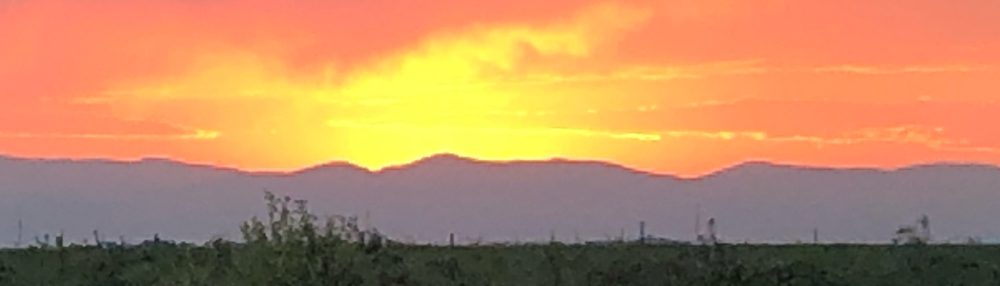
I want to share this wonderful quote from Jean Houston:
Resurrection is essentially a remembrance of one’s true nature and a waking up to this remembrance.
This Easter, may you wake up and remember who you really are.
Whew. I am going through a period in which I am feeling rather slammed — commuting several days a week 30 miles for a temp job, pet- and house-sitting, running errands after work, trying to do at least a couple of massages a week, and get in a little bit of fun and socializing. I’m squeezing time to get this post done! Oh, the life of a blogger….
I was talking with some friends over dinner last night, and the topic turned to trauma recovery. I want to write more about what that process involved for me.
I don’t believe that everyone else’s recovery process is like mine. Each person’s is different. Some might be shorter or longer, depending on the level of commitment to healing, the quality of help available, how much/how long ago/how suppressed, your self-discovery abilities, and your available time.
I did the majority of my processing over about two years, with the first nine months being most intense. The trauma happened when I was a child, occurred once, and was suppressed for many years. I had access to a psychotherapist for the first six months, and she was not a specialist in trauma recovery. I ended up doing a lot of work on my own using journaling and reflection and talking to people, and I did the most intense work during a three-month period when I was between jobs when I could put all my resources into it.
Of course, the healing process continues even now, but it’s on an as-needed basis.
Today recovery would be faster because the tools have gotten better and I know more now.
During that recovery period, trauma processing was my biggest commitment, besides working to put a roof over my head. Which was good, because trauma recovery requires self-absorption. I had neglected developing myself in this way for years, in hindsight, and I was motivated because I did not want to have PTSD. I was engaged in the recovery process, sometimes emotionally exhausted from putting the pieces back together. It was gratifying and satisfying inner work.
My social life was sporadic while processing. I benefitted greatly from the support of my friends and family, who were tolerant that I was actively involved in remembering and reframing my past. I am still deeply grateful for this. They put up with hearing me say “When Margaret was murdered…” a lot when the revelations were coming quickly and thickly, and only one person told me she was tired of hearing about it. Bless her heart.
I was not interested in dating and would not have considered it during this time. It never crossed my mind that a prospective partner would have been interested in me while I was integrating some emotionally gruesome memories, and if one had been, it would not have been a balanced, healthy relationship. I simply didn’t have the energy to put into a new relationship while I was actively recovering from trauma, and I needed more from others than I could give back.
After, yes. I was a lot juicier after!
During those two years, I accessed a lot of suppressed memories, brought them into consciousness, re-felt the emotions, and sorted these memories into some kind of coherent chronological order, which people traumatized as children often must do. I reframed my life.
I filled well over a dozen composition books with my journaling, including writing down the most vivid dreams I’ve ever had. Those dreams kept me on the path, told me I was moving in the right direction even though sometimes it was difficult. They promised me light at the end of the tunnel, and so it came to pass.
I learned how to tell my story and include not just the dissociated facts, but also my actual experience — what my tender young self saw, heard, and felt. Some of the “felt” part of my experience, and some of what I saw and heard, had been missing from my story before.
I read a lot about trauma recovery and PTSD. The most significant book was Waking the Tiger. I’ve written about this book several times. I understood for the first time that trauma affects the body and mind, the heart and spirit, that humans really are animals no matter how we try to elevate or distance ourselves above the other species, and recovery must include releasing energy blocks in the body as well as cognitive work, social/relational/emotional work, and spiritual work.
I’ve mentioned before that I spontaneously released the trauma from my body one day after reading most of the book.
During recovery, I gained perspective that I had not had before. My view of myself and my life became larger than it had ever been. I understood myself in a new way. I made more sense to me.
I remember sitting on my front porch, journaling and experiencing what I call “brain clicks”. The best way I can describe them is that I was remaking my map of the world, especially updating the parts that had stayed frozen from when I was 11. I literally felt something happen inside my head that was like reality clicking into place. Maybe it was me getting congruent.
I contacted people who’d known my family back then and listened to what they had to say. It was good to reconnect and get a bigger picture of how it affected them.
I planned and held a long-overdue celebration of my sister’s short life.
One of the most momentous days in my life was the day I learned the name of the murderer and that he (as of 2002) was living in Austin, not that far from where I’d lived for 10 years. We could have stood in line next to each other at the grocery store and never known our relationship.
I grew up that day. I developed compassion, not just for him, but for myself. Neither of us were any longer the people we were back then, me at 11, him at 15. I understood that he’s had to live with knowing his young self murdered a little girl for all these years and devastated her family. Not an easy burden to carry. I wish him peace.
All this makes it sound like I undertook a deliberate process. That would be wrong (except for the celebration). Traumatic memories began erupting, I went to therapy, got a diagnosis and a start on processing, and from then on, I just surrendered to the process. I couldn’t have stopped it if I had wanted to, and it was very compelling to have those great dreams, to recover lost memories (even if unpleasant) and know more of my story, to experience those brain clicks, and most of all, to become more and more present, once my past was in order.
When I committed to recovering from my childhood trauma, I made a commitment to my health, which is still in place.
It’s not that I’m the healthiest person around. I am fairly healthy, although I can still be triggered, especially when stressed and presented with an unexpected negative surprise. I am committed to move in the direction of health as best I can, making the happier, healthier choice when I know what that is. Happier does not always mean doing cartwheels, either. It can mean letting go, and it can mean allowing the big picture to unfold over immediate gratification.
I am not a great person but a human one. I feel stupid after I realize I’ve been triggered. Embarrassed. Foolish. You are not that person.
Sometimes I’m at a loss as to what to do, if anything. I just wait, listening and looking for a clear sign. Sometimes needing a lot of space does not mean total disconnection.
I send support to everyone who finds the courage to face themselves and rewrite their story in this way. It requires great valor. It’s truly a hero’s journey, and I recommend learning as much about the hero’s journey as you can, through books and film and reflection on your own journey. Joseph Campbell, Carol Pearson, and Stephen Gilligan provide enlightenment about this process.
You are the hero of your own life, and I honor your path and your courage.
Namaste.
Libby is playing at the Cactus Cafe on April 5, 2012. Here’s the link: http://cactuscafe.org/events/event/libby-kirkpatrick/
I’ve gotten comments and/or blog subscriptions from South Africa, Australia, England, and elsewhere overseas, and what overseas readers (and perhaps some in the U.S.) may not know is that my hometown of Austin, Texas, is well-known for music.
A national television show, Austin City Limits, is filmed here, and the city plays host to the Austin City Limits Music Festival each fall and the South by Southwest (SXSW) music festival in the spring. Austin’s official slogan is “Live Music Capital of the World.”
It’s a musicians’ town, and the music here is eclectic. I’m using this blog post to recommend a couple of CDs by local musicians. They are very different, but each one wakes you up in its own way and keeps on giving by offering enough variety and depth to keep it fresh on repeated listenings.
~~
When I first heard The Buzzard Has Landed by Loping Buzzard
View original post 550 more words
I loved this post from the blog Marc and Angel Hack Life: Practical Tips for Productive Living. Every single post on their blog is a list of tips that begins with a number.
Some of my favorite bits of this post, 12 Life Lessons Learned in 12 Years on the Road, are below:
What you do every day is what’s most important. – The difference between who you are and who you want to be, is what you do. You don’t have to be great to get started, but you do have to get started to be great.
You can’t always be agreeable. – That’s how people take advantage of you. You have to set boundaries. Don’t ever change just to impress someone. Change because it makes you a better person and leads you to a better future.
You DON’T want perfect people in your life. – Even though you probably sometimes get confused, you don’t really want your friends and lovers to be perfect. What you do want is people you can trust, who treat you right – people you can act silly with, who love being around you as much as you love being around them.
The truth is always the best choice. – Respect and trust are two of the easiest things in life to lose and the hardest to get back. Never make a big decision when you’re angry, and never make a big promise when you’re overjoyed. Never mess with someone’s feelings just because you’re unsure of yours.
Everyone’s story is more complicated than it seems. – Every passing face on the street represents a story every bit as compelling and complicated as yours. It’s not always the tears that measure a person’s pain, sometimes it’s the smile they fake. Not all scars show. Not all wounds heal by themselves. You usually can’t see the pain that someone feels. Don’t judge a person negatively for their past or feelings without a full understanding of their situation.
You are not alone in being alone. – To lose sleep worrying about a friend. To have trouble picking yourself up after someone lets you down. To feel like less because someone didn’t love you enough to stay. To be afraid to try something new for fear you’ll fail. None of this means you’re dysfunctional or crazy. It just means you’re human, and that you need a little time to right yourself. You are not alone.
Click the link above to read the whole post.
I’ve been asked to post this on my blog, and I am very happy to oblige.
NLP Practitioner training, offered by Best Resources/Texas Institute of NLP, begins this weekend, March 31-April 1, 2012. The training takes 16 days, on weekends only, ending in mid-August.
As a graduate, I get to make this special offer:
The first person who gets back to me with a “yes” can attend the first weekend for free. Please call me (512 507 4184) so I can get your name on the list of free guests.
Anyone else can attend the first weekend for only $100. Follow the link at the bottom of this post to register.
The entire tuition is $2,200 if paid in full by March 31. Payment plans are also available for $400 per month or $285 per training weekend, discounting the first weekend’s $100.
 NLP stands for Neuro-Linguistic Programming. It has been called the science of subjective experience, and it’s a super-duper set of people skills. (It’s also called “Now Let’s Play”.)
The training is part lecture/part demo and very interactive. You get to practice each skill taught during the training, and (usually) study groups form during the training.
Who can benefit from taking this training?
At the end of the training, you will have more behavioral choices, more emotional flexibility, better rapport skills, better negotiation skills, and more confidence in your choices and decisions.
You may make lifelong friends who become like a second family to you — I certainly have.
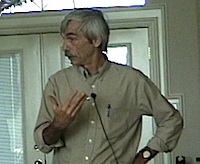 Tom Best has been offering NLP training for 26 years. He works in the U.S. and internationally, in South America, Europe, Hawaii, Bali, and elsewhere. He draws on his background in cultural anthropology and interest in shamanism. (NLP unveils the secrets of shamanism!) We’re very lucky to have him offer this training in Central Texas.
Trainer Keith Fail has been teaching NLP for 18 years, with a focus on technology businesses and now individual coaching.
NOTE: I’ve taken this training twice, once as a student and once as a training assistant/coach. Master Practitioner training will be offered in 2013. I highly recommend both.
Click this link to learn more and to register.
A few days ago, I finally started reading In an Unspoken Voice: How the Body Releases Trauma and Restores Goodness, by Peter A. Levine. This book comes full circle from Waking the Tiger, Levine’s first book, the book that changed my life.
It changed my life by giving me a new understanding of how trauma affects people and how to recover. Trauma is actually stored energetically in the body.
Levine, an ethologist, noticed the shaking that animals who narrowly missed being killed for dinner did, once free of their predators. That shaking allowed them to rejoin the herd not much worse for the wear.
When I read the book in 2002, I was skeptical but open. What Levine said was so different from what any other experts on trauma (psychotherapists) were saying.
One day, feeling exhausted from dealing with difficult emotions and memories, I flopped down on my bed and started to doze off. The next thing I knew, my body was moving spontaneously, and I knew from having read the description that I was releasing energy blocks from trauma.
In the new book, Levine describes his subjective experience of being hit by a car.
Importantly, he describes PTSD as not an illness but as an injury that can occur from war, rape, sexual abuse, assault, and the like, and also after surgery, serious illnesses, falls, abandonment, receiving shocking or tragic news, witnessing violence, and getting into car accidents. Major shocks to our sense of well-being, in other words.
Some excerpts from his experience:
I can’t figure out what has happened. How did I get here? Out of a swirling fog of confusion and disbelief, a crowd of people rushes toward me. They stop, aghast… Slowly I orient myself and identify the real attacker… A wide-eyed teenager bursts out. She stares at me in dazed horror. In a strange way, I both know and don’t know what has just happened… I sink back into hazy twilight. I find that I am unable to think clearly or to will myself awake from this nightmare.
A man rushes to my side… he announces himself as an off-duty paramedic. When I try to see where the voice is coming from, he sternly orders, “Don’t move your head.” The contradiction between his sharp command and what my body naturally wants — to turn toward his voice — frightens and stuns me into a sort of paralysis. My awareness strangely splits, and I experience an uncanny “dislocation.” It’s as if I’m floating above my body…
…I need to have someone’s comforting gaze, a lifeline to hold onto. But I’m too terrified to move and feel helplessly frozen.
…Finally, I manage to shape my words and speak. My voice is strained and tight. I ask him, both with my hands and words, “Please back off.” He complies.
After a few minutes, a woman unobtrusively inserts herself and quietly sits by my side. “I’m a doctor, a pediatrician,” she says. “Can I be of help?”
“Please just stay with me,” I reply. Her simple, kind face seems supportive and calmly concerned. She takes my hand in hers, and I squeeze it. She gently returns the gesture… I feel emotionally held by her encouraging presence. A trembling wave of release moves through me, and I take my first deep breath. Then a jagged shudder of terror passes through my body. Tears are now streaming from my eyes…
I am sucked down by a deep undertow of unfathomable regret. My body continues to shudder. Reality sets in.
In a little while, a softer trembling begins to replace the abrupt shudders. I feel alternating waves of fear and sorrow… I’m afraid of being swallowed up by the sorrow and hold onto the woman’s eyes. Her continued presence sustains me. As I feel less overwhelmed, my fear softens and begins to subside. I feel a flicker of hope, then a rolling wave of fiery rage. My body continues to shake and tremble. It is alternately icy cold and feverishly hot. A burning red fury erupts from deep within my belly.
I hear my shirt ripping. I am startled and again jump to the vantage point of an observer hovering above my sprawling body..The Good Samaritan paramedic reports that my pulse was 170… The paramedics are requesting a full trauma team. Alarm jolts me… As I am lifted into the ambulance, I close my eyes for the first time. A vague scent of the woman’s perfume and the look of her quiet, kind eyes longer. Again, I have that comforting feeling of being held by her presence.
Even though my eyes want to dart around, to survey the unfamiliar and foreboding environment, I consciously direct myself to go inward. I begin to take stock of my body sensations. This active focusing draws my attention to an intense, and uncomfortable, buzzing throughout my body.
…I notice a peculiar sensation in my left arm. I let this sensation come into the foreground of my consciousness and track the arm’s tension as it builds and builds. Gradually, I recognize that the arm wants to flex and move up. As this inner impulse toward movement develops, the back of my hand also wants to rotate. Ever so slightly, I sense it moving toward the left side of my face — as though to protect it against a blow. Suddenly, there passes before my eyes a fleeting image of the window of the beige car… I hear the momentary “chinging” thud of my left shoulder shattering the windshield. Then, unexpectedly, an enveloping sense of relief floods over me. I feel myself coming back into my body. The electric buzzing has retreated… I have the deeply reassuring sense that I am no longer frozen, that time has started to move forward, that I am awakening from the nightmare…
…I feel tremendous relief along with a deep sense of gratitude that my body did not betray me… As I continue to gently tremble, I sense a warm tingling wave along with an inner strength building up from deep within my body.
And it goes on. He gets the ambulance paramedic to tell him his vital signs: heart rate is 74, blood pressure 125/70. Normal. He knows from research that he won’t be getting PTSD.
Thank you, Peter Levine, for providing this fabulous first-person account of the subjective experience of someone who experienced trauma. The body and emotional awareness, the knowledge to tell the paramedic to back off, to receive comfort from the pediatrician, and mostly to allow his body to do what it needed to to — shake and make defensive movements and allow intense emotions to flow — is just brilliant.
I want to be able to witness another’s trauma and not be triggered myself.
Today I had a psychic reading. Have you ever done that?
In the past, I’ve worked with Richard Ungar many times. He does hand analysis and does not claim to be psychic, although he’s very intuitive. He’s been trying to bring the ancient art of palmistry into the realm of science (he founded the International Institute of Hand Analysis), and to that end, has utilized massive databases of finger- and hand-prints.
I’ve studied Richard’s book, Life Prints, and taken my friends’ and family members’ fingerprints, which I decoded for them. Very fun.

I highly recommend getting a reading with Richard if you ever have a chance.
I’ve also had astrological readings done. The last one was last summer. I’m happy to say that my Jupiter return, which occurs once every 12 years, begins at the end of this month, and I am so looking forward to moving into a period of expansion.
Today Joe Nicols, a long-time, well-known Austin palmist/psychic, read my hands in a 10-minute reading. I found what he had to say interesting and am considering going back to him for a full reading.
Joe wears a suit, and one of my companions was very impressed by that!
First, by looking at the backs of my hands, he said that I’d had an emotional disturbance recently. Yes.
He told me I’d been blind in a previous life, and that I’m very careful who I listen to. He said he was flattered that I was listening to him.
Huh. I do know that I am (often) more auditory than visual and that uncorrected, my vision is in the -9 to -10 range, extremely near-sighted. The pleasures of making eye contact were an adult revelation.
Over the past few years, I have gotten choosy about people’s voices. I’ve been disturbed by certain voices and distanced myself because hearing the person talk grated on my nerves. It’s partly their tone and partly hearing their mindless suffering.
I prefer to be around people who are careful with their speech, who really understand it as communication. People have interesting communication habits (including me, I’m sure). Some are predictable and straightforward, some deliver with a smile or laugh, and some bury what I consider important information and only later do I get it. Some withhold it.
I also like people who are emotionally sensitive — not just about what they hear but also about what they say. Insensitivity is alienating, and I say that as someone who knows she has responded to it in kind but who later regrets not calling the other on it when first received. Insensitivities tear at the fabric of trust, in my opinion.
I have a strong aversion to hearing bad news given badly. I like to be prepared for it and be offered emotional support.
These are just some things I’ve noticed about listening, partly from having bumped into someone whose communication style I sometimes found difficult and puzzling.
Joe told me that I’d been a healer for many, many lifetimes, doing healing of various types — as a doctor, midwife, and so on.
This makes sense to me. I can easily believe that I’ve met up with people I’ve known as fellow healers in previous lives, and they’ve drawn me back into healing work in this lifetime. I’m coming home.
He said I came into this lifetime ready to make a mark but that factors in my early life dampened that. True.
He said I have the mark of an athlete in my hands. That was surprising, but yep, if you consider yoga and dance athletic.
He also said that I could have done many things in this lifetime. He said I could have been an engineer, for instance. Hmm. Okay.
Joe also said I’d been a writer in many, many lifetimes, and that I was once a man who wrote with a quill pen!
Whoa. I wonder if I wrote standing up. I wonder if I wore a powdered wig. I wonder what I wrote! Wow! If I knew who I was in this previous life, I could look up my writing!
You could say that by blogging about wellness and practicing massage, I’m continuing two karmic traditions. Joe had no idea that that’s what I do.
Joe told me that I’m not materialistic and can’t be bought. Yep, I know that’s true.
Joe also spoke to me about having an aversion to being trapped, because I wear no jewelry on my hands. (I said, “But I’m a massage therapist. I don’t wear rings or bracelets when I’m working, so it’s easier not to wear them at all.” He replied that my conscious mind may understand it that way, but it’s deeper than that. Okay.)
Yes, of course I have an aversion to being trapped! Who wants to be trapped? I asked him what was wrong with that, and he made it sound like it was necessary to allow oneself to be trapped to be in a relationship.
Hmm. I still don’t like it. Surely there’s got to be a happy place of being in a relationship and not feeling trapped.
Joe then switched from reading my hands to reading cards. He had me shuffle an ordinary deck a few times and cut the cards. Then he laid them out in a spread to give me a reading on love.
He said I was entering a time of exploring new relationships, that I’m open to it and will learn from it, and in a couple of years I will be very drawn toward someone who is talkative, busy, and a mover and shaker.
That sounds good. May he be drawn to me as well.
I tagged a customer review of a book on Amazon because it moved me and I wanted to track comments on the review. It spoke to me.
(The book is In an Unspoken Voice: How the Body Releases Trauma and Restores Goodness by Peter A. Levine, author of Waking the Tiger, a book that changed my life.)
Fred wrote:
I agree with the comments about this book. I have the book and a couple of his other ones and I learned from them, they were my first knowledge of what trauma could do. I want to make a specific trauma comment and since the author has helped me alot what better place to do it!
At age 60 I am finally and only recently past the terror of early, continuous and prolonged childhood abuse because of the healing work I have done on my own. I recommend books and techniques from Alice Miller, Peter Levine (of course!), David Berceli, Babette Rothschild, EMDR, EFT, PARTS/EGO STATES work, NLP. I am a little leery about unsupervised guided imagery and meditation because they can be so close to dissociation, I sure did.
My comment is that with early abuse in whatever form the child has to create coping and defensive mechanisms to be able to survive mentally. These PARTs then prevent the child from growing naturally like all children should. As an adult these PARTS drew me to abusers and perpetuated actions which continued to retraumatize me. I didn’t know any better.
People who experience trauma as adults can use the techniques the author describes and those listed above to get back to normal. I have come to the awful realization that I have no NORMAL to go back to! My former desires and reasons for living no longer exist. They were based on avoiding reality, lessening the pain and terror, and plowing through dissociation to be able to function. While I don’t have the terror anymore I am still trauma parallyzed (Freeze, surrender) as I have been for most of these 6 decades and I don’t have the NORMAL interests and motivations which would help me get past that. “I” do not exist.
My hope from this review is that this Catch 22 can be added to trauma discussions. I don’t know what can be done to create a resource or if there are even more people like me out there.
I guess a correlary is to emphasize the need to help children who do experience trauma, as early as possible. (Another of the author’s books.)
Fred says there’s no normal to return to because of childhood abuse.
I ask Fred and others who have experienced long-term PTSD who don’t believe they have anything like a “normal” self to return to:
What if “normal” is an illusion? What if there is no normal?
Really, if your trauma began at age 1 or 11 or 21, the “returning to normal” is returning to how you were before the trauma began. What would it look like for a 60-year-old healing trauma victim to return to being a normal one year old? It doesn’t seem to work like that.
Perhaps “normal” is a concept that the mind desires that doesn’t really exist. Even for so-called “normal” people!
If that’s the case, then I say you get to determine what normal means for you.
Maybe normal means being a more present, heart-centered, resourceful person.
Maybe normal means finding what you believe you missed out on: a sense of worthiness, love, inner peace, trust, self-respect, and so on.
Maybe it’s having a strong connection to an enlightened witness. Maybe that enlightened witness is an inner part, Divine Essence, or another person.
Maybe normal is being a valued member of a community and building close relationships.
Maybe normal is being playful and having fun. Maybe it’s setting the boundaries you need to thrive.
Maybe normal is feeling centered in your body and having your energy flow freely, and learning how to return to that state when you become uncentered or blocked.
Maybe it’s wanting to experience the most joy, connection, sanity, and love — both giving and receiving — as you can and having a damn good reason for doing so. Living really well is the best revenge and the best healing you can possibly do.
Imagine that you fully and completely have the experience of being normal. What would that do for you ? Let’s hear it! “Then I’d be…”
And what would that do for you?
Take it as far as you can and enjoy experiencing that staate.
There’s a Zen phrase “unfaithful to my sorrows” that I use on my About me page. To me, it means that no matter what your sorrows are, or how many or deep they are, or how long you’ve had them, there are at least moments when you’re unfaithful to them — times when you forget them and notice something else. A rainbow. Some music. A dream image. A dust bunny. A release of tension.
We tend to believe we’re defined by our sorrows and traumas, but we’re not. We can let these non-sorrow moments become large.
Krishnamurti put it like this:
| What can be described is the known, and the freedom from the known can come into being only when there is a dying every day to the known, to the hurts, the flatteries, to all the images you have made, to all your experiences— dying every day so that the brain cells themselves become fresh, young, innocent. | 
|
My dear friend Keith Fail says it more simply,
We’re always bigger than we think we are.
Steve Silberman, science writer (whom I adore and follow on Twitter: @stevesilberman), has just posted a new piece on NeuroTribes: mind, science culture, one of my favorite blogs. It’s a Q&A with New York Times reporter Charles Duhigg on his new book The Power of Habit.
(And I must say that after the William J. Broad experience — “yoga is not only killing us but began as a Tantric sex cult”– it is sweet to learn of a Times reporter who’s really done his homework and offered something very valuable. Kudos, Charles Duhigg.)
Silberman lets us know up front how habitual we are.
Indeed, we spend more than 40 percent of our precious waking hours engaged in habitual actions [PDF], according to a 2006 study at Duke University. Welcome to the machine.
No wonder mindfulness has become something we seek. To connect with someone or something not out of habit, but out of something like our original self — that’s the stuff that peak experiences, connecting to the Source, the most alive life are made of.
It’s as if our brains store habitual behavior in a locked box to prevent tampering by the more mindful angels of our nature…
In his provocative and brilliantly written new book, The Power of Habit, Charles Duhigg … pries open the box with the help of recent research and finds surprising good news: Even the most thoughtless and self-destructive cycles of behavior can be changed, if you understand how habits are formed and stored in memory.
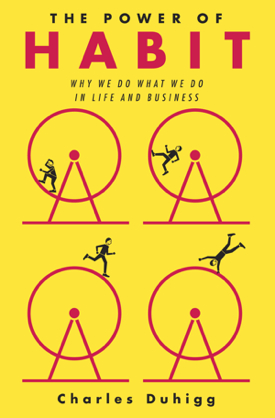
Duhigg breaks down the sequence of ritualized behavior (which he calls the habit loop) into three component parts: the cue, the routine, and the reward. The cue is the trigger that sets the sequence in motion…. The routine is the behavior itself, which can be positive (like a daily running habit) or harmful (like gambling away the family savings). And the third part is the reward — the goal of the behavioral loop, which your brain’s pleasure centers gauge to determine if a sequence of behavior is worth repeating and storing in a lockbox of habit….
Duhigg … maps out a more effective path toward enduring habit change that focuses not on trying to scrap the routine all at once, but on becoming aware of the cues and manipulating the rewards. The encouraging news is that success in making modest alterations in behavior (which Duhigg calls “small wins”) creates a ripple effect into other areas of your life….
We know from studies that almost all cues — the stimuli that elicit the habitual behavior — fall into one of five categories. It’s time of day, or a certain place, or a certain emotion, or the presence of certain people, or a preceding action that’s become habitual or ritualized….
Then you focus on the rewards. The first couple of times you go running, you’re not going to enjoy it. No one enjoys it the first time they run. So you have to give yourself a piece of chocolate when you get back from the run. You have to have some immediate reward. And we know from studies that within two weeks, the intrinsic reward of running — the endocannabinoids unleashed by exercising — are going to become enough of a reward to create that habit. But you have to trick your brain into it by giving yourself a piece of chocolate the first couple times….
If you want to start running every day, just start by putting on your running shoes at the same time every day. Then you’ll feel more like running. Then you’ll run!
If I want to meditate more regularly, I can tell myself that I just need to sit for 5 minutes each morning, or 2 minutes each evening. Once I actually sit for those small lengths of time, I’m much more likely to sit for 20 or 30 minutes.
These two guys then begin discussing the civil rights movement, the gay marriage movement, and more. To read the whole post, click here.
NPR has a good review of the book Imagine: How Creativity Works and an interview with the author, Jonah Lehrer, a writer about neuroscience.
Creativity and neuroscience — two topics that turn me on! So, oh boy, here are some excerpts I found interesting!
Lehrer defines creativity broadly, considering everything from the invention of masking tape to breakthroughs in mathematics; from memorable ad campaigns to Shakespearean tragedies. He finds that the conditions that favor creativity — our brains, our times, our buildings, our cities — are equally broad.
“I think one of the mistakes we’ve made in talking about creativity is we’ve assumed it’s a single verb — that when people are creative they’re just doing one particular kind of thinking. But looking at creativity from the perspective of the brain, we can see that creativity is actually a bundle of distinct mental processes.”
“… Whether you’re writing a Shakespearean tragedy, or trying to come up with a new graphic design or writing a piece of software, how we think about the problem should depend on the problem itself. Creativity is really a catch-all term for a variety of very different kinds of thinking.”
“The question becomes, what happens if you hit the wall? Because we’ve all got experience with this. You’re working on a creative problem, and then all of a sudden that feeling of progress disappears … What you should do then — when you hit the wall — is get away from your desk. Step away from the office. Take a long walk. Daydream. Find some way to relax. Get those alpha waves. Alpha waves are a signal in the brain that’s closely correlated with states of relaxation. And what scientists have found is that when people are relaxed, they’re much more likely to have those big ‘A ha!’ moments, those moments of insight where these seemingly impossible problems get solved.”
So get a massage if you’re blocked! It’ll help you relax, definitely take you into the alpha range, and probably into theta (toward sleep) for even deeper relaxation and access to even more resources.
“The brain is just an endless knot of connections. And a creative thought is simply … a network that’s connecting itself in a new way… There are all sorts of ways seemingly old ideas can get reassembled in a new way.”
You can read the whole article here. Click the link in the first sentence to order the book from Amazon.com.
 The Well: bodymindheartspirit