Cats really know how to relax and be flexible. Check this out:

And its mirror:

The full series is here. Enjoy!

Cats really know how to relax and be flexible. Check this out:
And its mirror:
The full series is here. Enjoy!
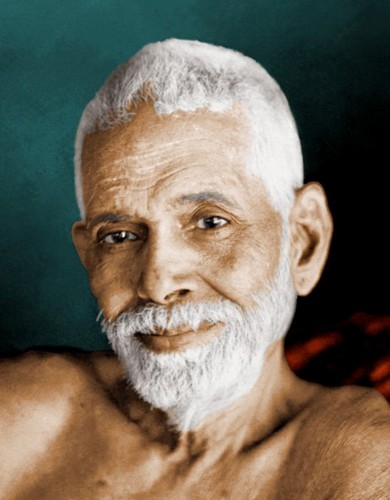
I so love this photograph of Ramana. I love to make eye contact with him. Those eyes exude pure love and peace. I fall right into them.
Who is looking?
After seeing someone being triggered by something I did, days of emotionally struggling with PTSD memories, processing all that it brought up (hopefully being of some use to someone somewhere), and being ill, here’s what I find in my inbox this morning:
When you finally get that call, meet that person, walk that walk, and live that dream, MaryAnn, do you think you’ll even care that there were a few dark and scary moments in a journey that made them all possible?
Trust me, you won’t even remember.
The Universe
Thanks, Universe. The percentage of time that you are right on target is amazing. Keep up the good work!
Occasionally people who have been traumatized have gravitated to me because I’m open about having experienced a serious trauma and (mostly) recovered, but they don’t seem to realize how deeply their past still affects them. They haven’t done any trauma recovery work, and they show up in my life.
I believe they show up because their unconscious is seeking healing. Or perhaps angels bring these people to me so they can see for themselves that recovery is possible. You know, I don’t mind being a role model for recovery from trauma. I’ve come a long way in 10 years. I’ve worked at it.
It’s not like traumatized people wear signs stating that. The sudden discovery that a new friend or love interest has been traumatized can create a huge amount of distress for me. Even though in hindsight, their craziness now makes more sense (“oh, of course that weird behavior was a trauma response”), it can still really be a shock.
So I just want to put this message out there:
If you’ve been traumatized and feel attracted to me because I’m open about having experienced trauma and having done a lot of work on my recovery, first of all, please tell me clearly and up front (or as soon as you realize) that you’ve been traumatized, emotionally abused, get triggered, have flashbacks or nightmares, are shell-shocked, or whatever history or symptoms are affecting you. There’s no shame in it — you didn’t ask for it. I’d rather know than not, and I just might be able to prevent you from making a big mess when your judgment isn’t very good. I will help you find help and support you emotionally — in a way that is healthy and not co-dependent.
If that’s what draws you to me, just own it. Do not be asking me out on dates and withholding information about your untreated trauma. That’s creepy, and the thing is, you can’t really hide a trauma in your history until you are healed. You may naively think you can, but it seriously disregulates your nervous system and makes it stuck in either dissociation or hyperarousal, sometimes both. Your trauma-related weird behavior will show up in your most intimate relationships sooner or later. Having untreated trauma is like having an elephant in your living room whose shit is piling up.
Secondly, if you’re not getting professional help, please do that — get professional help. And let me know that too, because I’m going to worry about you if you don’t, and I’d rather be happy than worried.
Please do not look to me to help you beyond being a friend and a cheerleader for your recovery work. I am a blogger who’s open about having experienced trauma and having done a lot of work on recovery. This blog (read About me, and do a search on PTSD or trauma to find related posts) describes some of my recovery experiences. Please feel free to ask me about them or try them yourself.
There is absolutely no need for you to just show me your wounds without any warning. Seeing you suddenly be triggered by your past trauma triggered painful memories of my long struggle of not knowing I had PTSD and then finding out, and then spending long months doing some intense processing, healing, and putting my life back together in a new, healthier way.
Your behavior freaked me out badly. It took acupuncture, herbs, and therapeutic assistance to start to get over it (at my expense, I might add, which you have ignored, which also makes me think less of you), and I really don’t trust you now.
After I witnessed your triggering and saw empathically how damaging your experience had been, it hit me hard. I emotionally dropped, rolled, and came up ready for combat. I was so ready to protect … someone … from something! And you had something to do with it.
Recovery from trauma doesn’t mean being bulletproof. It means being more embodied, emotionally present, and energetically open than before recovery, while still being an ordinary person who cannot read your mind. I have more compassion now and am more of a whole person, and I need to set clear boundaries to take care of myself.
It breaks my heart more than you can imagine that the innocent gesture I made triggered fear in you. It’s not anything I take casually or lightly. It’s emotionally disturbing to witness someone with their wires crossed, whose mind mistakes the present for the past, whose mind mistakes someone who has never traumatized them with someone who did.
I wish you’d told me as soon as you knew instead of showing me like that. That would have been important communication. You scared me, once again.
With help, you can heal your poor damaged nervous system and experience more peace and stability and aliveness in your life. I am recommending Somatic Experiencing Practitioners to people these days.
Please find your way to help. I wish you well.
So this is for everyone: if you know that I have had PTSD and you have had untreated trauma in your life, and you come around seeking a relationship, please tell me up front, do your own recovery work (I’ll be rooting for you), and get yourself in decent emotional and relational shape before you expect any intimacy from me, for both our sakes.
I look forward to talking with the healthy you.
Regular readers of this blog and anyone who has read the About me page knows that I have had PTSD and (mostly) recovered. I’m pretty open about it. I hate that there’s a stigma about having PTSD, or any mental illness, when no one asks for it in the first place. At this point in my life, openness has way more to recommend it than shame and secrecy.
It’s actually an injury that affects the whole bodymindheartspirit.
I also posted about PTSD in November, in Getting over trauma and moving on with your life: some core questions. That post focused on the desire to heal, knowing that you have PTSD.
I’ve posted a lot about the trauma releasing exercises, brainwave optimization, shaking medicine, and other topics related to recovering from trauma.
Recently something happened that triggered my memories of what it was like to have undiagnosed PTSD for a long time and the two years of my life that I spent intensely working on becoming whole and reclaiming myself after I was diagnosed. There were still some holes, but I did feel like I got on top of it enough to function fairly well and keep filling in the holes as my awareness of them arose.
This post is about figuring out whether you have PTSD, what it’s like to have it, and how it affects your relationships.
How do you know you have PTSD? There’s an official diagnosis in the Diagnostic and Statistical Manual of Mental Disorders (DSM-IV, for the current version), a book used by psychiatrists to diagnose mental illness. The official cause of PTSD is this:
PTSD always follows a traumatic event which causes intense fear and/or helplessness in an individual. Typically the symptoms develop shortly after the event, but may take years. The duration for symptoms is at least one month for this diagnosis.
I had thought that the definition included something about violence. The current definition does not. I was wrong about that.
If you’re not sure if what happened to you is considered trauma, here’s a definition of trauma:
an event that is life-threatening or that severely compromises the emotional well-being of an individual or causes intense fear
The common denominator is feeling intense fear. Aka terror or horror. Or “severely compromised emotional well-being.”
If you’re not sure whether you have PTSD, ask yourself whether and when you have experienced intense fear in response to traumatic events or whether something happened to you that severely compromised your emotional well-being.
Of course, sometimes traumatized people may not remember a trauma, which is tricky — in PTSD, the memories of the actual feelings associated with a traumatic event are often suppressed (because they were intensely scary the first time).
Timeline work can be helpful. If in reviewing your life, there’s any event that some would consider to be traumatic or severely compromising to their emotional well-being, even if you don’t remember the actual feeling, you might have PTSD. Read on.
Also, ask yourself whether and when you have experienced a sense of helplessness. When you experienced a traumatic event, did you freeze in terror?
If your answer to one or both of those questions is yes, then you don’t need a psychiatrist to know that you probably have PTSD. However, if you’re still not sure, you can judge by your behavior.
How does having PTSD affect your behavior? People who have been traumatized often have flashbacks, in which something in the present situation triggers an emotional reaction from a past traumatic event. For example, someone may innocuously point a finger at you, and you suddenly feel fear because seeing the pointing finger has triggered the memory of someone else pointing their finger at you while angrily heaping emotional abuse on you. Never mind that the current person is not heaping emotional abuse on you and is in fact startled that their innocent finger has made you feel so visibly afraid.
Your past has kidnapped you emotionally.
I only had one flashback similar to that. The main type of flashback or time distortion that I experienced was regressing back to the age I was when my childhood trauma occurred. Sometimes social situations would make me feel like a child amongst grownups. Mostly I was quiet, but sometimes I would say inappropriately childish, immature things.
I could be talking to someone as a mature woman, and suddenly I became an awkward child again. I didn’t realize I was regressing for a long time. I just thought I was socially awkward. But the age I regressed to was usually 11 years old.
I have so loved that traumatized 11-year-old child, hugged, soothed, and comforted her for all the incomprehensible events she experienced, that she feels integrated and doesn’t pop out like that much any more. When people are baffling to me now, I note it, but it usually doesn’t send me back into childhood any more.
With PTSD, you may also have nightmares. I had them for years. Something terrifying was chasing me, and I couldn’t run fast enough, and I awoke feeling intense fear.
The last such dream related to my original trauma was about 10 years ago, when feeling on high alert, I clearly told a serial killer to put the huge sharp scissors down. By confronting him, I had overcome my helplessness.
In fact, a lot of my recovery was about overcoming helplessness. I imagined riding to my sister’s rescue — on a white horse — and blowing away the killer. It didn’t change the past, but it changed the way my nervous system processed that memory so that I felt empowered.
You may live your life avoiding situations, people, and/or objects that remind you about the event, such as avoiding driving after a serious car accident or avoiding someone who who emotionally abused you or who even just reminds you of them.
Another form of avoidance is that you may experience emotional numbness, which is a way of avoiding yourself. Trauma can make people want to isolate themselves. If you inexplicably regressed when socializing, or got triggered, wouldn’t you want to hide? I spent years of my adult life just working, raising my daughter, going to grad school, and being depressed with no social life to speak of.
Your anxiety levels are higher in general, and you may have a heightened startle response, jumping when you hear a sudden loud noise. (I still do this.) You may have insomnia, trouble concentrating, irritability, anger, hyperarousal.
In my opinion, people can experience anxiety, avoidance, and nightmares without necessarily having PTSD, but having flashbacks is unique to PTSD, as far as I know. If anyone knows different, please comment.
How does PTSD affect relationships? PTSD affects the relationships you value most — intimate relationships, with family, lovers, and close friends. You may be difficult to get close to. You may fear closeness and decide to move on when someone is becoming close, or others may distance themselves from you if you shut down emotionally.
You may have difficulty listening and making cooperative decisions. You may carry a sense of betrayal or grievance into nonabusive relationships. You may be blaming, punitive, passive aggressive, dissociative, cold, insensitive, insulting, under- or overreactive emotionally, and behave in other ways that make you a difficult, frightening, or unpleasant person to relate to. Working out problems may seem impossible.
If you have it, I’m sorry for the suffering you’ve experienced. Really truly sorry you suffered in the first place, and that it continues. Finding out you have PTSD is not fun, but at least you have an explanation for your baffling behavior and can start your journey toward health.
I can only advise you that once you suspect you have it, get counseling as soon as possible. Get counseling as if your life depends on it, because the quality of every day of the rest of your life and the quality of your most valued relationships actually does. Go to the best counselor you can find.
I also recommend brain wave optimization to normalize your brain waves after trauma.
The post-PTSD life, the joy, the friendships and close relationships that await you, the presence, the freedom — I cannot tell you how good life can be.
Go for it. You’re worth it.
How To Break Free From Being Stuck Altucher Confidential.
James Altucher is one of my blogging heroes. He’s fun, keeps it alive, is a great writer.
Click the link to read his advice on getting unstuck.
Reiki today, a thermal palms massage (with oatmeal!) tomorrow, acro-yoga this weekend…life is good. And unstuck.
Ha ha, now the same New York Times writer so focused on how yoga is injuring and killing people has written a new article in which he says that yoga fans the sexual flames, with its roots in Tantric sex cults!!!
William J. Broad writes:
Why does yoga produce so many philanderers? And why do the resulting uproars leave so many people shocked and distraught?
How does he get away with saying that yoga produces “so many” philanderers? I don’t see any data. It’s certainly not as if the majority of philanderers are yogis. A handful of anecdotal examples does not prove his case.
Um, I believe fundamental and evangelical churches have produced way more philanderers per capita than yoga has. Not to mention the U.S. government — from the presidency on down! But I guess those are old headlines. And I don’t have any data either. Does anyone have data on philandering?
And…doesn’t philandering usually end up creating uproars that leave people shocked and distraught no matter what field they occur in?
William J. Broad is riding the Anusara/John Friend scandal to capitalize on the popularity of yoga and sell more of his books. If the New York Times called him “practitioner of make-a-buck sensational journalism whose claim to scientific credibility is undermined every time he confuses causation with correlation” instead of “senior science writer,” well, that would seem to be more accurate.
I cannot wait to read what the awesome Leslie Kaminoff has to say about this article! I will post it here when he puts up another video. Leslie has been a great counterpoint to William J. Broad, with way more credibility in the yoga world, and a voice of reason, common sense, and insight among the recent uproars about yoga. Leslie, write a book! See my recent post of his video about his yoga teacher Desikachar, son of the founder of modern yoga.
My take on it? Yoga improves health, and being healthy means being alive, vibrant, and responsive. That can certainly translate to sexy! Who isn’t attracted to people with those qualities?
And, a lot of activities improve health and libido, not just yoga. Running, biking, swimming, playing basketball, dancing zumba, and many, many more.
I also believe that yoga does more than just improve health — the asanas unblock meridians, allowing life-force energy (chi, prana) to flow more freely throughout the body.
Ask anyone who’s had regular acupuncture for years if it’s improved their health, energy levels, and life force/vibrancy/libido, and they will tell you it has made a big difference. Same deal, no yoga.
And, over time and without needles, yoga does the same thing. And not just yoga. Gymnastics, acrobatics, acro-yoga, Pilates, martial arts, tai chi, chi gong, and several types of dance place the body in unusual postures or movements that increase flexibility, build strength and endurance, and require focused awareness. They train the bodymind to be healthier, to function better. Of course that affects sexuality. Health and sexuality are intimate partners.
This has been known for a long time.
Broad totally did not mention that one of the yamas (ethical guidelines) in the Yoga Sutras of Patanjali is brahmacharya, or nonexcess.
In the commentaries on the sutras, brahmacharya is applied specifically to sexual behavior and refers to chastity or even celibacy among advanced spiritual aspirants. Brahmacharya means refraining from sex except in committed relationships, and in that context, engaging in sex in moderation to develop a true spiritual partnership.
The yamas are required reading and discussion in yoga teacher training. And to put that in context, we live in America, which is a hypersexual culture. The porn industry is huge, and sex sells.
I imagine that the majority of people with a serious yoga practice do not misbehave sexually. Those who do, well, it’s more about power or addiction or lack of healthy role models than it is about the yoga.
Broad does share information about science’s interest in yoga and sex. I am not surprised by any of it. He’s fixated on yoga and sex; I’d like to see similar studies on martial arts and sex, and on yoga and the bonding hormone oxytocin.
And by the way, meditation (aka doing nothing) can promote sexual arousal. So can simply relaxing.
In Russia and India, scientists have measured sharp rises in testosterone — a main hormone of sexual arousal in both men and women. Czech scientists working with electroencephalographs have shown how poses can result in bursts of brainwaves indistinguishable from those of lovers. More recently, scientists at the University of British Columbia have documented how fast breathing — done in many yoga classes — can increase blood flow through the genitals. The effect was found to be strong enough to promote sexual arousal not only in healthy individuals but among those with diminished libidos.
In India, recent clinical studies have shown that men and women who take up yoga report wide improvements in their sex lives, including enhanced feelings of pleasure and satisfaction as well as emotional closeness with partners.
So yoga enhances sex. No surprise there, and what’s wrong with that, as long as people are conscious about behaving responsibly with it? Yoga also enhances health, fitness, longevity, equanimity, awareness, and compassion. No data, just my experience.
See Yoga and Sex Scandals: No Surprise Here to read the full article.
I’m loving this page by Antero Alli on relating to the muses. Whether you’re a creative, an artist, or a creative artist, you have a relationship with Muses.
The idea (and the experience) of “the Muse” and “the Muses” has vexed, haunted, and inspired the lives and works of artists, poets, musicians, book authors, painters, sculptors, and creatives for eons. Though many myths and concepts swirl around the enigmatic Muses archetype, nothing seems to accurately describe or explain the ineffable phenomena beyond its impact on the human vessels giving expression to its manifest creations.
I want to share what he wrote about the gifts of tragedy:
Around my fortieth birthday, in November 1992, the Muses struck me blind with a different kind of vision forcing a shift from theatre to cinema…, a process that continues to this day. This turning point followed the unexpected death of my second daughter — an unfathomable, devastating loss by any standards. As with many great losses, there sometimes come unexpected gifts. Through the grief and horror of losing my child came an unusual gift that kept on giving. A strange vision, a way of seeing The Tragic in life as the long sunset shadow cast by The Magic in life.
I could not see that connection in my own life for many years, but I am aware of it now, of receiving gifts from tragedy.
I am not an “artist,” but I’ve been touched by muses, angels, spirits. My product isn’t a thing you can touch or hear or see. My product is my self, or, as Antero puts it,
The payoff is realizing my purpose.
Healing is my purpose, healing is my product, healing transforms the tragic into the magic. Healing is as much art as science. And it’s a mystery as to who is healed and who is healer at any given time.
Like Antero, to invite the muses back, I make this note to myself:
Without gratitude, I am fucked.
Click here to read Random Notes on the Muses Dialogue.
Here’s an elegant response from yoga teacher/anatomist Leslie Kaminoff, whom I studied with in January, to the recent yoga scandal involving John Friend and Anusara Yoga.
I’ve watched the headlines about the exodus of senior teachers and the revelations about Friend’s flaws with a measure of detachment. The headlines say enough — no details are needed.
This is an old story that often happens when power goes to a leader’s head, who is usually male. It’s the story of the flawed guru, the untrustworthy leader, the downfall of the powerful. It’s an archetypal story about human nature and usually involves sex and/or money, and sometimes substance abuse, and always, trust, betrayal, and loss of reputation.
It doesn’t have to happen. People are people. Attraction happens…and it takes self-aware teachers who are mindful of others and themselves and have enough personal resources to draw on to keep the trust given them, to notice when it/they may be slipping, to maintain the integrity of their teaching program.
It is part of the challenge of taking that path. The teacher is also the teaching.
If you want to catch up on what happened, check out WellandGood‘s coverage.
Disclosure: I take an Anusara class each week, and I love it and my Anusara-inspired teacher who has worked so hard for years to understand and teach yoga well and keep us safe and growing.
In my opinion, the quality of the yoga being taught includes the integrity of the teacher as well as the skill and knowledge. JF, as the founder of Anusara Yoga, did not have had much influence on me except in the body of work he created, and my teacher, who took classes from him and other Anusara teachers.
Anusara is good yoga, and I hope Anusara will still stand as an offering in the yoga world.
I’ve been lucky to have had some skilled, righteous yoga teachers whom I have trusted.
My respect for Leslie Kaminoff only increases. He talks about the suffering that occurs when a group gathers around a teacher whose human frailties prevent him from living up to the task he has been trusted with. (Yes, it’s usually men, but men hold more positions of power than women. And…the women involved made choices too.)
He relates how his teacher, Desikachar, who created Viniyoga, then decided to dissolve it because he was uncomfortable with the idea of branding. He found certification (which includes some standardization) to be antithetical to the traditional teacher/student relationship found in Indian yoga.
Desikachar resisted every opportunity to become a guru. He based his interactions with his students on his faith that the students could come up with the answers for themselves. He allowed them to struggle instead of giving them easy answers.
Today I had three dance experiences, which made it a wonderfully memorable day.
There is a shortcut to ecstasy. It’s called dance. ~ Gabrielle Roth
I am in love with Ecstatic Dance Austin, feeling so grateful that I have two hours every Sunday morning as an outlet for my energy, movement, physicality, playfulness, experimentation, and connection.
Today it occurred to me that if I didn’t have this, I’d curl up in a ball and die, or at least be really depressed. When I’m struggling over relationships, finances, work, decisions, politics, life, this is a place where I can give all that heaviness over to Spirit and just move, feel, connect, play, and be present. Life becomes a dance.
It is joy to walk into a big dance studio with a great sound system playing the kind of music that invites movement. I move out onto the floor. I begin moving.
Because there’s no talking, I connect with people using eye contact, smiles, and sometimes hugs. Sometimes I create my own space by closing my eyes and dancing.
I smile a lot because I feel so radiant and happy. There’s joy in the present moment, of course. My more personal joy is that I’ve worked on my health for years with bodywork, yoga, and a clean diet, and I feel great. My stamina is good — I stay moving, even through the burning fire of dancing all-out chaos. My creativity is good — there’s no end to discovering rewarding movements that morph into new grooves. My capacity for living and dancing from joy is good — although I have moments when heavy thoughts arise in my awareness during dance, I can move through them and return to joy.
I find ecstatic dance to be a great healing antidote. If I’m suffering relationship woes, I can dance with men who appreciate me, move with me, play with me, honor me. They don’t know my story, and I don’t know theirs. We just dance. A couple of dances can restore my sense of being valued as a woman by the other sex.
And for days when I’m fed up with male egos, I can have playful, fun dances with women.
And of course, I can have dances with men or women, or men and women, any time for no reason at all except that we’re together in the studio, there’s some great music playing, and we share the joy.
The physicality of it, the improvisational nature of ecstatic dance, the freedom and goodness I feel in my body, the wave of rhythms that peaks somewhere in the middle just clear me out until nothing is left but sweat, breath, and oneness.
Afterward we sit or lie spent in a big circle on the floor and give ourselves a couple of minutes of silence. We say names. We have announcements. We mingle and leave.
Dance, dance, otherwise we are lost. ~ Pina Bausch
Pina, the film written, directed, and produced by Wim Wenders (Wings of Desire, Buena Vista Social Club), is showing at the Violet Crown in downtown Austin. The film has been nominated for Best Documentary for the Academy Awards. (Click the link to view the awesome trailer.)
Pina Bausch worked with Tanztheater Wuppertal in Berlin from 1973 until her sudden death in 2009. Rather than being a biographical documentary, Pina shows her choreographic work and the dancers who danced her work speaking about her.
Here’s a clip (it’s in 3D, by the way — first dance film in 3D, that I know of — thanks, Wim Wenders!):
And here’s another:
And another:
She painted with dancers, movement, costumes. Her dances are not ecstatic dance — they are choreographed — but from what I could tell, she started with improvisation, asking for instance for a dancer to show her joy. Although some of the dance is highly structured, it retains its aliveness.
The film is a revelation — about life, love, pain, loneliness, longing. And creativity and playfulness.
WIM WENDERS ABOUT PINA BAUSCH
No, there was no hurricane that swept across the stage,
there were just … people performing
who moved differently then I knew
and who moved me as I had never been moved before.
After only a few moments I had a lump in my throat,
and after a few minutes of unbelieving amazement
I simply let go of my feelings
and cried unrestrainedly.
This had never happened to me before…
maybe in life, sometimes in the cinema,
but not when watching a rehearsed production,
let alone choreography.
This was not theatre, nor pantomime,
nor ballet and not at all opera.
Pina is, as you know,
the creator of a new art.
Dance theatre.
I loved seeing the dances, dancers, costumes, settings. This film inspires me. I want colorful, flowing, sexy evening gowns to dance in. I want to play with movement, to experiment, to have fun.
I can trust my friends. These people force me to examine, encourage me to grow. ~ Cher
Peggy is a dancer and choreographer and a dear friend of mine for years. Having just seen the film and danced our way out of the theater, we walked around Town Lake incorporating playful movements — stepping stylishly between two trees, walking on benches, doing asana on bridges, mimicking the arm gestures we saw in the film, striking poses, waving arms, adding twirls and hops into our walk.
We made our walk into a dance, and you know I’m such a sucker for dancing in unlikely places. The hike and bike trail is as good a place as any, maybe better than most.
It was a beautiful cloudy cool winter afternoon, and people were out enjoying themselves on the trail, walking, running, biking. Our play gave them a little extra enjoyment. People can be so serious, it’s like an illness. We put smiles on their faces.
As we played, we talked about creating dances. We shared some hilarious, outrageous, fun, engaging ideas for dances.
I hope we do them. I’m moved!
 The Well: bodymindheartspirit