Now just relax and read this blog post about how people know when they’re stressed

I’ve thought a lot about the topic of relaxation and its evil twin, stress. I’ve had good reason to. I’ve had a stress disorder, I’ve had stressful jobs, and I’ve lost colleagues to illnesses exacerbated by stress.

Still haven’t found the original citation of the oft-seen statistic that 90 percent of doctor visits are stress-related…

I asked a question on Facebook:

How do you know when you’re stressed?

Here are some answers. Please feel free to comment with your answer. I’m seriously interested in this topic and wanting to aim my right livelihood at helping people become more relaxed.

  • Either I feel very tired, or my ears lay back like a dog’s or cat’s.
  • I get snappy.
  • I second the snappy.
  • Everything is bunched up between my shoulders and neck…and often, I get a headache or cranky or both!
  • I have headaches and fogginess in my eys, drowsiness and anxiousness in my belly. I fluctuate between giggles and frustration.
  • Sometimes I get a small eye twitch. It’s a signal to slow down and let go of things on my to do list. My experience is that as I’ve responded to my stress signals earlier and earlier over time (instead of waiting until they’re completely debilitating — like a migraine), the signals have gotten smaller and smaller.
  • When heavily stressed: Catch myself holding my breath, get obsessively task focused, drawn to eat lots of chocolate. When super stressed I get a little anxious which manifests in my mind generating risks and possible bad outcomes at every turn (e.g., while driving, the idea of someone running into my car will flash for me). I’m quick to recognize that as a sign of stress.
  • Question might be: How do you know when you are more stressed than usual?  🙂 My back gets tired. Lower and upper left shoulder.
  • as if i’m ever not stressed?! ha ha ha, that’s a good’n, mary ann! ha ha ha ha ha!

I notice that some of these are felt in the body (fatigue, tightness, headache, holding the breath), some are felt more as emotions (anxiety, frustration), and some are behavioral (snappy, cranky, giggles, drawn to chocolate, obsessively task focused).

There’s so much more I want to know, such as how you know that you’re not stressed? (Apparently some people never feel unstressed.) Then what do you do to de-stress or lower your stress level once your realize you are stressed?

Poetry, reciprocity, feeling absolutely useless and enjoying it

I used to post poems I liked to this blog, but I stopped a while back and removed them (well, all except for Shoveling Snow with Buddha by Billy Collins, widely available online).

By the way, Shoveling Snow with Buddha is a wonderful poem to read in August when it’s over 100 degrees. Just saying.

The major reason is that poets are often impoverished and yet the best ones give us the beautiful gifts of lifting spirits and expanding worldviews, maybe shifting our  identities for the better, touching our hearts and souls.

Somehow they manage to use words, which are a left-brain tool, to convey right-brain experiences of intuition, wonder, and new associations.

Every poem available online is also available in a book, and when you buy a book of poems, the poet makes money. They don’t make money from having their poems published online.

Buying a book of poems reciprocates the poet for his or her talent, sweat, and generosity. They need to eat too. (I think Billy Collins is doing pretty well, though, and I have bought a handful of his books. Billy, if you disagree, please let me know.)

I still subscribe to Panhala, which sends me a daily email with a poem in it. Each poem includes the poet’s name and the printed source — so you can buy the book or find it in a library, if you choose.

I have a hunch that Panhala, even though it posts poems for free, probably steers more people to poetry in general, to particular poets, and to buying poetry books than anything else online. Joe Riley does it as a labor of love. No advertising, just poems, photos, and music.

Today’s Panhala poem makes me want to make an exception to my rule. It’s by David Ignatow, is titled For Yaedi, and is from New and Collected Poems, 1970-1985.

It’s a short poem, and I’m going to only quote part of it.

…When I die
I want it to be said that I wasted
hours in feeling absolutely useless
and enjoyed it, sensing my life
more strongly than when I worked at it.

Thank you, David Ignatow. Thank you for that poem. I love that sentiment. I find myself longing for some hours to waste. I’m so used to being productive, to forging ahead, to getting things done.

My shoulders tight, especially my right shoulder, which seems to be where that forging ahead energy resides in my body. 

I got my grades in massage school, and I’m doing so ridiculously well that I realized I could afford to slack off a little. I stayed home half a day, turned in an assignment a day late, and made 80 on a quiz. So there.

Thoughts have been swirling about finishing the work on the trailer, big expenses coming up (tuition, car repairs or replacement, finishing the next four months of massage school), dwindling savings, finding work, and this intensely hot drought that seems to be unending.

I am going to set aside several hours tomorrow to waste while I sense my life strongly. Maybe a little shaking medicine, sitting, breathing, yoga, toning, journaling, walking — no, wait, that’s useful. I’m going for useless.

Hmm.

I think tomorrow is the day to let my feet lead me. They’re already telling me they plan to take me to Barton Springs.

My hunch is that I will probably have more resources to draw on to solve my problems after taking a useless day than I would have if I had a useful day.

I’ll post the outcome on Monday.

The Five Tibetans plus one

My training to become a massage therapist includes training my own body. We practice and are graded on our own biomechanics when delivering massage. After just a few weeks (and considering there are students who are right out of high school and from very conventional backgrounds), the teachers are beginning to convey that massage therapists transmit their own health and well-being through their hands — the energetic connection.

Just this past week, my class’ primary practical massage teacher, Cindy Anderson, introduced us to the Five Tibetans.

I’ve encountered this series of exercises before, years ago. Cindy says we will be doing them regularly and that past students often thank her for teaching them — and tell of practicing them on mountaintops and other unusual places!

Curious Mind here googled “Five Tibetans” to learn more (especially to learn that they may not always be taught well on videos), and then headed over to Wikipedia to read about them.

Highlights: The Five Tibetan Rites are reputed to be at least 2,500 years old. The origins are unknown. They predate modern yoga (asana). Some of the exercises bear some similarity to certain asanas, so perhaps they influenced yogasana. Who knows?

They are done in order as a vinyasa (flowing sequence) and are said to stimulate the chakras. Many other claims have been made as well — they are a fountain of youth, reversing the aging process, and such. I think you can safely say they build strength, flexibility, and balance, and they will give you more energy.

You start by doing a small number of repetitions — 1, 3, or 7, depending on your comfort and ability level, but no more to start. You add repetitions slowly until you can do 21 of each. Add repetitions so slowly that you do not feel sore the next day. Never do more than 21. (Although apparently some yoga geeks do 108 of each! Make up a rule that works for you, is what I say.)

The Wikipedia description is good, including that you stand erect and take two deep breath cycles between each. Cindy has us exhale through rounded lips with eyes open wide.

There’s a whole blog about them: The Five Tibetans — Expert Advice, Support, and Information. It offers free downloads of the original English description of the exercises, posters of the exercises and warm-ups (should you need them), and a PDF showing 7 undulations to relieve office tension that will be helpful to readers with desk jobs who are concerned about their health.

The blog is connected to a website that offers DVDs showing you how to do the exercises and even Five Tibetans teacher training.

However, if you just want to see them, here’s a pretty good animated description.

If you do them for the first time from reading this blog, and if you don’t already have a regular yoga practice, please please please do each one very slowly and mindfully, tuning into what’s happening in your body, and never go beyond what’s comfortable for you. Be very gentle, especially with your neck and back.  Be mindful and err on the side of caution!

If you are not in shape, please download the warm-up exercises mentioned above and do them first.

Right now, I think of them as an alternative to a morning sun salutation — and that’s just where I’m coming from now. Both sun salutations and the Five Tibetans build strength and flexibility. They work the major muscles and joints of the body. They are fun to do, as well, at least for me. I’ll mix them in with my daily sun salutations, and perhaps later I’ll write a post about what I like about each practice.

The sixth Tibetan rite is a breathing practice. It is not usually taught in the US (our culture tends to frown on celibacy) but is recommended only for those living a monastic or committed celibate life. Wikipedia included a brief description and a link here. You do this exercise only to transfer the energy of the sexual urge up into the spiritual centers of the body.

Thinking heats the brain up — cooling it aids sleep

Saw a fascinating new finding in Time that cooling the brain helps insomniacs sleep.

That run-away monkey mind — doing frontal lobe activity such as planning — can keep people awake at night.

A psychiatrist was curious if this brain activity generated heat, and if so, if that was making sleep more difficult.

The body’s circadian clock, which regulates sleep and wakefulness, keeps the body at its warmest during the day and starts to lower body temperature in the evening to help us doze off. For those with insomnia, however, researchers found that the extra brain activity was keeping the brain too hot to sleep.

When Buysse’s group gave 12 insomniacs a cap to wear that contained circulating water at cool temperatures, they were able to get them to fall asleep almost as easily as people without sleep disorders: using the caps, the insomniacs took about 13 minutes to fall asleep, compared with 16 minutes for the healthy controls, and they slept for 89% of the time they were in bed, which was similar to the amount of time the controls spent asleep.

The article did not mention the possibility of training insomniacs to manage their minds. I mean, a person can pay attention to their inner dialogue (i.e., think), or they can  focus their attention on their breathing. It’s hard to do both at the same time. When attention wanders (usually to become literally “lost in thought,” as soon as you become aware that you’re thinking, bring your attention back to the breath. (Okay, so this is Meditation 101.)

The article didn’t mention that yawning cools the brain. This article suggests you can cool the forehead to stop yawning (and I presume, cool the brain and fall asleep). You know, get a gel-filled ice pack out of the freezer, wrap it in a towel, and put it across your forehead.

Inhaling through a rounded or “O” mouth and exhaling through the nose could be helpful as well. (Thanks to Susan Gobin for suggesting that on Facebook!)

Still, it might be nice to have one of those cooling caps to put on!

Tips to counteract a sedentary job

If you have a desk job that requires a lot of sitting and you’re concerned about the health risks now being associated with prolonged sitting, here are some things you can do that require no expense:

  • Use a timer to remind you to stand up and stretch and walk around every 30 or 60 minutes. Google “timer” to find a virtual timer you like. Aim for a few minutes of non-sitting movement every hour.
  • Find ways to walk more: Place your phone away from your desk, so you have to stand up and walk to it to make or answer calls. Use a small cup for your drinking water or beverage of choice (or fill your regular cup partway), and when it’s empty, get up to refill it. Don’t use the restroom that’s closest to your office — walk to a more distant one. Instead of emailing colleagues, walk to their offices to talk, when feasible.
  • Breathe fully and deeply, using your abdomen, moving your ribs front, sides, and back. Do 5 of these breaths, then return to normal breathing.
  • Take a yoga class on your lunch hour. Or do desk yoga (Google “rodney yee 4 minute”  to see videos of Rodney Yee doing seated sequences). You can evendo cat-cow ever so often while sitting: curl your spine forward and back a few times, exhaling when you curl forward, inhaling when you arch your back.
  • Close your door or put on your headphones, turn on your iPod or a music video, and dance!
  • Fidget and wiggle. Especially move your legs.

When you’re not at work, avoid sitting as much as you can:

  • If you drive to work and your car has no lumbar support, place two tennis balls inside a piece of pantyhose with a knot in the middle and at the ends. Put it behind your lumbar vertebrae and press into it as you drive. It will feel great — and you’ll know when you’ve had enough.
  • If you watch television in the evenings or on weekends, stand, use your treadmill, or bounce on an exercise ball while watching. If you sit, get up and move during commercials.
Sit on an exercise ball at work instead of a desk chair. It strengthens your core, improves balance, improves flexibility, burns more calories, and requires you to use your legs. You can get them for under $20. Get a 75 cm for the most height. 

All of these tips can make a difference, helping to lower blood sugar, triglycerides, cholesterol, and waist size; improve posture, breathing, and metabolism; and decrease back pain.

“If there’s a fountain of youth, it is probably physical activity,” says Yancey, noting that research has shown benefits to every organ system in the body.

Next: standing desks.

My experience with brainwave optimization

Last week I did brainwave optimization, aka brain training, at NeuroBeginnings.  I did the baseline assessment in May and wrote about it here. It’s an astounding new technology with huge potential to alleviate suffering and help people’s brains function optimally without spending a minor (or major) fortune on health care.

Gigi Turner, owner of NeuroBeginnings, likes to schedule the training to start within two weeks of the initial assessment, but we had to work around finishing my 3M contract, which was hard to pin down. You need a full week as free of demands as possible so you can integrate the brain training. It’s a wonderful activity for a vacation (or stay-cation if you live in Austin). 

By the way, Gigi is hard-working, personable, and adorable. She’s easy to relate to, and you know she’s working for your best interests. She’s a woman after my own heart, fascinated with the brain and its workings, making the world a better place one brain at a time.

I did two sessions per day, Monday through Friday, one at 9 am and another at 12:30 pm, each lasting about an hour and forty-five minutes.

Between the morning and afternoon sessions, I hung out at the Zilker Botanical Gardens or walked along Barton Creek. It felt great to move after being still, and being outdoors in scenic nature was refreshing. I’d get lunch at the Daily Juice or Whole Foods, something light and very healthy.

During each session, I sat in a special recliner and either watched a computer monitor or just relaxed doing nothing. Gigi attached electrodes to my head and moved them to various places — frontal, temporal, parietal, and occipital lobes.

There were several exercises I did in every session: sitting and watching a bar move to a lower position,  reclining with the lights off and relaxing deeply, imagining/remembering an activity that uses all the senses, and visualizing a guided meditation.

During all the exercises, I heard musical notes playing. Gigi said you actually want them to stay in the background and not think about it too much. They are random notes, not playing a tune, not rhythmic, not even music — just random notes. There are a variety of musical sounds. You might hear the random notes played on a guitar, xylophone, steel drum, bells, or piano.

I am a thinker. I have a very active mind, and I’m gaining facility in switching from that active, inquiring, analytical state to more relaxed states.

I noticed that I liked it when a lot of notes played fairly densely, and I didn’t like it when one note played over and over, or when there was a long silence. I wanted the “music” to be pleasing to my ears.

A couple of times I would recognize a fragment of a song in a string of 3 or 4 notes and smile to myself. I noticed that if I was getting one note repeatedly, I could move my eyes, and the sound would shift. That’s an NLP trick!

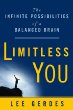
The sounds reflect current brainwave activity, allowing the brain to “see” itself, as Lee Gerdes says in his book, Limitless You. You do occasionally view your brain activity on the monitor, but mostly the brain is hearing itself, and the more in harmony and cohesive the brain gets, the more the sounds reflect that.

You don’t have to do anything. The brain adjusts itself. At least, that’s how I think it works.

Watching the bar was hardest for me. I tried too hard, and it strained my eyes (I wear contacts and need to blink often — did you know your brainwaves change when you close your eyes, even to blink?). I stopped drinking green tea in the morning and brought eyedrops, attempting to make this exercise easier to accomplish.

I finally started getting the hang of it on Friday when I imagined that the sound of the air conditioning was a waterfall that was very nearby. When my attention was split between listening to the “waterfall” and gazing beneath the bar (rather than staring intently at it), I made progress.

I believe that exercise was about my “thinking” mind — aka bringing down my beta waves.

I went into brain training wanting to get rid of any remaining dysfunctional patterns from my childhood trauma and years of PTSD. Most of the changes took place in the frontal and occipital lobes — the center for executive functioning and the visual cortex, respectively. After my last session, Gigi gave me printouts showing how my brainwaves in those lobes had changed over the week of training. She got my left and right hemispheres more in sync in those lobes.

I loved the relaxation exercises. It turns out I’m very good at going into alpha! As I got used to the process, I got pretty good at dropping into theta and good at noticing the difference between alpha and theta. (Theta is where deep healing occurs.) I dropped into delta (sleep) a few times, especially after lunch, at first, but as the week progressed, I was able to stay awake in theta for longer periods.

I really loved the task of imagining I was entering a house, walking upstairs, and entering three rooms. Each day I created different rooms. Here are some juicy ones:

  • A room full of guides — lamas, teachers, angels, masters, buddhas and boddhisattvas, yogis, healers, shamans, seers — who included me and gave me gifts, laying their hands on me.
  • A room of possibilities that I’d like to manifest — travel, prosperity, success, joy, gifts and talents and skills, love, creativity, equanimity, health, goodness.
  • A room containing my fears and obstacles, with wonderful resources to address each one.
  • A room of gratitude for past, present, and future.
  • A room where I gave my gifts and resources to those who needed them.
  • A room of beginner’s mind.
  • A room for my future sage elder self.
  • A room of intuition.

Also, the Jean Houston guided meditation of cleansing the senses works well here. Having NLP training was useful!

During the five days of training, I didn’t experience any sudden or drastic changes in brain functioning, but each day I felt a little bit sharper, more present, more centered.

I learned that my brain operations were actually in pretty good shape to start with, and with a few tweaks it will operate even better. The changes will continue to manifest over a period of months after the training.

To get the most from it, the instructions are that for at least the next three weeks, I need to avoid alcohol and recreational drugs, exercise/walk daily, eat a lot of protein, and drink plenty of water.

It would be helpful to practice awareness through progressive relaxation, visualization while listening to a CD Gigi gave me (I liked the sound of a stream during some of the sessions, which has become an anchor), and doing breathwork.

I also need to postpone appointments for other therapeutic modalities until three weeks have passed, so I’ll need to make some phone calls on Monday.

If you’re interested, I recommend calling NeuroBeginnings for a baseline assessment. Her number is 512-699-6593. The baseline assessment currently costs $160. The entire cost, at present, is $1,635, if I remember correctly. Compared to doctor visits and medication, brain training could actually save you time, money, and side effects. 

I’m going to wait at least three months before going back for a tune-up unless something drastic happens, and then I hope to try one of their new gamma wave protocols.

I look forward to noticing improvements in my brain’s functioning and sharing them with you!

Allowing the inner Buddha to walk, working with Fran Bell, emergent knowledge

I’m sharing a beautiful article from Tricycle magazine, Walk Like a Buddha, written by Buddhist monk, teacher, and activist Thich Nhat Hanh about walking meditation.

For many of us, the idea of practice without effort, of the relaxed pleasure of mindfulness, seems very difficult. That is because we don’t walk with our feet. Of course, physically our feet are doing the walking, but because our minds are elsewhere, we are not walking with our full body and our full consciousness. We see our minds and our bodies as two separate things. While our bodies are walking one way, our consciousness is tugging us in a different direction.

For the Buddha, mind and the body are two aspects of the same thing. Walking is as simple as putting one foot in front of the other. But we often find it difficult or tedious. We drive a few blocks rather than walk in order to “save time.” When we understand the interconnectedness of our bodies and our minds, the simple act of walking like the Buddha can feel supremely easy and pleasurable.

What this brings up for me is noticing where my attention is. When do I pay attention to my body? My answer has been: not often enough. It’s there all the time, so easy to take for granted. The external world seems so much more engaging because it’s constantly changing.

I walked habitually, without paying much attention (or rather with more attention on my destination than the journey), and as a result, I acquired some mindless movement patterns that actually created stress and tension in my body.

Fran Bell is helping me with that. She shows me there’s an alternative, and it feels so relaxed and healthy! I feel totally in my body. I enjoy it.

But I only see her for an hour a week, and although I retain some of what she shows me, I also become mindless again, some of the time.

The real learning is up to me. Influenced also by the book Effortless Wellbeing, I’ve been paying attention to my body when I lie down, when I sit (at my computer and in the car), when I stand, and when I walk.

Where do I feel tightest, most constrained? Can I just let go of that? Well, yeah!

Here are some of my new awarenesses:

  • Walking as a unit rather than as an assemblage of parts.
  • Feeling the left-right symmetry of my moving body.
  • Feeling the rhythm of walking.
  • Balancing my head easily atop my neck with minimal strain.
  • Balancing my rib cage easily above my hips with minimal strain.
  • Ankles, knees, and hips.
  • Feeling the natural springiness in my walk.
  • Feeling the side-to-side sway of my body.
  • Feeling the relationship between my hip and the opposite shoulder.
  • Letting my arms swing from my dropped shoulders.
  • Keeping my sternum in an easy natural place.
  • Keeping my eyes in a soft gaze.
  • Finding the most ease.

Walking meditation is really to enjoy the walking—walking not in order to arrive, just for walking, to be in the present moment, and to enjoy each step. 

I notice that walking with mindfulness adds presence and pleasure to my life.

He goes on to include some instruction about adding breath awareness to walking medication. Here’s an excerpt I liked:

After you have been practicing for a few days, try adding one more step to your exhalation. For example, if your normal breathing is 2-2, without walking any faster, lengthen your exhalation and practice 2-3 for four or five times. Then go back to 2-2. In normal breathing, we never expel all the air from our lungs. There is always some left. By adding another step to your exhalation, you will push out more of this stale air. Don’t overdo it. Four or five times are enough. More can make you tired. After breathing this way four or five times, let your breath return to normal. Then, five or ten minutes later, you can repeat the process. Remember to add a step to the exhalation, not the inhalation.

Claiming some me time

Like the Energizer bunny, I’ve just kept going and going, with work and training and teaching and transitioning toward a new home, and then things started to go not so well. Low back-ache, fatigue, muscle tension, losing things, not handling a situation well, emotional sensitivity, feeling close to overwhelm.

As in, “If one more difficult thing happens, I’m going to lose it, and it’s not going to be pretty.”

As much as I like to meet life from a place of strength and resilience, sometimes that isn’t what’s real.

So I declared this afternoon as me time. You know. Solitary unpressured time — several hours of it — to rest, ruminate, and recover.

I even cancelled my restorative yoga class, which I try not to do, because I know when you need it, you need it, and it’s disappointing if it’s not available.

Yogis and yoginis, namaste. It’s savasana time for me, and for you if you need it! And, I am changing our class time to 7:30-9 pm so we can all have more “day” to enjoy on Sundays, then eat lightly, do the class, drive home, and go to bed all relaxed.

How does that sit with you?

We all need time to be active, time for sleep, and time for rest. In this case, I have not been getting enough rest.

Rest is when I check in with myself and get back on track, reconnect with myself and recenter.

It’s actually one of the best parts about being human. That we can do this!!!

And now, I’m going within, to get in touch with my feelings, breathe, maybe cry a little, curl up with Mango, and get some rest. And plan how to intervene with myself a little bit sooner so this doesn’t happen again. I hate disappointing people! I believe it may be time to restart my regular sitting practice, which has become irregular.

Yep. This is what happens when I don’t meditate. Yep, I’m really remembering that now.


To relax, to improve health, to change the world, just breathe

Last night I attended the monthly Austin NLP meetup. Katie Raver, who was raised by an NLP-trained mom and who is a co-founder of Austin NLP and who created Year of the Breath in 2009, presented on the topic Breathing Life into Rapport.

Note: Katie is my temporary roommate. And she loves my cat, Mango. I may be biased.

Katie drew on her experiences in Hawai’i (where ha means breath, thus Hawai’i, aloha, ha‘ole — without breath, ha prayer). When she returned, she noticed how shallow breathing negatively impacted a work-related meeting she was in, and she experimented with pacing and then leading the alpha person at the meeting (not the speaker, but the key decision maker) to breathe more deeply, thus changing the state of the meeting for all 17 people present. Only Katie — or as we call her, the instigator of love — was aware of how that shift occurred.

We had fun doing exercises like matching someone’s breathing while talking to them and matching their breathing while they’re talking to you. Sorry you missed it.

I must say, it’s a lovely experience to have a room full of people breathing in unison. It’s on a par with hearing a room full of people all chanting OM. Deep. Alive. Powerful. 

 Today an email led me to this NPR article dated Dec. 6, 2010, Just Breathe: Body Has a Built-In Stress Reliever.

As it turns out, deep breathing is not only relaxing, it’s been scientifically proven to affect the heart, the brain, digestion, the immune system — and maybe even the expression of genes.

Yogis and meditators know this. Breath is powerful.

But more importantly, [breathing exercises] can be used as a method to train the body’s reaction to stressful situations and dampen the production of harmful stress hormones.

Click the link to read up on the latest scientific findings about using breath to influence health and well-being.

You can also make meetings more satisfying. At least you won’t be bored.

Helping a healer heal with sound, Reiki, and presence

I had a most remarkable experience last night. I was planning to go to the Saxon Pub to listen to The Resentments play on the last night of SXSW after teaching my restorative yoga class, and on the way, I took a detour to check out a nearby mobile home park. (Yes, I’m still looking, but just today discovered an online directory of MH parks in Texas with phone numbers! My next home is getting closer and closer.)

Just as I was leaving, my iPhone rang. It was my friend B. We’ve had a couple of bodywork/unblocking sessions, and I’ve enjoyed getting to know him. He’s a teacher for me, someone who knows a lot about healing.

B asked me to breathe with him, which we’ve done together before, in rebirthing. Curious but game, I did.

I discerned that he was in pain from his occasional moans and sobs, and I could tell the pain was pretty intense. I pulled the car over and breathed with him for a while, not knowing what had happened, unsure if it was physical or emotional pain, not that it really matters.

All he could tell me was “I was out riding bikes with my son and something happened.” Didn’t know if he was bleeding or if something happened to or with his son… I watched my mind try to make up a story and give up.

After about 10 minutes, he asked me if I could come to where he was. I said sure, thinking he was at home. No. He gave me directions to a little woods behind a grocery store several miles away. We stayed connected on the phone as I drove.

He asked if I had any blankets in the car. Yes, B, as a matter of fact, I happen to have a dozen or so yoga blankets in my car. Good thing, because he was wearing a sleeveless t-shirt, and it was dark and starting to get chilly.

As I drove, he asked me if I had any Reiki training. Technically I’m a third-level Reiki master, but I have only done Reiki on myself and distance healing on others. He told me:

You’re about to get initiated.

He asked me if I was ready. At first I said yes, and then I said no, I couldn’t know that. All I could know was that I was willing and open to it. He was satisfied with that.

From my car, I could barely see him, back in the woods. I parked and brought some blankets over to where he was. I covered his upper body, and we began to work together.

From there on, the sequence of events gets fuzzy. We spent a couple of hours together in that little woods behind a suburban grocery store, out of sight of the hustle and bustle, healing his foot. 

He’d dropped a board on top of his foot that morning, and he worked on it then, and it seemed fine, and then he and his son went on a late afternoon bike ride. When he got off his bike, he couldn’t bear weight on that foot. The pain was excruciating. The motion of pedalling had apparently further dislocated a bone that had been impacted by the earlier injury and not quite gone back into place. Anyway, that seems to be the likeliest story.

This man works on his feet, but he was uninterested in going to any kind of medical establishment. He could have called 911 at any time from his cell phone, or asked numerous people to take him home and give him painkillers. Instead, he sent his son home on his bike. His wife, D, was working and he couldn’t get hold of her.

So he called me. Not sure why; maybe I was the only person who picked up. But we have a good strong connection, and I was able and willing to help. I helped him text his wife so she would call when she got off work.

I mentally reviewed my preparations for giving Reiki to myself. At his direction, I wrapped my hands around his foot just so, and he occasionally directed me verbally and nonverbally where to apply pressure, where to ease off, how to elongate his foot.

After a little while, my hands felt really good. I had a really good, positive, loving energetic connection with his injured foot. I could feel the pulse in it, feel the life force. I felt plugged in and connected to the Source.

We breathed together. Fast, slow, loud, soft. Mostly he led and I paced him.

We moaned, toned, sang together. Some of the toning we did was amazingly powerful. I could hear the resonance between two notes becoming so much more than those two notes. They amplified the energetic connection, almost as if we were supported and held in place by sound.

I noticed that when I could be in a position where my body was symmetrical, my energy flowed better. My crown chakra opened wide, and I felt very present, engaged, and relaxed.

B was a marvel to me. Here was someone in pain who fully faced it. Now that’s a different approach. He was totally present with it. Sometimes it was overwhelming, and he just had to lie down. Sometimes he sobbed from the pain. He was so open to his experience, even though it was intensely painful.

Pain is just sensation without the story.

He reviewed the sequence of events and admitted he had made a mistake getting on the bike, but I never heard any self-castigation. He accepted that he had made a mistake, but it didn’t mean anything, as in “therefore, I am a failure.” Just facing what is, that he had made a mistake. End-of-story. I never heard any cursing — in fact, he chided me for using strong language at one point.

He was very clear what he wanted to use his attention and energy for. He said let’s not talk about that, or let’s talk about that later.

Over time, the pain abated somewhat, he said from about 8.5 or 9 to a 7 on a 1-10 scale. That’s still pretty intense.

Then D called, and she came, and all of us held his foot and toned together. D had some Young Living Essential Oils in her purse, and he slathered them on his foot and  put some on his head. He used a whole bottle of Pan-Away on his foot. That’s what it’s for. (And by the way, I’m selling this stuff now.)

After maybe 30 minutes, D said she was ready to go home. She took his bike with her. B crawled from the woods to my car, and I drove him home. It was 10 pm, and I’m currently a gal with a job.

Today B called twice and thanked me. It was actually an incredible honor to be called upon to help, and to witness this method of healing, and to let Reiki flow through me in the service of alleviating suffering.

This afternoon when B called, he said he could now bear weight on his foot. He had continued with someone else giving him Reiki, and D had applied comfrey leaves to his foot, but he gave me a lot of credit. Really, I just met his presence.

As amazed as I am at this way of healing an extremely painful injury, I am even more amazed at his valor, presence, and most of all to his commitment to and faith in the healing power that lies within each of us, that when combined with others, can work what seems like miracles.