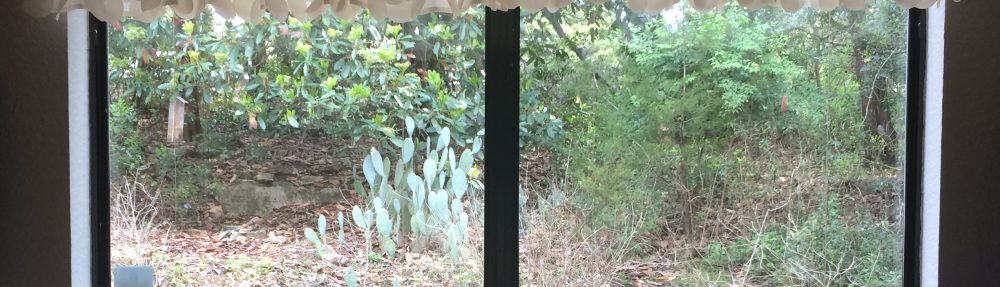
What if awareness is a quality you are inside of?

Indeed, the ineffability of the air seems akin to the ineffability of awareness itself, and we should not be surprised that many indigenous peoples construe awareness, or “mind,” not as a power that resides inside their heads, but rather as a quality that they themselves are inside of, along with the other animals and the plants, the mountains and the clouds. – David Abram, The Spell of the Sensuous

Thank you, Gioconda, for sharing that quote at the beginning of your yoga class a few weeks ago, and thanks for sending me the actual text and source. The profundity of this quote has been playing with me.

I invite you in this transitional week leading to the new year to play with this concept, to try it on. Ask yourself these questions.

Better yet, pull some questions out of thin air!

What if mind, or awareness, is something we walk around in and live our entire lives inside of, like the air?

What if our entire bodies — torsos, limbs, skin, bone, muscle, organ, connective tissue — are as immersed in this mind as our heads are? Can you experience yourself that way? Can you know with your toes? Discern with your liver? Learn with your heart? Understand with your hand?

What if mind is an element like air? Among the elements, air does represents mind — what if it is mind? We breathe it in for nourishment and exhale into it for release? Does that give new significance to your breathing? And because everyone is doing this all the time, what if the quality of Mind changes by what you and others put into it and take out of it?

Is this the illusion or is it real? Is this consensual reality?

What if expanding your mind, or if you prefer, expanding your awareness, is nothing more than more sensitively experiencing yourself and your surroundings?

And, what if there is no limit to how sensitively you can do this?

What if the boundary between self and environment is just a convenient construct for communication purposes but actually doesn’t exist?

For more on David Abram, here’s a chapter from The Spell of the Sensuous. Excerpt:

For none of the several island sorcerers whom I came to know in Indonesia, nor any of the djankris with whom I lived in Nepal, considered their work as ritual healers to be their major role or function within their communities. Most of them, to be sure, were the primary healers or “doctors” for the villages in their vicinity, and they were often spoken of as such by the inhabitants of those villages. But the villagers also sometimes spoke of them, in low voices and in very private conversations, as witches (lejaks in Bali)–dark magicians who at night might well be practicing their healing spells backward in order to afflict people with the very diseases that they would later cure by day. I myself never consciously saw any of the magicians or shamans with whom I became acquainted engage in magic for harmful purposes, nor any convincing evidence that they had ever done so. Yet I was struck by the fact that none of them ever did or said anything to counter such disturbing rumors and speculations, which circulated quietly through the regions where they lived. Slowly I came to recognize that it was through the agency of such rumors, and the ambiguous fears that such rumors engendered, that the sorcerers were able to maintain a basic level of privacy. By allowing the inevitable suspicions and fears to circulate unhindered in the region, the sorcerers ensured that only those who were in real and profound need of their [healing] skills would dare to approach them for help. This privacy, in turn, left the magicians free to their primary craft and function.

A clue to this function may be found in the circumstance that such magicians rarely dwell at the heart of their village; rather, their dwellings are commonly at the spatial periphery of the community amid the surrounding rice fields, at the edge of the forest, or among a cluster of boulders. For the magician’s intelligence is not circumscribed within the society–its place is at the edge, mediating between the human community and the larger community of beings upon which the village depends for its nourishment and sustenance. 

For more on Gioconda Yoga, click here. She’s got some cool workshops coming up!

(By the way, this is my 500th blog post. When I started this blog two years ago, I had no idea I’d post 500 times or post about this topic. Yay life for creating itself anew every day!)
Charlie Todd: The shared experience of absurdity | Video on TED.com

Charlie Todd: The shared experience of absurdity | Video on TED.com.

You’d have to be humorless not to enjoy this video! Thanks, Keith Fail, for sharing.

What Kind of Buddhist was Steve Jobs, Really? | NeuroTribes

What Kind of Buddhist was Steve Jobs, Really? | NeuroTribes.

Great article by Steve Silberman (I have subscribed to his blog and follow him on Twitter — great find). I like reading about Steve Jobs, but even better is this simple, clear description of why we meditate:

Why would a former phone phreak who perseverated over the design of motherboards be interested in doing that? Using the mind to watch the mind, and ultimately to change how the mind works, is known in cognitive psychology as metacognition. Beneath the poetic cultural trappings of Buddhism, what intensive meditation offers to long-term practitioners is a kind of metacognitive hack of the human operating system (a metaphor that probably crossed Jobs’ mind at some point.) Sitting zazen offered Jobs a practical technique for upgrading the motherboard in his head.

The classic Buddhist image of this hack is that thoughts are like clouds passing through a spacious blue sky. All your life, you’ve been convinced that this succession of clouds comprises a stable, enduring identity — a “self.” But Buddhists believe this self this is an illusion that causes unnecessary suffering as you inevitably face change, loss, disease, old age, and death. One aim of practice is to reveal the gaps or discontinuities — the glimpses of blue sky —between the thoughts, so you’re not so taken in by the illusion, but instead learn to identify with the panoramic awareness in which the clouds arise and disappear.

How are you doing at stress management? Here’s a quiz.

I included some of this in my earlier post and then decided it needed to be a post on its own.

I picked up a copy of Scientific American Mind from a newsstand recently because of the cover articles on stress. (In fact, it is probably still on newsstands.) If you read this blog, you’ll know I’m very interested in stress management and health and well-being.

I read in the article Fight the Frazzled Mind that very few people know how to be productive when they are not being pushed by stressors — but it can be done. The author of the article, Robert Epstein, says it is possible to perform well when relaxed. Epstein says:

That should be the goal, in my opinion: a life that is productive but also virtually stress-free.

I can go along with that. In fact, that is a fabulous goal to have, in my opinion! (He says to think of kung fu masters. I think of the hypnotized guy in Office Space. My hero!)

When I realized that I wanted to do the kind of work that I would love doing even if I didn’t get paid for it, I set myself on that path.

Epstein, former editor-in-chief of Psychology Today, says research suggests there are at least four broad, trainable skill sets that people can use to manage stress in a healthy, effective manner:

  1. source management (reducing or eliminating sources of stress)
  2. relaxation (breathing, meditation, yoga)
  3. thought management (interpreting events in ways that don’t hurt you)
  4. prevention (avoiding stress before it happens)

The article has a 16-question quiz designed to help you discover where you are competent and where you can improve. He says if you score under 12, you might want to consider taking a stress-management course. (Or you could come to me for relaxation coaching…just saying!)

The full 28-question version of his stress management test is online. I took it, and my best areas were relaxation and prevention. My worst area was thought management — probably because the test presupposes that irrational beliefs are stressful. I actually enjoy uncovering my irrational beliefs and have fun with them. I don’t allow them to stress me, and I don’t believe that irrationality per se equates with stress.

I find right-brain irrationality to be less stress-producing than left-brain rationality. People have a lot of irrational beliefs that are very comforting. Think about life-after-death beliefs. Rationally, it’s a huge unknown and very stressful. Anything else is irrational — and hopefully gives your life solace and meaning.

By the way: If your irrational beliefs are stressful, find a way to question, deflate, or replace them with non-stressful, positive beliefs. Byron Katie’s The Work is simply the best tool out there, in my opinion and that of many others.

So that’s my one quibble with this research, and it’s probably just semantic.

I can definitely work on source management: getting more organized with things, tasks, space, and time. I do okay but could do better.

Before doing the research, Epstein thought that relaxation and thought management — the focus of most stress reduction efforts — would be most effective at helping people reduce stress, be happier, and more successful personally and professionally.

Instead, he found that prevention is by far the most helpful competency when it comes to managing stress. Prevention includes:

  • every morning, spend a little time planning your day
  • identify and then reduce or eliminate stressors
  • stay on top of things by keeping an updated to-do list
  • have a clear plan of how you’d like your life to proceed over the next few years

In addition to these strategies, he adds two more for fighting stress before it starts:

  • commit to replacing self-destructive ways of managing stress with healthful ways; for instance, take a yoga class instead of going to happy hour
  • immunize yourself from stress using exercise, thought management, and relaxation techniques

Epstein found that on average, people scored 55 out of 100 on a test of simple stress management techniques. That means people are failing — badly — at managing their stress levels.

He also states that the new study found a high positive relationship between test scores and the overall level of happiness people reported, personal success, and professional success. Nearly 25 percent of the happiness we experience in life is related to — and maybe even the result of — our ability to manage stress.

That’s significant. Would you like to be 25 percent happier?

The best news is that stress management is trainable, with the greatest benefits reaped from prevention.

This is work worth doing.

There is a crack in everything

Today I’m acknowledging the crack, still waiting for the light to get in.

I don’t know what’s going on astrologically, but since a couple of days ago I’ve felt a disturbance in my equanimity.

Anyone else feeling that way?

I hate naming names and casting blame, so I’ll just say that unknowingly, innocently, I subjected myself yesterday to an experience with another person that I never want to repeat. It threw me off, rattled me, and I’m still not centered.

A couple of other incidents before and after that have piled it on, that feeling of being uncentered.

One of them that I feel okay writing about here was listening to part of Fresh Air with Terry Gross this afternoon while running errands in my car. She was interviewing a writer on economics who said that Goldman Sachs helped Greece hide its debt in order to be admitted to the European Union.

Once admitted, Greece had access to very low interest rates and proceeded to borrow lots of money and do things like raise salaries without any accompanying rise in income.

Now Greece has no way of repaying its debt, and it could affect the European Union and the world economy, which as we know is already not in good shape.

“This was not a one-off situation,” he says. “You look at the financial crisis in Europe, and the fingerprints of American investment bankers are everywhere. The financial collapse encouraged the worst sort of behavior. At the same time they were making bad loans in the United States, they were encouraging the same sort of behavior at the government level in Europe. The basic problem was, historically the role of the financier was to vet risk and make sure risk was evaluated. That got perverted in recent times, and instead the financier helped disguise risk.”

I’m feeling a lot of empathy for the OccupyWallStreet movement. Most of us feel it, that “things aren’t right.” Corporations are not people. Best bumper-sticker I’ve seen recently:

I refuse to believe that corporations are people until Texas executes one.

I’ve felt for a while that I want to live sustainably on something close to a cash basis, with no mortgage and as little debt as possible.

I want to grow some of the fresh produce I eat, and I want to grow it organically from non-GMO seeds.

I want a skill I can barter.

Because I don’t know what’s coming, and it may get worse before it gets better.

That said, I’m going to meditate for a spell and get myself recentered.

MaryAnn’s comment: Thanks for sharing. Reposting on my blog. If you’re reading this on my blog, click the link to see the video of a meditation flash mob on Day 12 of OccupyWallStreet and get a view of the protest you won’t see elsewhere.

The Jizo Chronicles

I’ve been waiting for this to happen…

Here’s a video from Day 12 of the occupation of Wall Street. The gentleman giving the contemplative pep talk is businessman and Hip Hop artist Russell Simmons, who is also an avid yoga practitioner.

I’m still wondering if there is any kind of organized Buddhist presence at these protests… if you know of anything, please leave a comment below.

View original post

What got you started meditating? Here’s my story. What’s yours?

Clare commented on my recent post about meditation that she enjoys becoming still and present but wonders how to convince others.

I’m not sure what convinces people that meditation is a good thing. Plenty of people do meditate, and now I’m curious about the initial catalyst. (Because none of this have been doing this our entire lives, I’ll bet!)

I’ll share my story, and I invite you to share yours, either in the comments or via email. If you email me (mareynolds27 at gmail dot com), be sure to let me know what name or initials you want me to use if I get enough responses to summarize in a future post.

I started five years ago after a relationship ended. Even though I knew it was right to end the relationship — the other person had stopped relating to me in a way I enjoyed and had become someone I no longer knew (either that, or my eyes fully opened for the first time) — I still wanted to escape from the emotional pain of ending a relationship I had put a lot of myself into.

I couldn’t find a way to escape. Alcohol, smoking, busy-ness, socializing, travel — none of that helped. Each morning I woke up with a heart that felt raw and vulnerable.

After a few weeks of this, it occurred to me one day that I had nothing to lose if I just sat with the pain, fully facing it. I didn’t believe it could have gotten worse.

I  sat myself down cross-legged on a pillow on the floor and surrendered to what I was feeling. I brought my attention to my heart center and felt into it. I let the pain just be what it was, not wanting to be in denial about it, not wanting to make it into anything else. I actually had some curiosity about moving toward it instead of away from it.

I wasn’t swallowed up, overwhelmed, decimated, annihilated, or engulfed. I felt hurt and vulnerable in my heart center, yes. And I realized that there was more to me than that. I was bigger than the pain. But who was I?

That was the hook. Who actually was I? I began sitting to find an answer to that question.

What set you on this path?

Why meditators are happier

A very interesting article that fits in well with this blog, Eat, Smoke, Meditate: Why Your Brain Cares How You Cope was published recently in Forbes, the business magazine — an unlikely place for an article about meditation but a good sign, meaning that this kind of information is reaching the conservative mainstream business audience.

The article, by health writer Alice G. Walton, states that for millenia people have turned to different activities to cope with life’s stresses: going for a walk, taking a deep breath, eating, drinking, smoking, praying, taking drugs, running, meditating.

She adds that most people would agree that the mind’s annoying chatter is a major source of unhappiness. It’s the obsessing, worrying, drifting, fearful mind that creates feelings of unhappiness. (We meditators know it as monkey mind.)

This internal chatter and the unpleasant emotions that accompany its thoughts are really what people are trying to get away from. A Harvard study done last year confirmed that mind wandering and unhappiness are clearly connected. That study found that when people are awake, their minds are wandering about half the time.

Another study found that mind wandering is linked to a network of brain cells called the default mode network (DMN for short). This network is only active when we are flitting from one life-worry to the next.

Meditation is about quieting the mind, facing, and then relinquishing those unhappy, stress-inducing thoughts.

New research from Yale has found that the DMN in experienced meditators is markedly less linked to other regions of the brain. And…when the brain’s “me centers” (areas governing thoughts about the self, such as the DMN) are activated, meditators also activated brain areas for self-monitoring and cognitive control.

They did this automatically, even when not being told to do anything in particular.

This implies that experienced meditators habitually monitor their thoughts and control them — a skill learned during meditation. When the mind wanders — when meditating and at other times — experienced meditators bring it back to the present moment.

Could this be the primary benefit of meditation, that you learn to monitor and control your thoughts, and therefore you feel happier?

The article suggests that meditators actually create a new default mode that is more present-centered and less “me”-centered.

The writer wonders whether happiness is really about shifting our tendency away from focusing on ourselves. Another study found that in praying nuns and meditating monks, brain areas for concentration and attention became activated, while areas that govern how a person relates to the world deactivated.

The author states that this suggests that the focus becomes less on the person being a distinct entity from the external world and more on the connection between the person and the external world.

Separation and oneness, away from and toward. Aha!

The article continues, stating that other tools to relieve stress like cigarettes, food, or alcohol actually end up making the users unhappier. Addictions create negative feedback loops that include craving and relief, followed by craving and relief, et cetera.

She concludes:

 Addressing the process itself with other methods (like meditation), which allow you to ride out the craving/unhappiness by attending to it and accepting it, and then letting it go, has been more successful, because it actually breaks the cycle rather than masks it.

Healing bruised, sprained toes

A friend called me last night, said she had injured her toes, wondered if I could help.

Of course, I said yes, come on over. While she was driving to my place, I got the massage table ready, with a round bolster for her knees and half bolster for her heels or ankles to rest on, to keep her toes elevated.

Got an ice pack out of the freezer and wrapped it in a kitchen towel.

Screen Shot 2016-03-15 at 10.25.32 PMI checked my collection of Young Living essential oils and immediately pulled out the PanAway. I looked in the Essential Oils Desk Reference to see what else might be helpful. My friend had said she thought her toes were bruised and sprained but not broken. I didn’t have geranium, helichrysum, or German chamomile on hand, any of which would have helped, but I did have lavender, peppermint, and wintergreen.
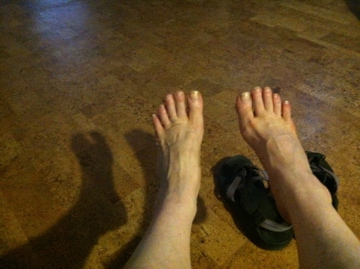
I decided to stick with the big gun, PanAway, a blend that includes helichrysum, wintergreen, clove, and peppermint. Continue reading

Feet report, planting a tree

Well, my feet did not take me to Barton Springs after all on Saturday. I woke and remembered it was a day of honoring my feet, of letting them lead. I put my attention into my feet, feeling into them.

While still in bed, I did some exercises that Fran Bell gave me to increase my ankle and hip range of motion. Out of bed, I did the Z-Health foot exercises that Patrice Sullivan gave me to open foot meridians.

After that, my feet felt alive and glowing! They took me to the shower. I love washing my feet, especially between the toes.

You can say to yourself:

Oh, those are my ordinary feet, and they look clean. I feel them resting on the floor.

Or you can think:

Wow, my feet are tingling with life force, energy, chi! I wonder how far the energy would extend if I could see it. Seriously, if this energy produced light, you could read by it!

Well, those feet took me to my yoga mat! I did a leisurely round of sun salutions, paying special attention to my feet in tadasana, lunge, plank, down dog, and so on, feeling the mat and pressure and stretch and strength and position and air currents.

Then my feet walked me over to the zafu and zabuton. I turned on a timer for 30 minutes and sat. I wanted to spread the aliveness of my feet into the rest of my body.

That was a great start to my day.

The rest of Saturday, I checked in periodically with my feet without thinking too much. They wanted me to make monkey tea. They wanted me to do some more unpacking and arranging at the trailer. They led me to set up my hummingbird feeder.

Then we ran errands. We went to Home Depot, and among other items I bought a soaker hose. My landscape architect friend/writing client Merrie told me I need to water the ground under my trailer, where there are big cracks in the bare soil from the drought.

I came home and soaked the parched earth.

Feet, connect us to the earth, pachamama, terra firma.  Connect us to our big blue marble. Keep us grounded in what we do. Let us be of service to you.

In the evening, my feet served me well when I gave my daughter her first massage from me, the first of many, I hope.

I danced for 90 minutes on Sunday morning. My feet felt free, loved, and joyous. After lunch, I stopped at The Natural Gardener. I needed some potting soil and bought some basil, thyme, and peppermint. The garden center was nearly deserted. Most people give up on gardening in August around here. I’m just getting started in a new place.

And then I wandered through the tree section. Thirty percent off a tree is substantial, and they had quite a few $24.99 trees before the discount. Half my trailer is unshaded, and since I can’t plant a tree 10 years ago, now is the next best time.

I thought I was going to get a cedar elm but felt pretty ho-hum about it. After discussing various oaks, I was drawn to an arroyo sweetwood (new to me), and one of The Natural Gardener’s plant-loving helpers showed me a mature one next to the parking lot that had been planted about 7 years ago.

Wow. These trees grow fast, are native to northern Mexico so can take heat and drought, and are fragrant, smelling like cinnamon and vanilla. They are multi-trunked, and have spring flowers, a dense canopy, and autumn foliage. Something wonderful for every season, plus scent. How perfect can a tree be?

So that’s what I bought, for just under $18. The cashier said my tree looked like a happy tree! I was a happy customer.

On my way home, I saw a sign:

I bought a tree to plant on the hottest day of the hottest month of the hottest year on record.

Yes, you can plant trees at the end of August if you are willing to check the dampness of the soil several inches down every couple of days. They’ll tell you how at The Natural Gardener.

Got home, picked a site that will perfectly frame a view of the tree from inside a nearly-floor-to-ceiling window, and watered the ground. Water, let it soak in, dig, repeat.

I finished digging this morning and planted the tree. When I came home this evening, my new little tree was having its branches gently jostled by the warm wind.

Next up: mulch.

So that’s what happened from letting my feet lead. I got so connected to the earth, I bought a tree and planted it! I took care of the ground under my trailer. I gave my daughter a massage. I did yoga and sat.

Grounded.

Thank you, feet.