Massage, brainwaves, NLP, work, yoga, women in prison, Gurdjieffian book group, trailer, and more

Life is going pretty well. Knock wood, right?

I’m doing well in massage school. Got in some great practice on three people outside of school this past Wednesday, ahead of Thursday’s practical exam. I have a major written test next week and then a week off. It’s hard to believe that I’m about halfway through!

Tomorrow it will be three months since I finished brainwave optimization. I am glad I did it. I feel more centered, my memory is better, and so is my focus. It’s been worth the expense, and I can still go back for individual sessions if I feel the need. It’s been helpful with juggling school/trailer/moving/remodeling/working and so on.

I’m looking forward to doing some gamma wave enhancement when my trainer Gigi Turner at NeuroBeginnings is ready and I have time.

Also, I can have a drink now! You are warned not to drink alcohol during the training and for three months afterward. Kinda makes me wonder what alcohol actually does to the brain. Any drinking I do will be very light — my alcohol tolerance is low.

I did an NLP session with a friend today and picked up a freelance writing/editing job for her website! This is my second recent website writing job. I love doing this for people who have created and are running their small businesses that make the world a better, healthier place, people who are living their passions. I’m looking for more work like that.

I posted my technical writing resume on Monster.com a couple of weeks ago. I’m looking to work 20 hours a week at most, flex-time and telecommuting preferred. Meanwhile, I’m open to doing freelance writing and editing, as well as more yoga and NLP coaching.

I’d love to teach yoga out of my trailer to individuals or small groups (up to 4 max). I’m putting this out there so if you know anyone in South Austin who’d like a small class with more personal attention, you can refer them to me.

I’m considering teaching a donation-only class on Saturday mornings until the weather gets cold. I plan to check out Searight Park in my neighborhood as a possible location. I have Sun Salutations on my mind!

I’ve been attending a weekly class in Anusara yoga at Castle Hill taught by Brigitte Edery or Liz Belile, both great teachers who stimulate and challenge the mind and body. It’s a natural segue from my Iyengar-based training. Love the attention to awareness.

Next week I’m going with Keith Fail into the state prison in Lockhart to teach some basic NLP to women in prison, as part of Truth Be Told‘s Exploring Creativity program. We’ll teach triple description — first, second, and third position, like first, second, and third person in English class, only applying it to your real life. Perceptual flexibility is a fabulous skill to teach, and I’m looking forward to it.

I’m participating in a book group, reading Life in the Labyrinth, by E.J. Gold. This is my first foray into the Gurdjieffian lineage, not counting my longtime interest in the Enneagram. The group has been meeting for a while, and I’m honored to have been invited. We take turns reading aloud, covering a chapter a week, and enjoying some stimulating discussion.

I’ve signed up for a one-day workshop at Lauterstein-Conway later this month on cranio-sacral massage. I’ve mentioned before on this blog that I received CST every month for 2-3 years from Nina Davis. It is a fascinating branch on the massage family tree.

Week after next, I’m trading two hours of Swedish massage, with all the extras, for a two-hour lomi lomi (Hawaiian style) massage with James Moore. Really looking forward to that! I haven’t had a lomi lomi massage yet but have read about the Hawaiian healers who have kept this art alive.

Last, the trailer. I’m working on finding the best weatherstripping for the aluminum jalousie windows — something that will last that I can buy in bulk for the 48 windows, which have had the old, melted weatherstripping painstakingly removed.

Then, I hope to replace the nonworking sliding glass doors at the entry with something that works and build an entry deck. I’ve been using the back door to come and go.

Oh, and I must share this! August 2011 was the hottest month in the hottest year on record in Austin. It was also my first full month of having AC in the trailer. Friends have been telling me about their outrageous electric bills — as much as $400.

My AC ran nearly all day every day in August. I worried about my bill being outrageous.

The August bill was $100. Whew! Jon Esquivel at Austin Star Services did a good job getting a good unit in this trailer. For that I am grateful.

Other tasks coming up include plumbing and wiring my shed for a washer and dryer, getting some good window coverings and installing them, and planting more trees and a fall garden with some edible landscaping.

I am really, really loving my life now and the direction it’s going. It’s scary to make a big change in direction like I did, and it is working out well. Knock wood!

Poetry, reciprocity, feeling absolutely useless and enjoying it

I used to post poems I liked to this blog, but I stopped a while back and removed them (well, all except for Shoveling Snow with Buddha by Billy Collins, widely available online).

By the way, Shoveling Snow with Buddha is a wonderful poem to read in August when it’s over 100 degrees. Just saying.

The major reason is that poets are often impoverished and yet the best ones give us the beautiful gifts of lifting spirits and expanding worldviews, maybe shifting our  identities for the better, touching our hearts and souls.

Somehow they manage to use words, which are a left-brain tool, to convey right-brain experiences of intuition, wonder, and new associations.

Every poem available online is also available in a book, and when you buy a book of poems, the poet makes money. They don’t make money from having their poems published online.

Buying a book of poems reciprocates the poet for his or her talent, sweat, and generosity. They need to eat too. (I think Billy Collins is doing pretty well, though, and I have bought a handful of his books. Billy, if you disagree, please let me know.)

I still subscribe to Panhala, which sends me a daily email with a poem in it. Each poem includes the poet’s name and the printed source — so you can buy the book or find it in a library, if you choose.

I have a hunch that Panhala, even though it posts poems for free, probably steers more people to poetry in general, to particular poets, and to buying poetry books than anything else online. Joe Riley does it as a labor of love. No advertising, just poems, photos, and music.

Today’s Panhala poem makes me want to make an exception to my rule. It’s by David Ignatow, is titled For Yaedi, and is from New and Collected Poems, 1970-1985.

It’s a short poem, and I’m going to only quote part of it.

…When I die
I want it to be said that I wasted
hours in feeling absolutely useless
and enjoyed it, sensing my life
more strongly than when I worked at it.

Thank you, David Ignatow. Thank you for that poem. I love that sentiment. I find myself longing for some hours to waste. I’m so used to being productive, to forging ahead, to getting things done.

My shoulders tight, especially my right shoulder, which seems to be where that forging ahead energy resides in my body. 

I got my grades in massage school, and I’m doing so ridiculously well that I realized I could afford to slack off a little. I stayed home half a day, turned in an assignment a day late, and made 80 on a quiz. So there.

Thoughts have been swirling about finishing the work on the trailer, big expenses coming up (tuition, car repairs or replacement, finishing the next four months of massage school), dwindling savings, finding work, and this intensely hot drought that seems to be unending.

I am going to set aside several hours tomorrow to waste while I sense my life strongly. Maybe a little shaking medicine, sitting, breathing, yoga, toning, journaling, walking — no, wait, that’s useful. I’m going for useless.

Hmm.

I think tomorrow is the day to let my feet lead me. They’re already telling me they plan to take me to Barton Springs.

My hunch is that I will probably have more resources to draw on to solve my problems after taking a useless day than I would have if I had a useful day.

I’ll post the outcome on Monday.

Insight into internal and external awareness

Tricycle magazine’s Daily Dharma quote (see below) addresses the nature of reality.

It all comes from the mind.

I’ve been interested in the mind and how to use it for a long time. Learning about the 12 states of attention (taught by Nelson Zink) helped me recognize how habitual we often are in how we use our minds — and how we can regain access to neglected states.

One of the characteristics of every state of attention is whether it is internal or external. Some people are more externally focused, while others attend more to their internal experiences. Internal/external are metaprogram sorts in NLP and pertain to Enneagram types as well.

One of the directions to wholeness is to seek more experience with the awareness that you use less often. When an externally referenced person begins to notice more of her/his internal experience, it can be mind-blowing!

Notice how often your mind attends to external matters and how often it attends to your actual experience. Are you more internally or externally referenced?

Tibetan Buddhism weighs in on these states:

The Root of Everything

The mind is the root of everything. In the Tibetan teachings, it is called kun je gyalpo, “the king who is responsible for everything,” or in modern translation, “the universal ordering principle.” Mind is the creator of happiness and the creator of suffering, the creator of what we call samsara and the creator of what we call nirvana. As Tulku Urgyen Rinpoche used to say, “Samsara is mind turned outwardly, lost in its projections; nirvana is mind turned inwardly, recognizing its nature.”

-Sogyal Rinpoche, “A Mind Like a Clear Pool”

Yes, nothing exists outside awareness. Therefore, the mind is the root of everything.

Wikipedia says samsara is “the continuous but random drift of passions, desires, emotions, and experiences.” In other words, suffering.

Nirvana, on the other hand, is said to be beyond suffering, the mind free of attachment.

These are new connections for me today. Thank you for that, Tricycle!

I’m going to massage school at Lauterstein-Conway!

I was taken with this quote in a book I’m reading.

The leading contemporary philosopher of the body, Don Hanlon Johnson, also underscores how the invention of different body therapies arises from the originator’s own spontaneous movements, which too easily become rigidified when they become formalized and taught to others in an authoritative manner. The most promising future for body therapy will be in the direction of returning us to an experience of basic, natural movements that take place effortlessly and spontaneously.

This quote is taken from the book Shaking Medicine: The Healing Power of Ecstatic Movement, by Bradford Keeney. I’m nearing the end of reading it. (Okay, I’m slow sometimes and usually have four or five books going at once.)

Keeney reports on his first-hand experience with Kalahari Bushman ecstatic shaking practices, shaking medicine on the Caribbean island of St. Vincent, the ecstatic “holy rolling” of the African-American church, the Japanese shaking medicine called seiki (not to be confused with reiki), kundalini, and his own Life Force Theater.

More to come on that…

The quote above fits with the practices of some of the bodyworkers I’m working with, who, although they trained in a rigidified method, have evolved their work in the direction of moving and healing naturally, using their intuition, familiarity with the body, and healing skill to facilitate rapid change and healing.

I’m feeling more solid, aligned, and at ease than ever — and that’s something for someone who’s had nerve damage, PTSD, scoliosis, and serious injuries. (Some of this great feeling of health and wellness may be due to the brainwave optimization process I undertook last week as well. There’s no separation between mind and body.)

Bodywork is a very inspiring area of learning and practice that I want to pursue. I’ll be starting my training later this month in The Lauterstein-Conway School of Massage in Austin, Texas.

There are three more spots to be filled in this class — click the link to learn more.

My experience with brainwave optimization

Last week I did brainwave optimization, aka brain training, at NeuroBeginnings.  I did the baseline assessment in May and wrote about it here. It’s an astounding new technology with huge potential to alleviate suffering and help people’s brains function optimally without spending a minor (or major) fortune on health care.

Gigi Turner, owner of NeuroBeginnings, likes to schedule the training to start within two weeks of the initial assessment, but we had to work around finishing my 3M contract, which was hard to pin down. You need a full week as free of demands as possible so you can integrate the brain training. It’s a wonderful activity for a vacation (or stay-cation if you live in Austin). 

By the way, Gigi is hard-working, personable, and adorable. She’s easy to relate to, and you know she’s working for your best interests. She’s a woman after my own heart, fascinated with the brain and its workings, making the world a better place one brain at a time.

I did two sessions per day, Monday through Friday, one at 9 am and another at 12:30 pm, each lasting about an hour and forty-five minutes.

Between the morning and afternoon sessions, I hung out at the Zilker Botanical Gardens or walked along Barton Creek. It felt great to move after being still, and being outdoors in scenic nature was refreshing. I’d get lunch at the Daily Juice or Whole Foods, something light and very healthy.

During each session, I sat in a special recliner and either watched a computer monitor or just relaxed doing nothing. Gigi attached electrodes to my head and moved them to various places — frontal, temporal, parietal, and occipital lobes.

There were several exercises I did in every session: sitting and watching a bar move to a lower position,  reclining with the lights off and relaxing deeply, imagining/remembering an activity that uses all the senses, and visualizing a guided meditation.

During all the exercises, I heard musical notes playing. Gigi said you actually want them to stay in the background and not think about it too much. They are random notes, not playing a tune, not rhythmic, not even music — just random notes. There are a variety of musical sounds. You might hear the random notes played on a guitar, xylophone, steel drum, bells, or piano.

I am a thinker. I have a very active mind, and I’m gaining facility in switching from that active, inquiring, analytical state to more relaxed states.

I noticed that I liked it when a lot of notes played fairly densely, and I didn’t like it when one note played over and over, or when there was a long silence. I wanted the “music” to be pleasing to my ears.

A couple of times I would recognize a fragment of a song in a string of 3 or 4 notes and smile to myself. I noticed that if I was getting one note repeatedly, I could move my eyes, and the sound would shift. That’s an NLP trick!

The sounds reflect current brainwave activity, allowing the brain to “see” itself, as Lee Gerdes says in his book, Limitless You. You do occasionally view your brain activity on the monitor, but mostly the brain is hearing itself, and the more in harmony and cohesive the brain gets, the more the sounds reflect that.

You don’t have to do anything. The brain adjusts itself. At least, that’s how I think it works.

Watching the bar was hardest for me. I tried too hard, and it strained my eyes (I wear contacts and need to blink often — did you know your brainwaves change when you close your eyes, even to blink?). I stopped drinking green tea in the morning and brought eyedrops, attempting to make this exercise easier to accomplish.

I finally started getting the hang of it on Friday when I imagined that the sound of the air conditioning was a waterfall that was very nearby. When my attention was split between listening to the “waterfall” and gazing beneath the bar (rather than staring intently at it), I made progress.

I believe that exercise was about my “thinking” mind — aka bringing down my beta waves.

I went into brain training wanting to get rid of any remaining dysfunctional patterns from my childhood trauma and years of PTSD. Most of the changes took place in the frontal and occipital lobes — the center for executive functioning and the visual cortex, respectively. After my last session, Gigi gave me printouts showing how my brainwaves in those lobes had changed over the week of training. She got my left and right hemispheres more in sync in those lobes.

I loved the relaxation exercises. It turns out I’m very good at going into alpha! As I got used to the process, I got pretty good at dropping into theta and good at noticing the difference between alpha and theta. (Theta is where deep healing occurs.) I dropped into delta (sleep) a few times, especially after lunch, at first, but as the week progressed, I was able to stay awake in theta for longer periods.

I really loved the task of imagining I was entering a house, walking upstairs, and entering three rooms. Each day I created different rooms. Here are some juicy ones:

  • A room full of guides — lamas, teachers, angels, masters, buddhas and boddhisattvas, yogis, healers, shamans, seers — who included me and gave me gifts, laying their hands on me.
  • A room of possibilities that I’d like to manifest — travel, prosperity, success, joy, gifts and talents and skills, love, creativity, equanimity, health, goodness.
  • A room containing my fears and obstacles, with wonderful resources to address each one.
  • A room of gratitude for past, present, and future.
  • A room where I gave my gifts and resources to those who needed them.
  • A room of beginner’s mind.
  • A room for my future sage elder self.
  • A room of intuition.

Also, the Jean Houston guided meditation of cleansing the senses works well here. Having NLP training was useful!

During the five days of training, I didn’t experience any sudden or drastic changes in brain functioning, but each day I felt a little bit sharper, more present, more centered.

I learned that my brain operations were actually in pretty good shape to start with, and with a few tweaks it will operate even better. The changes will continue to manifest over a period of months after the training.

To get the most from it, the instructions are that for at least the next three weeks, I need to avoid alcohol and recreational drugs, exercise/walk daily, eat a lot of protein, and drink plenty of water.

It would be helpful to practice awareness through progressive relaxation, visualization while listening to a CD Gigi gave me (I liked the sound of a stream during some of the sessions, which has become an anchor), and doing breathwork.

I also need to postpone appointments for other therapeutic modalities until three weeks have passed, so I’ll need to make some phone calls on Monday.

If you’re interested, I recommend calling NeuroBeginnings for a baseline assessment. Her number is 512-699-6593. The baseline assessment currently costs $160. The entire cost, at present, is $1,635, if I remember correctly. Compared to doctor visits and medication, brain training could actually save you time, money, and side effects. 

I’m going to wait at least three months before going back for a tune-up unless something drastic happens, and then I hope to try one of their new gamma wave protocols.

I look forward to noticing improvements in my brain’s functioning and sharing them with you!

How to get smarter

A couple of Facebook friends (thanks, Nelson and Jacqueline!) posted links to this guest blog post from Scientific American entitled You can increase your intelligence: 5 ways to maximize your cognitive potential. The author, Andrea Kuszewski, who has worked with children with Asperger’s syndrome and helped them increase their IQs, posits that IQ isn’t something that’s genetically predetermined.

Rather, we can get smarter.

I agree with this from my own experience. Clearing excess candida and getting gluten out of my diet resulted in the dissipation of a brain fog that I hadn’t even been aware of — because I had a brain fog! I remember realizing with joy that I could focus on reading difficult texts that I would have given up on before, and I could retain what I learned.

I also read the book Buddha’s Brain and take most of the recommended supplements for brain health. I’ve noticed a difference from that. My brain seems to be humming along more contentedly, and I feel more integrated.

Tell ya later about brainwave optimization!

Of course, this is anecdotal and not scientific evidence, but it seems to me that that’s always where good research starts — from noticing differences. And if it’s true for me, it’s true for me, and that’s good to know.

Kuszewski’s post draws on research findings published in 2008 that stated that you can increase your intelligence significantly through training. And she says if you can live your life by these five principles, you’ll be smarter:

1. Seek novelty. Be open to new experiences.

2. Challenge yourself. As soon as you master something, move on.

3. Think creatively. 

Creative cognition involves divergent thinking (a wide range of topics/subjects), making remote associations between ideas, switching back and forth between conventional and unconventional thinking (cognitive flexibility), and generating original, novel ideas that are also appropriate to the activity you are doing.

4. Do things the hard way. Use your skills — don’t let technology (calculators, GPS, cars) erode them.

5. Network. Expose yourself to new people, ideas, environments. Everyone benefits.

Review: Effortless WellBeing: The Missing Ingredients for Authentic Wellness, by Evan Finer

I learned about this book, Effortless Wellbeing: The Missing Ingredients for Authentic Wellness, last fall from an article in Elephant Journal, and I blogged about the article then.

I’ve finally read it and want to share with you my impressions and include some samples.

It’s a remarkable book, short and sweet (160 pages). It’s both secular and practical — it doesn’t promise enlightenment or dazzle you with flashy red herrings, but shares thoughts and techniques and practices that can definitely enhance wellbeing.

Published in 2003, it synthesizes many spiritual teachings into three essential skills and four essential practices, includes some of the author’s critical notions about being on the path to wellness, and ends with weekly journal pages where you can track the development of your skills, practices, and awareness.

I like the writing style, direct and heart-felt. I got the impression that the writer has achieved authentic wellness himself and is sharing the keys to how he did it, speaking directly to you from his wisdom.

It’s as if he took Einstein’s formula to heart:

Keep it as simple as possible, but no simpler.

The three essential skills to master are:

  • Relaxing the body
  • Breathing
  • Calming the mind
He describes simple techniques for learning these skills and advises discarding a technique once you’ve learned it. I like that. 

Of course, mastering a technique is up to you, but he provides all the tools you need.

I like his language usage. For instance, 
You are striving to feel very very deeply into yourself, into your vibrations, your essence.
Compare that to “relax your toes.” 
Essentially, Finer recommends practicing the three skills while in four physical postures: lying, sitting, standing, and moving. 

So for instance, you would practice relaxing the body while lying down, while sitting, while standing, and while moving. Same with breathing and calming the mind. The skills become anchored in a variety of postures and thus become more available. 

This is a way to expand a sitting practice into more of your life. 

I wouldn’t exactly call it effortless, though. Daily or near-daily effort is definitely required to learn these skills and practice them using these postures, but once learned, they become unconscious competencies. Only after you have developed the discipline to practice and learn these skills and integrate them do they become effortless.

That said, a serious practitioner of these skills would notice a difference in their wellbeing within a short period of time. 

Some of Finer’s “critical notions” are his thoughts about:
  • Vibrations.
  • Intention.
  • Cause and effect.
  • Integrity.
  • Acceptance and responsibility.
  • Death as an advisor.
  • Barriers to progress.

Do any of those sound worth investigating?

The journal part of the book includes enough two-page weekly forms to track your practice and assess your progress to last for 21 weeks. 

This book cuts through a lot of noise to get to the core practices for developing yourself. If you want to become a more centered, wise, and well person and live a more pleasant and fulfilled life, this is a good book to learn from. 

A reader’s experience with shaking medicine

I’m feeling very blessed to have recently had two readers of this blog respond to it in depth, either by sending me a personal email with questions or by leaving a lengthy comment on a post and sharing their experience.

Readers, you are welcome to comment on anything you read that so moves you. You may also email me privately with questions. I love the personal connection.

My theory is, if you take the time to ask your questions or share your comments, there are at least 10 people behind you with questions and comments, and I’d like to share them publicly, disguising your name to preserve your privacy unless you explicitly give me permission to use it. This is one of the great strengths of blogging — the community aspect of it. I’m currently getting about 50 views per day and one or two new subscribers a week. This blog is reaching and speaking to people interested in at least some of the things I blog about — people who want to come back. I’m really tickled about it!

Jose Luis shares his experience with shaking medicine, and his experience is worth sharing in a post

Hi Mary Ann,
just a sharing… Shaking Medicine emerged in my life spontaneously during a series of Holotropic Breathwork workshops I attended years ago…and then 12 years ago, I found Brad Keeney’s work: everything fitted… Brad Keeney’s “The Energy Break” is a nice, friendly-user introduction (you can begin inmediately!). Amazing medicine! Finally I could attend two three-days-gatherings: As-toun-ding! It’s a deep mystery, but this I know: It’s heart medicine, for sure…and it keeps “cooking me”…

“Bushman knowing is inspired by feeling love rather than thinking ideas. The more they feed love – loving the loving in a recursively spun positive feedback loop – the more they amplify its presence and impact on their body. It causes them to tremble and shake, an indication to them that they are awake and in the only state worthy of trustworthy knowing. For them, thinking should serve authentically experienced love rather than the latter being an abstraction for intellectual word play. Bushmen seek to make their “ropes” (a metaphor for relationship) strong. They do so by shooting “arrows” of amplified love into one another. You might be tempted to say that they are “cupid scholars” who hunt for “n/om” (the soulful life force). They work to make themselves “soft” through absurd play and open hearted expression so that the arrows and ropes that enhance relational connectivity may pierce and join. Bushman stories emphasize changes that surprise and trip you into being off guard with any convenient category of understanding. In effect, Bushman knowing is all about letting yourself out of any and all typological grids of abstraction so that the Heraclitean movement of spirited love can dance you into ever shifting relations with life.
***
A group of elder women n/om kxaosi were asked what made them so strong in matters of n/om (Keeney 2010). They replied, “we are this way because of the tears we have wept for the ancestors who have passed on.”  The deepest longing human beings experience often comes from the loss of a loved one. Rather than trying to emotionally get over it, these Bushman elders keep the longing alive, feeding it until it breaks their hearts wide open in an awakened way, bringing them inside a more expansive and intimate relation with their ancestors. In this connection tears flow along a channel that keeps their relationships strong and permits a never-ending expression of love and soulful guidance.

Another intense form of longing is familiar to all lovers who fall deeply in love. In this infinite ocean of Eros we find there is more than simple love. There is loving love. When we become lovers of loving, the ropes are inseparable from us and carry our hearts into the highest realms.”

Nice interview with Brad here:
http://www.futureprimitive.org/2008/05/shaking-up-bradford-keeney-phd/

warm regards
Jose Luis

PS (Peter Levine speaks briefly about the connection between trauma and spirituality at the end of his latest book…in fact he is writing a book about the spiritual experience…)

Thank you, Jose Luis. I took the liberty of making bold some things that popped out at me.

I’m adding Brad Keeney’s The Energy Break to my next book order. I love what he has written about love in the Bushman culture. I’m still reading Shaking Medicine and recently got Shaking Out the Spirits.

I would so love to know about these gatherings! Please email me about these.

Love is embodied experience. It does mean opening to our own softness and letting down our defenses, which once protected us but often become habitual. I thank healer and bodyworker Fran Bell for showing me the difference.

The intent of Bushman storytelling seems very Zen-like.

What you shared about Bushman grief expanding the heart came just in time for me to share with a friend who recently lost her mother and is grieving deeply.

Peter Levine’s latest book, In an Unspoken Voice: How the Body Releases Trauma and Restores Goodness, has been highly recommended to me by others as well, and it’s now on my list. His book Waking the Tiger changed my life. One of my friends just got certified in Somatic Experiencing.

Thank you for the link to the interview. Thank you again for sharing.

Starting the process of brainwave optimization

Yesterday I did something I’ve wanted to do ever since I learned about it. I had an assessment of how my brainwaves are working.

I learned that I still have traces of fight-or-flight activity stemming from PTSD. Forty something years after the trauma, after nearly 20 years of yoga, psychotherapy, releasing the traumatic energy block a la Waking the Tiger, over 5 years of meditation, learning NLP, and doing the trauma releasing exercises, this pattern (although much less than it was) is still present in my energy field. All of those healing modalities have helped and been completely worthwhile, to be sure.

Fight-or-flight is a wonderful instinct to have — when there’s something to fight or flee from. The problem is when there’s nothing in the environment to fear, but I am still tense or jumpy. It’s a brainwave pattern.

I’ve wondered how can I know I’ve completely recovered from trauma. The trauma happened when I was young, so I don’t have an adult baseline of well-being to compare to. I’d really like to know that I’m over it and don’t need to spend any more energy on it. Ever.

The aftereffects of a trauma can last a lifetime. I’d like to experience what it is like to be untraumatized. I can’t change the past, but I can change my brain wave patterns and therefore my life.  

Here’s how the process has gone so far. I made an appointment with Gigi Turner at NeuroBeginnings. That is one of three Austin affiliates offering brainwave optimization using the equipment and software and training provided by Brain State Technologies (BST).

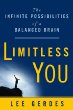
The founder of BST, Lee Gerdes, has written a book, Limitless You: The Infinite Possibilities of a Balanced Brain. I have just gotten the book myself. One of the testimonials on the back cover mentions “restoring … humans to a joyful and highly functional state in their daily life.” Yeah.

All of these companies are staying busy, from what I hear, and I’m sure they are all very competent at doing what they do. I connected well with Gigi on the phone and identified with her as a working woman, so I chose her. She’s also the most highly trained BST certified technician in town.

At my first appointment, she had me fill out an extensive online questionnaire. I’m pretty sure they ask about so many issues because BST wants to collect as much data as it can. All in the name of compassionate science. This is a fascinating frontier that I’ve blogged about before.

At the end of the questionnaire, I identified my top reasons for wanting to do this. I listed well-being and happiness first. And, oh yeah, I wouldn’t mind having better spiritual development and meditation, cognitive improvement, social interactions, etc.

Gigi had me sit in a recliner. She put some electrodes on my earlobes and scalp. She then asked me to close my eyes for 2-3 minutes. Then she asked me to open my eyes partially. Then she asked me to open my eyes completely. With eyes open, she had me do an exercise like repeat strings of numbers.

Meanwhile, a big computer monitor with a split screen is showing my left and right hemisphere activity as colors — blues, green, red, each color representing a range of brainwaves like beta, alpha, theta, delta — streaming by.

Pretty and fascinating. I wonder what this means.

Then she’d move the electrodes and repeat the process for a different area of my brain, getting readings for the frontal lobe, parietal, temporal, occipital, cingulate gyrus, and midline, if I remember accurately.

With my eyes open, I’d do a different exercise for each area. I solved math problems aloud, read to myself and answered a question, listened to Gigi reading and answered a question, and just looked around the room.

At the end, she removed the electrodes and showed me a summary on the computer of my assessment. (It’s proprietary, so I didn’t get a copy. Darn! I love looking at data, seeing what pops out.)

Basically for each area of the brain, there’s data about the left and right hemispheres, about each brainwave type, and about ratios between types (such as between beta and theta), as far as I could tell. I bet there’s also data about the brain’s flexibility in moving from eyes closed, partly open, to wide open, and how well it functions doing each assigned task.

From experience, the BST-trained technicians have come to recognize “brainwave signatures” for various conditions like PTSD, ADHD, and so on. But it’s really not meant as a diagnostic tool. It’s meant to be used to harmonize and balance the brain, and this is the starting place.

They also can tell what range the numbers “should” be in for optimal functioning. Not that there’s necessarily anything wrong with being out of range. I imagine some gifts and talents that people have developed (math prodigy, psychic) rely on being out of normal range while doing that activity. The question is, are they happy and healthy? Can their brainwaves change to meet the situation, or are they in a dysfunctional pattern?

Even if you don’t have anything like PTSD, you can probably benefit from tuning up your brain. The literature says it can help with addictions, anger, anxiety, chronic fatigue, chronic pain, compulsive behaviors, eating disorders, learning difficulties, obsessive thinking, panic attacks, poor memory, sleeping difficulties, stress, and a host of other issues.

So it is possible that with the training, I can completely retrain my brain to operate as if I never had PTSD.

I can be less jumpy and experience even more well-being. I’m looking forward to that.

I can also learn to focus better on reading material that is, ahem, less than compelling. Like textbooks and other dry material.

I’m a pretty good sleeper, but Gigi says that optimizing my brain waves will help me sleep even better, waking up even more refreshed. Wow. I’ve had insomnia before and have great compassion for people with sleep problems. I’m looking forward to sleeping more restfully.

BST affiliates can also do things like increase beta in the left hemisphere and increase alpha in the right hemisphere. Yeah, let those hemispheres specialize even more! I imagine this would make someone more cognitively adept when they need to be and happier the rest of the time. I’ll have some of that, too!

So I’m going to do it later this month, when my contract job is completely done. You need to be able to come in for a couple of hours a day every day, or even twice a day, which is why I’ve waited until now.

I understand the process uses sound, and that you actually “observe” your brain waves and optimize them yourself, creating the balance and harmony you desire, rather than matching an external norm.

I will report back here at Well:bodymindheartspirit.

Comparing trauma release and shaking medicine videos

Having just done the exercises along with the Trauma Releasing Exercises DVD for the first time, I recommend using the video over using the book to get up to speed on these.

The extra exercises at the beginning are nice, and they are more pleasant to do with the models on the video. They make it seem easier and get to the shaking part more quickly.

Read the book, The Revolutionary Trauma Release Process, for background and detail.

Get both!

I know some of you are probably confused about these two techniques, trauma releasing and shaking medicine. They are different yet related.

The trauma releasing exercises are specifically designed to strain the feet and leg muscles so that they begin to quiver and tremble and shake and release the deeply held tension from trauma and prolonged stress.

Every body does this a little differently, but basically, you lie on your back on the floor and let your legs tremble. The trembling may move into your pelvis, spine, neck, hands, arms, and shoulders, as well. The whole process is done lying down.

A room full of people may be doing these exercises, but each is in his/her own space, not touching.

Deep emotions may arise during this process.

Here’s a video of people trembling after doing the trauma releasing exercises.

Shaking medicine, as far as I know, is a term coined by Dr. Bradford Keeney, who also wrote a book called Shaking Medicine: The Healing Power of Ecstatic Movement (which I’m currently reading but bought used without the 40-minute CD of ecstatic drumming it came with).

I see he has written another book, Shaking Out the Spirits, and released a 6-CD audio set from Sounds True, Shaking: The Original Path to Ecstasy and Healing.

Shaking medicine is practiced in cultural traditions around the world, including the Kalahari Bushmen, Quakers, Shakers, and holy rollers. Shakers may stand, sit, and lie on ground, and move from one to the other “as the spirit moves them.” It also may be accompanied by vocalizations such as shouting and singing.

This kind of shaking is a way to heal and connect with God and let spirit move you. Literally.

It too may be accompanied by deep emotional release.

Here’s a video of Bradford Keeney shaking with some Kalahari Bushmen. It’s pretty long but you can certainly get a sense that this kind of shaking is different. It’s part of a community ritual with singing, drumming, and clapping.

It’s also practiced by individual shamans healing people with their shaking touch, sometimes passing the shaking on to another person.

In my current view, trauma releasing is a form of shaking medicine. Both practices release energy blockages and enhance the flow of chi in the body. Literally, both use shaking to heal, thus they are shaking medicine.

The term shaking medicine sounds pretty woo-woo and far out. The term trauma releasing exercises sounds much less threatening of the dominant paradigm and has a “legitimate” purpose that you could probably get a grant for researching.

The biggest difference I see is that shaking medicine is also an ecstatic practice. That word, ecstasy, isn’t associated with trauma release.

I haven’t had an opportunity to do shaking medicine yet (or have I? I practiced ecstatic dance for a dozen years…)

Both TRE and shaking medicine are kin to rebirthing and holotropic breathwork, which use breath to release deeply held tension and emotion.

I have a hunch that with all of these practices, when you’re done, you feel full of life and clean and fresh, very present, unstoried, and renewed. When you feel stale, you do it again.

I’ll keep reading and report on the book when I’m done, or when I find something too good to keep to myself.

Meanwhile, I’m looking for someone to do holotropic breathwork with me.