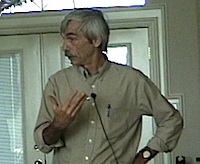
The rainbow-bridge, huayruro seeds, the long body, and the nagual: a tribute to Tom Best

Part of Monday’s reading from The American Book of the Dead by E.J. Gold, which I’m reading for my teacher Tom Best, who died this past week, is this:

If my attention is concentrated and clear, I will merge into the heart of the beloved, in a halo of light called the rainbow-bridge, and attain completion in the region known as Endowed-with-Glory.

The heart of the beloved here refers to an unveiled vision of reality. The clear light and the region known as Endowed-with-Glory are metaphors for the sea of the nagual, to my mind.

So much love, and such clear attention. He is still teaching me.

For the past few days, all the readings (and there are readings for 49 days after death) have mentioned the “rainbow bridge” or the “rainbow light.” When I realized that, I got GUS (god-universe-spirit) bumps because of the following story:

For many years, at the end of many of his trainings and workshops, Tom gave out “rainbow seeds” to his students. They are actually the seeds of the huayruro plant, from Peru. They are beautiful hard seeds of shiny red with a black spot. They are believed to bring powerful good luck and are often strung into necklaces and otherwise made into jewelry.
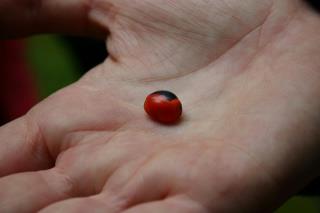
Tom’s instructions were to give these rainbow seeds away, and to give them to either a person or a place that signified excellence or devastation. In other words, a person or place of exceptional excellence, or a person or place in need of healing. (I am hearing his voice speak these words so clearly as I type, as I often do these days.)

I’ve dropped rainbow seeds in areas that have been ugly or devastated, and in spots so beautiful they took my breath away, and I’ve also given them to many people, for one or the other reason. I have also received one, which I mixed in with the others, and I don’t know which one it is now! I will give them all away.

I actually gave one to Tom once, when he was telling my master practitioner class about losing his beloved dog Dakota (whom I met when I first met Tom in the late 1990s), openly weeping as he spoke, sharing his sudden loss with us–and modeling how to let our emotions flow through us.
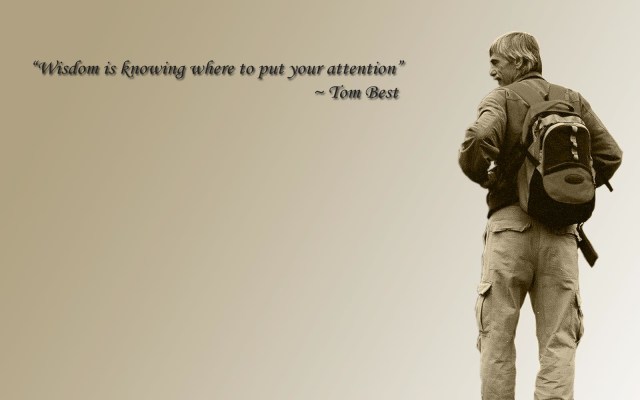
Tom gave these seeds out at numerous trainings every year all around the world, and the people he gave them to have also distributed them to people and places they’ve encountered. Tom called this “building rainbow bridges.”

We recipients now connect to each other on this planet, through him, the healed and the in-need-of-healing, the beautiful and devastated (because don’t we all–and this planet–have potential for both, and isn’t such a state always fluid?), and this bridge lives on even though he has transcended his earthly life, continuing its transformation in us. It’s almost as if he foresaw this happening.
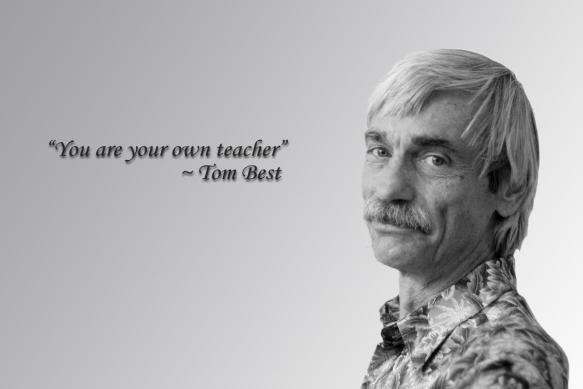
Now that is wisdom, living through the long body. What a master.

Tom, you have been building rainbow bridges for years before passing. I realize I am doing these readings mostly for me (and with Bobbi Best when she is able to join me), because I don’t think you need my help at all in this transition.

My emotional body finds it hard to say goodbye, although I moved some heavy grief hucha up and out at ecstatic dance on Sunday. My spirit body feels Tom’s presence within and around me.

You were my teacher and also the teaching in how you lived your life. Mahalo for showing me that. You know how to move into the nagual. Love, just love, love, love, Tom.

(Thanks to my friend from Maui, Erich Wolf, for posting the photo of the huayruro seed above, to Istok Pavlovic, Catharine Stuart Lord, and Nikola Jovanovic for the photos and posters of Tom and his words of wisdom and how to save high-resolution versions, and to Luzia Helena Wittman for sharing the photo of the footprints in the sand–taken by Tom of his own footprints in Portugal–on the Facebook group The Grace of Tom Best. Mahalo, my friends.)

For more about Tom, I wrote a later post that you might also like to read: When the teacher is the teaching: Tom Best.

Meeting Tom Best, who became my teacher

Whew. I can tell this is going to be some blogging that will take a few days to write, as my experience sifts itself into lasting words, and I’ll probably reread and retouch it a few times after posting as the clarifying process continues its magic. I don’t know now how it will come out, but it’s time to start writing.

Someone who has been important in my life, a teacher primarily and also a friend, since 2007 died, shuffled off his mortal coil, transitioned to a higher plane, passed away, left the planet, shed his body, entered the clear light, or however you like to put it.

I like how my friend Katie broke the news to me:

MaryAnn, I have some sad news to share, but not really.

She told me that our teacher, Tom Best, had had a brain hemorrhage on Monday afternoon. He took a nap, and when his wife Bobbi went to wake him up, he was breathing but didn’t wake up. Their dogs licked him, and he still didn’t wake up.

It sort of gets garbled here but he was taken to two hospitals because the first one couldn’t do a brain scan or something like that, and he looked like he was just sleeping and could just wake up at any moment, and with his wife and dearest friends gathered around him, the doctor didn’t hold out much hope but agreed to leave him on a ventilator overnight to see if his condition changed (it didn’t), and on Tuesday afternoon, he left his earthly body surrounded by loved ones.

People who were there said that as they stood around his bed as he was leaving his body, it was as if they sensed someone entering the room, and that energy seemed to be above them, and then it was gone.

I really want to thank Katie for telling me like that. This has been a really different experience of processing a death/absorbing a loss than I’ve experienced before, and much of it has to do with the person who died, and some of it has to do with me.

I first met Tom Best in 1998 or 1999, when I went to visit my friend Linda in Prescott, Arizona. She was close friends with Tom and Bobbi Best. We went to their place to borrow their new adorable white German Shepherd puppy Dakota and take him for a frolic in the forest. Linda introduced me to Tom, and I remember meeting a slight, wiry man with gray hair, kind of average in beauty, greeting me with a gaze that was really different from what I’d experienced before.

His eyes were very blue, a warm blue, and his attention was totally on me for those few moments of introduction with the best eye contact I’d experienced. I felt that he was genuinely interested in me. I felt an openness, a curiosity, a direct energetic connection, and a feeling of caring emanating from him in those few moments of the typical greeting ritual we all know so well in which names are exchanged and hands shaken.

I felt seen. I felt engaged. I felt cared for. Wow, all that in just a few seconds!

As I would later learn from him, I had just experienced news of difference.

I am pretty sure that was the first time I met anyone who transmitted his presence so clearly and directly to me, and I could not have described our first meeting like I just did had I not had him for a teacher later on.

I tucked that memory away, and in 2007, I was dating a man, Norm Sternfeld, who had studied NLP, and I thought of Linda who had studied NLP, and I thought to myself,

Hmm. People who study NLP use their minds well. I want to study NLP.

So I enrolled in practitioner training here in Austin, Texas, and when I showed up the first day, there was that same guy, Tom Best, whom I’d met in Arizona eight or so years earlier, at the front of the classroom, and in a very short time, I knew I was in the right place.

to be continued…

The starfish story: making a difference

I’ve heard two people tell this story recently. Each told it a little differently. Wanting to share it with you, I googled and learned the original was called The Star Thrower and was published by anthropologist/philosopher/writer Loren Eiseley as part of an essay in 1969.

The story has been adapted and used by motivational speakers ever since and was also made into a children’s DVD, Sara and the Starfish, in 2008. It was adapted again as a beautifully illustrated children’s book, Starfish on the Beach, in 2012.

I found this version on Wikipedia, and apparently it doesn’t violate anyone’s copyright.

Here it is:

An old man had a habit of early morning walks on the beach. One day, after a storm, he saw a human figure in the distance moving like a dancer. As he came closer he saw that it was a young woman and she was not dancing but was reaching down to the sand, picking up a starfish and very gently throwing them into the ocean.

“Young lady,” he asked, “Why are you throwing starfish into the ocean?”

“The sun is up, and the tide is going out, and if I do not throw them in they will die.”

“But young lady, do you not realize that there are miles and miles of beach and starfish all along it? You cannot possibly make a difference.”

The young woman listened politely, paused and then bent down, picked up another starfish and threw it into the sea, past the breaking waves, saying, “It made a difference for that one.”

The old man looked at the young woman inquisitively and thought about what she had done. Inspired, he joined her in throwing starfish back into the sea. Soon others joined, and all the starfish were saved.

If I adapted it, I would probably leave that last paragraph out. Yes, we love happy endings and want all the starfish to be saved, but that’s not why she did it, or why he joined her. Rather than detaching or being overwhelmed by the task, she took action. She threw one back, and then another, and another.

She made a difference to each one she threw back, even though they may have added up to only a tiny percentage of the washed-up, dying starfish. She did what she could.

How often do we look at some problem and feel paralyzed because it seems overwhelming? How often do we detach and think it’s not our problem? Racism, sexism, war, violence, poverty…the list goes on of seemingly intractable problems. It’s so easy to get stuck in helplessness, passivity, cynicism, separation.

And yet it’s our world.

So instead of thinking about what you can’t do, consider what you can do. What is one action you can take? What is the smallest action you can take? It might even be just to think about the problem differently. Maybe it’s a personal challenge that you need to rock yourself out of complacency.

Maybe you can make a bigger difference than you think.

Look at a problem in your life, one that seems intractable, and think of the tiniest action you can take. It doesn’t even matter what it is, as long as it is in the direction of health and resolution.

Then do it. And yes, I am talking to you.

How do you soothe yourself? Here are some of my favorite ways.

Self-soothing is an activity that nearly anyone can learn and get better at. It encompasses techniques and behaviors that we can use to soothe our emotions when ruffled, disturbed, distressed, overwhelmed — when we encounter difficult situations in life.

Self-soothing means not going to others expecting them to make you feel better. Of course, if we’re lucky, we have healthy loving people in our lives who help us feel better, but what if they’re not around? And…how can you become one of those healthy, loving people?

Self-soothing is a skill that you can cultivate to take better care of yourself.

You start with recognizing when you need soothing. It starts with self-compassion. Maybe you experienced a bad day at the office, an argument with a loved one, an unpleasant bit of news, mistreatment by a clerk, a fender bender, or all of these things.

Can you treat yourself as well as you would treat a friend in these circumstances if you had the resources to treat your friend really well? If you’re not your own best friend, who else is going to be?

You probably already use some self-soothing techniques without thinking about it. What do you do that brings you pleasure? I’m not talking about special techniques like EFT or NLP. This post is about ordinary things that people can do to soothe themselves, by themselves.

Here are some of my favorites –and I believe it’s good to have many self-soothing techniques in your repertoire that you can draw on when you need to. It’s a way of adding richness to your life, and you can share these with others, enhancing their lives as well.

For visual refreshment, I love walking in botanical gardens, especially Japanese gardens. I love looking at landscapes, cityscapes, sunrises, sunsets, and the star-spangled night sky — the big picture.

I buy myself flowers on occasion, and depending on the flowers, the color and shape not only please my sense of sight, the fragrance pleases my sense of smell.

Walking on a scenic trail or kayaking or paddleboarding on water is very pleasant, and the sensations of movement, temperature, and more just add to my pleasure.

Traveling to a beautiful place is awesome! I love Maui and West Texas for the gorgeous — and very different — scenery. Those landscapes feel very friendly to me.

Reading a good story takes my mind off my problems and sweeps me up into some other story.

Music is one of the greatest soothing inventions ever. Hearing a beloved golden oldie, music that you associate with good times and good feelings, or listening to new music that engages and calms — those can shift your comfort level profoundly. A couple of my favorites are Wachuma’s Wave and Chakra Chants.

Listening to a waterfall, rain falling, the ocean — the sounds of water definitely soothe me.

I just love listening to Mango purr. Listening to someone read some good writing aloud is also quite pleasurable.

I adore smelling fragrant flowers, any essential oil, herbs and spices and fresh produce, and teas. I once grew a rose called Souvenir de la Malmaisson that smelled so much like a fine wine, just the fragrance was intoxicating. It was like catnip is to a cat. I wanted to roll in it!

Petrichor is the word for the smell of rain. I wish I could bottle it because it’s always so refreshing!

Soothing touch includes feeling soft, sensual textures in bedding and clothing. Curling up is relaxing. So is tuning into the sensations of just breathing. Of course, you can touch yourself pleasingly, and I need not say more!

To some people, exercise soothes. They love sweating. I love yoga and dance. The movements please me and wake my body up pleasingly.

Be careful about soothing yourself with taste. It is the self-soothing method that many people use to the exclusion of all others, and it can easily result in weight gain and/or an unbalanced diet and dis-ease. Be mindful — take tiny bites, eat slowly, let your taste buds savor — and have lots of other self-soothing techniques.

Another fine thing you can do is to take a happy memory and relive it as fully as you can, re-experiencing the sensations and emotions.

Finally, laughter soothes jangled nerves, aching hearts, hurt feelings, failures, and disappointments. At some point, you’re ready to laugh again.

In that case, watch a good, funny video, listen to a funny audiotape, or read a funny book. To each his or her own. Steve Martin, David Sedaris, George Carlin, Saturday Night Live, Christopher Guest, Ellen deGeneres, Monty Python — there are lots of funny, funny performers, films, and books available that you can bust a gut enjoying.

If you have any favorites not listed here, I welcome you sharing!

The universal language of babies

Okay, so this is unrelated to most of the posts on this blog, except for me wanting to be of service by providing new-to-me (and I hope to you) information to improve your quality of life.

It turns out that those little noises that babies make before they really start crying actually have meaning. Babies have been signaling us when they’re hungry, sleepy, feeling general discomfort such as needing a diaper change, feeling lower GI distress like gas, and needing to burp.

Each of these has its own distinct sound.

If we can attend to their needs before they start crying, well, then they cry less! This seems revolutionary. What could it do to a population’s quality of life if all infants had their needs tended to quickly?

This was discovered by a brilliant woman gifted in auditory memory who became a mother, figured this out, and tested it around the world.

Watch this segment from Oprah:

The woman is Priscilla Dunstan. Here’s her website, in case you want to order the DVD: http://dunstanbaby.com/

I find it amazing that this has been right under our noses for millennia, and only now can it be discovered, tested, and widely taught.

It’s also amazing to think about how different the world might be if all parents learned these 5 signals and could tend to their infants’ needs better. Less frustration = more happiness.

It could be revolutionary.

With sparkling eyes and good posture!

From today’s Ocean of Dharma email, this is who we really are:

THE DIGNITY OF FEARLESSNESS

There is more to fearlessness than merely having overcome fear. Beyond that, when we speak of fearlessness, we are describing a positive state of being full of delight and cheerfulness, with sparkling eyes and good posture. This state of being is not dependent on any external circumstances. It is individual dignity. This joy and unconditional healthiness is the joy, the basic virtue, that comes from being what we are, right now. ~ Chogyam Trungpa Rinpoche

I have to say, the description of sparkling eyes and good posture is how I enjoy living my life, as much as I possibly can. It’s where I return when external circumstances take me out of it temporarily.

Joy and unconditional healthiness is who we are, and I am so grateful to have read this early today, as I woke this morning processing some sad, hurt, disappointed, angry feelings, with tears in my eyes.

This feels more like home, these sparkling eyes and good posture!

Body by yoga: beautiful video

Love this video of a committed yogi practicing at home, in her underwear, while a man sleeps nearby.

You can read an interview of the yogi in Elephant Journal here. Amazingly, she talks about having body image problems and an eating disorder. She got help through Overeaters Anonymous and yoga.

She’s also a mother.

Happy Easter!

I want to share this wonderful quote from Jean Houston:

Resurrection is essentially a remembrance of one’s true nature and a waking up to this remembrance.

This Easter, may you wake up and remember who you really are.

NLP practitioner training starts this weekend! First responder can be my guest! Others: $100!

I’ve been asked to post this on my blog, and I am very happy to oblige.

NLP Practitioner training, offered by Best Resources/Texas Institute of NLP, begins this weekend, March 31-April 1, 2012. The training takes 16 days, on weekends only, ending in mid-August.

As a graduate, I get to make this special offer:

The first person who gets back to me with a “yes” can attend the first weekend for free. Please call me (512 507 4184) so I can get your name on the list of free guests.

Anyone else can attend the first weekend for only $100. Follow the link at the bottom of this post to register.

The entire tuition is $2,200 if paid in full by March 31. Payment plans are also available for $400 per month or $285 per training weekend, discounting the first weekend’s $100.

NLP stands for Neuro-Linguistic Programming. It has been called the science of subjective experience, and it’s a super-duper set of people skills. (It’s also called “Now Let’s Play”.)

The training is part lecture/part demo and very interactive. You get to practice each skill taught during the training, and (usually) study groups form during the training.

Who can benefit from taking this training?

  • people who want to understand themselves and others better
  • people who want to deepen their relationship skills
  • people who want to experience more congruence and less internal conflict
  • people who want to improve their communication and language skills
  • people who want to experience more success in life
  • people who work in sales, management, and business
  • parents, coaches, helping professionals, health professionals, and teachers
  • anyone interested in personal growth and living from their highest values

At the end of the training, you will have more behavioral choices, more emotional flexibility, better rapport skills, better negotiation skills, and more confidence in your choices and decisions.

You may make lifelong friends who become like a second family to you — I certainly have.

Tom Best has been offering NLP training for 26 years. He works in the U.S. and internationally, in South America, Europe, Hawaii, Bali, and elsewhere. He draws on his background in cultural anthropology and interest in shamanism. (NLP unveils the secrets of shamanism!) We’re very lucky to have him offer this training in Central Texas.

Trainer Keith Fail has been teaching NLP for 18 years, with a focus on technology businesses and now individual coaching.

NOTE: I’ve taken this training twice, once as a student and once as a training assistant/coach. Master Practitioner training will be offered in 2013. I highly recommend both.

Click this link to learn more and to register.

A model for experiencing and recovering from trauma: Peter Levine’s story

A few days ago, I finally started reading In an Unspoken Voice: How the Body Releases Trauma and Restores Goodness, by Peter A. Levine. This book comes full circle from Waking the Tiger, Levine’s first book, the book that changed my life.

It changed my life by giving me a new understanding of how trauma affects people and how to recover. Trauma is actually stored energetically in the body.

Levine, an ethologist, noticed the shaking that animals who narrowly missed being killed for dinner did, once free of their predators. That shaking allowed them to rejoin the herd not much worse for the wear.

When I read the book in 2002, I was skeptical but open. What Levine said was so different from what any other experts on trauma (psychotherapists) were saying.

One day, feeling exhausted from dealing with difficult emotions and memories, I flopped down on my bed and started to doze off.  The next thing I knew, my body was moving spontaneously, and I knew from having read the description that I was releasing energy blocks from trauma.

In the new book, Levine describes his subjective experience of being hit by a car.

Importantly, he describes PTSD as not an illness but as an injury that can occur from war, rape, sexual abuse, assault, and the like, and also after surgery, serious illnesses, falls, abandonment, receiving shocking or tragic news, witnessing violence, and getting into car accidents. Major shocks to our sense of well-being, in other words.

Some excerpts from his experience:

I can’t figure out what has happened. How did I get here? Out of a swirling fog of confusion and disbelief, a crowd of people rushes toward me. They stop, aghast… Slowly I orient myself and identify the real attacker… A wide-eyed teenager bursts out. She stares at me in dazed horror. In a strange way, I both know and don’t know what has just happened… I sink back into hazy twilight. I find that I am unable to think clearly or to will myself awake from this nightmare.

A man rushes to my side… he announces himself as an off-duty paramedic. When I try to see where the voice is coming from, he sternly orders, “Don’t move your head.” The contradiction between his sharp command and what my body naturally wants — to turn toward his voice — frightens and stuns me into a sort of paralysis. My awareness strangely splits, and I experience an uncanny “dislocation.” It’s as if I’m floating above my body…

…I need to have someone’s comforting gaze, a lifeline to hold onto. But I’m too terrified to move and feel helplessly frozen.

…Finally, I manage to shape my words and speak. My voice is strained and tight. I ask him, both with my hands and words, “Please back off.” He complies.

After a few minutes, a woman unobtrusively inserts herself and quietly sits by my side. “I’m a doctor, a pediatrician,” she says. “Can I be of help?”

Please just stay with me,” I reply. Her simple, kind face seems supportive and calmly concerned. She takes my hand in hers, and I squeeze it. She gently returns the gesture… I feel emotionally held by her encouraging presence. A trembling wave of release moves through me, and I take my first deep breath. Then a jagged shudder of terror passes through my body. Tears are now streaming from my eyes…

I am sucked down by a deep undertow of unfathomable regret. My body continues to shudder. Reality sets in.

In a little while, a softer trembling begins to replace the abrupt shudders. I feel alternating waves of fear and sorrow… I’m afraid of being swallowed up by the sorrow and hold onto the woman’s eyes. Her continued presence sustains me. As I feel less overwhelmed, my fear softens and begins to subside. I feel a flicker of hope, then a rolling wave of fiery rage. My body continues to shake and tremble. It is alternately icy cold and feverishly hot. A burning red fury erupts from deep within my belly.

I hear my shirt ripping. I am startled and again jump to the vantage point of an observer hovering above my sprawling body..The Good Samaritan paramedic reports that my pulse was 170… The paramedics are requesting a full trauma team. Alarm jolts me… As I am lifted into the ambulance, I close my eyes for the first time. A vague scent of the woman’s perfume and the look of her quiet, kind eyes longer. Again, I have that comforting feeling of being held by her presence.

Even though my eyes want to dart around, to survey the unfamiliar and foreboding environment, I consciously direct myself to go inward. I begin to take stock of my body sensations. This active focusing draws my attention to an intense, and uncomfortable, buzzing throughout my body.

…I notice a peculiar sensation in my left arm. I let this sensation come into the foreground of my consciousness and track the arm’s tension as it builds and builds. Gradually, I recognize that the arm wants to flex and move up. As this inner impulse toward movement develops, the back of my hand also wants to rotate. Ever so slightly, I sense it moving toward the left side of my face — as though to protect it against a blow. Suddenly, there passes before my eyes a fleeting image of the window of the beige car… I hear the momentary “chinging” thud of my left shoulder shattering the windshield. Then, unexpectedly, an enveloping sense of relief floods over me. I feel myself coming back into my body. The electric buzzing has retreated…  I have the deeply reassuring sense that I am no longer frozen, that time has started to move forward, that I am awakening from the nightmare

…I feel tremendous relief along with a deep sense of gratitude that my body did not betray me… As I continue to gently tremble, I sense a warm tingling wave along with an inner strength building up from deep within my body.

And it goes on. He gets the ambulance paramedic to tell him his vital signs: heart rate is 74, blood pressure 125/70. Normal. He knows from research that he won’t be getting PTSD.

Thank you, Peter Levine, for providing this fabulous first-person account of the subjective experience of someone who experienced trauma. The body and emotional awareness, the knowledge to tell the paramedic to back off, to receive comfort from the pediatrician, and mostly to allow his body to do what it needed to to — shake and make defensive movements and allow intense emotions to flow — is just brilliant.

I want to be able to witness another’s trauma and not be triggered myself.