I’m starting a new category, consisting of quotes from ordinary people. Famous people don not have a monopoly on wisdom!
Here is the first:
Life is what we do between our first and last breath. ~ Loping Buzzard

I’m starting a new category, consisting of quotes from ordinary people. Famous people don not have a monopoly on wisdom!
Here is the first:
Life is what we do between our first and last breath. ~ Loping Buzzard
I just realized a day or two ago that so many of my recent efforts — meditation, reiki, the trauma releasing exercises, learning and teaching restorative yoga — are not only healing, they also relax you.
Hmm. Methinks there’s probably a strong relationship between healing and relaxing.
Judith Lasater in her recent restorative yoga workshop in Austin said that human beings need activity, rest, and sleep.
Rest is the one we usually let go of first in the pressure to “keep up” and “have it all”. Then sleep.
It’s hard to set limits on activities. Let me practice that right now.
No thanks, I have just the right amount on my plate.
Really, do you know anyone who takes resting seriously? Who turns off their computer and phone regularly to do something relaxing? Something playful and not too competitive?
Remember when everything was closed on Sunday and it was truly a day off? Stores and offices and factories closed so employees could have time off with their families. It was the norm.
Now so much is available most or all the time. You can shop online at 3 am! Factories run 24/7. Banks are open on Saturdays. Some stores are open all night.
Pondering all this “need for speed,” I thought up a workshop title: Relaxation Bootcamp. Really. That’s what it might take for some people, the bootcamp approach.
I’d start with the trauma releasing exercises. All that quivering, trembling, and shaking is tension leaving your body!
Then some pranayama to balance the left and right hemispheres.
Then a long restorative yoga session followed by a reiki session followed by meditation.
I have to ask myself,
Do I know who I am as a relaxed person?
What will it take to find out?
Am I addicted to stress?
When do I feel relaxed yet aware?
As I ponder these questions, I am in the middle of a 3-month contract job. I usually eat at my desk and don’t take a lunch break. Being productive is my m.o.
Yet sometimes when I feel the tension building from sitting at a computer all day, I do a little desk yoga with Rodney Yee.
4 Minute Neck and Shoulder Stretch
4 Minute Upper and Lower Back Stretch
Puts a little spaciousness and flexibility back into my day.
I have a hunch this is a lifetime issue for me, something I need to learn for myself and master.
How about you? What would you include in your Relaxation Bootcamp?
The marvelous yogini-cum-graphic-artist Alison Hinks, who created the yoga lineages flow chart I linked to earlier, has done it again.
This beautiful graphic shows the eight limbs of Patanjali’s Yoga Sutras.
What’s extra nice is that she’s identified the actions you do and the experiences that happen to you because you have practiced the actions effectively.
Thank you, Alison Hinks, for adding beauty and inspiration to the world.
I’ve got to load my yoga props in my car, scoot out the door, and head off to NLP master practitioner training, where I’m assisting, and then go directly to teach my restorative yoga class. So today, Feb. 6, my report will be short.
What I noticed this morning, sometime after I started doing the TRE exercises, is that my breathing had changed into quick inhalations through my nose and long, slow exhalations through my mouth. Like sighs. Sighs of relief, sighs of release. Ahhh.
Today I experienced more leg trembling and noticed a variety in the rhythms, from fast, hard shaking, which would slowly lessen, then come to a stop, and then repeat.
At times my knees were slamming into each other — good thing I’ve got a little padding there, or I might have bruises.
Only toward the end did I begin to do the pelvic rocking that rocks me all the way up my spine and head.
I stopped after 10 minutes because of time constraints. (Also, I confess, I only did Exercise 1 three times on each side.)
Here’s a video of Dr. David Berceli talking about how strange it looks and feels when you first do the TRE exercises. Basically he says it’s the ego that keeps us traumatized. In TRE, the body takes over from the ego. After the first minute or two, it feels relaxing.
Today I’m grateful for finding inner bigness — hope, recovery, resiliency, growth — for those energies that move a contraction into expansion, that move a loss into new possibilities.
If you have experienced a recent contraction — a disappointment or loss, say — know that if you give it some space, some energy within you will find a way to expand. To give it some space means to accept that what you planned has been replaced by the unknown. To allow the unknown to come into awareness — and not fight it or run from it with distractions or denial — is to open to possibility.
That moment may be uncomfortable, though. Breathe into it.
Expansion may come in the form of you learning a new and needed skill that gives you more confidence about managing your life.
Or it may come in the form of a new recognition about who you really are and what your life’s purpose is.
Today I recognize this pattern in my life, and I share it with those who need it.
~~~
Today I’m grateful for people who inspire, and I want to call one out in particular. Keith Fail presented last night at the Austin NLP meetup on the topic Living a Meaningful Life in 2011. Keith has studied NLP for 25 years with some of the best masters available. He coaches, teaches, and trains people with NLP. He is the most widely read person in the field that I’ve met, with a very inclusive yet discerning mindset. NLP is his life’s work.
 Plus, he’s secretly a Jedi master. I’m convinced! Meet him and see for yourself.
Basing his presentation on the assumption that people want to be happy, and using current research on what makes people happy, Keith asked key questions to elicit in each attendee more clarity about what gives meaning to their lives and therefore brings happiness.
I recognize that I am undergoing a sea change in my life purpose and values, and my conscious mind is the last to know! These changes start deep within the unconscious, and are really just starting to take shape consciously about living my life’s purpose. I’ll be writing more as it becomes clear to me.
Thank you, Keith, for the value you’ve added to my life, and for being a friend and Jedi master.
~~~
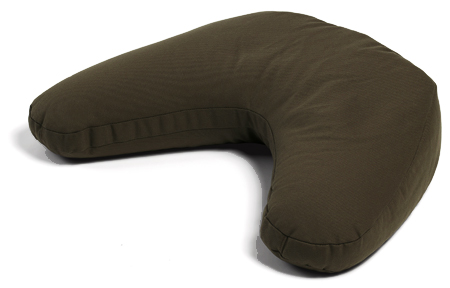 I’m grateful for awareness. The faculty of awareness, and specific instances of awareness. Awareness allows me to recognize gratitude.
After I meditate, I get up and then bow to my empty zafu. It serves as a symbol and location for my experience of awareness.
Thank you.
From googling “gratitude journal,” the practice apparently began in 1996 when Sarah Ban Breathnach created The Simple Abundance Journal of Gratitude as a companion to her popular book Simple Abundance: A Daybook of Comfort and Joy.
Here’s a blurb about the book:
“Gratitude is the most passionate transformative force in the cosmos,” promises author Sarah Ban Breathnach (Simple Abundance) in her introduction.
I believe it, Sister Sarah!
Sarah asked journalers (journalists?) to write five things every day that they felt grateful for and said they would feel their lives shift within a couple of months.
In 1998, Oprah Winfrey had Sarah as a guest on her show, and as we all know, Oprah just knows goodness. The gratitude journal took off.
I missed out on this back then. It was in the early days of the world wide web (remember that?). I was working at a computer all day, and in my free time, the last thing I wanted to do was be on a computer. (My, how Facebook and blogging have changed that!)
I was raising an adolescent girl going through her most difficult period, in an often-strained relationship.
Actually, looking back, keeping gratitude journals would probably have been a fantastically wonderful practice for us to share back then, if she had deigned to share anything with me.
Hmmm. She’s changed, and so have I.
Today I feel grateful for my whole experience of motherhood. From pregnancy (easy), through childbirth (difficult), to the moment I held my new baby in my arms for the first time and she wrapped her tiny fingers around my little finger (instant love), I have been blessed to have had a child, a daughter, and specifically my daughter, Lela Rose, who is 29 years old now.

Lela at her Dec 2010 graduation from nursing school, with her women friends.
I watched and helped her grow up, even as I grew up more myself, and she has turned out to be a mensch, a true human being. I see her in her young adult years now, a mother herself, starting her nursing career just this week, moving through struggle to accomplishment. I see her self-esteem, her worthiness, her competency, her intelligence, her endearing goofiness, her wisdom, her discipline, her caring, her limits too.
What I am most grateful for about being a mother is the personal growth that raising her brought to my life — the growing up that I had to do, the inner work of exploring my values, learning when to be flexible and when to stand firm, the changes that being her mother brought to my life.
Today I feel grateful for my women friends, in particular Clarita and Linaka, whom I spent time with last night. We go way back to 1995 when we began ecstatically dancing together. That is 16 years of knowing each other, talking, coming together and moving away, seeing each other through difficulties and joys and sharing them, traveling together, cooking and eating together, always laughing together, and lately doing NLP with each other.
I feel blessed to have so many women friends, new and old, near and far. There is something about the friendship of women that is so nurturing. I think we let our hair down when it’s just us, in a way that we don’t or can’t with men, because we share the lifelong experience of being women in this culture. And when we have common interests and affection for each other, the connecting is abundant.
Today I feel grateful for those people I’ve encountered so far in my life who are skilled intuitive healers. I’ve mentioned Patrice, my acupuncturist, and Chandler Collins, my chiropractor, on this blog before.
Yesterday I had a heart-centering bodymind session with Bo Boatwright, who is a chiropractor but who has learned and developed a method that one could do with just a massage license.
Having experienced one session with Bo, I’d say his work with me on the table was a combination of massage, chiropractic, myofascial release, rebirthing, and visualization. He rolled me and moved me to find the stuck places, and he dug into the stuck places, having me breathe all the while, until my body spontaneously began to release stress/tension/stuckness in the manner of rebirthing and trauma releasing exercises.
After my body quieted down, I felt sadness arise in my heart chakra. I cried, and Bo asked me about my relationship with my parents, who died in 1984 and 1997 (but of course one’s relationship with parents doesn’t end with death). I opened my heart to them, forgave them, embraced them, kissed them…
A couple of hours later, in a moment of quiet stillness, I noticed a new space in my heart center, an openness that wasn’t there before.
Thanks, Bo. I’m grateful for you. And heads up, you are teaching me.
I’m feeling some vulnerability in my heart chakra on this morning of the last day of 2011. It feels open and a little bit raw and unprotected.
I’m just moving with it.
Mentally I associate the feeling with the big transition I’m in, from being an employee with a full-time job taking up a huge amount of time, to … something else. The something else is all in the future — selling my house, buying a vintage trailer and getting it set up and moving into it. Those are huge. Then there’s the question of learning and future livelihood.
Emotionally, I’m feeling a charge about future finances, about moving from a steady, predictable, generous paycheck into new ways of earning and relating to money.
Will I need to get another job before my house sells? I don’t know! And if so, doing what? I can expand my yoga teaching and NLP coaching (which I would do for free anyway, except reciprocity is part of it). What else will people pay me to do that I enjoy doing? I don’t know.
So much is unknown! It’s hard for a fear-based Enneagram type like me (5 with a 4 wing) who loves the certainty of “knowing” to stay centered in the present moment instead of feeling anxiety about the unknown future.
So I’m meeting my karma here, facing it fully.
Yet isn’t it all unknown, really? Haven’t we all been surprised by external events…or by some previously unknown part of ourselves making itself known?
To live in this in-between time as best I can, I’m committing to doing a lot of daily energy work, both moving and still, verbal and nonverbal.
I can do all of these as needed, from morning until bedtime.
Whatever I know to get centered and connected to the Source, I’ll do it as often as I can.
Brene Brown, whose TED Talk I blogged about the other day after discovering Alan Steinborn’s recommendation on Facebook, does this thing on Twitter that she explains here on her blog. She calls it #Reverb10 and describes it as:
an online initiative that encourages participants to reflect on this year and manifest what’s next. It’s an opportunity to retreat and consider the reverberations of your year past, and those that you’d like to create in the year ahead.
As I understand it, it’s a group initiative. Thirty-one writers post prompts for writing and reflection on Twitter using the hashtag #reverb10. Brene is one of the writers. Anyone can get on Twitter, search for #reverb10, and respond.
Because not everyone is on Twitter, Brene has graciously made space on her blog where people can respond in the comments (with more than 140 characters!) to any or all prompts, and/or leave a link to their blog.
This is social networking at its most awesome!
Here is Brene Brown’s prompt for Dec. 27:
Our most profound joy is often experienced during ordinary moments. What was one of your most joyful ordinary moments this year?
Click the link above to check out Brene’s response to her own question, and those of many others.
And here is my response.
My most joyful ordinary moment is about something that I became aware of recently, and to understand it, I need to share a little background for new readers.
I started this blog as a year-long project to help myself develop the habit of meditating for 30 minutes daily. I’d meditated for several years, but not consistently. I’d do okay for a couple of weeks, then get derailed (sometimes for another couple of weeks).
I knew meditation had all kinds of beneficial side effects, and I wondered:
If I could put a little (or a lot) more effort into meditating every day, how would my life change?
Well, I failed. I did not meditate every day. I could not meditate with a stuffy nose (mouth breathing just doesn’t get it for me).
I also went through a period of rebellion a few months into the year. I was laying this demand on myself, and it felt burdensome. I rebelled, took a break, plunged inward with questions, and came back wanting to do it, recommitted.
I also had a sort of breakdown/spiritual awakening in November that resulted in me quitting my day job after six years. I was so distressed, I couldn’t sit. A lot of things in my life came to a head. I had planned to leave my job at the end of May in order to start acupuncture school in July, but circumstances actually made it the perfect time to leave (and my gut said I had to, besides).
Other than that, oh, and la-di-dah, a few days of just pure laziness, I have meditated daily in 2010.
End of background.
My most joyful ordinary moment came a week or so ago when I realized that as soon as I sat down on my meditation cushion and took a breath, that I was there. In the present moment. It felt like all considerations of the past and future just dropped away, leaving just the moment and the breath and the quiet bliss.
I am now like Pavlov’s dog, only instead of a bell triggering salivation, sitting on a meditation cushion triggers presence.
I created that in 2010.
This will go to Twitter, and I’ll comment on her blog as well. She’s giving away copies of both of her books and her DVD! I wouldn’t mind having those at all!
I love this project!
We all experience not being present — spacing out during a conversation, not remembering the drive home, thinking about work problems during dinner, eating mindlessly, worrying about something that hasn’t happened yet, bashing ourselves over some mistake.
To be present is to be aware of the present moment, to be here now, in Ram Dass’ words. This is where life really happens. The past is over, and the future never arrives. The present is all we really have.
Unclouded by the baggage of the past and clear of worry about the future, the present moment has sparkle to it, life. You have more fun. You feel more grateful. You listen more deeply, and your conversations are better. By doing one thing at a time and doing it well, you get more satisfaction from your work. You enjoy life more.
Being present is a skill that most anyone can learn, practice, and master. I’ve definitely gotten better at it, and as with any skill, there’s room for refinement.
I’ve practiced yoga, NLP, the 12 states of attention, peripheral walking, and meditation over the last few years. All of these practices have helped bring me more into the present moment, and over time, I’ve gotten better at it. Not coincidentally, I have more joy in my life.
Here are some of my favorite ways to live in the present moment. For many of these ways, it doesn’t matter where you are. You could be on hold, in line, at a red light, in an elevator, sitting at your desk, or exercising.
Notice that these exercises are based on simple curiosity about what your actual experience is.
When you’ve done each one of these several times, you can begin to create new habits to help you be more present.
Try being more present for a day, week, month, a season, or a year. What might that do for your life?
If you like this post, please click Like. Thanks!
I sat this morning, and toward the end of the 30 minutes, I felt a definite shift. You regular readers know I’m interested in brain waves. I think this was a shift from alpha to theta!
(One of my desires for 2011 is that between selling my house soon and starting at AOMA in July, I can acquaint myself with my brain wave states using a neurofeedback machine. I’d like to be able to relate my subjective experience to objective feedback and write about it.)
It’s important to be clear that even though I’m writing about shifting brain wave states, a shift is not just mental (i.e., experienced inside my brain). Shifts occur in my energetic body-mind. Brain wave biofeedback uses electrodes on one’s head, and perhaps that is the best place on the body to place electrodes to get a good reading, but shifts affect the entire body-mind-energy system.
It was like this: I began sitting. Immediately I gave my physical body more attention. (Before, monkey mind — and my feet — were wandering through the house with the loose intention of sitting before breakfast, and my feet found their way to my meditation corner.)
The attention to my physical body began to trigger little blossomings in my energy body. (Over the course of this year, I’ve become habituated to sitting. Like Pavlov’s dog, sit me down on a zafu, and certain things happen.)
I check in with my whole body, noticing stiffness in part of my back. It begins to relax. I breath prana into it for deeper relaxation.
I tell myself:
Let my whole body embrace my breath. Let me make it welcome. Let me receive it fully and let it go fully.
Pause, then big spontaneous inhalation, with my breath being fully and completely welcomed and embraced. Ah.
I think:
Hmm, maybe I should blog about this sometime.
Then for a while, I focus my attention on the energy field around my head. Just noticing my halo! Crown chakra, third eye chakra, throat chakra all open and clear.
I direct my attention to my heart center. This morning it feels quiet and open.
I begin remembering bits of Peg Syverson’s dharma talk at Appamada Zendo yesterday about the nature of wanting.
Our energy field expands to include that which we desire. We become attached; the attachment becomes part of who we are.
From wanting, suffering may (or may not) arise.
There is nothing wrong or bad about wanting!
I evaluate my own thoughts and think:
Hmm. Wanting and attachment. Mental note to self: explore this in a future blog post! But first, listen to Peg’s dharma talk again online.
That Peg is so brilliant.
And then:
Oh, thinking mind! Come back to the present, to my body.
Now where was I? Ah, yes, my belly.
Attention moves to belly. Mmm. Feel pleasant sensations between ribs and pelvis. Feel nice round heavy juicy energy in second chakra. Mmmm. Feel my tailbone, sitz bones, flesh, the root chakra area open and expand, heavy against the zafu.
I think:
I used to not experience much root chakra energy. It has returned in full force. I feel happy about this.
Now I merge awareness of my head, chest, and belly centers together to experience whole body awareness.
Ah. There it is. Deep inhale, deep exhale. I’m there.
Attention moves within the field of my whole body. News of difference moves it. A pain (contraction) here, a blossoming (expansion) there, neutral awareness of my wholeness.
This goes on for some time. I feel pleasantly relaxed and alert and centered.
Then I notice the shift.
It’s as if my body and mind have become heavier. My mind has definitely calmed. My body feels more still as well. It’s as if my vibrations are oscillating more slowly and congruently.
I feel more passive, more surrendered to the moment. I experience less of a need to be on top of things, to be in control, to do anything, really. It’s as if my ego has stepped away.
I don’t feel tired, but this is similar to feeling pleasantly fatigued. No effort. Quiet heavy bliss.
Then the timer chimes and I come out of it. I think:
Hmm. Maybe it takes 25 minutes to reach this state. I’m going to set my timer for longer and find out.
 The Well: bodymindheartspirit