Self-care for massage therapists, part 2 (what works for me)

In part 1, I listed various self-care methods that massage therapists use for their own aches and pains from giving massage. In part 2, I want to share what I’ve tried (so far) that works.

First, I want to say that my strength and endurance have increased with practice. I used to be in pain after giving 3 hour-long massages in a row several days in a row. Now I can do 4 hours 5 days a week with just a few twinges and aches afterwards. For several weeks, though, I was hurting and feeling some despair about having upended my life to get trained and start working in this new profession and the possibility of not being physically able to do it.

Key learnings from a newbie:

  • I no longer attempt deep tissue work, sticking to Swedish and reflexology. My Swedish massages are good and getting better. I incorporate some of David Lauterstein’s deep massage strokes into every Swedish massage, and I use pressure points, stretching, techniques from sports massage, body mobilization techniques, and reflexology, depending on the client’s issues and the amount of time I have. I cannot deliver the pressure that some clients (well-informed or not about what “deep tissue” means) seem to want. If I work within my limitations, it’s win-win for everyone.
  • I trained in Ashiatsu Oriental Bar Therapy so that I can deliver deeper pressure using my feet and body weight, controlled by holding onto overhead bars. It’s so much easier on my body and a lot of fun, too.
  • I rock with my feet and leverage my body weight strategically as I deliver Swedish massage so my arms and shoulders do less work.
  • Hydrotherapy totally rocks after a long shift. I fill my double kitchen sinks with hot water (my water heater is set to 130 degrees F. for sanitizing laundry) and cold water that I dump a quart or two of ice into. I immerse my aching forearms and hands in the water, alternating cold-hot-cold-hot-cold, for one minute each. I can barely stand it, and yet it makes a huge difference in just 5 minutes. Seems to flush toxins and swelling and pain right out.
  • I stretch my fingers and wrists, holding each stretch for 15 seconds. Good to do when driving, at red lights.
  • I press into the trigger points for the elbow and wrist (see part 1 for links).
  • I apply magnesium gel with seaweed extract topically. According to Wikipedia, symptoms of magnesium deficiency include muscle cramps, weakness, and fatigue, and fifty-seven percent of the US population does not get enough magnesium from food.
  • I love epsom salts in a bath. (Guess what? They contain magnesium!) When I was feeling a lot of pain all over, I would dump a cup or two of epsom salts into a fairly hot bath and add a few drops of lavender oil, then soak for 15-20 minutes. I felt like a new woman when I came out! I learned this years ago from dancers.
  • I use Young Living’s OrthoEase oil on clients’ painful muscles, and I use it on mine as well. Contains wintergreen, peppermint, eucalyptus, lemongrass, and more that are analgesic and anti-inflammatory.
  • I keep hydrated and have been avoiding nightshades lately. I’m already gluten-free and eat fairly healthily. I’m interested in following an anti-inflammatory diet but haven’t done the research yet.
  • I take at least a couple of days off per week, not always together, though. I’m still finding my ideal schedule.
  • I do 10-15 minutes of yoga every morning. Sun salutations stretch and strengthen my body. Plus, it’s a great check-in to do something that starts the same every day. I start slowly and really let my hamstrings lengthen in forward bend before I move on to the next pose. I add standing poses, balance poses, and pigeon as I feel the need and to keep it interesting.
  • I get at least a chair massage every week. I’m interested in setting up a weekly trade for a full-body massage with someone, too.
  • I use a foam roller on back when needed, and a tennis ball to my gluteus.
  • I have two tennis balls tied into a sock that I use when driving to massage my back. I’ve also learned to “pop” my own back while giving massage!

Here’s something that just doesn’t fit into any of the categories I’ve seen so far about self-care for MTs. It’s about how you use your attention. I’ve learned to keep some of my attention on my body most of the time.

When I focused exclusively on the client’s body, delivering what I thought they wanted, I hurt and fatigued myself. I listen more to my body now and check in verbally with the client if I am not noticing nonverbal feedback.

If I notice that I feel rigid anywhere in my body, I say to myself, “Soften,” and my body softens.

Sometimes I put my attention on the soles of my feet and their connection to the floor/earth (I massage with bare feet always for Ashiatsu and as much as possible for Swedish), making the movements of giving massage into a soft, fluid dance.

Sometimes I attend to my breath, letting it become easy and relaxing (and audible to the client, as a nonverbal suggestion that they relax too).

All of these techniques activate the inner body, subtle body, energy body, whatever you want to call it. It feels better to give massage with this “soft present alive expanded body” than not. There is definitely an aspect of being “in the flow” that seems somehow related to doing Reiki, but I don’t know how to put it into words (yet).

Another bonus: the sensations of pain and fatigue become distant as peace and love fill my awareness.

I don’t know if clients perceive the difference, but I don’t think it could hurt. I do it for me because I “in-joy” it!

It’s been four months since I got licensed and began working. I look forward to learning even more new things about self-care and sharing them here.
The dancing genes, sociability, transcendence, and genetic flexibility

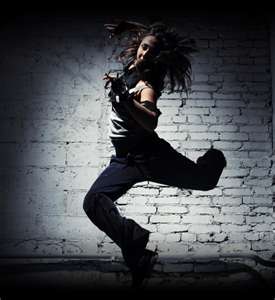
A recent article published online says that dancers are genetically different. Some Israeli researchers found that dancers show consistent differences from the general population in two genes.

The researchers said this did not surprise them, because studies have found that athletes and musicians have genetic differences.

I can only speak for myself, but my dance is very connected to music — my movement is a way to participate musically, as if I were playing an instrument. It’s also very physical.

I did a little Googling to see if I could find which specific genes differ in athletes and musicians, but I didn’t find anything that was very clear. Race seems to be the biggest issue in the media when it comes to genetics, athletes, and musicians.

The researchers studied dancers and advanced dance students and found they had variants in two genes, those affecting serotonin transport and arginine vasopressin reception.

Serotonin (“the happiness molecule”) is a neurotransmitter that contributes to spiritual experience — the capacity for transcendence and a proclivity to spiritual acceptance. (See this Psychology Today article for more about that.) It also affects optimism, the healing of wounds, resilience from stress, metabolism, sleep, and more.

“Serotonin transport” sounds like a dance inside the body!

Interestingly, exercise can raise serotonin levels in the body, so dancing itself reinforces dancers’ high serotonin levels!

I admit — I get into an altered state from ecstatic dance. That’s why they call it ecstatic dance, I suspect. 😉

The vasopressin receptor modulates social communication and affiliative bonding. Wikipedia says “…accumulating evidence suggests it plays an important role in social behavior, bonding, and maternal responses to stress.” It has a very similar structure to oxytocin (“the love hormone”), and the two can cross-react.

When the results were combined and analyzed, it was clearly shown that the dancers exhibited particular genetic and personality characteristics that were not found in the other two groups.

The dancer “type,” says Ebstein, clearly demonstrates qualities that are not necessarily lacking but are not expressed as strongly in other people: a heightened sense of communication, often of a symbolic and ceremonial nature, and a strong spiritual personality trait.

I know this is controversial, but I want to weigh in on the side of flexibility when it comes to genetics. For much of my life, genes were thought to be destiny, unalterable. Now it is known that the expression of genes is much more dynamic than previously believed. They can switch on and off.

I don’t know that much about it, except that stress tends to switch on the bad genes. I don’t know which or how many genes truly create destiny and therefore cannot be influenced, except that there probably are some. We just don’t know enough about this in our current level of understanding.

I want to encourage people who believe they don’t have the dancing genes to give dancing a try.

Two left feet? That’s a myth. If you can walk, you have rhythm and coordination.

If you think you can’t dance, try just moving to some music alone in your own home if you feel self-conscious. Play something catchy, like “I Heard It Through the Grapevine.”

Start simple, just swaying your hips to the beat, keeping your feet in place. Do you like it? Do you feel any sense of pleasure? Play with it. Add your arms. Walk to it. Make it fun and goofy!

Those dancing genes may be just sitting there waiting to be activated, for all we know, and they might help you become happier.

12 ways to improve your health by sitting less (written while pedaling on a FitDesk)

If you commute (usually sitting) to a desk job (mostly sitting) and then go home and watch television (sitting) and/or spend a lot of time on your computer (sitting), even if you manage to work in an hour at the gym, your health is at risk.

You can Google to learn more about the science of this — and they’re just beginning to learn. I’m just here to give free advice on behavioral changes you can make.

To counteract all the sitting, you could consider:

  1. Cutting the car commute and work from home as much as possible. Seriously. Present this option to your manager as a way to cut their costs, improve your health, and therefore make you more productive!
  2. If you can’t avoid car commuting, every time you’re at a red light or stop sign or gridlocked in a traffic jam, stretch your legs, and tense and relax them several times. Really pull the muscles to the bone. (Okay, that’s the yoga teacher in me talking.) Point and flex your feet and rotate your ankles.
  3. Take public transportation and stand during your commute, a la New York City subway riders.
  4. Bicycle to and from work, or combine biking with riding the bus or light rail. Many now have bike racks available. You may want to request that your workplace provide showering facilities.
  5. At work, take frequent breaks (1-2 minutes every 20 minutes) to stand up and walk around. Set a timer and do it. Go get a drink of water, go to the bathroom, stretch, shake the tension out of your body, do a forward bend to stretch the backs of your legs. Walk to the best view from your building and partake of it to refresh your spirit.
  6. Sit on an exercise ball. You have to use your legs to balance. You can also bounce when no one is watching. It will strengthen your core muscles because there’s no back — you have to hold your torso up. This will burn more calories, if you’re interested in doing that.
  7. Instead of emailing, texting, or phoning, walk over to a colleague’s office to communicate with him/her. I know, I know, this is really analog, but it’s also refreshing. Think of how much more information you get from seeing their face and hearing their voice in person. You might even learn something about them from seeing their office decor.FitDesk
  8. Persuade your office to invest in a FitDesk. One FitDesk shared among eight employees sounds like a great start. I imagine 30 minutes in the morning and 30 in the afternoon would make a big difference in the health and longevity of those eight employees, especially if they’re doing some of these other things when not pedaling. Of course, if your office can afford it, get a FitDesk for every employee! If you can’t afford it, you could phase this in over time as finances allow, as employees using it report they’re feeling better, missing less work, being in better moods, and being more productive, improving the company’s bottom line. Hey, maybe this is the key to the economic recovery and the obesity epidemic! FitDesks for every employee!
  9. When you get home, turn off the TV and computer and do something that uses your legs: cook, go for a walk, clean house, garden, do yard work, do yoga, lift weights, kick box, have sex, play with the dog, take a shower, swing your kids around, give them piggy-back rides, roughhouse, dance, put on a show. Also known as “living life” and “being embodied”.
  10. If you can’t eliminate TV or video games or Facebook or whatever is so compelling on your computer (okay, blogging and Facebook for me), limit it to an hour (with a break every 20 minutes; see #5 above) and get up during commercials unless you are on your feet while watching. Or…
  11. Get a FitDesk for your home so you can move your legs while watching TV and being on the computer.
  12. Do this with other people. It will be more fun.

Making the world a healthier place, one blog post at a time…

Free screening of Meetings with Remarkable Men: a film about Gurdjieff

My weekly book group, the Austin Redfin Group, just recently up and named itself and decided to host a public event!

We’ve been reading books about “The Work” of G.I. Gurdjieff, a famous Russian mystic and spiritual teacher. Right now we’re reading The Reality of Being: The Fourth Way of Gurdjieff, by Jeanne de Salzmann, his closest follower, whose notes on his teachings were just published in 2010, even though Gurdjieff died in 1949. I find her writing very clear and accessible.

We’ve also read books by E.J. Gold, author of the American Book of the Dead and many books in the Gurdjieffian Fourth Way tradition.

We’re hosting a viewing of the 1979 film Meetings with Remarkable Men, based on one of Gurdjieff’s books of the same name. The film covers his adventurous search for truth, his initiation into the mysterious Sarmoung Brotherhood, and a demonstration of the movements and sacred dances that later became part of The Work.

Filmed on location in Afghanistan, the movie tells a story of the universal search for the truth and meaning of life and the desire to awaken and realize oneself.

The screening is at Casa de Luz, Serena Room, 1701 Toomey Rd., on Tuesday, July 24, 2012, from 7-9ish pm.

If you are or have been a seeker after truth, you might really enjoy seeing this film. Please consider yourself invited to attend.

“People dance like little kids here!”

That’s what my 12-year-old granddaughter said about Ecstatic Dance Austin this morning. We arrived during warmup. She sat in a corner and watched. I danced. The space was full.

She sounded surprised and delighted when she made this observation. I had to agree. We do dance like little kids at ecstatic dance. Only we have better rhythm and more grace, and maybe some of us feel a bit more stiffness until we get warmed up. From what I remember, little kids don’t need to warm up.

We definitely have the playfulness, the wholeheartedness, the joy, the abandon, and the presence of little kids when we’re on that dance floor.

We’ve gotten pretty good at connecting with each other and respecting boundaries, completely nonverbally.

We’ve gotten pretty good at keeping the space safe, of moving into the empty spaces instead of colliding. We keep our eyes open.

We’re pretty good at spontaneity and going with the flow.

You could say we dance like nobody’s watching, and that’s because no one is. They’re paying attention to their own dance, dancing with one or more partners, maybe even dancing with the whole room. We’re there to dance, not judge.

I had a blast today, making some sweet connections, and my pulled soleus muscle is working well. I did some jumping and leaping, and it felt strong and capable. It’s just a little stiff. I believe that in another week, the healing will be complete.

Hurray for healing my own injuries!

We also got the good news that the development project that was going to tear down our dance space at the Austin Yoga School on South Lamar has fallen through, and the tenants can stay in their spaces.

That news was very welcome.

And so she danced a dance with me. For one song, we boogied and swung and jumped and played and grinned and laughed and got silly together.

Life is good.

Recovering from adrenal depletion

I’m in bed, mid-afternoon on a Wednesday, listening to the sound of rain on my metal trailer and the rumble of thunder in the background.

When you live in central Texas, and you get several days of thunderstorms and drenching rains in the middle of July, you count your blessings. Last summer was the worst drought on record. There were cracks in the ground an inch across and as deep as two feet where I live. Those cracks began to reappear after a luscious wet spring turned until a dry summer.

Until this week. The rain sounds and feels like a blessing. Even the hot humidity, in between rains, is welcome. It’s been so long since we’ve had it.

I went out earlier today to meet with a recruiter about a job. Yes, I’m looking for a technical writing/editing contract job. I’ve been heavily recruited for multiple jobs in the past week. I have some financial goals that I’d like to achieve before I’ll be ready to settle into a full-time bodywork and changework practice. Need a newer car, insulation and a deck for my trailer, a much desired trip to Peru in February, and some advanced NLP training next summer. I cannot do all that on massage wages.

I feel a bit incongruent about it. I’d love to just do bodywork and change work full time now (plus more writing), but I’m too broke. So, sigh, hi ho. Even though corporate work takes a toll on my health, I was able to earn and save a nice chunk of change that I’ve been living on since that last job ended nearly two months ago.

I’m still recovering from adrenal depletion (according to my acupuncturist, who told me to take OTC rhodiola and eleuthero) from shocks and stress earlier this year, and I am really feeling it today. Naps are good! Avoiding stress is good. So is really cherishing myself and only hanging out with people who are nurturing and fun to be around and trustworthy.

Laughter is good.

In order to work in the corporate world and stay as healthy as I can, I need to:

  • get a massage twice a week
  • get acupuncture twice a month
  • do yoga daily
  • eat impeccably healthily
  • work from home as much as possible
  • work standing up as much as possible
  • take frequent breaks to move my body
  • dance and shake it out every day
  • meditate

I’m feeling grateful for this downtime in between jobs to start my private massage practice, to experience doors opening (chair massage, anyone? stretching, trigger points? marketing?).

Meanwhile, I’m learning about the mechanics of trauma/chronic stress recovery first hand, and that will be quite useful in my own life and in my healing practice.

Wish me well!

How to get centered: the second energy

You’ve heard people say “I’m not feeling centered right now” or “He seems very centered”. If you do not relate to statements about being centered or experience that yourself, you can benefit from increasing your kinesthetic awareness. Being centered is a real aspect of the felt sense that is integral to living a healthy, happy, embodied life.

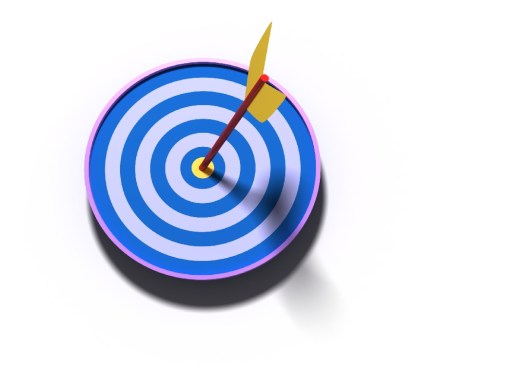
Like being grounded (my previous post), being centered is a body energy that has a direction:

bullseye

There are many ways to find your center, and there are different names for it: the literal center, the energetic center, the center of gravity. What’s important is to find one that makes you feel stable in your being.

Here’s how to find your literal center:

Stand up barefooted. Wiggle a little to release tension. Ground yourself.

Locate the plane that divides your body into left and right halves. In the front, your sternum (breastbone), navel, and pubic bone mark it; in the back, your spine (unless you have alignment issues like scoliosis).

Here’s a little trivia: This “line” corresponds to two meridians in Chinese medicine, the conception vessel (front) and governing vessel (back).

Now imagine the plane that divides your body into upper and lower halves. It can help to look in a mirror or even a tape measure to find this. Depending on the relative length of your legs, torso, neck, and head, it will lie between your pubic bone and solar plexus somewhere around your navel.

Now imagine the plane that divides your body into front and back, somewhere in the center of your torso.

The place where those three planes meet (left/right, upper/lower, front/back) is your literal center.

three planes dividing the body into halves

To find your energetic center, send your awareness into your literal center. Move your attention around in that area, and you may notice a slightly stronger sensation marking your energetic center. Practice moving your attention out of your energetic center and back in.

A quick way of finding center is to put your hands in prayer position with shoulders relaxed and forearms parallel to the floor. The place where the bottom of your hands meet or thereabouts marks your center. It is not exactly a pinpoint. I experience my center as being about the size of a tennis ball.

Here’s another way to get centered: Stand with your feet hip width apart, knees relaxed, body slightly loose, and close your eyes. Rock slightly forward, shifting more weight onto the balls of your feet. Rock slightly backward toward your heels. Rock to the left and then to the right.

Now center yourself with your weight evenly distributed front/back and left/right. Are you feeling a sense of stability? Good. You’re centered.

Each body also has a center of gravity, which has to do with the body’s mass. Think of ice skaters spinning. They could not perform safely without keen awareness of their centers of gravity.

Usually women’s center of gravity is a bit lower than men’s, because of how the chest and pelvis are proportioned.

If you already know where your center of gravity is, you probably already know how to be grounded and centered. If you don’t know, it’s discovered through movement, and you can begin to discover it by standing and twisting your torso from side to side, or by whirling/spinning.

Whirling Dervishes

Words indicating the centering energy: being centered, off-kilter, balanced.

I hope these methods have helped you experience first-hand being centered.

Now combine it with being grounded, and notice how being both grounded and centered may differ from how you usually experience life. Does it add a dimension of feeling, sensation, or awareness? Does it add richness to everyday experience?

Thanks to Brian Mahan, SEP, for the inspiration.

Four steps for discovering your Enneagram type

The Enneagram is a system that classifies people by type, like personality typing. It’s kin to the Myers-Briggs Type Indicator. But it’s about more than personality—it’s based on fixation.

According to Enneagram theory, we are either born with or acquire in the earliest years of life a fixation that deeply influences our identity: who we believe we are and how we view life. The fixation is what keeps you from experiencing your essential (healthy) self. It’s how you get in your own way. It’s a filter that in some ways has worked for you, but it can eventually limit you into a habitual way of living that feels too small. You may suspect there’s more to you than that. You can transcend your fixation to find more essence, more freedom, more joy.

Maybe this is what enlightenment is.

There are nine Enneagram types. Each type has two wings and three subtypes. Furthermore, each type moves toward two different types when you are stressed and when you feel secure. Plus, your development level changes with age, experience, and your desire and ability to grow. So it’s a fairly dynamic model, even though (according to theory) people remain their type their entire lives.

To illustrate, my type is Five. Other names: The Investigator and The Observer. We Fives are classic nerds: bookish, shy, avoiding conflict, private, attracted to minimalism, curious, alert, intense, innovative, insightful, cerebral, having a rich inner life, seeking mastery.

I also have a Four wing. Nickname: The Iconoclast. I am interested in people and healing. The Four wing adds sensitivity.

Would you believe that part of the path to my essential self is exercise? Living in my body connects me to a vitality and presence that I could never experience just living in my head. It took the painful aftermath of a car wreck in my 40s—and the subsequent healing journey—to really understand this.

Daily yoga, the outdoor activities I love like snorkeling and kayaking, dance, meditation, giving and receiving massage, hugs, touch, and sex all help me more fully occupy my body, and be more present in my full vitality, my essential energy that radiates joy, love, peace, and happiness.

So if you knew me as a child, you’d have known a shy, bookish, smart, aloof nerd. If you know me now, you’d see some of those qualities at times, but you’d also see someone who has a lot of vitality, who lives with an open heart (and who still really likes to think).

For me, the journey from being immersed in my type to living more from my essence has been like moving from a black-and-white world into a world full of amazing colors of infinite variety. I can’t say it’s all due to knowing about the Enneagram, but it has helped and provided much insight.

If you are interested in using the Enneagram as a tool for personal growth, and you don’t know your type, here’s how to find out. It’s not always easy (but sometimes it’s very obvious). You can definitely narrow it down to a couple of types, and then you’ll get an aha! (And you may change your mind later on.) Plus, you will easily recognize some people you’ve known.

It’s important to first note that we often do not see ourselves as others see us. Therefore, learning your Enneagram type might make you feel uncomfortable. Prepare yourself. The truth often hurts before it sets us free.

  1. The Enneagram Institute offers free and low-cost online tests. The free, brief QUEST takes 5 minutes.
  2. Watch a brief video of each of the nine types and self-identify your type.
  3. Watch the videos with people you trust with the intent to identify each person’s type with compassion. Others who know us can be honest yet tactful and supportive (as you can be with them—agree on this beforehand and don’t invite anyone who is insensitive).
  4. If you’re still confused about your type, read how types are often misidentified.

To learn more about how it works, read books. I suggest The Wisdom of the Enneagram and The Enneagram for beginners. For more advanced students, I recommend The Spiritual Dimension of the Enneagram.

Once you are more or less settled on which type most accurately describes you, you can subscribe to a daily “EnneaThought” email for your type that can support your developmental growth.

Here’s my EnneaThought for today:

EnneaThought example

More from the world’s oldest living yoga teacher: she tangos!

I found this 2006 YouTube video of Tao Porchon-Lynch, whom I posted about recently in The world’s oldest living yoga teacher.

This video was made in 2006, when Tao was “only” 86.

Isn’t she adorable? I aspire to be like her when I’m 86.

Oh, and she also likes to waltz, jitterbug, samba, cha-cha, foxtrot, and tango.

“It lightens up your spirit,” she says.

The starfish story: making a difference

I’ve heard two people tell this story recently. Each told it a little differently. Wanting to share it with you, I googled and learned the original was called The Star Thrower and was published by anthropologist/philosopher/writer Loren Eiseley as part of an essay in 1969.

The story has been adapted and used by motivational speakers ever since and was also made into a children’s DVD, Sara and the Starfish, in 2008. It was adapted again as a beautifully illustrated children’s book, Starfish on the Beach, in 2012.

I found this version on Wikipedia, and apparently it doesn’t violate anyone’s copyright.

Here it is:

An old man had a habit of early morning walks on the beach. One day, after a storm, he saw a human figure in the distance moving like a dancer. As he came closer he saw that it was a young woman and she was not dancing but was reaching down to the sand, picking up a starfish and very gently throwing them into the ocean.

“Young lady,” he asked, “Why are you throwing starfish into the ocean?”

“The sun is up, and the tide is going out, and if I do not throw them in they will die.”

“But young lady, do you not realize that there are miles and miles of beach and starfish all along it? You cannot possibly make a difference.”

The young woman listened politely, paused and then bent down, picked up another starfish and threw it into the sea, past the breaking waves, saying, “It made a difference for that one.”

The old man looked at the young woman inquisitively and thought about what she had done. Inspired, he joined her in throwing starfish back into the sea. Soon others joined, and all the starfish were saved.

If I adapted it, I would probably leave that last paragraph out. Yes, we love happy endings and want all the starfish to be saved, but that’s not why she did it, or why he joined her. Rather than detaching or being overwhelmed by the task, she took action. She threw one back, and then another, and another.

She made a difference to each one she threw back, even though they may have added up to only a tiny percentage of the washed-up, dying starfish. She did what she could.

How often do we look at some problem and feel paralyzed because it seems overwhelming? How often do we detach and think it’s not our problem? Racism, sexism, war, violence, poverty…the list goes on of seemingly intractable problems. It’s so easy to get stuck in helplessness, passivity, cynicism, separation.

And yet it’s our world.

So instead of thinking about what you can’t do, consider what you can do. What is one action you can take? What is the smallest action you can take? It might even be just to think about the problem differently. Maybe it’s a personal challenge that you need to rock yourself out of complacency.

Maybe you can make a bigger difference than you think.

Look at a problem in your life, one that seems intractable, and think of the tiniest action you can take. It doesn’t even matter what it is, as long as it is in the direction of health and resolution.

Then do it. And yes, I am talking to you.