The anatomy of lying: An interview with Sam Harris

Anatomy of Lying | Brain Pickings.

This repost from Brain Pickings is worthwhile reading, very good food for thought. It’s an interview with Sam Harris, author of Lying, which is available as a free ebook on Amazon through August 5.

As one who has valued tact over honesty in the past, I’m rethinking that stance. I have opinions, biases, associations, memories, judgments, emotions, rules, blind spots, and an internal bullshit detector, like everyone else (I assume). Redefining “the truth” as accurately communicating one’s subjective experience (and presenting it as such) motivates me to be more honest.

Why not share our subjective realities? Why not put my integrity first, instead of protecting someone else’s feelings so they’ll like me? Every interaction between people creates a bit of consensual reality. Why not share what’s really going on? Honesty is liberating. I love those people with whom I can really be myself.

And yes, maybe not everyone needs to hear your truth. For instance, telling your mom’s boss at a Catholic school that you’re an atheist will not go over well, especially when her job is putting food in your belly. But what about your friends and those you’re closest to? Do they know the real you?

At least one study suggests that 10 percent of communication between spouses is deceptive. Another has found that 38 percent of encounters among college students contain lies. However, researchers have discovered that even liars rate their deceptive interactions as less pleasant than truthful ones. This is not terribly surprising: We know that trust is deeply rewarding and that deception and suspicion are two sides of the same coin. Research suggests that all forms of lying — including white lies meant to spare the feelings of others — are associated with poorer-quality relationships…

But what could be wrong with truly ‘white’ lies? First, they are still lies. And in telling them, we incur all the problems of being less than straightforward in our dealings with other people. Sincerity, authenticity, integrity, mutual understanding — these and other sources of moral wealth are destroyed the moment we deliberately misrepresent our beliefs, whether or not our lies are ever discovered.

And while we imagine that we tell certain lies out of compassion for others, it is rarely difficult to spot the damage we do in the process. By lying, we deny our friends access to reality — and their resulting ignorance often harms them in ways we did not anticipate. Our friends may act on our falsehoods, or fail to solve problems that could have been solved only on the basis of good information. Rather often, to lie is to infringe upon the freedom of those we care about.

What do you think? How do you feel about this issue?
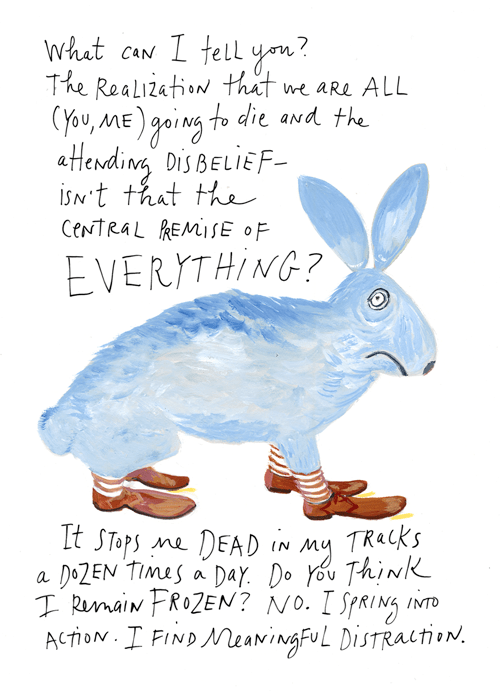
From Brain Pickings: Maira Kalman on identity, happiness, and existence

The awesome website/newsletter Brain Pickings features a video, with quotes and illustrations below, of the fabulous artist/writer Maira Kalman.

Maira Kalman on identity, happiness, and existence

How do you know who you are? There are many parts to who you are, so there isn’t one static place. And then, the other part of that is that things keep changing.

Thich Nhat Hanh on mindful walking and being grounded

I came across this excerpt from Shambhala Sun magazine from Thich Nhat Hanh on mindful walking. It is a way of being grounded, and since that is an essential energy of well-being, I want to link to it so you can read it all (one screenful on my laptop) and include an excerpt describing a basic element of the practice, in case you’re interested but pressed for time.

One way to practice walking meditation is to breathe in and take one step, and focus all your attention on the sole of your foot. If you have not arrived fully, 100 percent in the here and the now, don’t take the next step.

Here is his Walking Meditation Poem:

I take refuge in Mother Earth.
Every breath, every step
manifests our love.
Every breath brings happiness.
Every step brings happiness.
I see the whole cosmos in the earth.

May your day include grounded energy!

New alternative for sedentary desk work: the FitDesk

Since I’ve posted before on how prolonged sitting is unhealthy and how to counteract it, and I’ve promoted standing desks, I want to bring this to your attention (and thanks, Shelley Seale, for bringing it to mine).

This is on the heel of news that sitting less could add two years to your life expectancy.

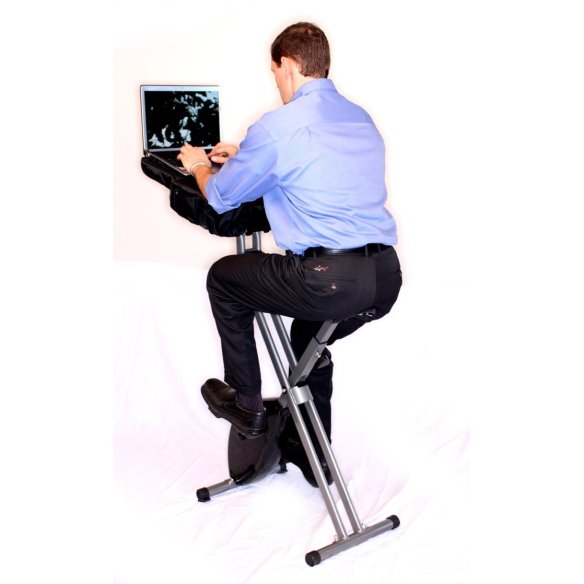
It is a stationary bicycle with a desktop attached to the front of it. You can pedal and keep your leg muscles active, improve circulation, burn calories, circulate lymph, move cerebrospinal fluid, and more, while working or playing video games!

The FitDesk X Compact Pedal Desk is for sale on Amazon for $249.99. Amazon will cross-sell you a comfy bicycle seat and a laptop/iPad holder to go with it.

The seller offers a full refund (plus shipping) within 30 days if you are not satisfied with it. (Hint: Save the carton.)

One thing I really love about Amazon is reading the customer reviews. This product gets an average of 4.5 stars from 111 reviewers (all gave it 3 to 5 stars). Here are what some said:

  • A grad student in an online program lost 10 pounds the first month (30 lbs. over six months) using this product. She raves about the product being sturdy and quiet (quiet enough to use in the same room as a sleeping spouse), and about the customer service. The 2011 model has a timer/calorie counter/speed/distance monitor like stationary bikes at the gym.
  • Another reviewer mentions the great customer service: “Steve, the inventor of FitDesk, will answer your call or email himself. Some day he’ll probably have a huge company because this is such an awesome invention and then he won’t have time to talk to customers himself, but for the moment, he’s the best customer service rep you’ll ever talk to because he believes in his product and is doing everything he can to make it even better.”
  • The critical review rated “most helpful” gave the product 3 stars and said the exercise bike is not that great, that it’s hard to get a consistent pedaling rhythm. This reviewer is also an avid mountain biker who also regularly rides exercise bikes at the Y.

It sounds like it won’t compare to serious exercise bikes, but the whole point of it is not getting a strenuous workout but rather getting a light workout over time while getting computer work accomplished or playing video games.

Okay, okay! I want one! I’m drooling at the thought of cycling while writing blog posts! Would be awesome to have one at my next corporate stint.

The FitDesk weighs 33 lbs., holds users up to 250 pounds, and has a “seat extender” available for tall people. It is easy to fold up and move.

Also, there may (or may not, since the product is being continually improved) be issues with the electronic monitor, and I couldn’t get the straight dope on that.

The company has a video showing the product in use:

You can “like” FitDesk on Facebook (where they offer discount codes and giveaways) and follow @fitdesk on Twitter.

~~

Follow-up on 7.13.2012: The maker of the FitDesk has offered to send me one to try out! I love it! Will post on the experience, with photos!


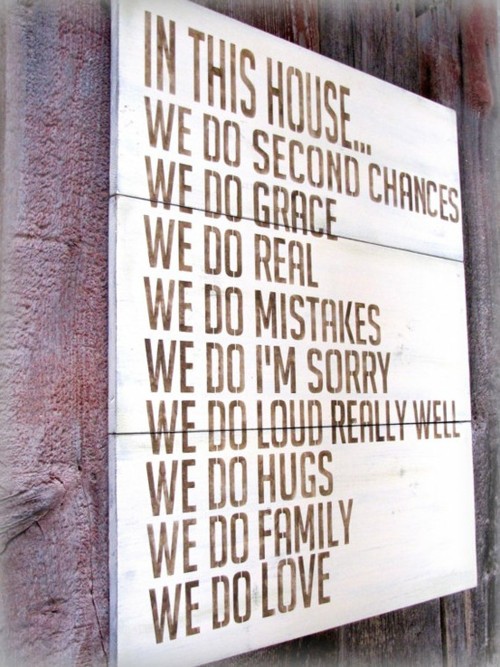
In this house…we do love

Sharing an image I saw on Elephant Journal. I dedicate this to all my families—past, present, future, blood-related, my ohana, the communities and tribes I belong to, including the animal members. (Waylon Lewis’ family is his dog.)

And, okay, so maybe I’d substitute laughter for loud and my grace may a silent gratitude, but the rest of it stands. What would you add or subtract?

It’s available (in slightly different form) as a vinyl wall sticker decal here on Etsy.

in this house...we do love

Recovering from a pulled muscle, I apply my massage skills and heal. Voila!

A couple of weeks ago, I started self-training in running, and I was walking/running on the trail, building up endurance while avoiding fatigue and injury (so I intended). I’d done the warmups recommended by my trainer and felt really good in my running—lifting my knees, almost sprinting, feeling that great-to-be-alive, heart-pounding, hard-breathing experience of really challenging my body in a healthy way. I was loving the run!

Then, running up a hill, I pulled my left calf muscle. I immediately slowed to a walk, walked for about 10 minutes, and then (ruh roh), I decided it wasn’t so bad and ran some more.

Afterwards, I could feel the pull, but it seemed pretty minor. I could walk fine, without a limp. However, I did wisely decide not to run again until it felt really fine.

Six days passed, and I went to ecstatic dance, where everyone dances like no one is watching. I love this practice, moving to music, going with the flow, connecting with others, letting go, being part of the tribe. I can get pretty wild, jumping around with a big grin, leaping from foot to foot, being danced.

If you have no clue what I’m talking about, it’s like this:

The Power Wave

So anyway, while leaping about, I suddenly felt strong pain in my left calf. I limped to the side and did not feel like dancing any more.

Thinking it was my gastrocnemius (the superficial calf muscle), I had a massage therapist work on it that afternoon. I was still limping badly afterwards, although definitely more relaxed. I went home and iced it, and then…

 A massage magazine I’d been reading was next to my bed. I picked it up and saw there was an article by Dr. Ben Benjamin on the soleus, the deeper calf muscle. It included diagnostic tests, and I verified that it was my soleus muscle that was injured. (The image shows it without the gastrocnemius.)

Guess what? It could take 4-6 weeks to fully heal. That was depressing.

Benjamin (who also wrote the fantastic reference book about muscle injuries that belongs in the home library of every athlete (in my opinion), Listen to Your Pain) gave instructions for “friction therapy” massage, stretching, and strengthening. I also put ice on it, several times a day at first and now just once a day right after I do the clinical protocol.

My leg went from maybe 15 percent to 85 percent functional within a week. My limp gradually lessened, day by day. The calf still feels just a bit tight and tender. My hunch is that the last 15 percent of healing will happen more slowly.

Anyway, I feel really empowered about using clinical massage on my own injury and seeing (and feeling) rapid improvement.

I am ready to apply that to others.

Color, culture, and language: be warned, this is weird and fascinating!

The crayola-fication of the world: How we gave colors names, and it messed with our brains (part I) | Empirical Zeal.

The NLPer/cultural anthropology nerd in me was fascinated by this article, which looks at the names for colors among various cultures. In NLP, we say “the map is not the territory,” meaning we live through our maps of the world, not so much through the actual world, and language is a huge part of our maps.

Did you know that some cultures have only two words for colors, words that mean light and dark? All light and warm colors—white, reds, yellows, oranges, pinks—are called by the word meaning light, and all dark, shadowy, cool colors—blues, greens, browns, black—are called by the word meaning dark.

The Japanese language did not distinguish between blue and green until the 20th century, and only did so with American influence. (English recognizes 11 colors. It’s a colorful language.)

In studying words for colors across multiple cultures, researchers came up with algorithms for determining exactly where a color fits in with the shades in a color group. (Remember the 64-crayon box that had yellow-green and green yellow? Barely distinguishable, but one was slightly more yellowish and the other was slightly more greenish.)

The blog, Empirical Zeal, that published this publishes posts from several sources and all posts are written using primary sources. (Unlike my blog, obviously. I’m not a scientist, but I can appreciate science sometimes, and I really just like to share some of the amazing stuff I find out there on the inter webs. I think maybe “humanist” is a good description for my angle.)

The spectrum has no natural boundaries, it would seem, and the perception of color is not universal. Languages also change over time, and many have followed the same route. Since most languages have two to 11 names for colors, scientists have determined that the first two color terms will be light and dark, or white and black. The third will be red, and the next will be either green or yellow. Once both those distinctions come into use, green splits into two, and you now have blue. (The Japanese word for blue green is midori. Author’s note: Thanks to Tim for correcting me on this.)

The research done on native speakers of 110 different languages using 400 color tiles was called the World Color Survey. Further research used algorithms to distinguish color groups. The algorithms were fairly predictive of how actual cultures grouped shades.

The picture that’s emerging is that colors aren’t quite random slices of the visual pie. They’re somewhat basic categories that humans from different cultures gravitate towards, and must have to do with how the biology of how we see the world. In other words, rainbows have seams. We can distill a rainbow into its basic visual ingredients, and a handful of colors come out.

If you get to the end of this, click the link for Part Two, about how naming colors messes with our brains!

Ruth Reichl’s delicious deviled eggs recipe

My favorite food writer is Ruth Reichl, former food critic of the New York Times and the Los Angeles Times, editor of Gourmet magazine, book author (Tender at the Bone, Comfort Me with Apples, Garlic and Sapphires, Not Becoming My Mother, and more) and a wonderful tweeter to follow on Twitter.

Her tweets are poetry, jewels of sensual delight. Here’s a recent one:

Late spring. Damp green grass beneath my feet. A flock of tiny yellow birds. Local strawberries, so sweet, drenched in thick Jersey cream.

Doesn’t that make you want to hang out with Ruth, wherever she is? She’s so present, so alive, so appreciative.

She wrote about how to make deviled eggs, and I learned several things:

  • Fresh eggs do not peel well. Get farm or backyard organic eggs from free-range chickens and let them sit in the fridge for a week before hard-boiling.
  • The term “deviled” was used starting in the 18th century to refer to spicy foods, such as deviled eggs and deviled ham. They are also called “stuffed eggs” and “mimosa eggs”.
  • If you want perfectly centered egg yolks, store the eggs on their sides.
  • Bring cold water with eggs in it to a boil, then cover and turn off the heat for exactly 12 minutes.
  • After cooking, immediately chill the eggs in a bowl of ice water to prevent the greenish tinge on the outside of the cooked yolk.

I made deviled eggs yesterday, before I read this article. They are so easy and yummy in summer! I use store-bought mayo (made with olive oil—Ruth provides the recipe for homemade—click the link above) and topped each filled egg with paprika and exactly three capers.

Below, two eggs are store-bought organic, and two are from Hal’s backyard chickens. Guess which is which? Also notice the greenish tinge on one of the yolks. That egg must not have cooled quickly enough!

My granddaughter, who turns 12 today, has a shortcut to get deviled egg flavor without the work: She peels a hard-boiled egg, cuts it in half, and smears a little yellow prepared mustard on it. Pop it in your mouth, and voila! Quick and easy!

The simplest way to improve your posture

If you’re at all familiar with this blog, I bet you think I’m going to say meditation. Guess what? Ha ha, I’m not!

It’s way simpler than that:

Whenever you’re doing something that does not require use of your hands, turn them so that they’re palm-side up (see the picture above). You also can do it while standing or walking, leaving your arms down at your sides and turning your palms so that they face outward in the direction you’re facing.

This palms-up position may be familiar to committed meditators and yogis who practice shavasana, but it’s foreign to those of us who spend a lot of time at a computer, behind the wheel of a car, holding babies, making lattes, or doing pretty much anything else that requires constant hand use. Even when we’re not using our hands, it’s just habit to sit, walk or stand with our hands facing down or behind us.

Wait for it — there’s a meridian connection: 

In acupuncture, the meridians that run along the inside of the arm, from the chest/underarm to the palm, are Heart, Pericardium and Lung….

Here is just a smattering of the functions each meridian is involved in (there are many more):

  • Heart: breathing, cardiac function, sleep, emotional balance and heat regulation.
  • Pericardium: breathing, blood circulation and upper digestive function.
  • Lung: breathing, immune function, perspiration, body temperature and urination.

…our lifestyles force our hands and arms into an almost constant downward/backward position, creating a tendency to slouch forward. This causes us to cave our upper bodies inward, crunching the Heart, Pericardium and Lung meridians.

Allowing these meridians to flow more freely optimizes their ability to perform their respective functions.

These three meridians are all yin meridians, flowing from the torso to the fingertips.

This is a mudra (energetic gesture in Hinduism and Buddhism). The palms-up mudra, you might have guessed, has to do with receiving energy from spirit or the universe, with allowing. It has to do with being open and surrendering yourself to the Mystery.

Try it when you think about it. Let one or both palms rest facing up, or outward if you’re on your feet. Notice the subtle but significant changes in posture.

Then make it a habit.

Thanks to Sara Calabro for this article.

Downward-facing dog and the bladder meridian: why it feels (and does) good

The Real Reason Downward-Facing Dog Is So Good for You. | elephant journal.

The connection between yoga and Traditional Chinese Medicine (TCM) fascinates me. When we do yoga poses, we activate various meridians in the TCM system, usually without awareness that we are doing so.

Here’s why doing downward-facing dog pose (adho mukha svanasana) feels so good (once your shoulders open up and the muscles in the back of your legs lengthen) and why it’s so good for your health.

Downward-facing dog  is arguably the most common pose in yoga. It’s done in Iyengar, anusara, vinyasa, ashtanga, bikram, and other styles of hatha yoga. It’s a cornerstone of sun salutations. It’s considered a resting pose in post-beginner yoga classes.

It’s so well-known, even many non-yogis recognize it: palms and soles flat on the floor several feet apart, buttocks high, back and legs straight.

Downward-Facing Dog

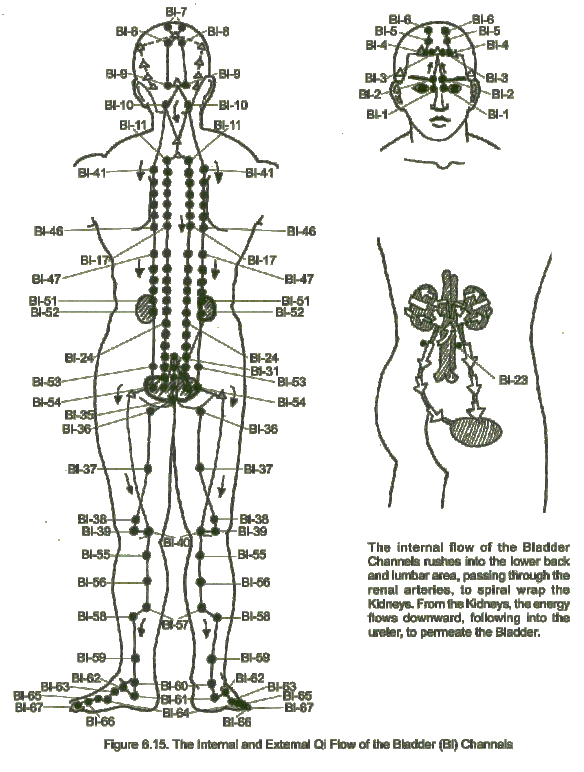
Downdog does our bodies so much good because it activates the bladder meridian, the longest channel in the body, running from the inner eye, up over the top of the head, down the back and the backs of the legs, ending at the pinkie toe. It even doubles up on part of its path:

To do downdog is to activate the bladder meridian’s 67 points, more than any other meridian (times two, because there are left and right meridians).

The bladder meridian is yang, meaning it deals with the outer world. The bladder channel is our first line of defense, so activating it boosts immunity. Not only is this meridian related to the urinary bladder, it also relates strongly to (and balances) the sympathetic (fight-or-flight) and parasympathetic (rest-and-restore) nervous systems.

If you are stressed (and most of us are most of the time), stimulating the bladder meridian activates the parasympathetic nervous system, inducing relaxation. It’s why people get so much out of having their backs massaged. Notice all those BL points in the sacrum area? The parasympathetic nervous system is activated by S2, S3, and S4 spinal nerves at the sacrum, and by several cranial nerves as well.

So doing downward-facing dog helps you relax and release tension.

There are also “Back Shu Points” located along the bladder channel. They are associated with organs and with chronic issues like insomnia, asthma, menstrual problems, IBS, anxiety, and so on. Doing downward-facing dog could prevent or alleviate chronic disease.

Downward-facing dog is also an easy inversion for the upper body, refreshing blood to the head and moving lymph.

Plus, you know, it just feels good to stretch like that! Do down dog to stretch the glutes, hamstrings, calf muscles, and Achilles tendons. Even the soles of the feet!

Let it open up your shoulders. Really feel your hands and feet connecting to the ground. Relax your neck and let your head drop toward the ground. Feel your strength. Straighten your legs and work toward lowering your heels to the floor. Do variations (on tiptoes, pedaling your feet, 3-legged dog, wild thing).

Then come down onto your knees, push your butt back toward your heels, and sink into child’s pose to enjoy that relaxation.

Downward-facing dog is a cornerstone of my yoga practice. If I could only do one pose, that would be it! Jai, adho mukha svanasana.