My experience with brainwave optimization

Last week I did brainwave optimization, aka brain training, at NeuroBeginnings.  I did the baseline assessment in May and wrote about it here. It’s an astounding new technology with huge potential to alleviate suffering and help people’s brains function optimally without spending a minor (or major) fortune on health care.

Gigi Turner, owner of NeuroBeginnings, likes to schedule the training to start within two weeks of the initial assessment, but we had to work around finishing my 3M contract, which was hard to pin down. You need a full week as free of demands as possible so you can integrate the brain training. It’s a wonderful activity for a vacation (or stay-cation if you live in Austin). 

By the way, Gigi is hard-working, personable, and adorable. She’s easy to relate to, and you know she’s working for your best interests. She’s a woman after my own heart, fascinated with the brain and its workings, making the world a better place one brain at a time.

I did two sessions per day, Monday through Friday, one at 9 am and another at 12:30 pm, each lasting about an hour and forty-five minutes.

Between the morning and afternoon sessions, I hung out at the Zilker Botanical Gardens or walked along Barton Creek. It felt great to move after being still, and being outdoors in scenic nature was refreshing. I’d get lunch at the Daily Juice or Whole Foods, something light and very healthy.

During each session, I sat in a special recliner and either watched a computer monitor or just relaxed doing nothing. Gigi attached electrodes to my head and moved them to various places — frontal, temporal, parietal, and occipital lobes.

There were several exercises I did in every session: sitting and watching a bar move to a lower position,  reclining with the lights off and relaxing deeply, imagining/remembering an activity that uses all the senses, and visualizing a guided meditation.

During all the exercises, I heard musical notes playing. Gigi said you actually want them to stay in the background and not think about it too much. They are random notes, not playing a tune, not rhythmic, not even music — just random notes. There are a variety of musical sounds. You might hear the random notes played on a guitar, xylophone, steel drum, bells, or piano.

I am a thinker. I have a very active mind, and I’m gaining facility in switching from that active, inquiring, analytical state to more relaxed states.

I noticed that I liked it when a lot of notes played fairly densely, and I didn’t like it when one note played over and over, or when there was a long silence. I wanted the “music” to be pleasing to my ears.

A couple of times I would recognize a fragment of a song in a string of 3 or 4 notes and smile to myself. I noticed that if I was getting one note repeatedly, I could move my eyes, and the sound would shift. That’s an NLP trick!
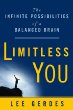
The sounds reflect current brainwave activity, allowing the brain to “see” itself, as Lee Gerdes says in his book, Limitless You. You do occasionally view your brain activity on the monitor, but mostly the brain is hearing itself, and the more in harmony and cohesive the brain gets, the more the sounds reflect that.

You don’t have to do anything. The brain adjusts itself. At least, that’s how I think it works.

Watching the bar was hardest for me. I tried too hard, and it strained my eyes (I wear contacts and need to blink often — did you know your brainwaves change when you close your eyes, even to blink?). I stopped drinking green tea in the morning and brought eyedrops, attempting to make this exercise easier to accomplish.

I finally started getting the hang of it on Friday when I imagined that the sound of the air conditioning was a waterfall that was very nearby. When my attention was split between listening to the “waterfall” and gazing beneath the bar (rather than staring intently at it), I made progress.

I believe that exercise was about my “thinking” mind — aka bringing down my beta waves.

I went into brain training wanting to get rid of any remaining dysfunctional patterns from my childhood trauma and years of PTSD. Most of the changes took place in the frontal and occipital lobes — the center for executive functioning and the visual cortex, respectively. After my last session, Gigi gave me printouts showing how my brainwaves in those lobes had changed over the week of training. She got my left and right hemispheres more in sync in those lobes.

I loved the relaxation exercises. It turns out I’m very good at going into alpha! As I got used to the process, I got pretty good at dropping into theta and good at noticing the difference between alpha and theta. (Theta is where deep healing occurs.) I dropped into delta (sleep) a few times, especially after lunch, at first, but as the week progressed, I was able to stay awake in theta for longer periods.

I really loved the task of imagining I was entering a house, walking upstairs, and entering three rooms. Each day I created different rooms. Here are some juicy ones:

  • A room full of guides — lamas, teachers, angels, masters, buddhas and boddhisattvas, yogis, healers, shamans, seers — who included me and gave me gifts, laying their hands on me.
  • A room of possibilities that I’d like to manifest — travel, prosperity, success, joy, gifts and talents and skills, love, creativity, equanimity, health, goodness.
  • A room containing my fears and obstacles, with wonderful resources to address each one.
  • A room of gratitude for past, present, and future.
  • A room where I gave my gifts and resources to those who needed them.
  • A room of beginner’s mind.
  • A room for my future sage elder self.
  • A room of intuition.

Also, the Jean Houston guided meditation of cleansing the senses works well here. Having NLP training was useful!

During the five days of training, I didn’t experience any sudden or drastic changes in brain functioning, but each day I felt a little bit sharper, more present, more centered.

I learned that my brain operations were actually in pretty good shape to start with, and with a few tweaks it will operate even better. The changes will continue to manifest over a period of months after the training.

To get the most from it, the instructions are that for at least the next three weeks, I need to avoid alcohol and recreational drugs, exercise/walk daily, eat a lot of protein, and drink plenty of water.

It would be helpful to practice awareness through progressive relaxation, visualization while listening to a CD Gigi gave me (I liked the sound of a stream during some of the sessions, which has become an anchor), and doing breathwork.

I also need to postpone appointments for other therapeutic modalities until three weeks have passed, so I’ll need to make some phone calls on Monday.

If you’re interested, I recommend calling NeuroBeginnings for a baseline assessment. Her number is 512-699-6593. The baseline assessment currently costs $160. The entire cost, at present, is $1,635, if I remember correctly. Compared to doctor visits and medication, brain training could actually save you time, money, and side effects. 

I’m going to wait at least three months before going back for a tune-up unless something drastic happens, and then I hope to try one of their new gamma wave protocols.

I look forward to noticing improvements in my brain’s functioning and sharing them with you!
Starting the process of brainwave optimization

Yesterday I did something I’ve wanted to do ever since I learned about it. I had an assessment of how my brainwaves are working.

I learned that I still have traces of fight-or-flight activity stemming from PTSD. Forty something years after the trauma, after nearly 20 years of yoga, psychotherapy, releasing the traumatic energy block a la Waking the Tiger, over 5 years of meditation, learning NLP, and doing the trauma releasing exercises, this pattern (although much less than it was) is still present in my energy field. All of those healing modalities have helped and been completely worthwhile, to be sure.

Fight-or-flight is a wonderful instinct to have — when there’s something to fight or flee from. The problem is when there’s nothing in the environment to fear, but I am still tense or jumpy. It’s a brainwave pattern.

I’ve wondered how can I know I’ve completely recovered from trauma. The trauma happened when I was young, so I don’t have an adult baseline of well-being to compare to. I’d really like to know that I’m over it and don’t need to spend any more energy on it. Ever.

The aftereffects of a trauma can last a lifetime. I’d like to experience what it is like to be untraumatized. I can’t change the past, but I can change my brain wave patterns and therefore my life.  

Here’s how the process has gone so far. I made an appointment with Gigi Turner at NeuroBeginnings. That is one of three Austin affiliates offering brainwave optimization using the equipment and software and training provided by Brain State Technologies (BST).

The founder of BST, Lee Gerdes, has written a book, Limitless You: The Infinite Possibilities of a Balanced Brain. I have just gotten the book myself. One of the testimonials on the back cover mentions “restoring … humans to a joyful and highly functional state in their daily life.” Yeah.

All of these companies are staying busy, from what I hear, and I’m sure they are all very competent at doing what they do. I connected well with Gigi on the phone and identified with her as a working woman, so I chose her. She’s also the most highly trained BST certified technician in town.

At my first appointment, she had me fill out an extensive online questionnaire. I’m pretty sure they ask about so many issues because BST wants to collect as much data as it can. All in the name of compassionate science. This is a fascinating frontier that I’ve blogged about before.

At the end of the questionnaire, I identified my top reasons for wanting to do this. I listed well-being and happiness first. And, oh yeah, I wouldn’t mind having better spiritual development and meditation, cognitive improvement, social interactions, etc.

Gigi had me sit in a recliner. She put some electrodes on my earlobes and scalp. She then asked me to close my eyes for 2-3 minutes. Then she asked me to open my eyes partially. Then she asked me to open my eyes completely. With eyes open, she had me do an exercise like repeat strings of numbers.

Meanwhile, a big computer monitor with a split screen is showing my left and right hemisphere activity as colors — blues, green, red, each color representing a range of brainwaves like beta, alpha, theta, delta — streaming by.

Pretty and fascinating. I wonder what this means.

Then she’d move the electrodes and repeat the process for a different area of my brain, getting readings for the frontal lobe, parietal, temporal, occipital, cingulate gyrus, and midline, if I remember accurately.

With my eyes open, I’d do a different exercise for each area. I solved math problems aloud, read to myself and answered a question, listened to Gigi reading and answered a question, and just looked around the room.

At the end, she removed the electrodes and showed me a summary on the computer of my assessment. (It’s proprietary, so I didn’t get a copy. Darn! I love looking at data, seeing what pops out.)

Basically for each area of the brain, there’s data about the left and right hemispheres, about each brainwave type, and about ratios between types (such as between beta and theta), as far as I could tell. I bet there’s also data about the brain’s flexibility in moving from eyes closed, partly open, to wide open, and how well it functions doing each assigned task.

From experience, the BST-trained technicians have come to recognize “brainwave signatures” for various conditions like PTSD, ADHD, and so on. But it’s really not meant as a diagnostic tool. It’s meant to be used to harmonize and balance the brain, and this is the starting place.

They also can tell what range the numbers “should” be in for optimal functioning. Not that there’s necessarily anything wrong with being out of range. I imagine some gifts and talents that people have developed (math prodigy, psychic) rely on being out of normal range while doing that activity. The question is, are they happy and healthy? Can their brainwaves change to meet the situation, or are they in a dysfunctional pattern?

Even if you don’t have anything like PTSD, you can probably benefit from tuning up your brain. The literature says it can help with addictions, anger, anxiety, chronic fatigue, chronic pain, compulsive behaviors, eating disorders, learning difficulties, obsessive thinking, panic attacks, poor memory, sleeping difficulties, stress, and a host of other issues.

So it is possible that with the training, I can completely retrain my brain to operate as if I never had PTSD.

I can be less jumpy and experience even more well-being. I’m looking forward to that.

I can also learn to focus better on reading material that is, ahem, less than compelling. Like textbooks and other dry material.

I’m a pretty good sleeper, but Gigi says that optimizing my brain waves will help me sleep even better, waking up even more refreshed. Wow. I’ve had insomnia before and have great compassion for people with sleep problems. I’m looking forward to sleeping more restfully.

BST affiliates can also do things like increase beta in the left hemisphere and increase alpha in the right hemisphere. Yeah, let those hemispheres specialize even more! I imagine this would make someone more cognitively adept when they need to be and happier the rest of the time. I’ll have some of that, too!

So I’m going to do it later this month, when my contract job is completely done. You need to be able to come in for a couple of hours a day every day, or even twice a day, which is why I’ve waited until now.

I understand the process uses sound, and that you actually “observe” your brain waves and optimize them yourself, creating the balance and harmony you desire, rather than matching an external norm.

I will report back here at Well:bodymindheartspirit.

Words of wisdom from Suzuki Roshi

Today’s message from Tricycle: The Buddhist Review is:

If meditation is a priority, then it’s helpful to take that word literally and put meditation first. An example would be my rule of not turning on the computer before I’ve meditated. Simple, but effective. Probably the most trenchant advice I ever heard was in eight words from Suzuki Roshi: ‘Organize your life so you can sit well.’—David Schneider

My three-month contract job ends this Friday, with another week later in May to tie up loose ends.

I’m looking forward to rearranging my days around my agenda. My sitting practice has been intermittent for the last few months.

I like this: meditate before turning the computer on. I think I’ll adopt it.

Click this link to read more tips from the meditators’ toolbox.

Antidotes for sedentary jobs: getting more life in your life

NPR is carrying a story about the health risks of a sedentary life, covered last week in the New York Times. (I blogged about it here.)

This story, Sitting All Day Is Worse For You Than You Might Think, is available for reading and listening by clicking the link.

This article recommends sitting on a stability ball (aka exercise ball) and taking frequent mini-breaks.

I’ve worked at sedentary jobs for many years. At my last job, after a period of not working and living an active life (walking, swimming, biking a lot), I took lunch-time yoga classes and brought in an exercise ball to sit on instead of using my office chair.

Many people, one at a time, asked me about it when they came by my office on another matter. I let them try mine if they liked. I believe one or two may have even got one for themselves.

(You know, I think I was kind of a pioneer, ahead of my time in that workplace. They probably saw me as being too “out there.” I don’t know, and actually it’s none of my business. My business is taking care of me. And now I’m moving away from sedentary work. My body just needs to move. I’m much happier and healthier.)

When you sit on an exercise ball, you use your leg muscles. It’s also easier to roll, bounce, sway, and otherwise get more movement into your day at a desk.

Also, without a back to lean against, using an exercise ball for a chair really works your core muscles. You have to hold your torso up with your muscles. That may be a little fatiguing at first. It took me a week to get used to it. I was never sore, though, just tired from the extra work until my body accommodated it.

I think I got my exercise ball at Target for $12.99. I’m not very tall, but the largest size worked for me. I think it was 75 mm.

They come with a foot pump. You fill it with enough air so that it’s firm. Every six months or so, you need to put more air in because either the rubber has stretched or it has leaked a tiny amount.

I used a large bent paper clip to pull the “nail” out of the air hole, pumped more air in, and replaced the nail.

You could put a square of duct tape over the nail if you’re worried about it popping or leaking.

I’m not sure how much weight they can hold. You can spend more for a burst-resistant ball.

If an exercise ball is not an option, the next best thing is to sit on the edge of your office chair rather than leaning against the back. At least you’ll strengthen your core muscles.

I like the idea of mini-breaks. Walk to the water fountain or restroom, or just take a walk around your workplace. As you walk past offices, listen to the sounds of people at work, catch snatches of phone conversations, hear how fast people type, smell various aromas, see how people personalize their office space, let your eyes rest from computer work by looking down the long hallways. Stretch, dance, do a minute of yoga.

It’s all good and puts more life in your life!

Silent mind

Tonight I was reflecting that one of the things that my sitting practice showed me is just how busy my mind was for all those many years before I began sitting and paying attention to my actual experience.

Constant activity, no stillness, no silence.

One of the great benefits to me of practicing sitting was having some contrast between my active mind and my silent mind.

By silent, I mean experiencing awareness with no internal dialogue.

What was/is that internal dialogue about? (Because I still experience it. I just know I have a choice now. Before, I didn’t.)

Usually the past or the future. Anxiety-based thoughts, what ifs, and I shouldas. Also a lot of judgment.

It was just such a blessed relief, through the practice of meditation, to learn experientially that I could take a break from all that and just be. Just be aware of the present moment — of sounds, thoughts, feelings, of the spaces in between, of the theater of awareness.

It does seem now that my practice of meditation and the self-awareness it brought me has been somewhat responsible for many of the changes in my life, from quitting my job to dreaming of possible new livelihoods, to honing in on what kind of work is satisfying to me, to deciding to downsize and simplify.

You can call it congruency or integrity or whatever you want. There’s a deep need to take action so that my external life matches who I am, which is ever changing.

What a lovely challenge it means now to be truly alive and engaged. There’s no holding back, no fear (well, not much), just doing and learning, and more doing and learning.

Repost from NY Times: Is Sitting a Lethal Activity?

A new field in health research is called “inactivity studies,” and this article reports on its findings.

Here’s one. Two people eat and exercise the same. One gains weight, the other doesn’t. Why?

If you fidget more and move more, but not necessarily work out, you can burn a lot of calories. People who are more sedentary put on more weight.

That seems like a no-brainer, but so much knowledge about this is based on self-reporting, which is simply unreliable. The study used “magic underwear” to track motion.

This is your body on chairs: Electrical activity in the muscles drops — “the muscles go as silent as those of a dead horse,” Hamilton says — leading to a cascade of harmful metabolic effects. Your calorie-burning rate immediately plunges to about one per minute, a third of what it would be if you got up and walked. Insulin effectiveness drops within a single day, and the risk of developing Type 2 diabetes rises. So does the risk of being obese. The enzymes responsible for breaking down lipids and triglycerides — for “vacuuming up fat out of the bloodstream,” as Hamilton puts it — plunge, which in turn causes the levels of good (HDLcholesterol to fall.

I’m curious. How much sitting is too much? More than six hours a day, some say; others say more than nine hours a day. Sitting is more lethal than age, sex, education, smoking, hypertension, BMI and other indicators.

And did you know that Steelcase, maker of file cabinets and office furniture, now makes treadmill desks?

That’s the ticket for health at sedentary jobs. That, or fidget and get up and walk around a lot.

“Go into cubeland in a tightly controlled corporate environment and you immediately sense that there is a malaise about being tied behind a computer screen seated all day,” he said. “The soul of the nation is sapped, and now it’s time for the soul of the nation to rise.”

Is Sitting a Lethal Activity? – NYTimes.com.

New study of yoga’s benefits for metabolic syndrome

I’m always heartened when I read about a new study of yoga’s benefits. It’s the best of the East and the best of the West: the scientific method and this ancient philosophy/practice.

Of course, yogis know from experience that yoga builds health. Non-yogis may need scientific proof that yoga is good for them before beginning a practice.

Here’s news of a new study: a year-long study of the health benefits of yoga to those with metabolic syndrome. Metabolic syndrome can occur with overweight adults who have high blood pressure, high insulin and/or cholesterol levels, and excess fat around the waist. These conditions increase the risk of heart disease, stroke, and diabetes.

The article says that about one-fourth of adults in the United States has some combination of these risky conditions.

One-fourth!

“We know that diet and exercise work when it comes to reducing an individual’s risk of diabetes and heart disease, but those behaviors are very hard for some people to sustain,” said PRYSMS lead investigator Alka Kanaya, MD, an associate professor in the Division of General Internal Medicine and a faculty member at the UCSF Diabetes Center. “If we can offer something novel that is enjoyable and easy to sustain, we can help combat these health epidemics.”

Yoga has been found to improve specific metabolic risk factors, such as blood pressure, body mass index and insulin sensitivity, but the 10-week UCSF pilot trial in 2008 was the first to examine its effects in individuals with metabolic syndrome, said Kanaya, who also led that study.

The pilot study found that after 15 90-minute yoga sessions over a 10-week period, “there was a trend to reduced blood pressure, a significant increase in energy level, and trends to improvement in well-being and stress” among study participants, according to a published report in the journal Metabolic Syndrome and Related Disorders.

The pilot study centered on restorative yoga, resting in various poses with the body supported for several minutes at a time.

Yay for a pilot study centering on restorative yoga! Which anyone, even nonyogis, can do.

The full study will compare restorative yoga and active stretching, and researchers expect both to show benefits to this group.

“If restorative yoga or active stretching are effective in reducing metabolic risk factors, the mechanism is likely through relaxation and stress reduction,” she said. “The initial results are encouraging enough to warrant a longer, larger trial of both behavioral interventions.”

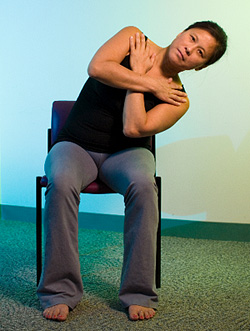
Oh, yeah, and the article has photo of Cora Wen doing a seated side bend. That’s how it came to me. I’ve never met her but just love her on Facebook and hope to study with her some day.

If you know anyone in San Francisco or San Diego with these conditions, the article ends with contact info for prospective participants.

~~~

Also, I’m congratuling some folks I know and love with a well-planned and so far successful change in eating habits resulting in healthy, respectable weight loss. You know who you are, darlings!!!!

Claiming some me time

Like the Energizer bunny, I’ve just kept going and going, with work and training and teaching and transitioning toward a new home, and then things started to go not so well. Low back-ache, fatigue, muscle tension, losing things, not handling a situation well, emotional sensitivity, feeling close to overwhelm.

As in, “If one more difficult thing happens, I’m going to lose it, and it’s not going to be pretty.”

As much as I like to meet life from a place of strength and resilience, sometimes that isn’t what’s real.

So I declared this afternoon as me time. You know. Solitary unpressured time — several hours of it — to rest, ruminate, and recover.

I even cancelled my restorative yoga class, which I try not to do, because I know when you need it, you need it, and it’s disappointing if it’s not available.

Yogis and yoginis, namaste. It’s savasana time for me, and for you if you need it! And, I am changing our class time to 7:30-9 pm so we can all have more “day” to enjoy on Sundays, then eat lightly, do the class, drive home, and go to bed all relaxed.

How does that sit with you?

We all need time to be active, time for sleep, and time for rest. In this case, I have not been getting enough rest.

Rest is when I check in with myself and get back on track, reconnect with myself and recenter.

It’s actually one of the best parts about being human. That we can do this!!!

And now, I’m going within, to get in touch with my feelings, breathe, maybe cry a little, curl up with Mango, and get some rest. And plan how to intervene with myself a little bit sooner so this doesn’t happen again. I hate disappointing people! I believe it may be time to restart my regular sitting practice, which has become irregular.

Yep. This is what happens when I don’t meditate. Yep, I’m really remembering that now.


4-Hour Body exercise induces shaking

Today I induced trembling unintentionally.

I’m reading The 4-Hour Body. I was feeling achy in my lower back this morning and decided to try some exercises I read about last week. The Egoscue Method is a postural therapy program with 24 clinics worldwide. Tim Ferriss, the author, was skeptical but tried a session, walking out after 90 minutes with no pain in his mid-back for the first time in six months.

He recommends six exercises for desk-dwellers’ postural imbalances.

If you have the book, I’m talking about pages 302-306.

The last exercise of the six is called the “air bench”. It’s like Exercise 6a of the trauma releasing exercises.

  1. Stand with back against a wall, feet and knees hip width apart, feet straight ahead.
  2. Walk your feet out as you slide your back down the wall. Stop when your knees are bent 90 degrees. Ankles should be slightly ahead of knees. Lower back is flat against the wall. Keep the weight in your heels.
  3. Hold for two minutes.

Aargh, it’s hard work! I bring my attention to my breath and breathe slowly, deeply, and smoothly. Otherwise, I’d be moaning.

When I finished, I lay on my yoga mat and did Exercise 6b, on my back, soles pressed together, knees as wide as possible, sacrum elevated two inches.

Then I immediately relaxed and put my soles flat on the floor and trembled, shook, and quivered for 20 minutes! It was a very good session, with lots of releasing. Both shoulders released, separately.

Nothing new to report except that I seem to be experiencing less intense shaking in my legs. I don’t shake as hard.

I wonder if there’s a point when you’ve done these exercises enough that you only shake mildly and for a short time.

That will be the blessed day…

Anyway, I’m going to try doing just Exercises 6a and 6b to find out if they alone can induce shaking. Next time!

Rest and relaxation bootcamp and desk yoga videos

I just realized a day or two ago that so many of my recent efforts — meditation, reiki, the trauma releasing exercises, learning and teaching restorative yoga — are not only healing, they also relax you.

Hmm. Methinks there’s probably a strong relationship between healing and relaxing.

Judith Lasater in her recent restorative yoga workshop in Austin said that human beings need activity, rest, and sleep.

Rest is the one we usually let go of first in the pressure to “keep up” and “have it all”. Then sleep.

It’s hard to set limits on activities. Let me practice that right now.

No thanks, I have just the right amount on my plate.

Really, do you know anyone who takes resting seriously? Who turns off their computer and phone regularly to do something relaxing? Something playful and not too competitive?

Remember when everything was closed on Sunday and it was truly a day off? Stores and offices and factories closed so employees could have time off with their families. It was the norm.

Now so much is available most or all the time. You can shop online at 3 am! Factories run 24/7. Banks are open on Saturdays. Some stores are open all night.

Pondering all this “need for speed,” I thought up a workshop title: Relaxation Bootcamp. Really. That’s what it might take for some people, the bootcamp approach.

I’d start with the trauma releasing exercises. All that quivering, trembling, and shaking is tension leaving your body!

Then some pranayama to balance the left and right hemispheres.

Then a long restorative yoga session followed by a reiki session followed by meditation

I have to ask myself,

Do I know who I am as a relaxed person?

What will it take to find out?

Am I addicted to stress?  

When do I feel relaxed yet aware?

As I ponder these questions, I am in the middle of a 3-month contract job. I usually eat at my desk and don’t take a lunch break. Being productive is my m.o.

Yet sometimes when I feel the tension building from sitting at a computer all day, I do a little desk yoga with Rodney Yee.

4 Minute Neck and Shoulder Stretch

4 Minute Upper and Lower Back Stretch

Puts a little spaciousness and flexibility back into my day.

I have a hunch this is a lifetime issue for me, something I need to learn for myself and master.

How about you? What would you include in your Relaxation Bootcamp?