What clients say about integrative massage

One recipient of an integrative massage (which combines Swedish massage, Lauterstein deep massage, acupressure points, foot reflexology, body mobilization techniques, muscle testing, stretching, trigger point therapy, and craniosacral work, as needed and desired) wrote afterwards:

Just a note to say I really enjoyed our conversation and my massage. The massage you gave me has allowed me to sleep soundly two nights in a row. My stress level also feels much lower than usual. Thank you for enhancing my life with your friendship and magical/healing massages! Sending happiness & blessings & love your way.

Here’s a testimonial for an integrative massage I gave to a dear friend suffering from insomnia.

I sit here at my computer after the best night’s sleep I’ve had in weeks. I am so deeply grateful for your loving energy yesterday. Your integrity, touch, and presence were exactly what I needed to break open the clogged dam of emotions that’s been keeping me from sleep.

All throughout the massage, I could feel and take in your love and healing energy which is abundantly transferred through your hands. When you said ‘How you feel matters,’ my soul got the message that you cared enough to hear, see, and touch me.

When you did the cranial-sacral hold, I felt like I was being cradled by my mother.

You had asked the question, “What happened three weeks ago?” … My insomnia has been “waking me up” to the fact of unfinished business….

Your work allowed me to dive through the opening and swim the turbulent waters on top of a still well. I’m not quite at the still well yet, but I have faith that I’ll get there.

Another client wrote to say:

MaryAnn has a special gift to connect with you and gently nurture your entire being. She is unique in that she offers unconditional love so freely. I highly recommend her massage therapy. ❤

For more about The Well Ashiatsu Barefoot Massage Austin, see my home page.

The Blind Cafe experience

Wednesday night I attended The Blind Cafe, which I posted about earlier. (This is its third year in Austin.) Arrived a few minutes before 7 pm. Entered Vuka Coop near Monroe and South First  from the back, as instructed. Checked in and was told I’d sit at Table 1. Right away saw my friends Jacqueline, Carol, and Linda — also seated at Table 1! We talked as more people arrived, filling the space. There was a feeling of anticipation and excitement about doing something new and unknown.

A cash bar served merlot. Someone brought out a cheese plate.

After about an hour, we were told to get in groups by table number. (There were 13 tables/groups; Table 1 had 9 people, and some seemed to have more.) We lined up with our right hand on the right shoulder of the person in front of us, so we could be led by a blind waitperson to our dining table. We went through a canvas maze into complete darkness. I mean…complete darkness.

Somehow I could tell it was a large room with a high ceiling, probably from hearing all the people who’d already been seated engaged in conversation.

The group came to a stop, and we were each positioned in front of a chair. I sat in what felt like a cast-iron cushioned lawn chair with arms.

The noise of over 100 people chattering was incredible, much more pronounced because of the darkness. I could hear a couple of conversations in detail, depending on where I focused my attention. To listen to it all at once was almost overwhelming. I thought that Jacqueline, sitting next to me, was probably listening too. (She does that well.) We sat quietly for most of the experience.

By feeling, I discovered that on the table in front of me were two Chinet plates — a large one and a small one. I felt crackers with toppings on the small plate. Since I eat a gluten-free diet, I managed to just lick the toppings off the crackers! A variety of toppings made it an interesting tasting experience, savory and sweet and with various textures.

Then I discovered a third small plate. It contained fruit and some candied pecans or walnuts. I couldn’t see any of the food I ate to verify exactly what it was. My identification was by taste and mouth-feel and hand-feel. I sniffed my food, but did not encounter anything particularly pungent.

The main plate had something large on it, the promised vegetarian entree. It turned out to also be something I could eat with my hands. I took it apart and ate it with my fingers. It seemed like there was parsley with stems, baby spinach, tomato chunks, avocado, and more. It was salad-like.

There was something I couldn’t identify. It was a long slice of something cool and crunchy, very mild in taste, but not hard like carrot. I wondered if it was jicama. I’ve been on a jicama kick lately. Later I decided it was probably cucumber.

Someone at my table was allergic to avocado, and a waiter brought her a substitute.

Someone said there was bread and dipping oil in the center of the table, which I didn’t try.

I found myself being worried about making a mess from eating with my hands in the dark. I was afraid of dropping food on my clothes, of having food on my face, of being shamed as a messy eater when the lights turned on. I am a messy eater sometimes, and I try to limit that to when I’m eating at home by myself! I was grateful that two paper napkins had been provided.

I realized these are concerns of the sighted. Who could tell, in the darkness? It made me think about how many rules and customs there are about eating that have to do with appearances — how we look to [judgmental] others. Wipe your mouth often. Eat soup like this. Eat green beans like this. Cut your meat one bite at a time. Make sure there’s no food in your teeth.Don’t eat with your mouth open. Don’t talk with food in your mouth. Don’t drink while you’re chewing. (Okay, I had a Southern belle grandmother who was very strict about table manners. A meal with her was a string of “dont’s”.)

All the wait staff were blind. There were four of them, and they were cool. If your world is always dark, you learn to navigate in darkness and in light really well. They talked and answered questions. One was a stay-at-home-father of four who enjoyed playing a lot of sports. Another was a technical writer, my old profession. They answered our questions about dating and education and getting around.

Austin, it turns out, is a good place for blind people to live because the public transportation system is good and the School for the Blind and Visually Impaired offers education and employment and other resources.

Also, blind people (or at least some blind people) have fun with it. If your sighted friend tells you some guy is looking at you in a bar, you go up to him and say, “I know you’ve been looking at me,” just to start a conversation and freak him out a little! Several of the wait staff said they had dated both blind and sighted people.

Then there was live music, first by Richie, the leader of the waitstaff and president of the National Federation of the Blind of Austin, and then by Rosh Rocheleau, the creator of The Blind Cafe, who played guitar and sang some songs he’d written (and also a beautiful cover of Hurt, by Trent Reznor). Rosh was accompanied by someone who played what I first thought was a cello, but Jacqueline (a cellist) said it was a bass.

By the end, we were all singing along, and it felt magical to be sitting in the dark with a lot of people, singing together. I think that’s the memory I most cherish, but it was also memorable was sitting in the dark with over 100 people in complete silence, and even more memorable was sharing this experience with Carol, Linda, and Jacqueline.

After the music ended, Rosh lit a tea light, and it created one small point of light in the center of the large room, banishing the darkness. Lights were then lit at each table, and we exited. People seemed different afterwards, with hearts more open.

It turned out that Table 1, which I had believed was a large round table, was actually square, with three seats on each side. I also found a bottle of water intended for me to my left. I guess it had been in a “blind spot” in feeling my dinner accoutrements.

Minor complaint: I wore my coat during the meal because cool air was blowing directly on me from an overhead vent. Advice: Bring a jacket or shawl.

My only major complaint was that there were a few people who were unable to be in darkness or silence, who turned their cellphones on briefly or who kept whispering as if no one could hear them. We were all given a handout when we checked in stating the rules: no lights (no lit watches, turn your cellphones off) and when the bell rings, be absolutely silent.

Every sighted person can see the light and everyone can hear the whispering, and it’s distracting. The offenders were quickly called out most of the time.

Fortunately, they seemed to get it. A couple of people near me had to get through the giggles to get it. I felt both compassion and annoyance at having my attention dragged away from the music. They finally became silent.

Advice if you’re thinking of attending The Blind Cafe: If you have no experience sitting in darkness with others and being silent, please take the rules seriously. You might want to practice at home beforehand. You may feel uncomfortable at first. Stick with it for a few minutes. It becomes powerful, and it will prepare you for the shock of being in a dark world that is The Blind Cafe.

Some people live their whole lives like this, and live well, and have things to teach the rest of us.

Thanks, Rosh and everyone who made this happen.

The Blind Cafe is a 501(c)3 nonprofit. Donations are tax deductible. They need donors, sponsors, and volunteers to make this happen. They also do small private intimate dinners for VIP sponsors.

Also, the National Federation of the Blind is participating in Read Across America Day on Dr. Seuss’ birthday, March 1. They would like to increase Braille literacy. Go to http://www.nfbaustin.org to donate.
Two remedies for muscle pain that everyone should know about: arnica and epsom salt

A marathon took place this past Sunday in Austin, Texas, and I’ve seen a few runners who came in for massages. It surprises me that so many runners, triathletes, bicyclists, and people who work out are unaware of two over-the-counter remedies that are very effective at relieving muscle pain. Hence this blog post!

It’s not that I don’t want to see you on the massage table. I do. Massage has great benefits, including pain relief. But it’s like this: Very few people can afford to get massage every time they work their muscles hard enough that they feel pain afterwards. Wouldn’t that be nice, though?

In between massages, here’s how you can find relief from muscle pain. These are remedies professional athletes, dancers, and others who work their bodies hard use. I first learned about them 20 years ago while attending a dance workshop.

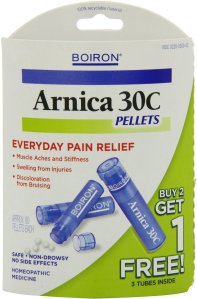
Arnica gel and tabletsarnicagel

Arnica montana is an herb that grows in Europe. The homeopathic pharmaceutical industry sells an arnica gel that you can apply to your skin to relieve pain. It’s clear, goes on cool, has no odor, and once it dries, you can’t tell it’s there.

You can also get arnica cream, which blends more easily with lotion or creamy sunscreen.

Arnica relieves muscles aches and stiffness, reduces swelling, and prevents bruising. It relieves osteoarthritis pain as well as ibuprofen, without any side effects. I always have it available when I’m doing massage, to apply to bruises and to extremely sore, stiff, or swollen muscles.

arnicapelletsIf you’re more adventurous, you can take arnica tablets. There’s a little trick to dispensing the tablets: twist the lid to loosen. Hold the container upside down and twist it, keeping the lid stable. Pellets will fall into the lid one at a time. When you’ve released 5 pellets, remove the lid from the container and empty the lid under your tongue. Let the pellets melt in your mouth.

If you know you will be doing something where you’ll be in pain afterwards, like lifting heavy boxes, gardening, getting Rolfed, hiking with a heavy pack, etc., take the tablets beforehand to prevent or lessen pain, or take it afterwards for whole-body relief.

Where to get arnica

Here’s the tricky part. People “in the know” like athletes and dancers use arnica, but the makers don’t advertise (as far as I know), so others tend to learn about arnica via word of mouth. To buy it, you need to go to a store that sells homeopathic medicines. Ordinary drug stores and groceries typically do not (although that may be changing), but compounding pharmacies and health food stores (including Whole Foods and Sprouts) do. If it’s not available where you live, you can buy it online.

Note: You may have heard people say homeopathy doesn’t work. If you’re skeptical, try this: The next time you feel muscle pain equally on both sides of your body, apply arnica to one side and do nothing to the other side. Wait a few hours or overnight and note the difference. Or you could apply it to half a bruise and see what happens.

Epsom salt baths

My second recommendation for muscle pain is taking epsom salt baths. Epsom salt (magnesium sulfate) is a mineral made from sea water that looks like rock salt. It has several uses, including taking internally to relieve constipation (taking too much orally can cause diarrhea) and fertilizing plants.

Fortunately, the body absorbs magnesium really well through the skin, and there are no adverse side-effects.

epsomsaltThe best use for sore bodies is to add two cups of epsom salt to a warm or hot bath and soak in it for 12-20 minutes. Swish the water until the epsom salt dissolves. If I take an epsom salt bath in the evening, it calms me and I sleep like a baby.

Epsom salt eases muscle cramps, pain, and inflammation. It reduces insomnia and anxiety. It pulls toxins out of cells, softens skin, improves blood circulation and oxygen use, increases the effectiveness of insulin, aids in nutrient absorption, lowers blood pressure, and relieves migraines and cold/flu symptoms.

Most of us are deficient in magnesium. Stress (including muscle overuse) depletes magnesium, and depleted magnesium creates stress, so it’s easy to get stuck in magnesium depletion.

I believe magnesium is the new Vitamin D because most of us don’t know we’re deficient, and once the deficiency is remedied, well-being increases.

I’m not the only one that thinks so.

According to the National Academy of Sciences, American’s magnesium deficiency helps to account for high rates of heart disease, stroke, osteoporosis, arthritis and joint pain, digestive maladies, stress-related illnesses, chronic fatigue and a number of other ailments.

The other component of epsom salt, sulfate aids joint health, improves absorption of nutrients, strengthens the gut lining, forms healthy brain tissue, and plays an essential role in detoxing. It may ease or prevent the pain of migraines.

If you think you might be deficient, take 2-3 epsom salt baths a week for a month. Once the blood levels reach optimum level, you stop absorbing it, so it’s safe.

Where to buy epsom salt

You can buy plain epsom salt at mainstream grocery stores and pharmacies. I bought a 4 pound bag from the Texas grocery chain H-E-B for $2.86. Four pounds makes 8 cups, so using two cups per bath, a bag provides enough for four baths at $.71 per bath.

Think about it: For a little over $2 per week, you could sleep like a baby, ease sore muscles, detoxify your body, improve digestion, lower blood pressure, and increase your feeling of well-being!

Bonus: You can reuse the bath water as a plant fertilizer! Epsom salt is often used to fertilize tomato and pepper plants as well as rose bushes. My bathtub drains into a hose that I can move around outside so various plants get the benefit of this fertilizer.

Also, you may see epsom salt sold in smaller quantities that’s had fragrant essential oils added. It’s usually marked up quite a bit. If you’re frugally experimental like me, you’ll want to get the plain generic epsom salt and experiment with adding your own fragrance.

For relaxation, add lavender, chamomile, frankincense, sandalwood, patchouli, or florals like rose, jasmine, neroli, geranium. To stimulate your energy, add citrus scents, mint, ginger, cinnamon, or rosemary. Put the scented epsom salt into pretty jars, tie with ribbons, and give as gifts.

Body self-care tools: the spine aligner and a workbook on trigger points

Aside

My two best self-care friends right now in my career as a bodyworker are a tool and a book that anyone can use. One of them provides daily relief from tight, achy back muscles caused by bending over slightly to massage clients. (I do Swedish and integrative massage, along with Ashiatsu and the biodynamic craniosacral therapy practice sessions I’m doing.)

Ma Roller (aka the spine aligner)

I’ve mentioned it before on this blog, and it bears mentioning again: daily use of a spine aligner keeps my back in shape. (Along with yoga, of course — even just a couple of sun salutations a day). I use it in bed, placing the center knobs between two vertebrae, somewhere between my shoulder blades, and lying back on it. When the muscles between those two vertebrae feel stretched and released, I move it down my spine one vertebrae at a time, all the way down to my sacrum.

spine aligner

My back feels so much better when I do this in the morning than when I don’t that I’m motivated to do it nearly every day, especially on days when I’ve got a lot of work.

I hesitate to lend my spine aligner out because once people try it, they want to keep it for themselves!

Plus, it tickles me that the first tool of this type is called the “Ma Roller”. That somehow gives it a worshipful quality to my mind. Ma Roller truly is a divine tool for keeping backs feeling good and flexible. (There are simpler versions without the foot ridges and single end knobs that mine has. You can Google and order the one you prefer online. )

Trigger point therapy

The other bosom buddy, a new one, is a book, The Trigger Point Therapy Workbook: Your Self-Treatment Guide for Pain Relief, by Clair Davies with Amber Davies, second edition.

Studying trigger points was not part of my massage school curriculum. (I understand they’re adding it now.) I really didn’t know much about trigger point massage. It’s one of the two techniques (the other being myofascial release) that are considered “deep tissue massage” — commonly considered the kind of massage that “hurts so good” or “hurts now, feels good after the bruises go away”.

After I started giving several massages a day, several days a week, I did know pain: muscle pain, painful tendons, achiness, burning, tightness, a thick hard ropy quality to muscles like I find on clients. And sometimes self-massaging those muscles felt good but didn’t last. The sore places became chronic.

I was traveling with a friend who’s a massage therapist and educator who explained trigger points to me and helped me find one in my neck so I could experience referral: press into a tender Point A and hold it, and pain arises in Point B, often surprisingly distant. (Although some trigger points are just painful at Point A.)

Eventually I got the workbook and started checking my muscles for trigger points. Then a colleague offered to give me a session so I could learn how she does it (and get some relief), and then she had me work on her trigger points. I actually bruised her butt, which she was okay with because she felt so much better.

If you didn’t know, a trigger point is a small knot in the muscle fibers that might even be microscopic. Sometimes a massage therapist — or you — can feel the knot. Experienced practitioners say when no knot is palpable, they can feel a change in muscle density.

The other way of finding them is to systematically press deeply into the muscle, sliding your fingers slowly along the skin, until you — or the client — identifies a tender spot. Then press into it while breathing deeply three times (sometimes the knot releases before then), and then rub the area to increase circulation and carry off toxins.

Now I add trigger point work on request to the Swedish and integrative massages I do. I don’t do sessions that are entirely deep tissue so far. Applying that much pressure is strenuous on my body, and my clients so far don’t want a whole hour of trigger point work.

I’ve ordered a small spiral book of images of muscles, trigger points, and referred pain areas that I can easily use at work in lieu of posters, since I work in multiple locations. It’s The Trail Guide to the Body — Trigger Points.

But back to me! I found dozens of trigger points in my sternocleidomastoid (the long muscle that pops out on the side of your neck when you turn your head) and scalenes (three shorter, entwined muscles on the side of the neck that attach to several cervical vertebrae, like guitar strings). The scalenes flex the neck to the same side.

Trigger points on these muscles produced referred pain at areas on my head, arms, hands, and between my shoulder blades. Finding and releasing these trigger points has made a world of difference. My body feels lighter, looser, freer, more flexible — and I’m already flexible.

I imagine that using the spine aligner regularly releases trigger points in the various layers of spinal muscles. My back is definitely less tender than when I first used the spine aligner. Use it in bed or on a sofa at first. Later you will be able to do it on the floor.

I have a hunch that if I could release all my trigger points, my body would feel like it did when I was 5 years old again. And that would be something I’d like to experience. The wisdom of age plus the energy of youth!

Trigger points do tend to come back but are not as painful, and sometimes they can require repeated work before they fully release. Every 2-3 days, I check those neck muscles and release any trigger points that are still tender. I’ll move onto my shoulder, arm, and upper back muscles next.

Whether you are a bodyworker or a recipient, if you are serious about moving away from muscle pain and toward more ease and lightness in your body, I recommend these tools for self-care.

The Blind Cafe in Austin, Texas, 2013

I wish I could remember how and when I first learned about The Blind Cafe. Online somewhere, for sure, in the last year or two.

What I read about it sounded so amazing, I knew I’d love to experience it when and if it ever came to Austin, and I added myself to a mailing list for notifications.

And lo and behold, The Blind Cafe coming to Austin this Feb. 20 and 21! I’ve already bought my ticket.

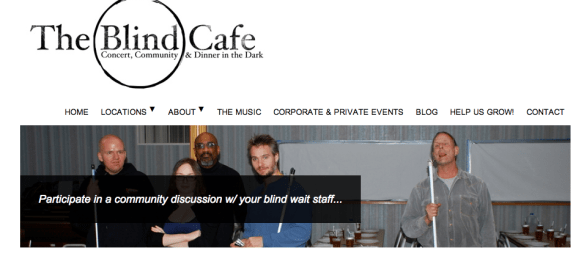
The Blind Cafe websiteWhat made me want to do it is this:

  • It’s a vegetarian meal with as much of the food locally sourced as possible. Check.
  • Profits go back into the community. Check.
  • The meal is accompanied by original live music. Check.
  • The seating is family-style. Check.
  • The waitstaff is professional. Check.
  • And blind… Hmm.
  • There’s Q&A time with the waitstaff. Check.
  • The meal is served in pitch darkness. Wow.

People who’ve experienced The Blind Cafe talk about how eating food served in darkness enhances their sense of taste. (It’s finger food, not soup, from what I’ve read.)

They also talk about how sharing a meal in the darkness with people you don’t know creates intimacy and community.

If you’re interested, there’s a Facebook event called The Austin Blind Cafe where you can RSVP, and you can buy tickets here. If the dinners sell out, which tends to happen, there’s a wait list for the next time the event is held here. (It’s also held in Boulder, Denver, Santa Cruz, Portland, Seattle, and Burlington.)

Also, if the price is too steep, you can request a discounted ticket.

I like these people! I’ll post again afterwards to let you know how it went.


New Year blessings for you from The Well

May you breathe fully and easily.

May you fully inhabit your body with your awareness.

May you discern the difference between stress and relaxation.

IMG_2383


May you experience more and deeper relaxation.

May you experience just enough stress to keep you aware and safe.

May you delight in exploring how good you can feel.


May the relation between your diet and well-being become clear.

May the relation between your conscious and unconscious minds become clear.

May you soften to yourself and others.


May you seek help when needed.

May you feel gratitude for all the resources you have.

May you move toward happiness.

IMG_2382

May you notice shine, wherever it appears.

May inspiration find you frequently.

May you have compassion for yourself and others.


May you set boundaries and manage conflicts with love.

May you experience breakthroughs in maturity and insight.

May you be present in every possible moment.

Mr. Rogers and 5 random acts of kindness for each person who died

This has been quoted on Facebook about how to help young children who encounter scary things in the news:

When I was a boy and I would see scary things in the news, my mother would say to me, “Look for the helpers. You will always find people who are helping.” To this day, especially in times of “disaster,” I remember my mother’s words and I am always comforted by realizing that there are still so many helpers – so many caring people in this world. ~ Fred Rogers

Here’s a link to the whole web page from which the quote came.

This is part of why I don’t own a television:

The way that news is presented on television can be quite confusing for a young child. The same video segment may be shown over and over again through the day, as if each showing was a different event. Someone who has died turns up alive and then dies again and again. Children often become very anxious since they don’t understand much about videotape replays, closeups, and camera angles. Any televised danger seems close to home to them because the tragic scenes are taking place on the TV set in their own living room. Children can’t tell the difference between what’s close and what’s far away, what’s real and what’s pretend, or what’s new and what’s re-run.

It’s not just children who become very anxious. Your consciousness is taking it in. Even though I’ve been an adult for a long time, and I’ve been conditioned about what “reality” is, watching the events of 9-11 really brought it home to me: the way “the news” televises tragedies is traumatizing. So many replays, so much repetition to get all “the facts” right, so much effort to keep people glued to their sets, feeling horrified and helpless, while taking in those images and words over and over again.

Turn off the news. Go for a walk. Pray and take care of yourself and your family. And look for solutions.

One Facebook friend (Ginger Webb, whom I’ve never met but whose fabulous herbal products I buy and recommend) proposed doing five random acts of kindness for each person who died.

I like that. I so wish that our government would enact gun control laws and make treatment for PTSD free and accessible for everyone. We do not need to be as highly armed as we are, and we’re not doing a very good job keeping guns out of the hands of the emotionally disturbed.

It will take time and effort for that to happen, and it may not, judging by the past. This time could be different, though. Please let your voice be heard.

Meanwhile, put some good into the world. You never know how stressed or hurting someone might really be, and how meaningful your unexpected kindness could be.

What is it going to take?

I wish everyone would really take this in: Yet again, there has been a mass shooting in the United States of America, and this time it was at a grade school, and children and teachers were shot and killed, and apparently a family member of the extremely disturbed young shooter.

I haven’t been able to read, hear, or look at the news since seeing a few posts about it on Facebook yesterday and hearing a little more on the radio as I drove to work. The big picture is enough.

It is tragic when children die. It is gut-twisting horrifying when children die violently.

The children who survived have lost their carefree innocence forever. I pray they can rediscover joy within themselves when it’s time.

I wish everyone would really absorb this and think of what we as a nation need to do to ensure this does not happen again.

That no mass shooting ever takes place again.

That people who are seriously disturbed get referred to the most excellent help possible.

That we become a peaceful nation without the need for so many guns.

That the politicians just shut up and do the right thing because people’s lives real trump your theoretical principles.

I wish that every single politician and lobbyist who wants to jabber on about “protecting our right to bear arms” had to spend 15 minutes alone in a room with the parents of one of those children who died.

Amen.

Inspirational video about the power of belief, yoga, and health

I love this video about Arthur, a disabled Gulf war vet who felt hopeless and got fat, who was turned down by many yoga teachers. Then he met the manly yoga teacher Diamond Dallas Page, who asked himself:

How am I gonna help that guy?

That’s all it takes from the teacher. Arthur was willing to make an effort and fail:

Just because I can’t do it today doesn’t mean I can’t do it some day.

And that’s all it takes from the student.

I hope it inspires your practice, whether it’s yoga or commitment to any path toward health.

Intuition, microexpressions, hypervigilance, and trauma

When Intuition Is A Curse.

When people come into my office and tell me, very early in a conversation, that they are ‘intuitive’ and ‘can see into people’ I often wonder if they have had trauma. The longer I do this for a living the more I realize that some of us developed our insights into humanity as a protection mechanism. It makes sense. People who have experienced trauma tend to be more intuitive. We’ve experienced hypervigilance where we are constantly scanning our environments for signs of danger.

Have you experienced trauma, and are you intuitive, psychic, an empath, and/or clairvoyant? I’m curious.

This article reminded me that early this year, I witnessed some microexpressions, when emotions that someone is trying to suppress appear briefly on their face. Paul Ekman has done a lot of research into them. The TV show Lie To Me is based on his work. Reading them may have a lot to do with intuition.

I noticed hatred and contempt appear fleetingly behind a mask of apparent calm and reason on the face of a man I had dated for a couple of months as he spoke to me. He was unaware of them or that I could read them.

It was disturbing. I could not think of anything I had done to merit those emotions, and I felt hurt and puzzled. From that and other puzzling oddities, I suspected he’d been emotionally abused. He hadn’t mentioned it to me, but his behavior had been strange at times. A mutual friend confirmed years of past abuse. Apparently I had unknowingly done something that triggered his memories of being abused.

After learning of the history of abuse, I felt compassion for him. I also realized I didn’t want to be alone with him in private again.

Later he got his wires crossed again, in public, right in front of me. Curious (because he still hadn’t told me anything about the abuse), I then had a clairvoyant experience in which I “saw” that he’d been the subject of horrific psychotic rage repeatedly for years.

I had a major fight-or-flight reaction.

I rode it out with mindfulness as much as I could. Once the biochemical cascade was underway, there was not much to do but wait for it to fully subside and do what I could to recover my equilibrium. It took a few months for that to happen. I watched my fearful, self-protective mind at work, influenced by deep stress. It wasn’t pretty, and I’m glad it’s over. Although unpleasant and difficult, being able to witness my own experience was useful.

I learned a lot from this. A main take-away is that if I am relating to someone who’s been traumatized, I want them to be up-front about it pretty quickly, if they have any awareness of it at all. It leaks out anyway if they try to hide it, and they come across as untrustworthy.

Over 60 percent of Americans experience trauma at least once in their lives. It’s not that uncommon.

I gained compassion for my past traumatized self, before I had done any healing work. I didn’t know myself well enough to understand how much trauma had shaped me.

During that time of riding out the biochemical cascade, I was diagnosed with adrenal fatigue. I am grateful for the healers who helped me recover, including the healer inside me.

I felt compassion for him. He was admittedly clueless, dissociated, and good at compartmentalizing. In my opinion, he seriously needed professional help.

I grokked his disappointment at leaving an abuser with hopes for a better future, waiting six months after divorcing and taking a course on building new relationships before dating, only to discover that the abuse had made him both easily disturbed by those with positive intentions and disturbing to them.

It was sobering to refer someone I dated to therapy. In hindsight, I think I showed him how a fairly healthy person responds when they are dating or befriending someone who shows signs and symptoms of mental illness, who is either hiding it, discounting its seriousness, or so injured he doesn’t even know he has a mental illness.

I let him know that I knew, told him that I would not have dated him had I known, and I ended our relationship until such time as he has recovered, urging him to get professional help to that end.

It seems probable that he needed to know how someone would do this. But damn, that was really freaky.

May his cluelessness become curiosity.

May his compartmentalization become wholeness and expansion.

May his fears become worthy of reconditioning.

May his dissociation occur only when useful, and may he learn to live in partnership with his body.

May his awareness include an appreciation of the gifts of the unconscious mind and a more conscious partnership with it.

May his contempt, hatred, terror, shame, and secrecy be transformed and his burden be lessened.

“We must be willing to let go of the life we have planned, so as to have the life that is waiting for us.” ~ Joseph Campbell

And after I think of him and send energetic blessings his way, I dissolve all thoughts and images of him and bring my attention back to my own body and experience peace and gratitude.

But was my intuition working because I’ve experienced trauma myself and learned to be observant? I don’t know. Here’s a possibility: Apparently some long-time meditators are also adept at reading microexpressions.

From studies with thousands of people, Ekman knew that people who do better at recognizing these subtle emotions are more open to new experience, more interested and more curious about things in general. They are also conscientious — reliable and efficient. “So I had expected that many years of meditative experience” — which requires both openness and conscientiousness — “might make them do better on this ability,” Ekman explains. Thus he had wondered if Öser might be better able to identify these ultra-fast emotions than other people are.

Then Ekman announced his results: both Öser and another advanced Western meditator Ekman had been able to test were two standard deviations above the norm in recognizing these super-quick facial signals of emotion, albeit the two subjects differed in the emotions they were best at perceiving. They both scored far higher than any of the five thousand other people tested. “They do better than policemen, lawyers, psychiatrists, customs officials, judges — even Secret Service agents,” the group that had previously distinguished itself as most accurate.

“It appears that one benefit of some part of the life paths these two have followed is becoming more aware of these subtle signs of how other people feel,” Ekman notes. Öser had super-acuity for the fleeting signs of fear, contempt and anger. The other meditator — a Westerner who, like Öser, had done a total of two to three years in solitary retreats in the Tibetan tradition — was similarly outstanding, though on a different range of emotions: happiness, sadness, disgust and, like Öser, anger.

I’m not nearly as experienced at meditation as these men, but even at my level, meditation can slow the experience of time down until there is only the present moment, which becomes vast, and awareness simply expands.

If you can experience time like that, microexpressions would be much more apparent.

That’s one explanation. Or maybe I’ve just been around the block a few times. Or maybe these long-time meditators had also trauma in their histories. The article didn’t say.

I do know that for years, I’ve been interested in people-reading, and I imagine at some point early on, there was a connection in discerning whether they were safe to be around. But once you realize someone is not out to murder you, there’s still a lot to learn. We humans are pretty fascinating and diverse.

If you want to learn more about reading microexpressions, Paul Ekman (link above) has a newsletter and online training.