If you could experience enlightenment every day, would you?

Note: There are just a few spaces left in this workshop, which is limited to 30 people.

~~~

I am going to be attending a workshop September 28-29 in Austin, and I’d love for it to fill up. This workshop is for people who are interested in enlightenment (or maybe just deeper well-being), Neuro-Linguistic Programming (NLP), or both. No NLP experience is required.

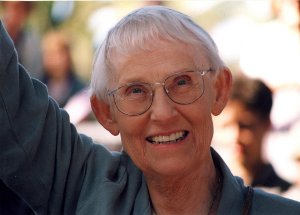
Connirae AndreasThe teacher is Connirae Andreas. She’s got her own Wikipedia page here. If you haven’t heard of her, she’s a psychotherapist, writer, and trainer in the field of NLP whose impeccable and compassionate work has helped many thousands of people suffer less and enjoy life more.

She and her sister Tamara Andreas created, developed, and trained people in a process called Core Transformation (described in the book Core Transformation: Reaching the Wellspring Within) that can take you from a problem state to a state of expansion and resourcefulness. Many experience their spiritual core in this process.

I’ve enjoyed taking people through this process so much, I offer it for free. Contact me if you would like a Core Transformation session in Austin.  

Connirae has been working on a process for personal growth that she calls “the Wholeness Process,” after studying various spiritual teachings on enlightenment, translating them into a precise method that people can adopt into a daily practice, and then working weekly with a small group in Boulder (her hometown) to refine the method.

She’s presenting the workshop to teach this practice in Austin September 28-29. Click the link for details. Keep in mind that the class is limited to 30 people, so if you’re interested, reserve your space sooner than later. She may not be teaching this again, so this is an opportunity to learn in person from the source.

The practice reportedly has benefits such as:

  • resetting the stressed nervous system, inducing deep relaxation
  • increasing one’s sense of well-being
  • helping one relate to others with more ease
  • melting away issues that before seemed like problems
  • accessing natural wisdom more easily
  • increasing creativity
  • feeling more whole and congruent
  • healing difficult, raw emotions
  • becoming more adaptable and resilient

She’s also learned that the practice has been found to relieve insomnia. It can also be used to dissipate pre-migraine auras and help people deal with their emotional hot buttons.

She found that once learned, the practice can take as little as 5 minutes a day.

Connirae wisely doesn’t promise enlightenment, but she does say this:

…if you use the process, you will experience a natural shifting in the direction that we might call enlightenment. The class is practical and experiential, and no beliefs regarding spirituality or philosophy are needed or offered. However the experiences people have at times resonate with many mystical writings and understandings.

Part of “evolving” in this way, is getting more comfortable and “at home” with our vulnerabilities and “weaknesses,” which become increasingly a part of a felt love and acceptance.

I hope to see you there.
Feeding your gut microbes a new key to health

Some of the most fascinating revelations in science these days are coming out of the study of microbes living in our guts.

Michael Pollan wrote an 8-page article for the New York Times Magazine about his experience and some of the findings. Excerpts (and click the link just to see the photo of a dirty baby playing with dirty toys, licking the wheel of a toy car):

It turns out that we are only 10 percent human: for every human cell that is intrinsic to our body, there are about 10 resident microbes — including commensals (generally harmless freeloaders) and mutualists (favor traders) and, in only a tiny number of cases, pathogens. To the extent that we are bearers of genetic information, more than 99 percent of it is microbial. And it appears increasingly likely that this “second genome,” as it is sometimes called, exerts an influence on our health as great and possibly even greater than the genes we inherit from our parents. But while your inherited genes are more or less fixed, it may be possible to reshape, even cultivate, your second genome….

A similar experiment [to one performed on mice] was performed recently on humans by researchers in the Netherlands: when the contents of a lean donor’s microbiota were transferred to the guts of male patients with metabolic syndrome, the researchers found striking improvements in the recipients’ sensitivity to insulin, an important marker for metabolic health. Somehow, the gut microbes were influencing the patients’ metabolisms….

Our resident microbes also appear to play a critical role in training and modulating our immune system, helping it to accurately distinguish between friend and foe and not go nuts on, well, nuts and all sorts of other potential allergens. Some researchers believe that the alarming increase in autoimmune diseases in the West may owe to a disruption in the ancient relationship between our bodies and their “old friends” — the microbial symbionts with whom we coevolved….

Yet whether any cures emerge from the exploration of the second genome, the implications of what has already been learned — for our sense of self, for our definition of health and for our attitude toward bacteria in general — are difficult to overstate. Human health should now “be thought of as a collective property of the human-associated microbiota,” as one group of researchers recently concluded in a landmark review article on microbial ecology — that is, as a function of the community, not the individual.

The saying “You are what you eat” can be modified to “Your health is determined by what you feed your gut microbes.”

Although scientists typically like to say there’s not enough data to say something is once-and-for-all proven, it’s good to know how the growing evidence may have influenced them to make changes in their daily lives. Scientists working in this field were asked about how they’ve changed their own and their families’ lifestyles:

  • They don’t take probiotic supplements.
  • They eat a variety of plant foods — fruits, vegetables, and whole grains.
  • They eat more “prebiotics” that encourage the growth of good bacteria — fermented foods like yogurt, kimchi, and sauerkraut.
  • They let their children play in the dirt and with animals.
  • They eliminated or cut back on eating processed foods.
  • They avoid (and help their children avoid) taking antibiotics whenever possible.

Also, they are aghast at the number of Caesarian-section births occurring and recommend vaginal delivery if at all possible, as a means of “inoculating” newborns with their mothers’ bacteria, thus seeding their own gut microbe, enhancing their immune systems, and perhaps giving them an edge on health in other ways.

One of the scientists’ wives gave birth by C-section, and they used cotton swabs to transfer vaginal secretions to the newborn’s skin.

For the same reason, they highly recommend breast-feeding over using infant formula.

Pollan concludes:

I began to see how you might begin to shop and cook with the microbiome in mind, the better to feed the fermentation in our guts. The less a food is processed, the more of it that gets safely through the gastrointestinal tract and into the eager clutches of the microbiota. Al dente pasta, for example, feeds the bugs better than soft pasta does; steel-cut oats better than rolled; raw or lightly cooked vegetables offer the bugs more to chomp on than overcooked, etc. This is at once a very old and a very new way of thinking about food: it suggests that all calories are not created equal and that the structure of a food and how it is prepared may matter as much as its nutrient composition.

This is one of the most fascinating areas of science, with implications that touch everyone, because everyone eats, and it is beginning to look like achieving good health is not as out of reach for many problems as was long thought. I will definitely be posting more on this.

Each moment, life as it is, the only teacher: quotes from Joko Beck

I posted this originally on June 16, 2011. Needing to remind myself of her wisdom, I thought you might want to (re)read her words and appreciate her wisdom too.

~~

Charlotte Joko Beck died yesterday, very peacefully, at the age of 94. She was a Zen teacher who made a major impact on American Buddhism.

Here’s a quote from article that puts her work into perspective (no longer available):

The Ordinary Mind School was among the first Zen communities to consciously engage the emotional life and the shadows of the human mind as Zen practice. The late Charlotte Joko Beck and her dharma heirs adapted elements of the vipassana tradition — a relentless inquiry into the contours of the human mind — as unambiguous Zen discipline.

Here are some quotes from her:

With unfailing kindness, your life always presents what you need to learn. Whether you stay home or work in an office or whatever, the next teacher is going to pop right up.

Caught in the self-centered dream, only suffering;
holding to self-centered thoughts, exactly the dream;
each moment, life as it is, the only teacher;
being just this moment, compassion’s way.

Enlightenment is not something you achieve. It is the absence of something. All your life you have been going forward after something, pursuing some goal. Enlightenment is dropping all that.

Wisdom is to see that there is nothing to search for. If you live with a difficult person, that’s nirvana. Perfect. If you’re miserable, that’s it. And I’m not saying to be passive, not to take action; then you would be trying to hold nirvana as a fixed state. It’s never fixed, but always changing. There is no implication of ‘doing nothing.’ But deeds done that are born of this understanding are free of anger and judgment. No expectation, just pure and compassionate action.

Practice is just hearing, just seeing, just feeling. This is what Christians call the face of God: simply taking in this world as it manifests. We feel our body; we hear the cars and birds. That’s all there is.

Life always gives us exactly the teacher we need at every moment. This includes every mosquito, every misfortune, every red light, every traffic jam, every obnoxious supervisor (or employee), every illness, every loss, every moment of joy or depression, every addiction, every piece of garbage, every breath. Every moment is the guru.

So a relationship is a great gift, not because it makes us happy — it often doesn’t — but because any intimate relationship, if we view it as practice, is the clearest mirror we can find.

Practice can be stated very simply. It is moving from a life of hurting myself and others to a life of not hurting myself and others. That seems so simple — except when we substitute for real practice some idea that we should be different or better than we are, or that our lives should be different from the way they are. When we substitute our ideas about what should be (such notions as “I should not be angry or confused or unwilling”) for our life as it truly is, then we’re off base and our practice is barren.

We have to face the pain we have been running from. In fact, we need to learn to rest in it and let its searing power transform us.

We learn in our guts, not just in our brain, that a life of joy is not in seeking happiness, but in experiencing and simply being the circumstances of our life as they are; not in fulfilling personal wants, but in fulfilling the needs of life.

Meditation is not about some state, it is about the meditator.

Zen practice isn’t about a special place or a special peace, or something other than being with our life just as it is. It’s one of the hardest things for people to get: that my very difficulties in this very moment are the perfection… When we are attached to the way we think we should be or the way we think anyone else should be, we can have very little appreciation of life as it is…whether or not we commit physical suicide, if our attachment to our dream remains unquestioned and untouched, we are killing ourselves, because our true life goes by almost unnoticed.

Buycott: new app for smart phones lets you vote with your dollars!

Avoid Koch Industries Campaign

Avoid Koch Industries Campaign

A new free smart phone app is quickly gaining popularity. Last week Forbes.com, the business magazine, profiled it in this article, New App Lets You Boycott Koch Brothers, Monsanto, and More By Scanning Your Shopping Cart. (Well done, Forbes! I didn’t know you had it in you.)

The article has already gotten about 440,000 shares on Facebook, which probably qualifies it as being pretty close to viral. I downloaded the app, but apparently they were overwhelmed with new users and still working on some functionality after the Forbes article.

Today it appears to be working fine. I took it for a test ride at my local H-E-B.

To me, this app represents a capitalist democracy functioning at its finest. Companies are of course very sensitive to sales, and at the same time many are making unprecedented use of corporate dollars to influence the governmental representatives that we voted into office to do their bidding. They’ve bought our politicians, and the Supreme Court has given its blessing.

So who’s watching out for us?

We the people can vote with our money and influence those companies to act more in our interests. Yes, we not only get to vote in the voting booth, but now this app makes it really easy to vote with our pocketbooks at the point of sale, which is probably way more effective than just voting in a booth in these days of Citizens v. United.

Here’s how to use it:

  1. Download the free app. When I first went to the website, it said the Android app is coming soon. The iPhone app is available in the Apple app store. Did I mention it’s free?
  2. Open the app and set yourself up with an account, or you can log in with Facebook if you have an account there.
  3. Note the three buttons at the bottom: Activity, Scan, and Campaigns. Click the Campaigns button to view and join campaigns. Next, select a category. For example, I selected Health.
  4. Joining A Campaign

    Joining A Campaign

    A list of health-related campaigns appear. I selected the campaign “YES to Organic+NonGMO — NO to Monsanto+GMOs” (see photo at right). I can now view information about this campaign, lists of companies and brands aligned with this campaign’s purpose, and Buycott members who’ve joined this campaign. I simply clicked a button to join this campaign. Click the Back button to continue to select the categories and campaigns you want to support. Now you’re ready to shop!

  5. When you are in a store considering a purchase and want to know if the money you pay will support or oppose your values, open the app and click Scan. Hover the phone’s camera over the product’s bar code so that you can view the entire code on the screen. Hold the phone steady for 2-3 seconds until a message says the bar code is loading.
  6. Once the company info appears, you can see whether it supports the campaigns you support. You can view company info, its family tree, and the campaigns it supports, and make a decision about purchasing the product that’s in line with your values.
  7. To scan another item, click Close and do steps 5 and 6 again.

If you want to see a history of your actions (campaigns joined, items scanned, etc.), click Activity (see photo below).

My Activity

My Activity

That’s pretty much it!

So, just for fun, next time you go to the store, go to the soda aisle and scan a bottle of Coke. Then take a look at its family tree. The screenshot below shows the companies/brands owned by Coca-Cola. You have to do a lot of horizontal scrolling to see them all. Then click Campaigns to see where the company stands in relation to your values.

Quote: Finding your spiritual home

From Martha Beck’s Daily Inspirations:

Many people take umbrage when someone sets out to find his or her spiritual home. If you embark on a similar journey, you should expect some people to be shocked, to be angry, to tell you you’re breaking the rules. That has certainly been my experience. However, the rewards are inexpressibly wonderful. Heading towards that inner home will take you places—both inside yourself and in the external world—which your heart will recognize as its native environment, even though you have never been there before. I would go so far as to say that this may be the purpose for human life; that we are set free into a lonely universe like homing pigeons meant to find our way back to joy.

I just love this lady. She’s incredibly wise and insightful.

The value of confession is that it softens us

Aside

Dzigar Kongtrul Rinpoche (one of Pema Chodron’s teachers) writes:

The gap between ourselves and the Buddhas and Bodhisattvas exists because of our own denial, that could not be penetrated by any blessings. But that denial comes from and covers, deep down, a lack of harmony with oneself, a conflict inside, between how things are and how they appear. Having these two in harmony is enlightenment. As we confess, we feel the lack of the aggression and rejection that underlies our denial. A little white light opens up in our being that one day can expand to the vastness of the sky. We can avail ourselves of help from which we were previously blocked. This is why honest and intelligent confession practice is so valued by many religious traditions.

New Year blessings for you from The Well

May you breathe fully and easily.

May you fully inhabit your body with your awareness.

May you discern the difference between stress and relaxation.

IMG_2383


May you experience more and deeper relaxation.

May you experience just enough stress to keep you aware and safe.

May you delight in exploring how good you can feel.


May the relation between your diet and well-being become clear.

May the relation between your conscious and unconscious minds become clear.

May you soften to yourself and others.


May you seek help when needed.

May you feel gratitude for all the resources you have.

May you move toward happiness.

IMG_2382

May you notice shine, wherever it appears.

May inspiration find you frequently.

May you have compassion for yourself and others.


May you set boundaries and manage conflicts with love.

May you experience breakthroughs in maturity and insight.

May you be present in every possible moment.

Inspirational video about the power of belief, yoga, and health

I love this video about Arthur, a disabled Gulf war vet who felt hopeless and got fat, who was turned down by many yoga teachers. Then he met the manly yoga teacher Diamond Dallas Page, who asked himself:

How am I gonna help that guy?

That’s all it takes from the teacher. Arthur was willing to make an effort and fail:

Just because I can’t do it today doesn’t mean I can’t do it some day.

And that’s all it takes from the student.

I hope it inspires your practice, whether it’s yoga or commitment to any path toward health.

Massage testimonial

Just received a wonderful testimonial from someone who hadn’t had a good night’s sleep in three weeks. I worked on her for two hours yesterday doing an integrative massage, and something really shifted for her.

She wrote:

I sit here at my computer after the best night’s sleep I’ve had in weeks. I am so deeply grateful for your loving energy yesterday. Your integrity, touch, and presence were exactly what I needed to break open the clogged dam of emotions that’s been keeping me from sleep.

All throughout the massage, I could feel and take in your love and healing energy which is abundantly transferred through your hands. When you said ‘How you feel matters,’ my soul got the message that you cared enough to hear, see, and touch me. When you did the cranial-sacral hold, I felt like I was being cradled by my mother.

You had asked the question, ‘What happened three weeks ago?’ … My insomnia has been “waking me up” to the fact of unfinished business…. Your work allowed me to dive through the opening and swim the turbulent waters on top of a still well. I’m not quite at the still well yet, but I have faith that I’ll get there.

All I can say in response is that it was a real pleasure and an honor to work on her. I feel grateful that opportunities to make a difference like this are coming my way in this new livelihood of massage and bodywork.

No kidding: the power of negative intention!

Last weekend I was debriefed by my friend Katie Raver on some cutting edge NLP tools she learned about at the recent IASH convention in San Francisco.

One of them was so unexpectedly awesome that I just have to share it! It originated with a Japanese doctor, Masaki Kono, who works with children who have cancer, which you might imagine can be pretty depressing. He only has a few minutes with each patient, and he wanted to get the most out of his time with them.

We’ve all heard a lot about the power of positive intention. Sometimes it seems like a cultural bias or a meme that we need to be positive, that being negative is taboo or at least anti-social and unproductive.

In fact, one of the presuppositions of NLP is that there is a positive intention behind every behavior.

We also know that problems can have secondary gains, such as the caring attention we receive when we’re seriously ill.

Realistically, people get stuck. We set goals we never reach; we have problems that can persist for a long time. Something — an unconscious negative intention — is blocking us from being the person we say we want to be or doing the things we say we want to do.

If that something was conscious, we could probably deal with it. But usually it’s not conscious.

This process can help. It works best when you do it with a partner, one being the guide and the other being the explorer. Then change roles.

  1. Guide, tell the explorer to think of a problem, something that’s wrong that has persisted for a while. Ask what the fear is behind this problem. And what is the fear behind that?
  2. Keep inquiring until the explorer reaches the greatest or core fear associated with this problem. You and the explorer will be able to tell what it is because they will feel some emotion about it.
  3. Now ask the explorer to repeat the core fear this way five times, out loud: “I have been intending to ________________.”
  4. Ask the explorer what he or she is noticing now.
  5. Future pace by telling the explorer that he or she may experience new learnings and even substantial shifts about this topic in the days and weeks to come.

Several people who used this technique have reported back that it is a pretty amazing tool for getting new information about what’s kept us stuck, and just that alone is enough to create a shift!