Tao Porchon-Lynch: teaching yoga, ballroom dancing videos

I found more videos of Tao Porchon-Lynch, the world’s oldest living yoga teacher. I just can’t get enough of her! She’s my inspiration, my role model for wellness, because what she can do now is based on what she did when she was much younger: a lifetime of good habits.

She looks, sounds, and feels so healthy! She seems to be wonderfully sweet and so full of vitality! Seeing her living so well is very motivating.

In the first video, she talks about yoga, and you see her teaching a class:

In the second video, she displays amazing ballroom dancing skills. That was filmed in 2009, when she was “only” 91. Her partner looks to be about one-third her age, yet they are well matched on the dance floor.

If you didn’t know, would you ever have guessed she was even over 70?

She has her own website here: http://taoporchon-lynch.com/.

Also, if you missed them, see my earlier posts, The world’s oldest living yoga teacher and More from the world’s oldest living yoga teacher: she tangos!

More from the world’s oldest living yoga teacher: she tangos!

I found this 2006 YouTube video of Tao Porchon-Lynch, whom I posted about recently in The world’s oldest living yoga teacher.

This video was made in 2006, when Tao was “only” 86.

Isn’t she adorable? I aspire to be like her when I’m 86.

Oh, and she also likes to waltz, jitterbug, samba, cha-cha, foxtrot, and tango.

“It lightens up your spirit,” she says.

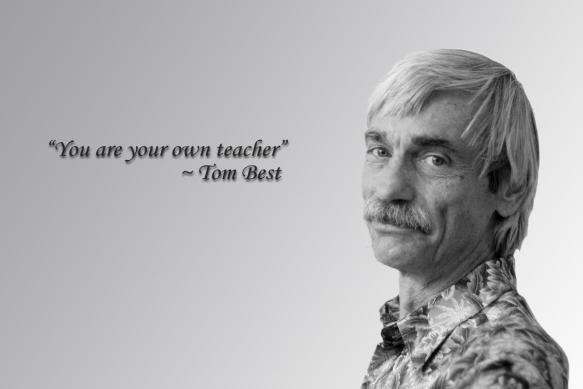
When the teacher is the teaching: Tom Best.

I figure I spent a thousand hours with Tom Best between 2007 and April 21, 2012, three days before his death.

I took NLP practitioner training as a student in Austin. Then evolutionary NLP in Dallas. Nightwalking in Wimberley. NLP master practitioner as a student, Austin. evolutionary NLP in Maui. NLP practitioner as a training assistant, Austin. Nightwalking at Buescher State Park, Smithville. NLP master practitioner as a training assistant, Austin. The Tom Best and Steve Daniel workshop using sound, Austin.

Several times I attended the first weekend and last day of practitioner trainings when I wasn’t a student or training assistant, to see him and Bobbi and my friends who also assisted, and to meet the new students and lend my support, and to re-experience “beginner’s mind” with NLP.

On April 21, I took a day of evolutionary NLP at Alma de Mujer, and he died three days later.

He was my teacher, and he was the teaching, my heart realizes now, after he left.
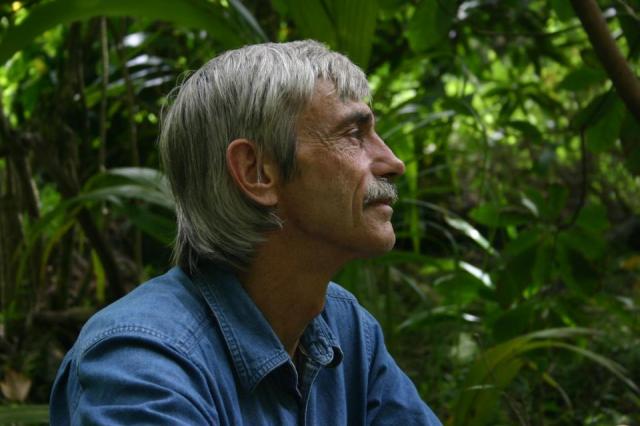

He was not really my friend, in the sense that we didn’t hang out in our off time and let our hair down together. Outside of teaching, he was a private man, a little shy and reserved, already giving a great deal of himself, a world-traveling teacher seriously devoted to spending his non-teaching time at home with his wife Bobbi and their dogs and cats.
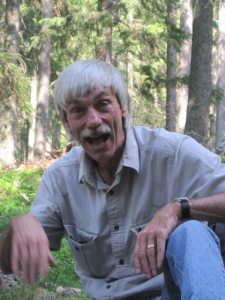
But he was friendly from the start, and I felt love for him and from him.

Who knows how he saw me? I don’t think I can even begin to see myself as he saw me in 2007 or how he saw me on April 21. I can tell you that I changed, that his teachings transformed me, and others witnessed that. Among my long-time friends, I am known for having changed.

I have had many teachers in this lifetime. Many were teachers who did not even know they were my teacher because I read their books or watched them on video. Many many many more didn’t know they were teachers — they said or did something I learned from, sometimes what to move away from, and sometimes what to move toward.

I signed up for in-person lessons and cracked myself wide open to take in Tom Best along with his teachings more than I have to any other teacher, besides my parents, in this lifetime. I poured myself into the NLP pot, and he cooked me.
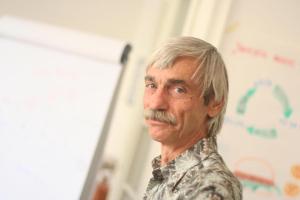
He was at the front of the room, talking, waving his long fingers around, drawing the VAKOG face, telling the Lake Conchas story and so many more, demonstrating a technique, explaining concepts, giving instructions, telling us to take an 11 minute and 17 second break, then ringing a bell to bring us back together…

When I started pract training, I quickly figured out that the academic learning style (dissociated, conceptual) that I had experienced so much of in school and college (and done well with) was not going to work. This NLP required experiential learning, and the only way to do it was to learn with my whole self — to take it in as much as I could, ask for help when I needed it, and then just do it. And then do it again, better. And again and again and again. And to later, to offer my help.

I can hear Tom’s voice right now, explaining the journey from unconscious incompetence, to conscious incompetence, to conscious competence, to unconscious competence.

I can hear him saying, “There’s no such thing as failure, only feedback.”
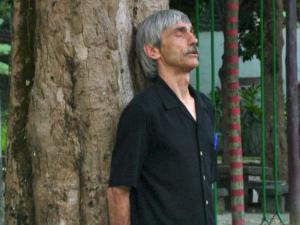
He gave us permission and encouragement to put ourselves out there, on the line, and do the techniques imperfectly. Just do it. I learned to accept doing something imperfectly, to forgive myself for being less than perfect, and to recognize that repetition creates mastery (along with tape editing).

I now see that that’s what made him such a great teacher, putting himself out there, on the line, over and over again, for years, around the world. He just got better at it, so that on Saturday, April 21, he almost seemed to consist more of pure energy (the energies of his intent, presence, attention, clarity, and love) than of matter or ego.

Some of my notes from that day:

Intention is of the tonal. It’s about your desired outcome.

Intent requires no thought. It is gratitude, alignment, participation, connection. (It is of the nagual.)

“Intend to align with realization,” I wrote.

That is so him! He was that teaching. See what I mean about him being the teaching?

Learning NLP the NLP way was exhausting. I went home from each day of practitioner training drained, needing to do something that didn’t require thinking, like watch a funny movie or just veg out.

When I assisted, some other students experienced that too.

I realize now that NLP training required my focused attention for hours at a time in a way that not much else had required. In school, I had learned quickly and then stared out the window, lost in my own private thoughts, while others struggled.

In the NLP pract classroom, I was not an A student. I struggled and was lost sometimes, which challenged me to become a training assistant so I could take it again.

Little did I know that I was building attentive stamina. 

Energy flows where attention goes. — Huna wisdom taught by Tom Best

I was also practicing intent, aligning with realization. Gratitude, alignment, participation, connection.

I’m very grateful that I served as a training assistant so I could take pract training again. It was much lighter and less exhausting, and I got even more out of it the second time around. I integrated the concepts and experiences more deeply. I was both student and training assistant for master practitioner too.

I had wanted to assist at each level one more time.
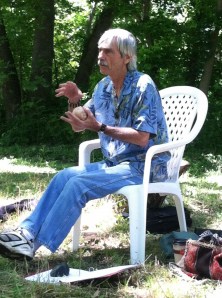
So for a thousand hours, my attention was on him, watching him speak and move, hearing his voice, taking him in with my whole self. His skinny, graceful, long-fingered, elegant, story-telling, teaching, sly, aligned, humble, gracious, personable, receptive, gently challenging, channeling, funny, quirky, fluid, congruent, trance-inducing, masterful, realizing self.

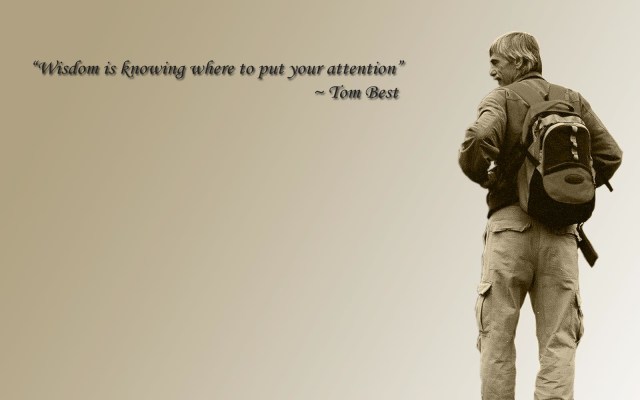
Wisdom is knowing where to put your attention. — Tom Best

I put my attention on you, Tom, over and over again, and it’s like in the grief process where you bring the person into your heart, instead of feeling their absence. You are in here, man. You are so present in my mind and in my heart as I absorb your life and teachings even more and make meaning of it all.

And then you did something a bit surprising and very human. You died. You lived your life well and fully, and then you slipped away, in your sleep, painlessly, quickly, easily.

So I just need to say this one more time, or a thousand more times:

You modeled love, love, love. Mahalo for showing the way.

Thanks to the Facebook group The Grace of Tom Best for all of the photos except the small blue one where he’s seated (that’s mine from April 21).

The rainbow-bridge, huayruro seeds, the long body, and the nagual: a tribute to Tom Best

Part of Monday’s reading from The American Book of the Dead by E.J. Gold, which I’m reading for my teacher Tom Best, who died this past week, is this:

If my attention is concentrated and clear, I will merge into the heart of the beloved, in a halo of light called the rainbow-bridge, and attain completion in the region known as Endowed-with-Glory.

The heart of the beloved here refers to an unveiled vision of reality. The clear light and the region known as Endowed-with-Glory are metaphors for the sea of the nagual, to my mind.

So much love, and such clear attention. He is still teaching me.

For the past few days, all the readings (and there are readings for 49 days after death) have mentioned the “rainbow bridge” or the “rainbow light.” When I realized that, I got GUS (god-universe-spirit) bumps because of the following story:

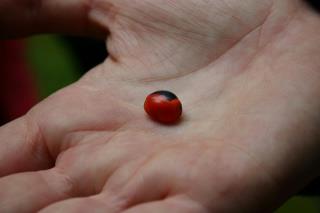
For many years, at the end of many of his trainings and workshops, Tom gave out “rainbow seeds” to his students. They are actually the seeds of the huayruro plant, from Peru. They are beautiful hard seeds of shiny red with a black spot. They are believed to bring powerful good luck and are often strung into necklaces and otherwise made into jewelry.

Tom’s instructions were to give these rainbow seeds away, and to give them to either a person or a place that signified excellence or devastation. In other words, a person or place of exceptional excellence, or a person or place in need of healing. (I am hearing his voice speak these words so clearly as I type, as I often do these days.)

I’ve dropped rainbow seeds in areas that have been ugly or devastated, and in spots so beautiful they took my breath away, and I’ve also given them to many people, for one or the other reason. I have also received one, which I mixed in with the others, and I don’t know which one it is now! I will give them all away.

I actually gave one to Tom once, when he was telling my master practitioner class about losing his beloved dog Dakota (whom I met when I first met Tom in the late 1990s), openly weeping as he spoke, sharing his sudden loss with us–and modeling how to let our emotions flow through us.

Tom gave these seeds out at numerous trainings every year all around the world, and the people he gave them to have also distributed them to people and places they’ve encountered. Tom called this “building rainbow bridges.”

We recipients now connect to each other on this planet, through him, the healed and the in-need-of-healing, the beautiful and devastated (because don’t we all–and this planet–have potential for both, and isn’t such a state always fluid?), and this bridge lives on even though he has transcended his earthly life, continuing its transformation in us. It’s almost as if he foresaw this happening.

Now that is wisdom, living through the long body. What a master.

Tom, you have been building rainbow bridges for years before passing. I realize I am doing these readings mostly for me (and with Bobbi Best when she is able to join me), because I don’t think you need my help at all in this transition.

My emotional body finds it hard to say goodbye, although I moved some heavy grief hucha up and out at ecstatic dance on Sunday. My spirit body feels Tom’s presence within and around me.

You were my teacher and also the teaching in how you lived your life. Mahalo for showing me that. You know how to move into the nagual. Love, just love, love, love, Tom.

(Thanks to my friend from Maui, Erich Wolf, for posting the photo of the huayruro seed above, to Istok Pavlovic, Catharine Stuart Lord, and Nikola Jovanovic for the photos and posters of Tom and his words of wisdom and how to save high-resolution versions, and to Luzia Helena Wittman for sharing the photo of the footprints in the sand–taken by Tom of his own footprints in Portugal–on the Facebook group The Grace of Tom Best. Mahalo, my friends.)

For more about Tom, I wrote a later post that you might also like to read: When the teacher is the teaching: Tom Best.

Meeting Tom Best, who became my teacher

Whew. I can tell this is going to be some blogging that will take a few days to write, as my experience sifts itself into lasting words, and I’ll probably reread and retouch it a few times after posting as the clarifying process continues its magic. I don’t know now how it will come out, but it’s time to start writing.

Someone who has been important in my life, a teacher primarily and also a friend, since 2007 died, shuffled off his mortal coil, transitioned to a higher plane, passed away, left the planet, shed his body, entered the clear light, or however you like to put it.

I like how my friend Katie broke the news to me:

MaryAnn, I have some sad news to share, but not really.

She told me that our teacher, Tom Best, had had a brain hemorrhage on Monday afternoon. He took a nap, and when his wife Bobbi went to wake him up, he was breathing but didn’t wake up. Their dogs licked him, and he still didn’t wake up.

It sort of gets garbled here but he was taken to two hospitals because the first one couldn’t do a brain scan or something like that, and he looked like he was just sleeping and could just wake up at any moment, and with his wife and dearest friends gathered around him, the doctor didn’t hold out much hope but agreed to leave him on a ventilator overnight to see if his condition changed (it didn’t), and on Tuesday afternoon, he left his earthly body surrounded by loved ones.

People who were there said that as they stood around his bed as he was leaving his body, it was as if they sensed someone entering the room, and that energy seemed to be above them, and then it was gone.

I really want to thank Katie for telling me like that. This has been a really different experience of processing a death/absorbing a loss than I’ve experienced before, and much of it has to do with the person who died, and some of it has to do with me.

I first met Tom Best in 1998 or 1999, when I went to visit my friend Linda in Prescott, Arizona. She was close friends with Tom and Bobbi Best. We went to their place to borrow their new adorable white German Shepherd puppy Dakota and take him for a frolic in the forest. Linda introduced me to Tom, and I remember meeting a slight, wiry man with gray hair, kind of average in beauty, greeting me with a gaze that was really different from what I’d experienced before.

His eyes were very blue, a warm blue, and his attention was totally on me for those few moments of introduction with the best eye contact I’d experienced. I felt that he was genuinely interested in me. I felt an openness, a curiosity, a direct energetic connection, and a feeling of caring emanating from him in those few moments of the typical greeting ritual we all know so well in which names are exchanged and hands shaken.

I felt seen. I felt engaged. I felt cared for. Wow, all that in just a few seconds!

As I would later learn from him, I had just experienced news of difference.

I am pretty sure that was the first time I met anyone who transmitted his presence so clearly and directly to me, and I could not have described our first meeting like I just did had I not had him for a teacher later on.

I tucked that memory away, and in 2007, I was dating a man, Norm Sternfeld, who had studied NLP, and I thought of Linda who had studied NLP, and I thought to myself,

Hmm. People who study NLP use their minds well. I want to study NLP.

So I enrolled in practitioner training here in Austin, Texas, and when I showed up the first day, there was that same guy, Tom Best, whom I’d met in Arizona eight or so years earlier, at the front of the classroom, and in a very short time, I knew I was in the right place.

to be continued…

With sparkling eyes and good posture!

From today’s Ocean of Dharma email, this is who we really are:

THE DIGNITY OF FEARLESSNESS

There is more to fearlessness than merely having overcome fear. Beyond that, when we speak of fearlessness, we are describing a positive state of being full of delight and cheerfulness, with sparkling eyes and good posture. This state of being is not dependent on any external circumstances. It is individual dignity. This joy and unconditional healthiness is the joy, the basic virtue, that comes from being what we are, right now. ~ Chogyam Trungpa Rinpoche

I have to say, the description of sparkling eyes and good posture is how I enjoy living my life, as much as I possibly can. It’s where I return when external circumstances take me out of it temporarily.

Joy and unconditional healthiness is who we are, and I am so grateful to have read this early today, as I woke this morning processing some sad, hurt, disappointed, angry feelings, with tears in my eyes.

This feels more like home, these sparkling eyes and good posture!

It’s spring cleansing time! Liver/GB cleared, reduced allergies, reduced anger

I’m reblogging a post about spring cleansing from last March because it got a lot of views back then and it still applies! I’m currently nearing the end of this year’s spring cleanse, which I started a couple of days after the solstice.

Last spring, after doing the colon/parasite cleanse, I finally cleared my liver and gallbladder of hardened bile (green stones). This may seem like not a big deal, but it is. There appears to be a link between the health of the liver and allergies.

In Chinese and Ayurvedic medicine, there’s also a link between the health of the liver and the emotions — specifically the emotion of anger and its relatives, irritability, exasperation, annoyance, outrage, hatred, fury, and so on. You can google “liver anger” to learn more.

Since clearing those organs of stones, anger appears less often and dissipates more quickly in my life. Of course anger is part of a full, healthy range of emotions, but have you ever noticed that some people are inordinately angry (at others or themselves)? That is not pleasant to experience or be around!

If you go through life feeling angry, consider that your organs play a big role in your biochemistry, including emotional, and you can change your emotional makeup toward less anger and more happy feelings by cleansing those organs.

Here’s the original post, dated March 30, 2011:

I started the colon/parasite cleanse today. It’s spring! Time to clean out the system! I do this twice a year.

I wrote about this last fall. You can click this link to my earlier post, which contains instructions for the colon/parasite cleanse, which is fairly simple, and information about the liver/gallbladder flush, which is more complex but worth doing.

I didn’t provide instructions for the flush because it’s complicated, and in my opinion, if you’ve never done it before, it’s best done under the supervision of an expert, experienced health care practitioner who’s quickly available should you have any questions or problems.

One new bit of information to note: The company that makes Paracidin, which rids the body of parasites in the liver, gallbladder, spleen, and pancreas, has changed the name of that product to Paratosin. The labels, including dosage and ingredients, are identical except for the name.

Another new bit of information that I’ve heard or read from several sources: allergies are related to liver toxicity. I’m not sure about this, but thought I’d put it out there. If you have experience or information on this, please share.

My respiratory allergies have decreased dramatically over time. I had NAET acupuncture treatment in 2000 (when I moved back to Austin, allergy capital of the world), and it made a substantial difference.

Before NAET, Seldane or Claritin every day, year round, plus at least one sinus infection per year requiring antibiotics.

After NAET, I’d take an occasional Claritin, and I’ve had only one sinus infection in the 10 years since, when I walked to and from work on a windy day last spring after a long dry spell — exposing myself to lots of pollen. Acupuncture helped me recover from that.

NAET worked pretty well for me.

I’ve done the liver/gallbladder flush twice a year (two nights in a row each time) for about 3 years. I rarely take medication for allergies any more. I feel unpleasant side effects if I take Claritin, so if I’m having nasal congestion and sneezing, I take a homeopathic remedy, Histaminum hydrochloricum, and that does the trick. I use it maybe once a week at peak pollen times. My body doesn’t respond to allergens like it used to. (Another day I’ll post on the NLP allergy cure, which has probably also made a difference.)

So it’s possible that the flush has improved my liver’s health and reduced my allergies. They haven’t gotten worse. (This does not apply to my gluten sensitivity, just to airborne allergens.)

Here’s a link to an article I found with much more information on the liver/gallbladder cleanse, including what actually happens in those organs.

The instructions are pretty close to what my acupuncturist says. She has me test my pH before doing the flush to make sure my body is clearly alkaline, and she has me do it two nights in a row. She also suggests taking magnesium malate when it’s difficult to make fresh, organic apple juice in quantity.

Travels with friends: stories from Paradise Island and Maui

One of my favorite ways of getting to know people better is to travel with them. I’ve been lucky enough to have taken several trips with people who were friends before we traveled together. Spending travel time together deepened our friendships.

Some of these trips were to other places in the world — the Bahamas, London, Maui (twice) — and some were road trips in Texas, even just to San Antonio, 80 miles down the road from Austin.

An hour and a half with a friend in a car can cover a lot of sharing.

Fanny, Pauline, and I went to the Bahamas together and had a total blast. We stayed in the mega-resort Atlantis, and wandering around Paradise Island and Nassau was hugely fun with them.

I learned how to snorkel for that trip, and one day, Fanny and I took a boat trip to visit a sunken boat used in an old James Bond film and check out a coral garden. We saw the “tongue of the ocean” where the deep Atlantic and the shallow Caribbean meet, where looking down, you see the grassy sea bottom drop off into utter darkness.

At the end of that trip, we snorkeled with sharks. (They were well-fed before we got into the water.) Their skin feels like sandpaper, and I noticed that everyone kept their arms and legs pulled in!

In the marketplace in Nassau, we’d been shopping and my feet were hurting (back in those days — never happens now), and I was tired of kids pestering me, hawking crappy trinkets I didn’t want.

I asked the most aggressive little boy if he would sing a song for me for a quarter. He obliged. Other children gathered, and for a couple of bucks, I heard song after song, many of which were hymns. We drew a crowd.

It was an unexpected tourist adventure, and I’m glad I thought of it — just from thinking that these children must have something else of value to offer besides crappy trinkets.

I still remember one little girl who sang so sweetly and beautifully about Jesus.

~~

Linaka took me to Rice Park on Maui. It’s up the volcano near Kula, and from there, you can see nearly three-quarters of Maui’s coastline and get as close to a bird’s eye view of the amazingly small mountainous island as possible without actually being in the air.

It took my breath away and gave me some navigational bearings I could never have gotten from a map. That map was the territory.

Then she taught me kalani hula, and we laughed.

On another trip to Maui, Glenda drove us on the Hana Highway. I didn’t know her very well before, but we spent over six hours together in the car on that trip, and she’s become a dear friend. She’s blessed my house in a fabulous ritual, and I can request from her a reiki dance for myself and those I care about when needed as well as send love to her when she needs it.

Glenda happens to be one of the most enthusiastic and loving, compassionate people I’ve ever met. She changed me.

There’s something really magical about being on a tropical island with friends.

I camped with Katie and Keith up on the Haleakala volcano on Maui in Hosmer’s Grove. The highlight of that experience was getting up way before dawn to drive to the top of the volcano to watch the sunrise.

When we got there, a crowd had already assembled. It was cold, about 35-40 degrees F. We found vantage points, and at the very moment the sun peeked over the clouds, a native Hawaiian man began chanting in Hawaiian. I have no idea what it meant, but it was obviously a sacred greeting, and he had a beautiful voice.

And then the magic really started…

We could see the tops of two volcanoes on the Big Island above the clouds off to the southeast. As the clouds cleared to the west, we could see the shadow of the volcano falling over west Maui and the smaller islands. Vertiginous… And then there was Nick Goodness, the story teller…

Sometimes when you travel with friends, you have shared experiences that sink in so deeply, your bond deepens.

You feel even more at home in this world. You have arrived in a new, more connected place, an inner, heartfelt place and a worldly, outer place.

Repost: 12 Life Lessons Learned in 12 Years on the Road

I loved this post from the blog Marc and Angel Hack Life: Practical Tips for Productive Living. Every single post on their blog is a list of tips that begins with a number.

Some of my favorite bits of this post, 12 Life Lessons Learned in 12 Years on the Road, are below:

What you do every day is what’s most important. – The difference between who you are and who you want to be, is what you do. You don’t have to be great to get started, but you do have to get started to be great.  

You can’t always be agreeable.  – That’s how people take advantage of you.  You have to set boundaries.  Don’t ever change just to impress someone.  Change because it makes you a better person and leads you to a better future.  

You DON’T want perfect people in your life. – Even though you probably sometimes get confused, you don’t really want your friends and lovers to be perfect.  What you do want is people you can trust, who treat you right – people you can act silly with, who love being around you as much as you love being around them.  

The truth is always the best choice. – Respect and trust are two of the easiest things in life to lose and the hardest to get back.  Never make a big decision when you’re angry, and never make a big promise when you’re overjoyed.  Never mess with someone’s feelings just because you’re unsure of yours. 

Everyone’s story is more complicated than it seems. – Every passing face on the street represents a story every bit as compelling and complicated as yours.  It’s not always the tears that measure a person’s pain, sometimes it’s the smile they fake.  Not all scars show.  Not all wounds heal by themselves.  You usually can’t see the pain that someone feels.  Don’t judge a person negatively for their past or feelings without a full understanding of their situation.  

You are not alone in being alone. – To lose sleep worrying about a friend.  To have trouble picking yourself up after someone lets you down.  To feel like less because someone didn’t love you enough to stay.  To be afraid to try something new for fear you’ll fail.  None of this means you’re dysfunctional or crazy.  It just means you’re human, and that you need a little time to right yourself.  You are not alone.  

Click the link above to read the whole post.

What if there is no “normal” to return to after long-term PTSD? Be unfaithful to your sorrows.

I tagged a customer review of a book on Amazon because it moved me and I wanted to track comments on the review. It spoke to me.

(The book is In an Unspoken Voice: How the Body Releases Trauma and Restores Goodness by Peter A. Levine, author of Waking the Tiger, a book that changed my life.)

Fred wrote:

I agree with the comments about this book. I have the book and a couple of his other ones and I learned from them, they were my first knowledge of what trauma could do. I want to make a specific trauma comment and since the author has helped me alot what better place to do it!

At age 60 I am finally and only recently past the terror of early, continuous and prolonged childhood abuse because of the healing work I have done on my own. I recommend books and techniques from Alice Miller, Peter Levine (of course!), David Berceli, Babette Rothschild, EMDR, EFT, PARTS/EGO STATES work, NLP. I am a little leery about unsupervised guided imagery and meditation because they can be so close to dissociation, I sure did.

My comment is that with early abuse in whatever form the child has to create coping and defensive mechanisms to be able to survive mentally. These PARTs then prevent the child from growing naturally like all children should. As an adult these PARTS drew me to abusers and perpetuated actions which continued to retraumatize me. I didn’t know any better.

People who experience trauma as adults can use the techniques the author describes and those listed above to get back to normal. I have come to the awful realization that I have no NORMAL to go back to! My former desires and reasons for living no longer exist. They were based on avoiding reality, lessening the pain and terror, and plowing through dissociation to be able to function. While I don’t have the terror anymore I am still trauma parallyzed (Freeze, surrender) as I have been for most of these 6 decades and I don’t have the NORMAL interests and motivations which would help me get past that. “I” do not exist.

My hope from this review is that this Catch 22 can be added to trauma discussions. I don’t know what can be done to create a resource or if there are even more people like me out there.

I guess a correlary is to emphasize the need to help children who do experience trauma, as early as possible. (Another of the author’s books.)

Fred says there’s no normal to return to because of childhood abuse.

I ask Fred and others who have experienced long-term PTSD who don’t believe they have anything like a “normal” self to return to:

What if “normal” is an illusion? What if there is no normal?

Really, if your trauma began at age 1 or 11 or 21, the “returning to normal” is returning to how you were before the trauma began. What would it look like for a 60-year-old healing trauma victim to return to being a normal one year old? It doesn’t seem to work like that.

Perhaps “normal” is a concept that the mind desires that doesn’t really exist. Even for so-called “normal” people!

If that’s the case, then I say you get to determine what normal means for you.

Maybe normal means being a more present, heart-centered, resourceful person.

Maybe normal means finding what you believe you missed out on: a sense of worthiness, love, inner peace, trust, self-respect, and so on.

Maybe it’s having a strong connection to an enlightened witness. Maybe that enlightened witness is an inner part, Divine Essence, or another person.

Maybe normal is being a valued member of a community and building close relationships.

Maybe normal is being playful and having fun. Maybe it’s setting the boundaries you need to thrive.

Maybe normal is feeling centered in your body and having your energy flow freely, and learning how to return to that state when you become uncentered or blocked.

Maybe it’s wanting to experience the most joy, connection, sanity, and love — both giving and receiving — as you can and having a damn good reason for doing so. Living really well is the best revenge and the best healing you can possibly do.

Imagine that you fully and completely have the experience of being normal. What would that do for you ? Let’s hear it! “Then I’d be…”

And what would that do for you?

Take it as far as you can and enjoy experiencing that staate.

There’s a Zen phrase “unfaithful to my sorrows” that I use on my About me page. To me, it means that no matter what your sorrows are, or how many or deep they are, or how long you’ve had them, there are at least moments when you’re unfaithful to them — times when you forget them and notice something else. A rainbow. Some music. A dream image. A dust bunny. A release of tension.

We tend to believe we’re defined by our sorrows and traumas, but we’re not. We can let these non-sorrow moments become large.

Krishnamurti put it like this:

What can be described is the known, and the freedom from the known can come into being only when there is a dying every day to the known, to the hurts, the flatteries, to all the images you have made, to all your experiences— dying every day so that the brain cells themselves become fresh, young, innocent.

My dear friend Keith Fail says it more simply,

We’re always bigger than we think we are.