Meet the Tibetan monk whose brain was studied by scientists

You’ve probably heard that there are some Tibetan monks who have been studied by scientists, who have learned which brain centers are activated during meditation. Well, here’s an article that goes into depth about the types of meditation studied .
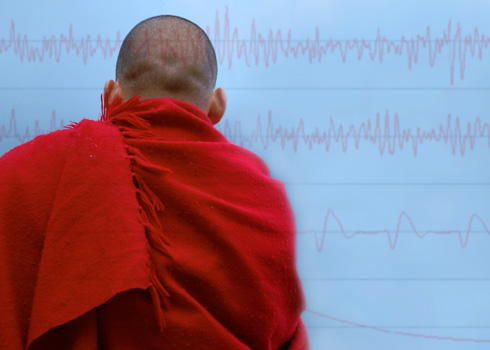
It tells the story of one monk (western-born, with 30 years of experience as a Tibetan Buddhist monk) who was studied by scientists extensively using fMRI and EEG and testing his ability to read fleeting facial emotions and to stifle his own startle reflex.

Read the whole article (by Daniel Goleman!) for a fascinating story.

[Note: This link no longer works. Try this link to read more about it.]

I liked that the article described the types of meditation that were studied. It made me want to be more specific in my own meditation. I usually practice (or attempt to practice) what’s called “the open state”. It’s more Zen.

Tibetan Buddhism may well offer the widest menu of meditation methods of any contemplative tradition, and it was from this rich offering that the team in Madison began to choose what to study. The initial suggestions from the research team were for three meditative states: a visualization, one-pointed concentration and generating compassion. The three methods involved distinct enough mental strategies that the team was fairly sure they would reveal different underlying configurations of brain activity. Indeed, Öser was able to give precise descriptions of each.

One of the methods chosen, one-pointedness—a fully focused concentration on a single object of attention—may be the most basic and universal of all practices, found in one form or another in every spiritual tradition that employs meditation. Focusing on one point requires letting go of the ten thousand other thoughts and desires that flit through the mind as distractions; as the Danish philosopher Kierkegaard put it, “Purity of heart is to want one thing only.”

In the Tibetan system (as in many others) cultivating concentration is a beginner’s method, a prerequisite for moving on to more intricate approaches. In a sense, concentration is the most generic form of mind training, with many non-spiritual applications as well. Indeed, for this test, Öser simply picked a spot (a small bolt above him on the MRI, it turned out) to focus his gaze on, and held it there, bringing his focus back whenever his mind wandered off.

Öser proposed three more approaches that he thought would usefully expand the data yield: meditations on devotion and on fearlessness, and what he called the “open state.” The last refers to a thought-free wakefulness where the mind, as Öser described it, “is open, vast and aware, with no intentional mental activity. The mind is not focused on anything, yet totally present—not in a focused way, just very open and undistracted. Thoughts may start to arise weakly, but they don’t chain into longer thoughts—they just fade away.”

Perhaps as intriguing was Öser’s explanation of the meditation on fearlessness, which involves “bringing to mind a fearless certainty, a deep confidence that nothing can unsettle—decisive and firm, without hesitating, where you’re not averse to anything. You enter into a state where you feel, no matter what happens, ‘I have nothing to gain, nothing to lose.’”

Focusing on his teachers plays a key role in the meditation on devotion, he said, in which he holds in mind a deep appreciation of and gratitude toward his teachers and, most especially, the spiritual qualities they embody. That strategy also operates in the meditation on compassion, with his teachers’ kindness offering a model.

The final meditation technique, visualization, entailed constructing in the mind’s eye an image of the elaborately intricate details of a Tibetan Buddhist deity. As Öser described the process, “You start with the details and build the whole picture from top to bottom. Ideally, you should be able to keep in mind a clear and complete picture.” As those familiar with Tibetan thangkas (the wall hangings that depict such deities) will know, such images are highly complex patterns.

Öser confidently assumed that each of these six meditation practices should show distinct brain configurations. The scientists have seen clear distinctions in cognitive activity between, say, visualization and one-pointedness. But the meditations on compassion, devotion and fearlessness have not seemed that different in the mental processes involved, though they differ clearly in content. From a scientific point of view, if Öser could demonstrate sharp, consistent brain signatures for any of these meditative states, it would be a first.

Click the link above to find out what the scientists learned from this monk’s brain.
Massage: Paying someone to meditate you?

Maybe that’s what massage is to a lot of people, those who don’t have chronic pain or migraines — it’s enforced meditation for those of us too distracted to meditate. You’re paying someone to meditate you. It’s not anything they’re doing, necessarily. It’s that they open a little window. They give you an excuse to lie there in silence and pay a deeper attention to the fact that you exist. The true value of shamanism may be a concealed one, that it holds us in place and says this.

via My Multiday Massage-a-Thon – NYTimes.com.

I admit it. I give massage, and I love helping people move into a state of deep, quiet relaxation. It affects me. Even though I’m being active, I participate.

Massage is something I’m doing (working your circulatory and lymphatic systems, shifting your nervous system from sympathetic to parasympathetic, calming your brain waves, working knots out of your muscles, loosening you out of your ordinary tension and patterns, touching your flesh with care), and you’re doing. Your part of the experience is you deciding to take time out of your busy life to be present and receive nurturing.

Here’s my experience: I meditate, and I receive massage. When I meditate, I relax my body, breath, and mind, but on my own, I cannot relax as deeply as I can with massage. At least so far I have not been able to do that. I can’t say it’s impossible.

Meditation is a different experience, one I think of as “presence practice”. Relaxation helps but is not an end in itself (usually, unless I’ve been especially agitated). There’s a discipline to meditation: witnessing the mind, inquiring into the nature of reality and identity. I’ve also experienced joy and bliss.

Massage jumpstarts physical and mental relaxation. There’s something about the touch of nurturing hands and surrendering to another person. In my massage training, I learned that there are specific places on the body that when massaged, activate the parasympathetic nervous system, which is the non-“fight-or-flight” nervous system, the one for rest and relaxation. I use that knowledge in massage to help people get out of their heads and into their wholeness more quickly.

The deepest prolonged relaxation states I have experienced so far were through bodywork. I experienced being relaxed so deeply that I skimmed just this side of being asleep for half an hour or more.

One was during a cranio-sacral therapy session that involved the locus ceruleus, a blue spot in the back of the brain.

The other was receiving esoteric acupuncture. Afterwards, I was told that if I had not already been a meditator, I would not have experienced such a deep state.

Both experiences, receiving massage and meditating, have to do with surrender and relaxation and presence. As I understand it, each creates neural pathways that make it easier.

Doing both likely hastens and deepens well-being. `

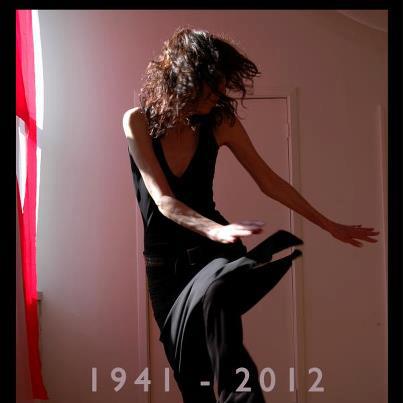
In remembrance of Gabrielle Roth: freedom is our holy work

One of the significant teachers in my life died yesterday, and I’ve struggled with writing about it. I find myself getting too heady, and yet this loss is actually so profound that when I took a nap yesterday, I dreamed I was balancing upside down on my head on a dance floor, surrounded by lively, active children.

When I woke, I could feel the pressure on the crown of my head.

Headstand is definitely about changing perspective.

I stumbled into ecstatic dance 18 years ago, first encountering the 5 rhythms of Gabrielle Roth and Sweat Your Prayers after I left church as something I could no longer take part in with integrity.

I found a tribe, a practice, and a way of experiencing myself and the world as energy.

I’m not sure, but I suspect that the latter is the change in perspective that I’m integrating with this shock of loss and review of Gabrielle’s influence on my life, that it’s all just energy all the time, and it’s always changing, always dancing. The best I can ever do is to be centered, grounded, embodied, and ready to meet it. What’s solid is awareness.

I’ve had issues and struggles at times with that tribe, practice, and worldview, and they have deeply shaped me. I keep coming back.

Here’s what ecstatic dance is to me: being free, feeling joy, being embodied, clearing, cleansing, breathing, sweating, extending myself, being aware, taking care of my body, pushing to my edge and beyond, being in the moment, sharing, delighting, inquiring, discovering, connecting, having compassion, being inspired, seeing, allowing, playing, surrendering, breaking myself open, feeling what comes up, being danced, letting go, grieving, dancing with other versions of me, dancing with the entire room including the space, letting life and everything flow through me, being totally and completely alive, being fully present, blowing all the blocks out of my energy channels.

I feel so grateful to have found this and that I am able to do this.

Thank you, Gabrielle Roth, for your life’s work. Thank you, dancing tribe.

Here’s Gabrielle in her own words.

I became a mapmaker for others to follow, but not in my footsteps, in their own. Many of us are looking for a beat, something solid and rooted where we can take refuge and begin to explore the fluidity of being alive, to investigate why we often feel stuck, numb, spaced-out, tense, inert, and unable to stand up or sit down or unscramble the screens that reflect our collective insanity.

The question I ask myself and everyone else is, “Do you have the discipline to be a free spirit?” Can we be free of all that binds and bends us into a shape of consciousness that has nothing to do with who we are from moment to moment, from breath to breath?

Dance is the fastest, most direct route to the truth — not some big truth that belongs to everybody, but the get down and personal kind, the what’s-happening-in-me-right-now kind of truth. We dance to reclaim our brilliant ability to disappear in something bigger, something safe, a space without a critic or a judge or an analyst.

Your body language influences your experience

In yoga, we learn that forward bends are calming (think fetal position, child’s pose), while backbends are stimulating. In a yoga class, after backbends, students usually start chattering!

Imagine holding your body upright in a relaxed manner, with the weight appropriately divided between front and back. Let your shoulders surrender to gravity. Imagine doing this with ease and breathing freely.

This is such a simple point that it’s easy to overlook how easy, and powerful, a tool this is to keep in mind. When you’re depressed, make an effort to sit up, and relax. When you’re excited, make an effort to breathe.

Buddhism: 50% of your State of Mind is dependent on your Posture. | elephant journal

For more on how body language influences experience, here’s a TED Talk on the subject. Amy Cuddy is a researcher at the Harvard Business School who shares some fascinating findings and her own story.

I particularly like “fake it ’til you become it” and “tiny tweaks —> BIG CHANGES.

Plus, two minutes. That’s all. Two minutes is all it takes to change your state.

The dancing genes, sociability, transcendence, and genetic flexibility

A recent article published online says that dancers are genetically different. Some Israeli researchers found that dancers show consistent differences from the general population in two genes.

The researchers said this did not surprise them, because studies have found that athletes and musicians have genetic differences.

I can only speak for myself, but my dance is very connected to music — my movement is a way to participate musically, as if I were playing an instrument. It’s also very physical.

I did a little Googling to see if I could find which specific genes differ in athletes and musicians, but I didn’t find anything that was very clear. Race seems to be the biggest issue in the media when it comes to genetics, athletes, and musicians.

The researchers studied dancers and advanced dance students and found they had variants in two genes, those affecting serotonin transport and arginine vasopressin reception.

Serotonin (“the happiness molecule”) is a neurotransmitter that contributes to spiritual experience — the capacity for transcendence and a proclivity to spiritual acceptance. (See this Psychology Today article for more about that.) It also affects optimism, the healing of wounds, resilience from stress, metabolism, sleep, and more.

“Serotonin transport” sounds like a dance inside the body!

Interestingly, exercise can raise serotonin levels in the body, so dancing itself reinforces dancers’ high serotonin levels!

I admit — I get into an altered state from ecstatic dance. That’s why they call it ecstatic dance, I suspect. 😉

The vasopressin receptor modulates social communication and affiliative bonding. Wikipedia says “…accumulating evidence suggests it plays an important role in social behavior, bonding, and maternal responses to stress.” It has a very similar structure to oxytocin (“the love hormone”), and the two can cross-react.

When the results were combined and analyzed, it was clearly shown that the dancers exhibited particular genetic and personality characteristics that were not found in the other two groups.

The dancer “type,” says Ebstein, clearly demonstrates qualities that are not necessarily lacking but are not expressed as strongly in other people: a heightened sense of communication, often of a symbolic and ceremonial nature, and a strong spiritual personality trait.

I know this is controversial, but I want to weigh in on the side of flexibility when it comes to genetics. For much of my life, genes were thought to be destiny, unalterable. Now it is known that the expression of genes is much more dynamic than previously believed. They can switch on and off.

I don’t know that much about it, except that stress tends to switch on the bad genes. I don’t know which or how many genes truly create destiny and therefore cannot be influenced, except that there probably are some. We just don’t know enough about this in our current level of understanding.

I want to encourage people who believe they don’t have the dancing genes to give dancing a try.

Two left feet? That’s a myth. If you can walk, you have rhythm and coordination.

If you think you can’t dance, try just moving to some music alone in your own home if you feel self-conscious. Play something catchy, like “I Heard It Through the Grapevine.”

Start simple, just swaying your hips to the beat, keeping your feet in place. Do you like it? Do you feel any sense of pleasure? Play with it. Add your arms. Walk to it. Make it fun and goofy!

Those dancing genes may be just sitting there waiting to be activated, for all we know, and they might help you become happier.

An autistic person describes how she learned to think flexibly

Managing My “Inflexible Thinking”.

I found this article by a woman who is a speaker, writer, social worker, mother, and autistic fascinating! She describes how she has adapted to the “NT” (neurotypical) world. She works with her visual thinking style in a fabulously creative way, using layers, to be more flexible in accommodating change, something  that’s difficult for many autistic people to do.

Now she teaches others.

If inflammation is the culprit behind autism, heart disease, and more, the cure is to get parasites and eat real food

Tonight I read two articles that each blamed inflammation for serious health issues.

One, by a world-renowned heart surgeon, said that the medical profession got it wrong when it began advocating a low-fat diet to control cholesterol. It is now known that inflammation in the artery wall is the real cause of heart disease. More people will die from heart disease this year than ever. The low-fat diet doesn’t work.

And…the dietary recommendations for lowering cholesterol are responsible for the high rates of diabetes and the obesity epidemic.

Only inflammation of artery walls causes cholesterol buildup. It has nothing to do with a low-fat diet.

The biggest culprits in inflammation, according to Dr. Lundell, are highly processed carbohydrates like sugar and flour and an excess consumption of omega 6 oils like soybean, corn, and sunflower.

There is no escaping the fact that the more we consume prepared and processed foods, the more we trip the inflammation switch little by little each day. The human body cannot process, nor was it designed to consume, foods packed with sugars and soaked in omega-6 oils.

There is but one answer to quieting inflammation, and that is returning to foods closer to their natural state. To build muscle, eat more protein. Choose carbohydrates that are very complex such as colorful fruits and vegetables. Cut down on or eliminate inflammation-causing omega-6 fats like corn and soybean oil and the processed foods that are made from them…. Instead, use olive oil or butter from grass-fed beef.

What you can do is choose whole foods your grandmother served and not those your mom turned to as grocery store aisles filled with manufactured foods. By eliminating inflammatory foods and adding essential nutrients from fresh unprocessed food, you will reverse years of damage in your arteries and throughout your body from consuming the typical American diet.

Here’s a link to the original article: World Renowned Heart Surgeon Speaks Out on What Really Causes Heart Disease. And for good measure, read this to learn about the top 10 anti-inflammatory foods.


The second article was from the Sunday New York Times Magazine and showed a link between inflammation and autism. At least a third, and very likely more, of the cases of autism are linked to inflammatory diseases, including a mother’s inflammatory response to bacterial and viral infections, asthma, metabolic syndrome, autoimmune disorders such as rheumatoid arthritis and celiac disease, even allergies, during pregnancy.

Rather than blaming diet, this article blames sanitation for high levels of inflammation found in the developed world.

Scientists have repeatedly observed that people living in environments that resemble our evolutionary past, full of microbes and parasites, don’t suffer from inflammatory diseases as frequently as we do.

William Parker at Duke University has chimed in. He’s not, by training, an autism expert. But his work focuses on the immune system and its role in biology and disease, so he’s particularly qualified to point out the following: the immune system we consider normal is actually an evolutionary aberration.

Some years back, he began comparing wild sewer rats with clean lab rats. They were, in his words, “completely different organisms.” Wild rats tightly controlled inflammation. Not so the lab rats. Why? The wild rodents were rife with parasites. Parasites are famous for limiting inflammation.

Humans also evolved with plenty of parasites. Dr. Parker and many others think that we’re biologically dependent on the immune suppression provided by these hangers-on and that their removal has left us prone to inflammation. “We were willing to put up with hay fever, even some autoimmune disease,” he told me recently. “But autism? That’s it! You’ve got to stop this insanity.”

This article’s only mention of diet is that a probiotic taken during pregnancy may help prevent autism.

Read the original to learn about a medicalized parasite being tested on autistic adults. Here’s the link: An Immune Disorder at the Root of Autism.

My take? Do it all! One in 88 children now is born with autism in the U.S. The stress and difficulties of raising an autistic child are huge, not to mention who will care for (and pay for) these autistic adults who will someday have no family to take them in.

If that is due to diet and cleanliness, it’s worth eating fresh, unprocessed foods and living with some parasites. In my opinion.

Repost: Why Your Health Is Bigger Than Your Body

Why Your Health Is Bigger Than Your Body

Thanks to Eric Towler for posting this article from YES magazine on Facebook.

There is a link between health, economics, politics, and ecology.

[Dr. Ted Schettler,] the Harvard-educated physician, frustrated by the limitations of science in combating disease, believes that finding answers to the most persistent medical challenges of our time—conditions that now threaten to overwhelm our health care system—depends on understanding the human body as a system nested within a series of other, larger systems: one’s family and community, environment, culture, and socioeconomic class, all of which affect each other.

It is a complex, even daunting view—where does one begin when trying to solve problems this way?

Currently getting over a case of Lyme disease, Schettler notes that the condition wasn’t even on the radar three decades ago. Likewise, West Nile Virus. And dengue fever, first identified in the late 18th century, has soared since the 1960s, now infecting up to 100 million people worldwide each year.

“Can there be any doubt that human health is enormously dependent on ecological systems that we are having a major influence on?” Schettler says. “It’s all one world. Our tendency to describe the natural world as something without humans is part of the problem.”

Click the link to read on. Farm policy, obesity, diabetes, pesticides, Parkinson’s disease, inequality, asthma, breast cancer, DDT, school lunches, lead poisoning, iron deficiencies, hospital food, medical waste… There are a lot of dots being connected.

An interview with Stephen Porges: polyvagal theory, or how the nervous system is affected in autism, ADHD, borderline personality disorder, and trauma

Nexus, Colorado’s Holistic Health and Spirituality Journal.

This interview with Dr. Stephen Porges, whose career is based on understanding the evolution of the human nervous system, outlines some of the basics of polyvagal theory.

This theory is being tested in trauma recovery sessions. It’s exciting because it helps explain how and why people freeze or experience fight-flight reactions in response to trauma — and the route back to normal, healthy functioning, no matter how long ago the trauma occurred or how often it happened.

Polyvagal theory is increasingly becoming part of the training of bodyworkers, therapists, and educators. In a future post, I will describe how to tell which nervous system (freeze, fight or flight, or parasympathetic) is dominant at any given moment.

This theory is based on an in-depth understanding of the vagus nerve, also known as the 10th cranial nerve, which wanders (the Latin word vagus means wandering, like vagabond and vagrant) from the brain stem down through the body, affecting the face, heart, lungs, and gut.

The brain evolved hierarchically in vertebrates, and the neural circuits of the older nervous systems are still present, accessed hierarchically.

RD: So one thing happens then another thing happens then another thing?

SP: Right. This influences how we react to the world. The hierarchy is composed of three neural circuits. One circuit may override another. We usually react with our newest system, and if that doesn’t work, we try an older one, then the oldest. We start with our most modern systems, and work our way backward.

So polyvagal theory considers the evolution of the autonomic nervous system and its organization; but it also emphasizes that the vagal system is not a single unit, as we have long thought. There are actually two vagal systems, an old one and a new one. That’s where the name polyvagal comes from.

The final, or newest stage, which is unique to mammals, is characterized by a vagus having myelinated pathways. The vagus is the major nerve of the parasympathetic nervous system. There are two major branches. The most recent is myelinated and is linked to the cranial nerves that control facial expression and vocalization.

Here’s how it works in action:

SP: Let’s say you’re a therapist or a parent or a teacher, and one of your clients, students or children’s faces is flat, with no facial expression. The face has no muscle tone, the eyelids droop and gaze averts. It is highly likely that individual will also have auditory hypersensitivities and difficulty regulating his or her bodily state. These are common features of several psychiatric disorders, including anxiety disorders, borderline personality, bipolar, autism and hyperactivity. The neural system that regulates both bodily state and the muscles of the face goes off-line. Thus, people with these disorders often lack affect in their faces and are jittery, because their nervous system is not providing information to calm them down.

RD: How will polyvagal theory change treatment options for people with these disorders?

SP: Once we understand the mechanisms mediating the disorder, there will be ways to treat it. For example, you would no longer say “sit still” or punish a person because they can’t sit still. You would never say, “Why aren’t you smiling?” or “Try to listen better” or “Look in my eyes,” when these behaviors are absent. Often treatment programs attempt to teach clients to make eye contact. But teaching someone to make eye contact is often virtually impossible when the individual has a disorder, such as autism or bipolar disorder, because the neural system controlling spontaneous eye gaze is turned off. This newer, social engagement system can only be expressed when the nervous system detects the environment as safe.

There’s much more fascinating information you can read by clicking the link at the top of this post.

The Anti-DSM: A compendium of healthy states!

The DSM-IV is the psychiatric profession’s Bible of mental disorders. It’s where experiences like PTSD, borderline personality disorder, and autism are defined. Doctors diagnose, and insurance companies cover prescriptions for diagnoses, according to the DSM-IV. It’s a very powerful book affecting the lives of millions.

Rob Breszny, astrologer extraordinaire, questions why we don’t have such a list of healthy states. He asked his readers to help him compile a compendium of healthy, exalted, positive states of being.

Here are just a few of the responses:

* ACUTE FLUENCY. Happily immersed in artistic creation or scientific exploration; lost in a trance-like state of inventiveness that’s both blissful and taxing; surrendered to a state of grace in which you’re fully engaged in a productive, compelling, and delightful activity. The joy of this demanding, rewarding state is intensified by a sense that time has been suspended, and is rounder and deeper than usual. (Suggested by H. H. Holiday, who reports that extensive studies in this state have been done by Mihaly Czikszentmihalyi in his book, Flow: The Psychology of Optimal Experience.)

* AESTHETIC BLISS. Vividly experiencing the colors, textures, tones, scents, and rhythms of the world around you, creating a symbiotic intimacy that dissolves the psychological barriers between you and what you observe. (Suggested by Jeanne Grossetti.)

* AGGRESSIVE SENSITIVITY. Animated by a strong determination to be receptive and empathetic.

* ALIGNMENT WITH THE INFINITY OF THE MOMENT. Reveling in the liberating realization that we are all exactly where we need to be at all times, even if some of us are temporarily in the midst of trial or tribulation, and that human evolution is proceeding exactly as it should, even if we can’t see the big picture of the puzzle that would clarify how all the pieces fit together perfectly. (Suggested by Meredith Jones.)

* AUTONOMOUS NURTURING. Not waiting for someone to give you what you can give yourself. (Suggested by Shannen Davis.)

* BASKING IN ELDER WISDOM. A state of expansive ripeness achieved through listening to the stories of elders. (Suggested by Annabelle Aavard.)

* BIBLIOBLISS. Transported into states of transcendent pleasure while immersed in reading a favorite book. (Suggested by Catherine Kaikowska.)

To read and be inspired by more of these healthy and delicious possibilities, click this link! This is an excerpt from Rob’s book, Pronoia Is the Antidote for Paranoia: How the Whole World Is Conspiring to Shower You with Blessings, well worth reading if you’d relish subverting the dominant paradigm and confirming more of what’s good and possible in life.