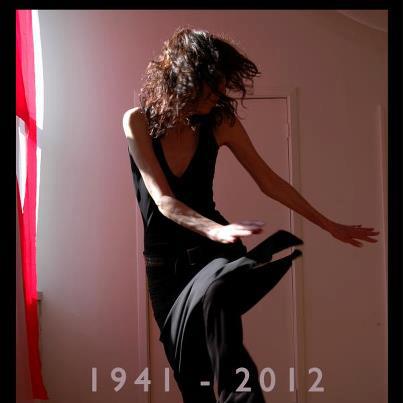
Wise words about loss and presence, joy and gratitude

My young, wise Facebook friend Arpita Rose shared this quote. I thought it was so amazing, I wanted to share. I added to my Favorite quotes page too.

You will lose everything. Your money, your power, your fame, your success, perhaps even your memories. Your looks will go. Loved ones will die. Your body will fall apart. Everything that seems permanent is impermanent and will be smashed. Experience will gradually, or not so gradually, strip away everything that it can strip away. Waking up means facing this reality with open eyes and no longer turning away.

But right now, we stand on sacred and holy ground, for that which will be lost has not yet been lost, and realising this is the key to unspeakable joy. Whoever or whatever is in your life right now has not yet been taken away from you. This may sound trivial, obvious, like nothing, but really it is the key to everything, the why and how and wherefore of existence. Impermanence has already rendered everything and everyone around you so deeply holy and significant and worthy of your heartbreaking gratitude.

Loss has already transfigured your life into an altar. ~ Jeff Foster

Building my massage practice

I have not been posting here quite as often as I used to because I’m working on building my massage practice, which includes not just giving massage (which I enjoy and am good at) but also learning about business matters like marketing, bookkeeping, scheduling, pricing, and so on.

That kind of practical, down-to-earth stuff that doesn’t seem to fit well with the themes of this blog. You’re not here to learn whether to use Quicken or Quickbooks, read about using incentives to attract and retain clients, or sift through research on gift certificate law in Texas, but currently I am a sponge for all that.

I’d love to share some of my lovely experiences! I had fun on Friday morning doing something new: going to each business on the block where my studio is located, introducing myself as a new neighbor, and letting them know I’m available for massage just a short walk away.

My friend Keith came with me. We talked to people at 19 businesses and left a flyer for the bulletin board and business cards at each one. I was glad to have his company.

One of my pet peeves is that I work hard to get stressed people all nice and relaxed, and when their session is over, they get in their car and drive away, which can so easily undo the relaxed state.

I’ve begun suggesting that they enjoy their relaxed state as long as possible, just becoming alert enough to drive themselves safely home.

Even better would be if people could walk to my studio, get a massage, and walk back. Walking anchors the relaxed state more deeply, and the neighborhood is old and lovely, a visual treat.

~~~

I’ll be sending off for my certification in Ashiatsu Oriental Bar Therapy today, having done the requisite 20 practice sessions with evaluations. I’ll take the test and get the paperwork in the mail. That feels good. I’m really grateful I can offer this modality.

I’ve just ordered a workbook on trigger points and am looking forward to learning how to work with them. I will be able to make even more of a difference when clients experience muscle pain.

I’ve been fortunate to have worked on some people who are themselves highly experienced bodyworkers, who have shared tips and wisdom with me. I feel immensely grateful for the support.

When I start each session, I like to be still for a moment, connecting my energy to earth and heaven and then connecting to my client’s energy. It feels appropriately responsible when someone has come to me with trust that I can help them feel better. I know it sounds like a cliche, but that moment feels sacred.

Also, all of my clients are really great clients!

“The 5 rhythms are a contemporary shamanic Zen practice” ~ Gabrielle Roth

Okay, so science has recently showed us that dancers have genes for transcendence and social connection. (And if you don’t dance, maybe you have these genes too and don’t know it yet. And consider this: if stress turns on the bad genes, maybe the opposite of stress — joy? contentment? — turns on the good genes! Just sayin’….)

In this interview, Gabrielle Roth explains the connection between ecstatic dance, Zen, and shamanic practices.

The 5Rhythms are a contemporary Zen, Shamanic practice. Zen, in that they are a map to an inner journey for seekers of wisdom and freedom, the wisdom to know who we are and the freedom to get over ourselves. Shamanic, in that they address the Great Divide, the divorce of spirit from flesh that has created the loss of soul, which haunts us. We’ve rendered the soul homeless, it can’t breathe, exist, or move disconnected from the body. The body is the womb of the soul, a begging bowl for spirit, like Aretha when she sings….

The fastest way to still the mind is to move the body. All the profound spiritual teachings in this world don’t mean anything if they’re not embodied. Feeling totally high and connected to the divine mystery while sitting on a meditation pillow is fine, but how do we put the rubber to the road? As Charlie Parker said, If you don’t live it, it won’t come out your horn. So I take refuge in the 5Rhythms practice to keep my horn in tune.

There are videos of Gabrielle as well on the site. Check ’em out!

In remembrance of Gabrielle Roth: freedom is our holy work

One of the significant teachers in my life died yesterday, and I’ve struggled with writing about it. I find myself getting too heady, and yet this loss is actually so profound that when I took a nap yesterday, I dreamed I was balancing upside down on my head on a dance floor, surrounded by lively, active children.

When I woke, I could feel the pressure on the crown of my head.

Headstand is definitely about changing perspective.

I stumbled into ecstatic dance 18 years ago, first encountering the 5 rhythms of Gabrielle Roth and Sweat Your Prayers after I left church as something I could no longer take part in with integrity.

I found a tribe, a practice, and a way of experiencing myself and the world as energy.

I’m not sure, but I suspect that the latter is the change in perspective that I’m integrating with this shock of loss and review of Gabrielle’s influence on my life, that it’s all just energy all the time, and it’s always changing, always dancing. The best I can ever do is to be centered, grounded, embodied, and ready to meet it. What’s solid is awareness.

I’ve had issues and struggles at times with that tribe, practice, and worldview, and they have deeply shaped me. I keep coming back.

Here’s what ecstatic dance is to me: being free, feeling joy, being embodied, clearing, cleansing, breathing, sweating, extending myself, being aware, taking care of my body, pushing to my edge and beyond, being in the moment, sharing, delighting, inquiring, discovering, connecting, having compassion, being inspired, seeing, allowing, playing, surrendering, breaking myself open, feeling what comes up, being danced, letting go, grieving, dancing with other versions of me, dancing with the entire room including the space, letting life and everything flow through me, being totally and completely alive, being fully present, blowing all the blocks out of my energy channels.

I feel so grateful to have found this and that I am able to do this.

Thank you, Gabrielle Roth, for your life’s work. Thank you, dancing tribe.

Here’s Gabrielle in her own words.

I became a mapmaker for others to follow, but not in my footsteps, in their own. Many of us are looking for a beat, something solid and rooted where we can take refuge and begin to explore the fluidity of being alive, to investigate why we often feel stuck, numb, spaced-out, tense, inert, and unable to stand up or sit down or unscramble the screens that reflect our collective insanity.

The question I ask myself and everyone else is, “Do you have the discipline to be a free spirit?” Can we be free of all that binds and bends us into a shape of consciousness that has nothing to do with who we are from moment to moment, from breath to breath?

Dance is the fastest, most direct route to the truth — not some big truth that belongs to everybody, but the get down and personal kind, the what’s-happening-in-me-right-now kind of truth. We dance to reclaim our brilliant ability to disappear in something bigger, something safe, a space without a critic or a judge or an analyst.

Repost: Why experts are not the best teachers

Why Experts are not the Best Teachers | The Psychology of Wellbeing.

Good teaching requires a beginner’s mind.

This made a lot of sense to me. It’s not that everyone who is really excellent in a field of endeavor is a bad teacher.

It’s that teaching is a separate skill that involves communicating how to do something. Many experts don’t know how they do it. The whole field of Neuro-Linguistic Programming (NLP) came about because of this. It started with modeling excellence in people who had no idea how they did what they did so well.

A good teacher, besides knowing her stuff, is also good at tuning into the learner’s current level, putting herself in the student’s shoes, and discerning what the best next step is in terms of developing mastery.

The Japanese word shoshin means beginner’s mind.

In the beginner’s mind there are many possibilities, in the expert’s mind there are few. ~ Shunryu Suzuki


Sunday morning: a little trauma release, a fine buzz, then some yoga jazz, and a tribute to a teacher

Long-time readers know I spent some time and energy on learning the trauma releasing exercises of David Berceli and practicing them. (If you’re a new reader, you can search this blog for TRE or trauma releasing exercises or Berceli to see my many posts on the topic.

If you want to learn them, I recommend Berceli’s book and video.)

I haven’t written much about them for a while. I still value them very much as a tool for releasing tension.

Sometimes at ecstatic dance, I allow my legs to shake. Nobody notices or comments, ever.

Some mornings I wake up and just know I need to do them. I may tremble for 30 seconds to a minute or two. It doesn’t have to last long to be effective.

I imagine that the more you do them and really surrender to them, the less you need to do them. Also, the more you do them, the more aware you become of tensions accumulating in your body, and you adjust sooner — taking a deep, cleansing breath to let it all out, stretching and moving the tense area.

This morning I did them for longer, because my body wanted to keep going. First my legs surrendered to the shaking, then left my arm flapped, then right my arm flapped, then my lower spine hammered, then my upper spine waved, then more legs, and so on. It’s entertaining to witness where the surrendering moves!

Then afterward, the fine buzz inhabiting my body. Mmm. Chi. Prana. Energy.

Walk to my yoga mat. Tadasana, feeling feet, upward energy. Stretching arms up into hastasana circling to anjali mudra several times to warm shoulders up, each with my gaze a little higher, a little more backbend to stretch the front fascial lines.

Then from hips, float down into uttanasana and just hang, stretching the back fascial lines. Feel my tight hamstrings. Hold. Breathe. They become like rubber bands, surrendering to the stretch. Then extend spine and re-bow.

Left leg back into lunge. Feeling the tight gastrocnemius and soleus. Push heel back and breathe. Right leg back to join it. Breathe length into calves.

Plank, with spread fingers, sturdy column arms under shoulders. Feel strength. Pressing palms and fingers evenly into mat, slowly lowering into chataranga, feeling creaks and twinges in shoulders and elbows.

Once flat, press pelvis and tops of feet into floor and lift up into bhujangasana, cobra. Imagine the fronts of my vertebrae, deep in the middle of my torso, fanning wide open to give and receive and expand my energy. This spine, this flexible column of bone, fluids, muscle, nerve, dura, this central channel, this backbone. Yes.

Turn toes under. Strongly lift my body up, elevating my pelvis as high as it will go. Push palms and fingers evenly into floor. Push heels back to stretch my soles (I’m hearing my teacher Eleanor Harris now). Lift sit bones to ceiling. Rise on tiptoes, then settle on feet, allowing spine to surrender to gravity between cranium and sacrum. Feel strong shoulders. Downward-facing dog, adho mukha svanasana.

“Enjoy your breath,” as my teacher Brigitte Edery is fond of saying. And I do.

Then bring right leg forward into lunge. Then today’s standing sequence, a vinyasa within a vinyasa: warrior two, extended side angle, reverse extended side angle, triangle, reverse triangle, ardha chandrasana, warrior one, warrior three. Nice standing vinyasa (with room for improvement in the sequencing, I notice), and I am aware of all the different stretches each pose brings where spine meets pelvis meets thighs.

I am pleased with my balance in ardha chandrasana, but I need to put my extended arms on the top of a stool to hold warrior three. There’s always an edge. Today, and probably for a few weeks (or months, who knows?), that’s mine — balancing in warrior three.

Then back to lunge, uttanasana (notice how much deeper my fold is), extending spine, and reverse swan dive up, arms circling back down into anjali mudra.

Repeat on other side.

I follow with pigeon, a deep twist (thrilling as my shoulders reached the floor), happy baby, and rock to standing.

I am in my body, ready for today, for ecstatic dance, for community, for work, for learning prenatal massage.

Feeling very grateful for my friends, and for my teacher Gabrielle Roth, whose work I knew better than I knew her personally, who was so influential in opening my awareness up to new movements, rhythms, and energies in life, who is in her own life now moving into stillness. She dedicated her life to healing the mind-body split. Amen to that.

Here’s my favorite Gabrielle quote:

After you jump, before you land is God.

I’m going to light a candle and open myself up to God.

Positive and negative emotions and enlightenment

Came across this quote today from Adyashanti.

It is important that we know what awakening is not, so that we no longer chase the by-products of awakening. We must give up the pursuit of positive emotional states through spiritual practice. The path of awakening is not about positive emotions. On the contrary, enlightenment may not be easy or positive at all. ~ Adyashanti, “

Over the last year or so, I have been slowly coming around to this point of view.

The bliss and joy that meditators can experience are seductive. It’s easy to believe that this is what you should feel, that this is the goal of meditation, to feel good, to feel love, joy, and bliss. It’s easy to desire — and become attached to — positive emotional states.

That’s identification.

We can use EFT to tap away negative emotions, believing them undesirable, wanting them to go away. Yet we experience them. They are part of “life as it is.”

Rather than putting so much energy into avoiding them, I am at the point (most of the time) where I am willing to experience and explore them — the feeling component in my body, the mental component of the story I tell myself, and what’s true.

If emotional states only last a couple of minutes at most, I think I can bear that. Avoiding them gives them power. Allowing them to exist just lets them be what they are, transient conditions of being human and having a nervous system, seeking to make meaning out of what we experience.

That’s disidentification.

I notice I am tempted to add that while I am willing to experience negative emotions and explore them, please, I don’t want too many!

I say feel emotional states when they arise, and notice that they too are transitory. Without a story, what happens?

Pema Chodron advises:

When you refrain from habitual thoughts and behavior, the uncomfortable feelings will still be there. They don’t magically disappear. Over the years, I’ve come to call resting with the discomfort “the detox period,” because when you don’t act on your habitual patterns, it’s like giving up an addiction. You’re left with the feelings you were trying to escape. The practice is to make a wholehearted relationship with that.

Bliss, discomfort, part of the path of accepting what is. 

Day 19 of The Work: Do you believe life should be free from pain?

This Tricycle Daily Dharma quotation reinforces Byron Katie’s work:

We suffer because we marry our instinctive aversion to pain to the deep-seated belief that life should be free from pain. In resisting our pain by holding this belief, we strengthen just what we’re trying to avoid. When we make pain the enemy, we solidify it. This resistance is where our suffering begins. ~ Ezra Bayda, “When It Happens to Us”

Next time you’re feeling emotional pain, I invite you to examine whether a “should” is involved. “Shoulds” are always beliefs, as far as I can tell.

Imagine (that is, make up stories about) what you believe should happen.

Now think about what you believe shouldn’t happen, and create two stories. In one, imagine having no resistance to what shouldn’t happen. Just let it unfold and witness it. In this scenario, if there’s pain, there’s pain, but there’s no drama or story.

Then create a worst-case scenario, complete with lots of drama and a compelling story!

Just see if you can do this. Now you have three options.

The point is, how much do you add to your own suffering? Without the story, the pain can just come and go, and that’s it. It hurts. You move on.

How we got the idea that life should be free from pain is something to be curious about. It seems to me that if you have a nervous system, pain is inevitable. (Although I have gone to great lengths to avoid it myself!)

Day 17 of the Work: turning around question 6

There is one last turnaround in Byron Katie’s The Work. This one is sometimes overlooked. Back on Day 1, I filled out the Judge Your Neighbor worksheet. Question 6 asks:

What is it in or about this situation that you don’t ever want to experience again?

I responded:

I don’t ever want to feel so disconnected, frustrated, and helpless about someone I care about [as I did with my father].

Question 6 has its own turnaround, which is:

I am willing to feel as disconnected, frustrated, and helpless about someone I care about [as I did with my father].

I look forward to feeling as disconnected, frustrated, and helpless about someone I care about [as I did with my father].

Whoa. I definitely feel a lot of resistance. Those statements are not true!

So let me inquire more deeply. I’m going to consult my worn, autographed copy of Loving What Is and see what Byron Katie has to say about this turnaround:

This turnaround is about embracing all of life. Saying — and meaning — “I am willing to…” creates openness, creativity, and flexibility. Any resistance you may have is softened, allowing you to lighten up rather than keep hopelessly applying willpower or force to eradicate the situation from your life. Saying and meaning “I look forward to…” actively opens you to life as it unfolds.

It’s all there in the title of her book, Loving What Is.

So my understanding now is that it is entirely possible in my future that I will again feel as disconnected, frustrated, and helpless about someone as I did with my father. Do I know my future? No. So to resist a possibility in advance is to cut myself off from potential reality. What will happen will happen.

The truth is that if this does happen, I don’t have to respond the way I did in the past. I don’t have to fear it or repress it or even suffer at all. I can embrace whatever feelings arise and do inquiry on them if painful. I can embrace that person.

I can recognize the similarity with my old story about my dad and know this person is not him but could definitely have some similar characteristics (which sooner or later everyone will, because the common denominator is being human).

I can get fascinated with that.

I can even thank them for bringing me something to do The Work on.

Another approach to this statement is to ask question 3 again, “What happens when you believe that thought?” When I think about feeling like that in the future, I feel disgruntled, unwelcoming, armored.

I can not only let that thought drop me, I can embrace that possible future! It’s one of many!

Does anyone’s future hold only that which they want? Probably not. So get ready. Shit happens. I am willing to experience conflict, to feel pain and suffering, to be confused, even to be mortal and to die.

I am going to do those things anyway, so I might as well be willing.

I can even look forward to doing these things with as much serenity, acceptance, wisdom, and equanimity as I can muster.

~~~

I originally wrote this post two days ago, and then I lost it somewhere in the ether. So this is the second time I’ve written it. It was a struggle the first time, less so this time, and I got even more out of it by doing it again.

Day 13 of The Work: turning it around to the opposite

Today in The Work, I turn my statement “my father didn’t care about me” around to the opposite:

My father did care about me.

I need to think of three specific examples of how that could be true.

  1. He supported my very existence from birth until college by working and providing for my sustenance in the form of food, housing, clothing, and so much more: health care, dance and piano lessons, braces on my teeth, and so on. That’s caring.
  2. He (and my mom) cared about the cultural literacy of their children enough to read books aloud to us. When I tell people that my parents read aloud to us after meals, and that they read A Child’s History of the World (still in print and used in home schooling) and a wonderfully illustrated oversize child’s version of The Iliad and the Odyssey (sadly out of print), they are amazed. Both of my parents loved books, knowledge, language, and learning, and they passed that love on. I had no idea how good I had it. That’s caring.
  3. I could ask him questions about English and other languages, math, science, history, baseball, college football, politics, religion, and current events, even chess, and he gave me information I could rely on as accurate. I don’t recall him ever saying “I don’t know” or ridiculing me for my interest in all manner of nerdy, brainy topics. In fact, that was how we connected, through sharing information. He supported the development of my curiosity and my intellect. That’s caring.

I have turned my judgment completely around, from “my father didn’t care about me” to “my father did care about me.” Even though I knew it wasn’t true from question 1, this turnaround provides the proof.

I feel grateful for remembering these specific examples.

Next: the turnaround for statement 6.