Make your own laundry soap for fresh smelling clothes and linens!

I did, and I absolutely love the way my massage table linens and my clothes smell!

It started when my daughter told me she was making her own laundry detergent. I was not happy with the expensive  “natural” detergent I was using on my massage sheets. I’ve smelled old massage sheets that have a rancid smell from the oils and creams used that didn’t quite get washed out. My massage sheets are an investment (100% organic cotton), and I want them to feel and smell clean and fresh for a long time.

She gave me the recipe she used. I tinkered a little with it and am very satisfied with the results. If you’re interested in making your own, you can save money, get better results, and be kinder to the environment.

Supplies you’ll need:

  • a large mixing bowl
  • a measuring cup
  • rubber gloves
  • an airtight container

Ingredients:

  • 2 cups washing soda (found in the grocery store on the laundry supplies aisle)
  • 2 cups Borax (ditto)
  • 2 cups baking soda (on the baking supplies aisle)
  • 1-3/4ths cup white vinegar
  • 1/2 cup liquid castile soap (I used Dr. Bronner’s; you can choose a scent)

Add the powders to the mixing bowl and mix well. Put the gloves on and break up any lumps.

Add the liquids. Remember, baking soda plus vinegar are how you make volcanoes erupt for 4th grade science projects! It will fizz up, so add it slowly.

Wearing rubber gloves, start mixing it by hand, breaking up lumps. The mixture gets warmer. The texture becomes like Play-Doh. Keep kneading, and it becomes crumbly. Keep kneading and breaking up the lumps until it is mostly powder. It’s okay if a few small lumps remain — they’ll dissolve in the wash. This should take about 10 minutes.

Put it in an airtight container. I like using a Ziploc bag.

When I’m ready to wash a load, I simply add 1/4th cup of this homemade detergent to the water, and my laundry comes out sparkling clean and smelling wonderful!

(Shortcut: On January 9, 2014, I mixed up a batch. For some reason, after kneading it for 12 minutes, it didn’t become powdery. Temperature? Humidity? Age of ingredients? I don’t know. I measured 1/4th cup of the mixture and rolled it into a ball. I made 32 more “soap balls” to match, let them sit on my counter for a couple of hours to dry, and stored them in a Ziploc bag. When I need to wash a load, I simply crumble a soap ball into the water.)

This recipe makes enough detergent to do 33 loads of laundry.

Here are the pre-tax costs of ingredients, as of March 7, 2013, rounded up to the nearest cent (using my best math abilities; let me know if I miscalculated, please). Note that I bought larger amounts of ingredients to save money.

  • Arm & Hammer Super Washing Soda, $3.24 for 55 oz. = $.06 per oz. x 16 oz. = $.96
  • 20 Mule Team Borax, $3.38 for 76 oz. = $.05 per oz. x 16 oz. = $.80
  • Store-brand baking soda, $2.12 for 64 oz. = $.03 per oz. x 16 oz. = $.48
  • Store-brand white vinegar, $2.82 for 128 oz. = $.02 per oz. x 14 oz. = $.28
  • Dr. Bronner’s castile soap, $43.19 for 128 oz. (Amazon.com) = $.34 x 4 oz. = $1.35

The total cost to make this recipe is $3.87, which breaks down to about 12 cents per load. I don’t know how that compares to commercial laundry detergents, but it seems very reasonable to me, given how fresh my massage sheets and clothing smell and knowing it’s natural and not harmful to the earth.

 

Two remedies for muscle pain that everyone should know about: arnica and epsom salt

A marathon took place this past Sunday in Austin, Texas, and I’ve seen a few runners who came in for massages. It surprises me that so many runners, triathletes, bicyclists, and people who work out are unaware of two over-the-counter remedies that are very effective at relieving muscle pain. Hence this blog post!

It’s not that I don’t want to see you on the massage table. I do. Massage has great benefits, including pain relief. But it’s like this: Very few people can afford to get massage every time they work their muscles hard enough that they feel pain afterwards. Wouldn’t that be nice, though?

In between massages, here’s how you can find relief from muscle pain. These are remedies professional athletes, dancers, and others who work their bodies hard use. I first learned about them 20 years ago while attending a dance workshop.

Arnica gel and tabletsarnicagel

Arnica montana is an herb that grows in Europe. The homeopathic pharmaceutical industry sells an arnica gel that you can apply to your skin to relieve pain. It’s clear, goes on cool, has no odor, and once it dries, you can’t tell it’s there.

You can also get arnica cream, which blends more easily with lotion or creamy sunscreen.

Arnica relieves muscles aches and stiffness, reduces swelling, and prevents bruising. It relieves osteoarthritis pain as well as ibuprofen, without any side effects. I always have it available when I’m doing massage, to apply to bruises and to extremely sore, stiff, or swollen muscles.

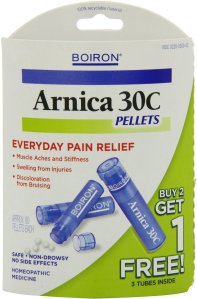
arnicapelletsIf you’re more adventurous, you can take arnica tablets. There’s a little trick to dispensing the tablets: twist the lid to loosen. Hold the container upside down and twist it, keeping the lid stable. Pellets will fall into the lid one at a time. When you’ve released 5 pellets, remove the lid from the container and empty the lid under your tongue. Let the pellets melt in your mouth.

If you know you will be doing something where you’ll be in pain afterwards, like lifting heavy boxes, gardening, getting Rolfed, hiking with a heavy pack, etc., take the tablets beforehand to prevent or lessen pain, or take it afterwards for whole-body relief.

Where to get arnica

Here’s the tricky part. People “in the know” like athletes and dancers use arnica, but the makers don’t advertise (as far as I know), so others tend to learn about arnica via word of mouth. To buy it, you need to go to a store that sells homeopathic medicines. Ordinary drug stores and groceries typically do not (although that may be changing), but compounding pharmacies and health food stores (including Whole Foods and Sprouts) do. If it’s not available where you live, you can buy it online.

Note: You may have heard people say homeopathy doesn’t work. If you’re skeptical, try this: The next time you feel muscle pain equally on both sides of your body, apply arnica to one side and do nothing to the other side. Wait a few hours or overnight and note the difference. Or you could apply it to half a bruise and see what happens.

Epsom salt baths

My second recommendation for muscle pain is taking epsom salt baths. Epsom salt (magnesium sulfate) is a mineral made from sea water that looks like rock salt. It has several uses, including taking internally to relieve constipation (taking too much orally can cause diarrhea) and fertilizing plants.

Fortunately, the body absorbs magnesium really well through the skin, and there are no adverse side-effects.

epsomsaltThe best use for sore bodies is to add two cups of epsom salt to a warm or hot bath and soak in it for 12-20 minutes. Swish the water until the epsom salt dissolves. If I take an epsom salt bath in the evening, it calms me and I sleep like a baby.

Epsom salt eases muscle cramps, pain, and inflammation. It reduces insomnia and anxiety. It pulls toxins out of cells, softens skin, improves blood circulation and oxygen use, increases the effectiveness of insulin, aids in nutrient absorption, lowers blood pressure, and relieves migraines and cold/flu symptoms.

Most of us are deficient in magnesium. Stress (including muscle overuse) depletes magnesium, and depleted magnesium creates stress, so it’s easy to get stuck in magnesium depletion.

I believe magnesium is the new Vitamin D because most of us don’t know we’re deficient, and once the deficiency is remedied, well-being increases.

I’m not the only one that thinks so.

According to the National Academy of Sciences, American’s magnesium deficiency helps to account for high rates of heart disease, stroke, osteoporosis, arthritis and joint pain, digestive maladies, stress-related illnesses, chronic fatigue and a number of other ailments.

The other component of epsom salt, sulfate aids joint health, improves absorption of nutrients, strengthens the gut lining, forms healthy brain tissue, and plays an essential role in detoxing. It may ease or prevent the pain of migraines.

If you think you might be deficient, take 2-3 epsom salt baths a week for a month. Once the blood levels reach optimum level, you stop absorbing it, so it’s safe.

Where to buy epsom salt

You can buy plain epsom salt at mainstream grocery stores and pharmacies. I bought a 4 pound bag from the Texas grocery chain H-E-B for $2.86. Four pounds makes 8 cups, so using two cups per bath, a bag provides enough for four baths at $.71 per bath.

Think about it: For a little over $2 per week, you could sleep like a baby, ease sore muscles, detoxify your body, improve digestion, lower blood pressure, and increase your feeling of well-being!

Bonus: You can reuse the bath water as a plant fertilizer! Epsom salt is often used to fertilize tomato and pepper plants as well as rose bushes. My bathtub drains into a hose that I can move around outside so various plants get the benefit of this fertilizer.

Also, you may see epsom salt sold in smaller quantities that’s had fragrant essential oils added. It’s usually marked up quite a bit. If you’re frugally experimental like me, you’ll want to get the plain generic epsom salt and experiment with adding your own fragrance.

For relaxation, add lavender, chamomile, frankincense, sandalwood, patchouli, or florals like rose, jasmine, neroli, geranium. To stimulate your energy, add citrus scents, mint, ginger, cinnamon, or rosemary. Put the scented epsom salt into pretty jars, tie with ribbons, and give as gifts.

Body self-care tools: the spine aligner and a workbook on trigger points

Aside

My two best self-care friends right now in my career as a bodyworker are a tool and a book that anyone can use. One of them provides daily relief from tight, achy back muscles caused by bending over slightly to massage clients. (I do Swedish and integrative massage, along with Ashiatsu and the biodynamic craniosacral therapy practice sessions I’m doing.)

Ma Roller (aka the spine aligner)

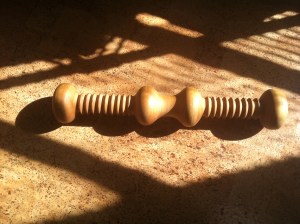
I’ve mentioned it before on this blog, and it bears mentioning again: daily use of a spine aligner keeps my back in shape. (Along with yoga, of course — even just a couple of sun salutations a day). I use it in bed, placing the center knobs between two vertebrae, somewhere between my shoulder blades, and lying back on it. When the muscles between those two vertebrae feel stretched and released, I move it down my spine one vertebrae at a time, all the way down to my sacrum.

spine aligner

My back feels so much better when I do this in the morning than when I don’t that I’m motivated to do it nearly every day, especially on days when I’ve got a lot of work.

I hesitate to lend my spine aligner out because once people try it, they want to keep it for themselves!

Plus, it tickles me that the first tool of this type is called the “Ma Roller”. That somehow gives it a worshipful quality to my mind. Ma Roller truly is a divine tool for keeping backs feeling good and flexible. (There are simpler versions without the foot ridges and single end knobs that mine has. You can Google and order the one you prefer online. )

Trigger point therapy

The other bosom buddy, a new one, is a book, The Trigger Point Therapy Workbook: Your Self-Treatment Guide for Pain Relief, by Clair Davies with Amber Davies, second edition.

Studying trigger points was not part of my massage school curriculum. (I understand they’re adding it now.) I really didn’t know much about trigger point massage. It’s one of the two techniques (the other being myofascial release) that are considered “deep tissue massage” — commonly considered the kind of massage that “hurts so good” or “hurts now, feels good after the bruises go away”.

After I started giving several massages a day, several days a week, I did know pain: muscle pain, painful tendons, achiness, burning, tightness, a thick hard ropy quality to muscles like I find on clients. And sometimes self-massaging those muscles felt good but didn’t last. The sore places became chronic.

I was traveling with a friend who’s a massage therapist and educator who explained trigger points to me and helped me find one in my neck so I could experience referral: press into a tender Point A and hold it, and pain arises in Point B, often surprisingly distant. (Although some trigger points are just painful at Point A.)

Eventually I got the workbook and started checking my muscles for trigger points. Then a colleague offered to give me a session so I could learn how she does it (and get some relief), and then she had me work on her trigger points. I actually bruised her butt, which she was okay with because she felt so much better.

If you didn’t know, a trigger point is a small knot in the muscle fibers that might even be microscopic. Sometimes a massage therapist — or you — can feel the knot. Experienced practitioners say when no knot is palpable, they can feel a change in muscle density.

The other way of finding them is to systematically press deeply into the muscle, sliding your fingers slowly along the skin, until you — or the client — identifies a tender spot. Then press into it while breathing deeply three times (sometimes the knot releases before then), and then rub the area to increase circulation and carry off toxins.

Now I add trigger point work on request to the Swedish and integrative massages I do. I don’t do sessions that are entirely deep tissue so far. Applying that much pressure is strenuous on my body, and my clients so far don’t want a whole hour of trigger point work.

I’ve ordered a small spiral book of images of muscles, trigger points, and referred pain areas that I can easily use at work in lieu of posters, since I work in multiple locations. It’s The Trail Guide to the Body — Trigger Points.

But back to me! I found dozens of trigger points in my sternocleidomastoid (the long muscle that pops out on the side of your neck when you turn your head) and scalenes (three shorter, entwined muscles on the side of the neck that attach to several cervical vertebrae, like guitar strings). The scalenes flex the neck to the same side.

Trigger points on these muscles produced referred pain at areas on my head, arms, hands, and between my shoulder blades. Finding and releasing these trigger points has made a world of difference. My body feels lighter, looser, freer, more flexible — and I’m already flexible.

I imagine that using the spine aligner regularly releases trigger points in the various layers of spinal muscles. My back is definitely less tender than when I first used the spine aligner. Use it in bed or on a sofa at first. Later you will be able to do it on the floor.

I have a hunch that if I could release all my trigger points, my body would feel like it did when I was 5 years old again. And that would be something I’d like to experience. The wisdom of age plus the energy of youth!

Trigger points do tend to come back but are not as painful, and sometimes they can require repeated work before they fully release. Every 2-3 days, I check those neck muscles and release any trigger points that are still tender. I’ll move onto my shoulder, arm, and upper back muscles next.

Whether you are a bodyworker or a recipient, if you are serious about moving away from muscle pain and toward more ease and lightness in your body, I recommend these tools for self-care.

SOS holiday party, silent auction, gift certificates for massage….

I am really feeling jazzed! I’ve been a supporter for many years of the Save Our Springs Alliance, a local environmental group dedicated to preserving the quality of “the soul of Austin,” Barton Springs.

bartonspringsIf you’re not familiar with Barton Springs, it’s a large spring-fed urban swimming hole with a natural bottom, populated with plants, fish, salamanders, crawdads, and other wildlife, including humans. It’s got a nice view of the downtown skyline and is a must-see stop for tourists.

The water is unchlorinated and cold, and it feels fantastic! It takes courage to get in because it’s so cold (68-70 F. year-round). I am mostly a warm-weather swimmer/snorkeler there,though I’ll do the New Year’s Day polar bear dip if the weather is decent.

Keeping the springs clean and healthy is a challenge in an urban environment, and SOS does a good job.

Every year SOS holds a holiday party and silent auction. It’s one of the best nonprofit parties around, with good food, live music and dancing, an excellent silent auction, and lots of fun people.

This year for the first time, I had something to donate to the silent auction. I donated an Ashiatsu gift certificate for a 90-minute session. I stopped by the SOS office, my first time there, to drop it off and was warmly welcomed by Pat and Bill and recognized as a long-time member.

Wow, I wasn’t expecting that!

Anyway, if you’re interested, come to the party and bid on an Ashiatsu session with me and whatever else you like! It’s Thursday, Dec. 6, 6 pm-midnight, at Mercury Hall. Here are the details.

I also have massage and Ashiatsu gift certificates available for purchase. You choose the denomination — my sessions start at 30 minutes, and recipients can always upgrade to add more time.

Building my massage practice

I have not been posting here quite as often as I used to because I’m working on building my massage practice, which includes not just giving massage (which I enjoy and am good at) but also learning about business matters like marketing, bookkeeping, scheduling, pricing, and so on.

That kind of practical, down-to-earth stuff that doesn’t seem to fit well with the themes of this blog. You’re not here to learn whether to use Quicken or Quickbooks, read about using incentives to attract and retain clients, or sift through research on gift certificate law in Texas, but currently I am a sponge for all that.

I’d love to share some of my lovely experiences! I had fun on Friday morning doing something new: going to each business on the block where my studio is located, introducing myself as a new neighbor, and letting them know I’m available for massage just a short walk away.

My friend Keith came with me. We talked to people at 19 businesses and left a flyer for the bulletin board and business cards at each one. I was glad to have his company.

One of my pet peeves is that I work hard to get stressed people all nice and relaxed, and when their session is over, they get in their car and drive away, which can so easily undo the relaxed state.

I’ve begun suggesting that they enjoy their relaxed state as long as possible, just becoming alert enough to drive themselves safely home.

Even better would be if people could walk to my studio, get a massage, and walk back. Walking anchors the relaxed state more deeply, and the neighborhood is old and lovely, a visual treat.

~~~

I’ll be sending off for my certification in Ashiatsu Oriental Bar Therapy today, having done the requisite 20 practice sessions with evaluations. I’ll take the test and get the paperwork in the mail. That feels good. I’m really grateful I can offer this modality.

I’ve just ordered a workbook on trigger points and am looking forward to learning how to work with them. I will be able to make even more of a difference when clients experience muscle pain.

I’ve been fortunate to have worked on some people who are themselves highly experienced bodyworkers, who have shared tips and wisdom with me. I feel immensely grateful for the support.

When I start each session, I like to be still for a moment, connecting my energy to earth and heaven and then connecting to my client’s energy. It feels appropriately responsible when someone has come to me with trust that I can help them feel better. I know it sounds like a cliche, but that moment feels sacred.

Also, all of my clients are really great clients!

A day in the life of a massage therapist

I’ve been doing massage since June, but I haven’t posted very much about it on this blog. I’ve been getting my bearings, gaining hands-on experience. I also maintain the confidentiality of my clients.

I’d like to write about my work, as long as my clients remain anonymous. I would have liked to read about what it’s like to work as a massage therapist, so maybe me posting about it will serve that need for someone else.

I massaged a woman who had recently had jaw surgery. She was going to physical therapy, and the PT said her neck muscles were so tight, a massage was in order.

At her request, I just worked on her back, shoulders, and neck, and I persuaded her to let me spend some time working on her feet.

It is incredibly relaxing to have foot reflexology and/or foot massage. I gave her both. There are zones on the feet that correspond to the rest of the body, so working the feet softens tense areas before I even get to them.

If you ever just want to relax and don’t have time for a full body massage, foot massage and reflexology are wonderful.

I allowed plenty of time in our session to work on her neck both when she was face down and after she turned over. I did a combination of Swedish massage and deep massage (Lauterstein method) to work on her circulatory and lymphatic systems and her structure and energy.

She told me she was having difficulty sleeping. She said she had always slept on her stomach with no pillow. Post-surgery, she was having to sleep on her back, propped up on pillows. She found it awkward and uncomfortable.

I shared with her what had helped me after I had had some major chiropractic work on my neck and was told to sleep on my back: hugging a pillow against my body. The weight of it feels comforting to a stomach sleeper.

Afterwards, she said she felt much better.

That’s one of the things I love most about being a massage therapist. What I do makes a tangible difference in people’s quality of life.

I worked on another woman who had been on her feet all weekend at an outdoor music festival. She wanted a lot of attention to her feet and legs as part of her full body massage. She booked a 90 minute massage, which is twice as relaxing as a 60 minute massage!

Truthfully, I don’t know how to quantify how relaxing a massage is. That’s a subjective measure. I just know that when I give a 60 minute massage, if the person is larger than average or has an area that needs extra attention and still wants a full body Swedish massage, the massage feels rushed, to me.

I don’t know if it feels rushed to them. Maybe that’s all they’ve ever known, and they have no idea how much more relaxed they could feel if they had a longer session. It’s their choice — and I’m not beyond suggesting that a client book a longer session next time!

I did Swedish/deep massage and reflexology/foot massage on her and was able to work at a more relaxed and relaxing pace. IMO, she did herself a huge favor by booking 90 minutes. She relaxed very deeply and looked happy when I met with her after the session.

I like using aromatherapy. It adds a nice dimension to a massage both to the client and to me.

I often put the essential oil blend Valor (from Young Living) on the client’s feet before massaging them. The way I see it, everyone needs more valor to face life, and here’s a way to get some!

When clients turn over from being face down, their breathing is often congested. When that’s the case, I like to take a drop of Eucalyptus radiata oil, rub it between my hands, and then place my hands near the client’s nose. Their eyes are covered, so they don’t see it coming. They simply smell the eucalyptus, a pleasant surprise, and it clears their breathing passages.

At the end of a massage, especially when the client has gone into a deep trance or fallen asleep, I like to rub a drop of peppermint or rosemary oil between my palms and allow the scent to help wake the client up in a refreshing way.

Celebrating online booking for massage with a special offer

New! Online booking for Ashiatsu and massage!

I’m very excited! I just got online booking set up for my massage practice! If you need a massage here in Austin, I’d love to work with/on you. I do integrative massage, and Ashiatsu Oriental Bar Therapy (barefoot massage).

Special offer

To celebrate, I’m offering a special: if you book an appointment that’s 60 minutes or longer online by 8 pm CDT tomorrow, October 25, you may add 30 minutes to your session for free.

Feel free to pass the word!

Online booking available

You can book online any time from my home page, from my Facebook business page The Well, by clicking this link, or by clicking the menu Schedule Appointment. If you prefer to talk to me, you can call me at 512-507-4184.

My studio is downtown near 12th & Lamar, with free parking.

Let me know if you have any questions or run into any problems with the online booking. I think I’ve got it all set up correctly, but if you have any problems scheduling online, please let me know ASAP (512-507-4184). Thank you!

Now offering Ashiatsu at my downtown studio!

Ashiatsu now available

Good news! I am now offering Ashiatsu Oriental Bar Therapy, at my downtown Austin studio, 12th Street Massage, 827 W. 12th. Call 512-507-4184 to schedule an appointment.

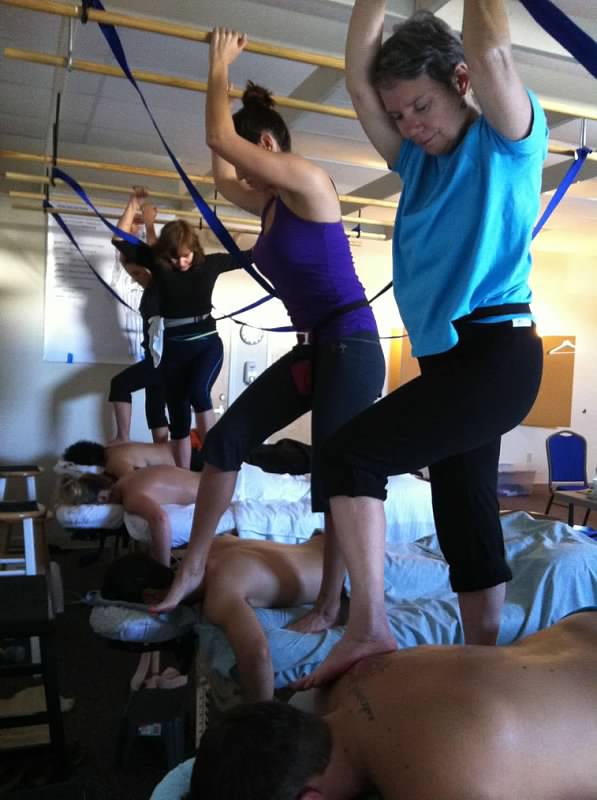
Ashiatsu (AOBT) is called “the deepest, most luxurious massage on the planet.” Performed on a standard massage table, I hold onto overhead bars while massaging your body with my feet. Ashiatsu consists of long, flowing, deep strokes with the whole foot as well as targeted work using the heel, toes, or edge of the foot.

Ashiatsu sessions last 60, 75 or 90 minutes. The 60-minute sessions are done on the back. Longer sessions include work on the front and sides of the body and may include work with the hands on your neck, feet, or hands.

If you like the feeling of slow, deep pressure, you will love Ashiatsu. Leveraging the amount of pressure you receive, I can apply up to my full body weight (I weigh in the 110-120 range) to the places on your body that can take it, lightening up on vulnerable areas.

If you’ve never experienced Ashiatsu, I invite you to come check it out. Many, many people love it so much, they never go back to traditional massage. Needless to say, the pressure really refreshes your circulatory and lymphatic systems.

Integrative massage

I also offer integrative massage (Swedish plus the Lauterstein deep massage method, as well as reflexology, acupressure points, stretching, body mobilization techniques, trigger point therapy, Reiki, and/or craniosacral work) at my studio.

How I work

Here’s a little about how I like to work: I always give you the full time you pay for, and if I run into an area that needs extra work, I may run over a few minutes (in that case, it’s on me). If you need to leave by a certain time, please tell me up front. Otherwise, you can take your time getting dressed and enjoy your relaxed state.

Here’s the secret of a really great massage: I do not book sessions back to back like discount massage places do because it’s important to me to be rested, fresh, and present with each person I work on. For that reason, I offer only a limited number of appointments per day. My cancellation policy is 24 hours in advance.

I provide fresh organic cotton sheets, organic oils, aromatherapy if you like it, and nature sounds, soothing music, or silence.

A massage makes a great gift. We all know someone who would be so grateful to receive one. I offer gift certificates in any denomination.

I also offer chair massage and lunchtime yoga classes for employee wellness.

MaryAnn Reynolds, MS, RYT, LMT, NCTMB

New massage modality coming soon: Ashiatsu Oriental Bar Therapy

New offering: Ashiatsu

This past weekend I went to San Antonio and did four days of training in Ashiatsu Oriental Bar Therapy, learning to work on the back, front, and sides of the body with my feet.

Oh, it is so much fun, and painless to give because I’m using my feet and leveraging my body weight to control pressure by holding onto overhead bars. Current weight: 114. May  wear a scuba belt for those who want even more pressure… I usually keep one foot on the table, though, so I’m completely able to deliver lighter pressure.

In case you didn’t know, I have really amazing reiki energy in my feet! Some days I wake up with it just pouring out of them. I haven’t known what to do with it, but this seems like a very good way to put it to work!

I also have “monkey toes” like many yogis with Iyengar training.

I’m looking forward to getting some overhead bars set up and being able to offer it in addition to Swedish, deep, and integrative (an intuitive blend of Swedish, deep, acupressure, reflexology, clinical — whatever is needed) that I already offer.

Because of my size, I was wearing my body out trying to deliver the deep tissue pressure that so many people like. A lot of people don’t realize how taxing massage is on the therapist’s body and what a high burnout rate this profession has. I didn’t. Self-care is essential to be and give your best. I’m working now on giving as much as I can give without hurting myself.

Learning Ashiatsu will allow me to make a difference on those who like medium to firm pressure and those who want to try something different. The long strokes are very relaxing. My practice client at training, Don, a big biker who practices reiki himself, fell asleep!

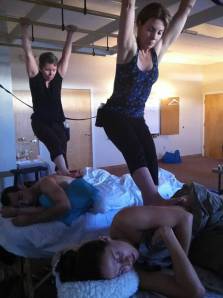
Photos from training (I’m the one with the short hair):

Image

Body care tools make great gifts!

When you are considering gifts to give during the holiday season (or for birthdays or special occasions year-round), here are some recommendations from a professional bodyworker. All of these relax, relieve stress, release tension, and enhance well-being. Who doesn’t want that?

First of all, please consider giving your loved ones gift certificates for massage. There are many modalities available ranging from Swedish to Ashiatsu to craniosacral to hot stones and more. This is a great way to show love — by surprising your loved one with a health-giving, rejuvenating, relaxing massage.

Your loved one will love you for it, and you’ll enjoy their relaxed, post-massage company even more!

Plus, supporting a private practitioner keeps the money in the local economy, so you’re being generous twice.

Here are my recommendations for tools that bring relief between massages:

  • Therapeutica Sleeping PillowThe Therapeutica Sleeping Pillow helps side sleepers keep their heads aligned with their spines while they sleep and encourages healthy back sleeping by providing nice curves for neck and head alignment. It is designed to reduce snoring and to relieve TMJ pain. Comes in five sizes based on shoulder width.
  • Check out the smaller Therapeutica Travel Pillow if your loved one travels a lot.
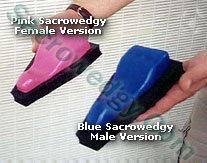
  • The Sacrowedgy is designed to be placed under the sacrum while you are lying on your back. It can relieve sciatica, back pain, piriformis syndrome, and more. Massage therapists and bodyworkers know that the keys to activating the parasympathetic nervous system (opposite of fight or flight) lie in pressing nerves at the occiput and/or the sacrum. This device cradles the sacrum similar to placing a hand under it, the way we often hold infants. Very calming and relaxing! Sized to fit male and female sacrums. Makes a nice stocking stuffer.
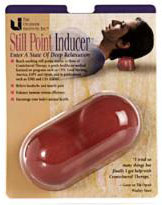
  • Place a Still Point Inducer under the occiput when you are lying on your back. Just as the Sacrowedgy induces relaxation via cradling the sacrum, the Still Point Inducer calms by cradling the occiput. A “still point” is a pause in the rhythm of the cerebrospinal fluid that results in better functioning of the central nervous system. Inducing a still point can relieve headaches and eye strain, lower blood pressure, and enhance the immune system. Craniosacral therapists induce the still point manually. You can do it yourself at home with one of these.
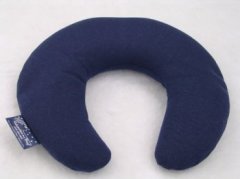
  • neckpillowA flaxseed pillow shaped to fit your neck and shoulders can be heated or chilled as needed for stiffness and pain. Better yet, get two of these! Freeze one and microwave the other, and then alternate heat and cold on your neck and shoulders for some wonderful circulatory and metabolic stimulation. Comes unscented — add your own fragrance if desired. Lavender is always relaxing.
  • TPWBThis item might inspire a New Year’s resolution! The Trigger Point Therapy Workbook by Clair Davies shows where to find trigger points  and describes how to release them in layman’s language. (Third edition is recommended.) If regular deep tissue massage is too expensive and you and your partner or friend suffer from trigger point pain and limited range of movement, this book is a fantastic resource. You’ll also need an inexpensive tool, such as a knobble or maybe a back buddy. If you and your partner or friend are able to spend time weekly helping to find and release each other’s trigger points, you’ll both feel so much better by the same time next year!
  • spine alignerThe wooden Spine Aligner does just that. You lie on it, on a bed or cushioned surface at first, then on the floor when your body has adjusted. Rest the two central knobs between two vertebrae starting between your shoulder blades. Lie back on it for 10 breaths, then roll it down between the next pair of vertebrae, take 10 breaths, and so on, all the way down to L5-sacrum. The Spine Aligner relieves kinks and misalignments in the back, like you get when you sleep in a strange position or on a strange bed and wake up with a spasm-y, crick-y back. You can even put a knobby end under a glute for a nice tension-relieving stretch that definitely works some pressure points. You can roll the corrugated parts with the soles of your feet for a nice foot massage.

Some body care gifts you can make at home without spending a lot of money:

  • Two tennis balls tied in a tube sock. If your loved one’s car does not have built-in lumbar support, and he/she spends much time driving, you can easily make this simple gift. Put two tennis balls into a man’s tube sock. Tie a knot at the open end to keep the balls from coming out. They’ll place the sock behind their low back while driving, with a ball on either side of the spine. They can press into them, giving the low back a nice little massage.  Good for between the shoulder blades, too. This is  great on long car trips and to relieve the stress of driving in rush-hour traffic!
  • Scented bath salts. Buy Epsom salt in bulk at the grocery store, pharmacy, Costco, or online. Measure two cups of Epsom salt into a 16-oz. glass container. Add an essential oil such as lavender, chamomile, orange, sandalwood, rose, or peppermint for different effects. Stick an attractive label on the jar identifying the scent and include instructions to dissolve in a hot bath and soak for at least 12 minutes.
  • Make your own gift certificates for foot, hand, or scalp massage, or a back or shoulder rub. No training is needed, and 15-30 minutes keeps it at a good length to be effective but not tiring for you. Ask the recipient to tell you what they especially enjoy, and deliver that.

Taking care of your body, and helping your loved ones take care of theirs, is the essence of healthy living. Body care gifts create good will and make the world a better place, because people who feel great do great things!