Stay hydrated all the time, not just after a massage

I’ve written about this before. I tell my clients to stay hydrated, rather than asking them to drink “extra water” after a massage to “flush the toxins out.”

Water makes physiological processes, especially the brain, work better, so getting enough is important. Whatever measure you use – a gallon a day, half your body weight in ounces, until your pee is clear – most of us don’t drink enough, and we need extra to make up for sweating, diarrhea, etc.

Now New York Times health writer Gretchen Reynolds addresses the issue, interviewing an expertContinue reading

New finding: Sanitation practices may play a bigger role than antibiotics in gut microbial diversity

Just sharing a link to a story on NPR News covering new studies on the gut microbiome.

Here’s a summary: Modern Western guts are missing microbes that exist in the guts of hunter-gatherer people.

Western diets and modern-day hygiene have wiped a few dozen species right out of our digestive tracts. One missing microbe helps metabolize carbohydrates. Other bygone bacteria act as prebiotics. And another communicates with our immune system.

The big question is why.  Continue reading

Riding the energy of the New Year into life skills

Happy New Year from wellbodymindheartspirit!

It seems natural to me that after the indulgences of the holiday season — after all the parties, feasts, special foods, and alcohol consumption lasting from Thanksgiving through New Year are over — I want to simplify, clean up my habits, rebalance.

This is the energy begetting New Year’s resolutions. January is the soberest month, after all!

But how best to work with that energy? I’ve learned from personal experience that most of the time, those good intentions don’t last a whole year. (One exception: I did meditate nearly every day for a year, back in 2010, when I launched this blog. The following year, I was so sick of the daily discipline, I became quite irregular at it. Back on track now, figuring 5 out of 7 days is just fine, and 7 out of 7 is awesome!) So it’s good to think about how you know when you are done. How can you be successful actualizing your intention? Is it related to a specific time period, mindfully learning a new habit that you then do mindlessly, achieving a particular goal, or something else?

I’m riding that energy to use the first two weeks of January to clean up my diet. I’ve resolved to go dairy-free through January 15th. Then I plan to do challenge testing of dairy products, partaking of them again and noticing how they affect my body. My nutritionist, Olivia Honeycutt, will help me through this, building on the food records I’ve been keeping for the past several months.

I’ll probably start with the fermented stuff, yogurt and kefir, which may be easier to digest, and then go on to test cheeses, also fermented, and finally the hard-core dairy products I like, cream and butter. (I haven’t drunk milk in many years, so that won’t be an issue.)

After those two weeks, I’ll have a better idea of which kinds of dairy and how much (if any) my body can handle well.

It’s not that I’m sick (I was, before going gluten-free 7 years ago). Now I’m experimenting with which tweaks to my diet make me feel even better.

I’m also using this period to cut grains out of my diet. I’ll be experimenting after that with ways to prepare grains in ways that don’t rob my body of minerals from phytates and that maximize digestibility (soaking and sprouting first). I miss the texture of grains sometimes, like rice and quinoa. The cookbook Nourishing Traditions has tips on how to prepare grains (and everything else) in healthful ways.

Sugar and honey and other sweeteners are also going by the wayside during this period, except for that daily small piece of 85%-cacao dark chocolate. When it comes to chocolate, I know well how little resistance I have when there’s more sugar in the chocolate. I wanna eat the whole damn bar! 85% is barely sweet and thus non-addictive. I can eat a small piece daily and make a bar last two weeks, getting the benefits of the cacao (antioxidants, magnesium, endorphins) without overindulging in sugar.

I decided I might as well go alcohol-free too. What the heck, right? I have become fond of some red wines and could (and did) drink a glass almost daily. After that, I may cut back to drinking wine only when dining out. Alcohol can be addictive, and apparently it’s never too late to develop a drinking problem, which I definitely don’t want.

Another good resolution is to get the first hour of my day in good order. For me, it’s brushing and flossing first thing, followed by drinking a glass of water with gelatin and apple cider vinegar, doing 10-15 minutes of yoga (vinyasa, easing into each stretch for at least 15 seconds), then meditating for 15-60 minutes, and making myself a morning cup of healthful tea, mixing matcha, puerrh, yerba mate, ginger, turmeric, nettle, reishi, etc., as needed for energy and healing. (I learned the value of this from Tim Ferriss, the supreme life hacker who wrote The 4-Hour Body and The 4-Hour Chef.)

After doing those things, I go about my day. Every day can be different in my line of work (massage therapy), depending on the number of clients and their needs, working in different locations. It’s nice to have a routine (that I hope will become mindless, like autopilot when I wake up) of healthy habits to start each day.

I am also interested in lowering my stress levels. As a massage therapist, relieving others’ stress and tension is my job. What about my own? Meditation helps, but it’s time deliberately set aside from the daily grind, sitting on a cushion and meditating. What about during the day, when I’m running errands, stuck in Austin’s notorious traffic, running late for a meeting, returning stuff, standing in line, experiencing inner and outer conflicts, hearing terrible news about what’s happening in the world that I can’t do anything about?

I decided late in 2014 to investigate the HeartMath program. I bought a device that attaches to my iPhone (the Inner Balance for iOS pulse sensor) and downloaded a free app (Inner Balance). I plug the device into my phone, attach the clip to my earlobe, and watch an expanding/contracting mandala on the screen to pace my breath. Auditory cues let me know if my heart rate variability is in the low, medium, or high range. (HRV is an indicator of coherence in the autonomic nervous system that correlates with entrainment/harmony of physiological systems. Coherence correlates to feeling positive emotions, so you could call this an attitude adjustment device. Here’s more information if you want it.)

The goal is to be in the high range of coherence as much as possible. As with games, you can set the pace, move up to higher levels, change images, get scores, and more. There are also computer-based devices available.

I quickly noticed how my thoughts affect my coherence level. If my mind wanders to news of a plane crash or nasty politics or war or a crime (I’m sure you’ve experienced this too), I move into the low range. If I bring my attention back to my heart center, I move into the high range.

I plan to do at least one session every day until I can, at will, without the device, reliably switch from stress to a positive emotion and maintain it for as long as needed.

(Not that negative emotions are totally bad. Of course when someone I love is suffering or dies, I will feel grief, anger, etc., and I have memories of difficult times in my own life. That’s life. But when it’s about something distant from me that I cannot personally do anything about, who does it serve for me to feel bad? Not me, not those I most care about. One thing I can do is to support effective organizations that are making the world a better place.)

And there you have it. These are my intentions for 2015, my expression of the “new beginnings” energy that accompanies the turn of the year. First, a two week diet clean-up. Next, an intention to create a new habit for how I spend the first hour of every day — and I’ll be done once I’m doing it regularly. Thirdly, I will use a device to increase my experience of positive emotions —and stop when I can reliably do that at will, without the device.

I will check back in later this year, and again at the end of 2015, to let you know how these intentions and practices have panned out in actuality.

Hope you have a wonderful year and that 2015 showers you with love and abundance and worthy challenges!

Moving toward a more traditional diet

I’ve been working with local clinical nutritionist/acupuncturist Olivia Honeycutt for a couple of months, tweaking my diet so I can be healthier and have more energy. She gave me some forms for noting what I eat for meals and snacks, when I eat, how much water I drink, how many hours of sleep I get and the quality of my sleep, bowel movements, etc. We get together every couple of weeks so I can share my forms. She looks them over and makes recommendations of little tweaks I can make to improve my health through diet.

Although I was already eating very little grains and legumes and no gluten before I started working with Olivia, I’m eating more of a traditional diet now.

It was a bit difficult to move past the belief that more fat is good, because for most of my adult life, fat has been considered the cause of heart disease and obesity. Especially animal fat. Fat = bad for decades, and now fat = good (especially animal fat, coconut oil, avocado oil, and olive oil). I went out of my way especially to avoid Mexican restaurant food cooked with lard, and now it’s considered healthy! (It’s also tastier.)

Yet here I am, eating butter, ghee, and/or bacon grease daily. I did not want to gain weight, but I have. It’s actually fat turned to muscle, because my clothes still fit. To lose weight eating like this, you eat more fat earlier in the day.

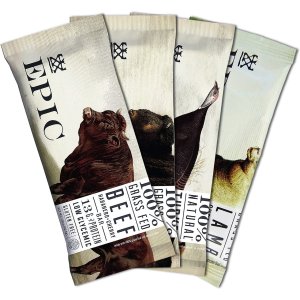
Epic barsThe great thing about fat is that it satisfies. If I’m working for hours doing massage, and I don’t have time to eat, consuming fat will stave off my hunger for longer than anything else I could eat. It’s fuel. I’ve tried eating various fat-laden foods such as almond butter, coconut butter, Epic bison/lamb/turkey/beef bars, avocados, and some organic extra-virgin coconut oil when my hunger is getting the better of me. It works.

One of the biggest adjustments is that from tracking my water intake, I learned I wasn’t drinking enough water. Now I drink 16 ounces upon arising (with a tablespoon of apple cider vinegar). My water bottle holds 27 ounces, and I empty it daily. Another 16 ounces in the evening brings my total to 59 ounces, close enough to my goal of 60 ounces a day, or about half my body weight in ounces. I don’t count the caffeinated tea I drink because tea is a diuretic.

Also, I like to drink a glass of water about 10 minutes before eating because it helps me avoid overeating. It’s so easy to confuse hunger and thirst! When my thirst is sated, I’m not as hungry.

Because I work out 3-5 times per week with kettle bells and do physical work as a massage therapist, Olivia has me eating a palm-sized amount of protein at each meal. I am not an athlete, but I get to eat like one! I’ve been making chicken liver paté from different recipes for the past few weeks to get some beneficial fat-soluble vitamins found in liver. (Here’s my favorite recipe!)

I don’t eat much canned or processed foods, except for sardines. I eat raw honey, rare beef, and fermented food and drink such as sauerkraut, refrigerator pickles, yogurt, kefir, kombucha, Kevita, wine, cider, or cheese nearly every day.

I’m looking forward to obtaining some natto, having become aware of the vast benefits of consuming adequate vitamin K2 for appropriate calcium utilization (i.e., in the bones and teeth and not in the arteries and brain). There’s a supplement that also has K2

I’m learning to soak and dehydrate nuts. (Well, just walnuts, so far.) The cookbook Nourishing Traditions has been helpful. This diet is similar to the Paleo diet, is influenced by the Weston A. Price Foundation‘s dietary principles, and also by Olivia’s understanding of diet and health from her acupuncture training (having to do with heat, cold, dampness, herbs, seasons, constitutions, etc.).

I try to eat half a beet and drink a cup of dandelion tea (leaf or root) each day for better liver function. I eat dark green leafy vegetables, cruciferous vegetables, and tropical fruits. And high-cacao chocolate (over 70 percent).

I also make bone broths, especially in the winter, for the calcium. I save chicken, beef, and lamb bones and veggie scraps in my freezer. Sometimes I just buy bones. I have a big plastic container to store them in, and I also add the water from steaming veggies to this frozen stockpile of nutrients.

When I’ve got enough, I put the contents into a stockpot, add water to cover and a splash of apple cider vinegar and a moderate amount of salt, and cook it at a simmer for a day or two, skimming foam off the top when it first rises.

The resulting broth is flavorful and extremely nourishing. I drink a cup a day when I have it and also use it as a basis for soups and stews. See my post on making turkey vegetable soup with bone broth!

In summer (because it’s too hot to make broth), and when I’ve run out of broth, I consume a tablespoon of gelatin every day for the protein. It thickens smoothies, makes my hair and nails grow thicker and faster, and is good for joints and reducing cellulite. I get the Great Lakes brand sold on Amazon.

My gut seems to be working better despite recent stressful difficulties. I take L-glutamine supplements, which help with gut issues and have many other benefits.

Check out my Products I Recommend page for more recommendations for books, supplements, and products to improve your well-being.

How to drink water with lemon and preserve your tooth enamel

Update, July 2021: If you are interested in having a healthy mouth, you may want to read this: Swishing with salt water reduces gum disease. I also want to mention the toothpaste I now use that strengthens tooth enamel, Boka Natural Toothpaste.

I recently became aware that one of my healthy habits was having a deleterious effect on my teeth, so I did some online research and am posting this to help others make healthier choices.

Benefits of drinking water with lemon

Drinking water with fresh lemon juice squeezed into it is touted as a very beneficial health practice. I googled “water with lemon” and found these top links (and many more):

Screen Shot 2016-06-26 at 10.53.21 AMIn short, water with lemon aids digestion, provides nutrients (Vitamin C, citric acid, potassium, calcium, phosphorus, magnesium, and pectin), boosts your immune system, strengthens liver functions, dissolves gallstones, provides antioxidants that nourish the skin, reduces inflammation, reduces hunger cravings, freshens breath, flushes toxins by increasing urination, reduces mucus, maintains a healthy alkaline pH once metabolized, is anti-bacterial to pathogens, reduces joint pain, and more. Continue reading

My experience with functional movement

If you’ve friended me on Facebook, you might be aware that I’ve been taking classes in functional movement since August, so four months now. I thought I’d post something  about what it is, what I’ve been doing, and my results.

What is functional movement?

Functional movement refers to fitness and the movements we use in everyday life. As opposed to yoga, for instance. Continue reading

I just applied for the 60-day food challenge!

The Human Food Project has opened a 60-day challenge that involves changing your diet for 2 months, recording it, and sharing the results. I’ll summarize, and you can click here to read the original invitation and apply. (I think they add you to their mailing list even if they don’t accept you, so you’ll be notified of results.)

The researchers are seeking 25-30 super-motivated people to participate. It’s not an easy challenge. However, if you are skeptical about the role of your gut microbes on your overall health, and you have been eating processed food and junk food (or you’ve been eating a healthier diet that includes a lot of whole grains), participating in this challenge will let you experience first-hand (for most of us, the best proof possible) the connection between diet and well-being.

You also get before-and-after data on the composition of your very own gut bugs. They want to measure before and after the 60 days to see if they can shift things, decreasing levels of opportunistic pathogens and increasing the microbes that increase health.

I told you it wasn’t easy. Besides the diet (more on that later), they want you to:

  • spend a lot more time outside
  • keep your home and office windows open to breathe more fresh air
  • spend more time being dirty and in the dirt (gardening, anyone?)
  • spend more time with pets and livestock if you don’t have pets, visit other people’s pets and visit a farm)
  • swim in natural bodies of water rather than chlorinated pools

Basically, they want you to live — for 60 days — with more connection to the wild world, connecting with the “microbial metacommunity.” (Love that phrase!)

Here’s the diet part. There’s no meal plan, but it’s about eating unprocessed foods as much as possible:

  • eat 30-plus species of plants each week (let’s see, I have on hand avocado, kale, onion, carrot, parsley, dill, green onion, raspberry, red pepper, jalapeño, ginger, garlic, collards, tomatoes, cashews, walnuts, spinach, celery, lemon, cabbage, chia seeds, goji berries, olive oil, coconut oil, mint, thyme, rosemary, hemp seeds, capers, and mustard — that’s 30 right there)
  • eat lots of onions, leeks, and garlic
  • eat the whole plant as much as possible (not just the broccoli tops but the tough stems too) — the goal here is to eat 30-80 grams of fiber a day from numerous sources
  • when you cook veggies, take care not to overcook them
  • eat no grains at all, not even rice
  • eat beans and lentils (so this is not a Paleo diet)
  • eat as much meat, poultry, fish, and game as you like, but avoid anything raised on growth hormones or antibiotics (no factory-farmed animal products)
  • only drink filtered water, not tap water

I didn’t see anything about dairy or sugar, so I assume you can include them if you want. Apparently alcohol is also okay, but they recommend you take your “booze cruise” after the challenge.

I applied to do it! I’m not sure I’ll qualify. The researchers say they are very interested in people who are currently eating lots of whole grains. I eat a gluten-free diet. I’ve gone for a few weeks not eating grains of any kind, and then after talking with a friend currently studying nutrition, last weekend I added back quinoa, rice, Ezekiel bread, and the occasional corn tortilla, going for 1-2 servings per day.

Keep ya posted about whether I get in!

Feeding your gut microbes a new key to health

Some of the most fascinating revelations in science these days are coming out of the study of microbes living in our guts.

Michael Pollan wrote an 8-page article for the New York Times Magazine about his experience and some of the findings. Excerpts (and click the link just to see the photo of a dirty baby playing with dirty toys, licking the wheel of a toy car):

It turns out that we are only 10 percent human: for every human cell that is intrinsic to our body, there are about 10 resident microbes — including commensals (generally harmless freeloaders) and mutualists (favor traders) and, in only a tiny number of cases, pathogens. To the extent that we are bearers of genetic information, more than 99 percent of it is microbial. And it appears increasingly likely that this “second genome,” as it is sometimes called, exerts an influence on our health as great and possibly even greater than the genes we inherit from our parents. But while your inherited genes are more or less fixed, it may be possible to reshape, even cultivate, your second genome….

A similar experiment [to one performed on mice] was performed recently on humans by researchers in the Netherlands: when the contents of a lean donor’s microbiota were transferred to the guts of male patients with metabolic syndrome, the researchers found striking improvements in the recipients’ sensitivity to insulin, an important marker for metabolic health. Somehow, the gut microbes were influencing the patients’ metabolisms….

Our resident microbes also appear to play a critical role in training and modulating our immune system, helping it to accurately distinguish between friend and foe and not go nuts on, well, nuts and all sorts of other potential allergens. Some researchers believe that the alarming increase in autoimmune diseases in the West may owe to a disruption in the ancient relationship between our bodies and their “old friends” — the microbial symbionts with whom we coevolved….

Yet whether any cures emerge from the exploration of the second genome, the implications of what has already been learned — for our sense of self, for our definition of health and for our attitude toward bacteria in general — are difficult to overstate. Human health should now “be thought of as a collective property of the human-associated microbiota,” as one group of researchers recently concluded in a landmark review article on microbial ecology — that is, as a function of the community, not the individual.

The saying “You are what you eat” can be modified to “Your health is determined by what you feed your gut microbes.”

Although scientists typically like to say there’s not enough data to say something is once-and-for-all proven, it’s good to know how the growing evidence may have influenced them to make changes in their daily lives. Scientists working in this field were asked about how they’ve changed their own and their families’ lifestyles:

  • They don’t take probiotic supplements.
  • They eat a variety of plant foods — fruits, vegetables, and whole grains.
  • They eat more “prebiotics” that encourage the growth of good bacteria — fermented foods like yogurt, kimchi, and sauerkraut.
  • They let their children play in the dirt and with animals.
  • They eliminated or cut back on eating processed foods.
  • They avoid (and help their children avoid) taking antibiotics whenever possible.

Also, they are aghast at the number of Caesarian-section births occurring and recommend vaginal delivery if at all possible, as a means of “inoculating” newborns with their mothers’ bacteria, thus seeding their own gut microbe, enhancing their immune systems, and perhaps giving them an edge on health in other ways.

One of the scientists’ wives gave birth by C-section, and they used cotton swabs to transfer vaginal secretions to the newborn’s skin.

For the same reason, they highly recommend breast-feeding over using infant formula.

Pollan concludes:

I began to see how you might begin to shop and cook with the microbiome in mind, the better to feed the fermentation in our guts. The less a food is processed, the more of it that gets safely through the gastrointestinal tract and into the eager clutches of the microbiota. Al dente pasta, for example, feeds the bugs better than soft pasta does; steel-cut oats better than rolled; raw or lightly cooked vegetables offer the bugs more to chomp on than overcooked, etc. This is at once a very old and a very new way of thinking about food: it suggests that all calories are not created equal and that the structure of a food and how it is prepared may matter as much as its nutrient composition.

This is one of the most fascinating areas of science, with implications that touch everyone, because everyone eats, and it is beginning to look like achieving good health is not as out of reach for many problems as was long thought. I will definitely be posting more on this.

Brainwave optimization follow-up, two years later

I received a phone call yesterday from someone who had read my original post about receiving brainwave optimization. Barbara in Houston was considering it. She’d read this blog and wanted to hear some follow-up. We had a nice long conversation, and I felt inspired by her courage.

This month marks two years since I underwent brainwave optimization — five days of twice-daily sessions designed to help my brain function better using biofeedback.

I have no regrets about doing it. I’m glad I took that leap of faith.

Of course it’s impossible to say how I might be different had I not received it. It’s also impossible to separate the BWO from the meditation, diet, yoga, and other work I’ve done. (I still think BWO is probably the equivalent of five years of daily meditation.)

What I can say is that when I compare how I experience myself now and how I experienced myself then, now is better. I feel more myself — I occupy my body and my life more fully and with more pleasure and serenity and depth and wholeness than I did before. I make better decisions. I am happier.

One of my reasons for doing it was that I had experienced trauma in my childhood that plagued me with ill effects for decades. Facing the trauma, healing and integrating it were turning points toward health in my life. I wanted to see if brainwave optimization could relieve me from any more dysfunctional patterns that might remain.

Last year, a year after undergoing BWO, I did get triggered by someone who didn’t recognize the extent of his own traumatic experiences and was unable to communicate responsibly about it. I experienced the flood of stress hormones and adrenal exhaustion that went along with being triggered.

The useful part of that experience was being able to witness how those stress hormones affected my thinking. I got a clear sense of what I’m like unaffected by trauma and what I’m like after being triggered. Day and night. Equanimity vs. fear and anger. Sunshine and butterflies vs. creepy shadows with hidden monsters.

The unpleasant part was that it took months to completely clear the effects of the cascade of stress hormones and return to robust, excellent well-being. During this time, I forgot that I could have gotten follow-up sessions of brainwave optimization, which are much less expensive than the initial assessment and 10 sessions.

In hindsight, it would have been really smart of me to experience just enough of being triggered to learn its lessons and then to shorten my suffering by going in for some follow-up work. I don’t know if it would have worked, but I believe that it would have made a difference, because when you make an effort on behalf of your own well-being, that commitment to action makes a big difference and amplifies the measures you choose to take. 

I regret now that it did not occur to me to do that.

It’s clear to me now that undergoing BWO does not give someone who’s experienced trauma a bulletproof vest against being further traumatized or being triggered. It does give you more resilience, because experiencing wholeness is so desirable. The brain is aware of its own well-being and likes it and will return to it as soon as it can. That’s a big part of how BWO works, in my understanding.

If you’re not sure your brain has experienced well-being because of past trauma, or if it’s been so long it’s hard to remember what well-being was like, I recommend getting brainwave optimization. It can’t hurt, and if it doesn’t help in the way you think it might, then at the least you’ve ruled something out on your path to recovery. You have not left that stone unturned.

And it might help in ways you haven’t thought of, so please be open to that. It’s hard to describe well-being if you’ve never experienced it. It’s hard to know what to expect before you do it.

Also, the brainwave changes keep happening for a long time after you finish the treatments. Hold your story lightly and keep a journal. I have been told by people who’ve known me for awhile that I’ve changed for the better more than anyone they know.

I also take the Buddha’s Brain supplements to support my post-BWO brain health, and I recommend that.

Science says massage relieves stress!

Researchers assigned healthy adults to receive 45 minutes of Swedish massage while the control group received light touch “using highly specified and identical protocols.”

(This is from a New York Times article, Regimens: Massage Benefits Are More Than Skin Deep. Here’s the abstract.)

The researchers took blood samples immediately before and for up to an hour after the massage.

Those who received Swedish massage had significant decreases in stress hormones. Their white blood cell counts went up as well, indicating the immune system was stimulated.

If replicated, these findings may have implications for managing inflammatory and autoimmune conditions.

Those who received light touch showed higher levels of oxytocin, the “bonding” hormone, and greater decreases in a hormone that stimulates the adrenal glands to produce more cortisol.

So basically, massage relieves stress and light touch increases bonding.

Now that science says so, the skeptics can come get on the table and experience it for themselves!

Several things pop out. One is that the research was sponsored by the National Center for Complementary and Alternative Medicine, a branch of the National Institutes of Health. I’m pretty sure the NIH is heavily biased toward MDs and western medicine, and that NCCAM fields like massage and acupuncture are considered flaky and suspect.

But if 75 or 90% of illness is stress-related, shouldn’t the NIH be emphasizing research on stress relief to prevent illness? That would be a great use of my tax money!

I would like to see more studies done on massage.

  • I’d like to see the blood tested to see how long these changes last, because my strong hunch is that if a massage recipient can avoid stress afterwards, the massage keeps working on the body for hours. Maybe 24 or 48 hours, but no one knows, because no one has studied it. Yet.
  • Could a control group be added of people who don’t receive massage or light touch?
  • Scientific study of prenatal massage and its effect on the women — and their childbirth and babies — would be wonderful.
  • I’d also like to see recipients’ brain waves tested, before, during, and after massage.
  • Does massage work equally well on everyone? Are there people who don’t benefit and “super beneficiaries”?
  • This study was on the effects of a single massage. I’d like to see longitudinal studies done of the long-term effect of regular massage: people who receive massage weekly, biweekly, and monthly for at least a year, five years, and ten years. All we have now is anecdotal evidence that people who receive regular massage are healthier into their senior years, falling and getting sick less often and recovering faster when they do.

The other thing that popped out was that the researchers were surprised by the results! They must have never received a massage. I wonder if they do now.

When I read the abstract, I saw that the authors did a follow-up study in 2012 on the effects of repeated massage. So I did get one wish, but these subjects received Swedish massage or light touch either weekly or twice a week for just five weeks. Otherwise, it was the same as the first study, which means they looked for changes for up to an hour after each massage.

Those receiving weekly Swedish massage sustained a higher level of white blood cells like those receiving a single massage, with minimal effect on stress hormones. Come on, not even the first massage changed stress hormone levels? That contradicts the first study!

Those receiving twice-weekly massage had increased oxytocin levels and lower stress hormone levels. So people getting more frequent massage bond more easily. I wonder if they used the same massage therapist each time.

The abstract says nothing about the light touch group. (And by the way, I have a hard time reading scientific research and understanding the findings and implications in plain English. This is the best I can do. If you know better, please comment!)

The authors conclude:

There are sustained cumulative biologic actions for the massage and touch interventions that persist for several days or a week, and these differ profoundly depending on the dosage (frequency) of sessions. Confirmatory studies in larger samples are needed.

Yes. And I am very glad that this research is happening and raising more questions.