Core Transformation is a process that amplifies well-being

Sometimes we believe we have to do something (or not do something) before we can experience a sweet state of being such as peace, love, feeling one with everything, etc.

If only I wasn’t so nervous, I’d feel more confident about a troublesome situation.

Core Transformation is a process where you can learn to experience a pleasant, desirable state of being (maybe even more pleasant and desirable than you can currently imagine!) without having to do something to get there.

rainbow, The Well, ATXThat’s right, you can experience these states regardless of what happens (or doesn’t happen) because your mind creates states of being. You can learn to work with your mind and be way more than 10 percent happier! Continue reading

What If?

What if our religion was each other?
If our practice was our life?
If prayer was our words?
What if the Temple was the Earth?
If forests were our church?
If holy water – the rivers, lakes and ocean?
What if meditation was our relationships?
If the Teacher was Life?
If wisdom was self-knowledge?
If love was the center of our being?
~ Ganga White

New addition to my Favorite Quotes page.

Thanks to David Baker for sharing on Facebook. Yes. These are the questions to be asked.

If you could experience enlightenment every day, would you?

Note: There are just a few spaces left in this workshop, which is limited to 30 people.

~~~

I am going to be attending a workshop September 28-29 in Austin, and I’d love for it to fill up. This workshop is for people who are interested in enlightenment (or maybe just deeper well-being), Neuro-Linguistic Programming (NLP), or both. No NLP experience is required.

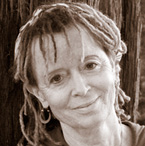
Connirae AndreasThe teacher is Connirae Andreas. She’s got her own Wikipedia page here. If you haven’t heard of her, she’s a psychotherapist, writer, and trainer in the field of NLP whose impeccable and compassionate work has helped many thousands of people suffer less and enjoy life more.

She and her sister Tamara Andreas created, developed, and trained people in a process called Core Transformation (described in the book Core Transformation: Reaching the Wellspring Within) that can take you from a problem state to a state of expansion and resourcefulness. Many experience their spiritual core in this process.

I’ve enjoyed taking people through this process so much, I offer it for free. Contact me if you would like a Core Transformation session in Austin.  

Connirae has been working on a process for personal growth that she calls “the Wholeness Process,” after studying various spiritual teachings on enlightenment, translating them into a precise method that people can adopt into a daily practice, and then working weekly with a small group in Boulder (her hometown) to refine the method.

She’s presenting the workshop to teach this practice in Austin September 28-29. Click the link for details. Keep in mind that the class is limited to 30 people, so if you’re interested, reserve your space sooner than later. She may not be teaching this again, so this is an opportunity to learn in person from the source.

The practice reportedly has benefits such as:

  • resetting the stressed nervous system, inducing deep relaxation
  • increasing one’s sense of well-being
  • helping one relate to others with more ease
  • melting away issues that before seemed like problems
  • accessing natural wisdom more easily
  • increasing creativity
  • feeling more whole and congruent
  • healing difficult, raw emotions
  • becoming more adaptable and resilient

She’s also learned that the practice has been found to relieve insomnia. It can also be used to dissipate pre-migraine auras and help people deal with their emotional hot buttons.

She found that once learned, the practice can take as little as 5 minutes a day.

Connirae wisely doesn’t promise enlightenment, but she does say this:

…if you use the process, you will experience a natural shifting in the direction that we might call enlightenment. The class is practical and experiential, and no beliefs regarding spirituality or philosophy are needed or offered. However the experiences people have at times resonate with many mystical writings and understandings.

Part of “evolving” in this way, is getting more comfortable and “at home” with our vulnerabilities and “weaknesses,” which become increasingly a part of a felt love and acceptance.

I hope to see you there.

Brainwave optimization follow-up, two years later

I received a phone call yesterday from someone who had read my original post about receiving brainwave optimization. Barbara in Houston was considering it. She’d read this blog and wanted to hear some follow-up. We had a nice long conversation, and I felt inspired by her courage.

This month marks two years since I underwent brainwave optimization — five days of twice-daily sessions designed to help my brain function better using biofeedback.

I have no regrets about doing it. I’m glad I took that leap of faith.

Of course it’s impossible to say how I might be different had I not received it. It’s also impossible to separate the BWO from the meditation, diet, yoga, and other work I’ve done. (I still think BWO is probably the equivalent of five years of daily meditation.)

What I can say is that when I compare how I experience myself now and how I experienced myself then, now is better. I feel more myself — I occupy my body and my life more fully and with more pleasure and serenity and depth and wholeness than I did before. I make better decisions. I am happier.

One of my reasons for doing it was that I had experienced trauma in my childhood that plagued me with ill effects for decades. Facing the trauma, healing and integrating it were turning points toward health in my life. I wanted to see if brainwave optimization could relieve me from any more dysfunctional patterns that might remain.

Last year, a year after undergoing BWO, I did get triggered by someone who didn’t recognize the extent of his own traumatic experiences and was unable to communicate responsibly about it. I experienced the flood of stress hormones and adrenal exhaustion that went along with being triggered.

The useful part of that experience was being able to witness how those stress hormones affected my thinking. I got a clear sense of what I’m like unaffected by trauma and what I’m like after being triggered. Day and night. Equanimity vs. fear and anger. Sunshine and butterflies vs. creepy shadows with hidden monsters.

The unpleasant part was that it took months to completely clear the effects of the cascade of stress hormones and return to robust, excellent well-being. During this time, I forgot that I could have gotten follow-up sessions of brainwave optimization, which are much less expensive than the initial assessment and 10 sessions.

In hindsight, it would have been really smart of me to experience just enough of being triggered to learn its lessons and then to shorten my suffering by going in for some follow-up work. I don’t know if it would have worked, but I believe that it would have made a difference, because when you make an effort on behalf of your own well-being, that commitment to action makes a big difference and amplifies the measures you choose to take. 

I regret now that it did not occur to me to do that.

It’s clear to me now that undergoing BWO does not give someone who’s experienced trauma a bulletproof vest against being further traumatized or being triggered. It does give you more resilience, because experiencing wholeness is so desirable. The brain is aware of its own well-being and likes it and will return to it as soon as it can. That’s a big part of how BWO works, in my understanding.

If you’re not sure your brain has experienced well-being because of past trauma, or if it’s been so long it’s hard to remember what well-being was like, I recommend getting brainwave optimization. It can’t hurt, and if it doesn’t help in the way you think it might, then at the least you’ve ruled something out on your path to recovery. You have not left that stone unturned.

And it might help in ways you haven’t thought of, so please be open to that. It’s hard to describe well-being if you’ve never experienced it. It’s hard to know what to expect before you do it.

Also, the brainwave changes keep happening for a long time after you finish the treatments. Hold your story lightly and keep a journal. I have been told by people who’ve known me for awhile that I’ve changed for the better more than anyone they know.

I also take the Buddha’s Brain supplements to support my post-BWO brain health, and I recommend that.

What does being healthy mean to you?

Quote

Health is a state of complete physical, mental and social well-being, and not merely the absence of disease or infirmity. ~World Health Organization, 1948

Words are important. They influence our thinking greatly, and therefore our behavior. I recently ran across this decades-old definition of health. It made an impression.

How do you characterize health? As “something is wrong” or as “something is right”? As something you move toward or away from?

As an experiment in the power of words, let’s take apart the statement above.

First, say to yourself, “Health is the absence of disease or infirmity.” What does that mean to you? How does it resonate?

To me, it means that as long as I don’t have a disease (that is, anything “wrong” with me, like cancer, chicken pox, an infection) or an infirmity (like being feeble or frail), then I am healthy.

Notice that the statement focuses on physical health. So as long as I avoid getting sick or infirm, I am healthy.

(You may also realize how much of the “health care system” is set up using this model. You go to the doctor to find out what’s wrong with you.)

Now say to yourself, “Health is a state of complete physical, mental, and social well-being.” Think about what that means to you.

What would it be like to have complete physical well-being? I imagine waking up each day completely refreshed from a good night’s sleep, feeling able-bodied, with a robust immune system working for me, and having stamina to spare as I go about my daily life. I imagine feeling vibrant, full of vitality, glowing with health.

I imagine eating healthily, getting regular massages, and exercising to maintain and improve my physical well-being.

How about complete mental well-being? What would that be like? Well, I think I would feel good about myself and others most of the time. I would acknowledge disappointments and disturbances, feel the pain, and let go of it, learning whatever I can from the experience.

I would sort whether information coming my way was true or useful, so I wouldn’t be a sucker for the latest buzz in my ears.

I would use both hemispheres of my brain, employing reason and intuition as needed.

I would make it a habit to develop my mental capabilities. Lifelong learning keeps your mind healthy.

Now, what about complete social well-being? What does that look/sound/feel like to you?

In my opinion, it would mean being centered in my own being, having good boundaries with others, and not needing drama in my relationships.

It would mean being open to others while trusting my own inner radar about what is true and good.

It would mean forgiving others but not being a doormat, allowing myself and others to be vulnerable, being trustworthy with good judgment about others’ trustworthiness, being accountable and expecting others to be accountable as well.

It would mean learning and growing from all my relationships.

I like the well-being definition (of course I do, look at the name of my blog!). It has a direction of “moving toward” rather than “avoiding,” which the absence definition does.

The well-being definition brings up a companion question:

How can I be healthier, physically, mentally, and socially?

And it’s that question that is constantly with me. Yes, of course, sometimes I rest, and sometimes I fall asleep, yet the inquiring has become a habit.

Anne Lamott on how to become yourself

lamottI love Anne Lamott. I follow her on Twitter (oh, my, she’s fierce and funny!) and have read her wonderful Bird by Bird: Some Instructions on Writing and Life and other books. She’s open about being a screwed-up human being, and she has a lot of wisdom to share and the writing skills to convey it truthfully, with humor.

Somehow I stumbled upon a post she’d written for O, The Oprah Magazine (does anyone ever say, “I got my copy of O in the mail”?), that I want to share.

Excerpts:

We begin to find and become ourselves when we notice how we are already found, already truly, entirely, wildly, messily, marvelously who we were born to be. The only problem is that there is also so much other stuff, typically fixations with how people perceive us, how to get more of the things that we think will make us happy, and with keeping our weight down. So the real issue is how do we gently stop being who we aren’t? How do we relieve ourselves of the false fronts of people-pleasing and affectation, the obsessive need for power and security, the backpack of old pain, and the psychic Spanx that keeps us smaller and contained?…

I had to stop living unconsciously, as if I had all the time in the world. The love and good and the wild and the peace and creation that are you will reveal themselves, but it is harder when they have to catch up to you in roadrunner mode. So one day I did stop. I began consciously to break the rules I learned in childhood…

Dealing with your rage and grief will give you life. That is both the good news and the bad news: The solution is at hand. Wherever the great dilemma exists is where the great growth is, too. It would be very nice for nervous types like me if things were black-and-white, and you could tell where one thing ended and the next thing began, but as Einstein taught us, everything in the future and the past is right here now. There’s always something ending and something beginning. Yet in the very center is the truth of your spiritual identity: is you. Fabulous, hilarious, darling, screwed-up you.

Actually, not on purpose, I’ve left out the funniest parts! Read more and enjoy: http://www.oprah.com/spirit/How-To-Find-Out-Who-You-Really-Are-by-Anne-Lamott/

Time, money, and massage packages

At The Well Ashiatsu Barefoot Massage Austin, I always give you the full time you pay for, and if I run over a few minutes, it’s on me.

You can take your time getting off the table and getting dressed afterward, because I don’t book sessions back to back. I schedule in some recentering and renewal time for myself between massages because it’s important to me to be rested, fresh, and present with each person I work on.

My regular rate is $75 per hour. 

Getting regular massage is beneficial for great health and well-being. To that end, I offer packages with discounts, which you can view on my online booking site.

I take cash, checks, and Visa, Mastercard, American Express, and Discover cards. I can also process payments via HSA (health savings account) cards — your plan may require your doctor’s approval first. 

Gratuities are always welcome, of course! 

For more about The Well Ashiatsu Barefoot Massage Austin, see my home page.

Nine days into a cleansing diet

Today is a cold rainy day here in Austin, and I’m in a great place right now as I write this — in bed, where it’s warm and cozy. I hear drops hitting the trailer roof with that satisfying sound that metal roofs provide.

I’m in the 9th day of a cleansing diet.

Usually sometime between Thanksgiving and Christmas every year, I get the strong idea that I want to eat simple food — once the holidays are over.

Don’t get me wrong — I partake of feasts and many holiday goodies. I don’t eat gluten ever, if I can help it, but I indulged in gluten-free muffins, bread, and cookies, not to mention sugar, mostly combined with chocolate. And wine. And a delicious Wensleydale cheese with cranberries.

The richness is delicious, of course, but it just gets to be too much. I start making lentil soup to simplify and make plans to really clean up my eating in January…

Now the holidays are over and we’re into January, and I’m doing the strict candida diet that I first did 5 or 6 years ago. That diet includes very limited grains (only quinoa, millet, and a few others), no dairy except plain yogurt and kefir, no fruit except lemon/lime/pomegranate, no sugar in any form, no fermented/pickled/brined foods.

You can have a lot of non-starchy vegetables, meat/poultry/fish/eggs, nuts and seeds. The only sweetener you can use is stevia.

I remember the first time I did it. I followed it so strictly. I had read that with candida, if you messed up and ate any of the forbidden foods, you could lose all the progress you had made toward clearing excess candida out of your body, and you’d have to start completely over. That’s because the forbidden foods contain sugar or become sugars that feed candida.

So my idea then was that this change in eating was so painful, I wasn’t going to mess up, because I never wanted to do it again.

Now here I am, doing it again. Not because I have candida again, but because I remember that after about two and a half months of eating so cleanly like this, I realized that I felt different.

I couldn’t describe how I felt.

After checking in closely and realizing that I had many fewer aches and pains, more energy, and no issues with my digestive system, it gradually dawned on me that I felt well.

And I’ve built on that for years.

And that’s what I’m going for again. Feeling really well. It’s not that I’m sick. I actually feel pretty blessed to have good health and be able to work 20-25 hours a week doing massage. But I could feel better.

I figured that I might as well ride the impulse to clean up my diet in January and really clean it up. And it’s not that painful, just another adventure in learning about the relationship between the food I eat and my well-being.

This might be something I do every January. It’s hard to maintain perfectly, and I miss certain foods, which I usually indulge in in moderation. The diet is like a baseline to go back to, and it has influenced my food choices quite a bit.

The book I used the first time was The Body Ecology Diet by Donna Gates. It explains the whole inner ecosystem idea (balancing the gut flora and fauna) pretty well without being overwhelmingly scientific and walks you through doing the diet, including recipes.

I lent that book out afterwards and never got it back, but I remember it pretty well, and some of that material is available online.

In the interim, I discovered green smoothies, which I can make differently every time, using different greens and adding fresh mint and other herbs. I’ve been making those (anyone got a Vitamix they want to sell cheap? my blender is wearing out) for breakfast, lunch, dinner.

I’m also planning to make cultured red cabbage!

I’ll report back after January ends on whether I experienced a surge in well-being and how I want to move forwards.

Meanwhile, I’m feeling pretty good, except for some aches and pains from doing massage.

Leaning into 2013: how to make meditation a near-daily pleasure.

I’ve been thinking a lot this December about what changes I’d like to make in 2013.

In the past, I usually didn’t think much about it at all, and when I did, my thoughts on the matter all took place in the last week of the year, after Christmas.

Unfortunately, my New Year resolutions were usually short-lived.

I’d like to change that. I’d like to become more disciplined, and I’d like to be realistic about what that means so I can actually make lasting changes in my life.

The problem is, I like to rebel against “the rules”, so when I set up strict rules for myself, I am setting myself up to break them. It’s counterproductive.

I spent a year meditating for 30 minutes nearly every day, and when that year was up, I rebelled and didn’t meditate every day any more. My sitting practice became sporadic.

I’d like to figure out a way to make meditation a pleasure.

One possibility: Instead of creating a rule to meditate for 30 minutes every day, I can meditate for at least 15 minutes 5 out of 7 days.

I like that flexibility. However, it still sounds like a chore. Why am I making meditation such a joyless task to be done somewhat regularly and checked off a list?

Looking at what keeps me from meditating: I often allow myself to get sucked into reading email and checking Facebook, my online massage booking site, Twitter, Tumblr, blog stats, and so on in the morning, and before I know it, it’s time to get ready for work, and I haven’t meditated.

And…if I don’t meditate in the morning, it usually doesn’t happen.

I don’t know why this is, except perhaps that it takes more effort to do nothing than you’d think, to tear myself away from my laptop and sit myself down on the cushion.

Once I start sitting, I actually love meditation. I love getting really present with myself, breathing, hearing, seeing (if my eyes are open), feeling my body, witnessing my thoughts, noticing my chakras open, experiencing the silent stillness that contains everything, even just feeling the little aches, pains, and tensions as I sit.

To experience this is a joy that keeps on giving throughout the day, somehow connecting me with resources that help me meet life with more equanimity and love, including self-love, than I could otherwise summon.

How can I make this a pleasure? It’s so much more rewarding than being online in terms of enhancing my well-being and the quality of my life, relationships, activities, decisions!

What if…I stay offline until I’ve meditated, and I make it my goal to meditate no longer than an hour, except when I really want to (and have time) to go longer? I can set the timer for an hour, end it then or when it seems complete, and be happy about it all.

Now we’re cooking!

A video that could help you sleep

Insomnia is a malady I have rarely had over the last few years. Only when I drink caffeine late in the day (I usually know better), and even more rarely, when I feel so disturbed about some issue in my life that my mind can’t let go of it do I lie awake at night unable to sleep and feel like a zombie the next day.

I have experienced months of insomnia every night in the past, however, and that experience has given me great compassion for those who suffer from it. A good night’s sleep is just essential for well-being.

I’ve posted about various remedies for insomnia occasionally. You can search my blog on “insomnia” to find those posts if you wish.

Cures or relief from insomnia is a topic of great interest. New information emerges. I’m interested in what works. Could it be that there is not a “one size fits all” cure for insomnia?

Today I stumbled across a video purportedly created by scientists to help you sleep. I listened to it (and did not fall asleep, but it’s morning and I am well rested already). I found it very peaceful. I can imagine that it would help me fall asleep.

Here’s the link if you want to give it a try:

http://www.wimp.com/scientistscreated/

The only other information I could find is that the video and music are by a band called Marconi Union. I don’t know if this is a band of scientists or what!

The best help I know of for insomnia (and the most expensive) is brainwave optimization.   I wasn’t experiencing any insomnia when I did the five days of brain training in June 2011. But it has been known to help with insomnia, and a study is underway to learn more about its effects on insomnia.

Even more awesome, Wake Forest Baptist Medical Center is undertaking this study of insomnia, and other studies are planned for migraines, mild cognitive impairment, and traumatic brain injury/concussion later this year!