About MaryAnn Reynolds

I practice advanced bodywork in Austin, TX, specializing in Craniosacral Biodynamics and TMJ Relief.

Easy improvisational curry (vegan, vegetarian, and carnivore versions)

This recipe is like jazz: you can improvise based on what you have on hand and what your tastebuds desire. It’s a great way to eat lots of veggies because it’s so delicious. It’s easy because everything can be chopped roughly to bite-size, which adds to the charm; precision is not needed. It’s colorful, too!

IMG_4540

Continue reading

Juicing with watermelon

This summer,  I’ve had a blast making juices with watermelon as the main ingredient. Seedless watermelons are so easy to work with, abundant, and inexpensive. You start with the sweetness of the watermelon and add layers of flavor — sour, hot, herbal, fragrant, smoked, savory, and/or salty elements — to that yumminess.

Screen Shot 2017-07-01 at 2.57.45 PM.pngAlthough I make a lot of juices that are all veggies (green) or veggies plus one fruit (usually brown!), for some reason it seemed important to keep this juice red in color, so I didn’t add kale, spinach, or parsley, which I’m sure would have made the juice more nutritious, if less pretty to look at.

I had fun combining watermelon with other flavors. I don’t measure, so measurements aren’t included. Make watermelon the most abundant ingredient, because it’s where most of the juice comes from. After that, use your tastebuds and common sense! Continue reading

A case study for massage therapists: distinguishing myofascial neck pain from herniated disk pain

In my craniosacral therapy-related work, I learned to work on TMJ/jaw issues. It didn’t take long to realize that distress in the jaw joint is accompanied by distress in the neck. With the intent of providing even more relief, I studied Tom Myers’ DVD course, Easing the Neck, and after practicing it, began using it.

My recipients loved this neck work, even when they didn’t have TMJ issues or forward head posture, so I incorporated these myofascial release techniques into a new offering, my Back Shoulder Neck Head sessions, into which I added trigger point work, lymphatic drainage, and range-of-motion testing.

I was excited about adding this to my repertoire. Clients loved it, and I was getting great results. When I learned that a woman I knew was suffering from neck pain, I offered her a session, and that’s where the learning started.

This client has given me permission to share this story on my blog.

Looking back at my notes from over a year ago, I see that my intake form didn’t inquire about the history of her neck pain, whether she had a medical diagnosis (and if not, what she thought was going on), changes in symptoms, what made it worse or better, how it affected her activities of daily living, what other health care practitioners she’d seen and whether what they did was helpful, and more. (My current intake form asks for all that from clients who come in with specific injuries and conditions.)  Continue reading

Pelvic rehab update: getting bodywork, exercises, kinesiotaping

A couple of weeks ago, my advanced program class at Lauterstein-Conway Massage School did our final exam for the orthopedic massage training. We were assigned a partner in the class, and our job was to interview them, observe, palpate, check range-of-motion, and do special tests if needed to identify the tissues involved.

Then we treated them, and they did the same for us.

My partner, James, did a great job of reassessing my pelvic alignment, first done back on June 22 by our teacher, Jan Hutchinson, PT/LMT. I’ve been wearing a sacroiliac belt around my hips much of the time since then. My hips feel tighter, and my walk has changed for the better. I rarely feel much discomfort at the left SI joint any more.

But I’m still not there. I still had a slight lateral tilt, an anterior tilt, with the left innominate having more of an anterior tilt than the right, and the pubis was also tilted. James watched me walk and could see that it affects my gait.

James applied what we’ve learned in the class. Since the bones are supported by the muscles, we learned techniques to length and shorten muscles to move bones into better alignment.

By the end of his treatment, he retested me. Everything was aligned. No tilts! Good job, James! Continue reading

If you want to get better at healing others and/or self, read this blog post

My wonderful craniosacral therapy teacher of the past few years, Ryan Hallford, wrote a blog post entitled Soft Mantras for Hard Lesions. Although specific to biodynamic craniosacral work, in my opinion it applies to so much more – all types of healing work with others and all healing work on self.

ryanSubstitute “stuck places” for lesions and consider his statement that this post is about our mindset when encountering them, and you can understand how applicable this is to all realms of life.

Toward the end of the post, he lists three mantras (internal prayers) that a person intending to heal (self or other) might find helpful to ask.

I’ve read this blog post three times now and decided to write down the questions to carry with me at all times. This is a practice I use when I want to integrate something new into my being. The writing of it helps me commit it to memory as my pen moves across the paper letter by letter, word by word, and carrying the written paper with me signals my commitment to integrate it.  Continue reading

New science about heart disease, sulfate, glyphosate, sunlight, statins, and aluminum

I listened to a podcast earlier this week that was pretty scientific (for me), yet fascinating. The Bulletproof Exec (Dave Asprey) interviewed Dr. Stephanie Seneff, a senior researcher at MIT. For three decades she’s been doing interdisciplinary research where biology and computers intersect.

It was so full of information, I could hardly keep up with the podcast while driving. Later I went online to read the actual transcript. Here’s the link, and the page also has video of the Facetime-like conversation.

I am not a scientist, but the findings and recommendations that I found intriguing in this lengthy and wide-ranging conversation are listed below. If you want to learn more about any of this, there’s a lot of good information available online. There are open-access scientific journals and papers available on the internet that are free. And you can google “Seneff”.

  • The cause of heart disease isn’t high cholesterol, it’s a deficiency in sulfate.

Continue reading

SI belt update, plus insoles for Morton’s foot

The sacroiliac belt is still working for me. It’s been three-and-a-half weeks since I started wearing it 24/7. It can get hot and a bit itchy at times, but I love what it’s doing for me.

Remember, my plan is to wear it so much that my pelvis and sacrum become aligned and I don’t have SI joint discomfort. It takes time for ligaments to adjust, but I’ve been assured that they do adjust. I’m willing to give this a while.

Last week I started doing something else designed to improve my alignment. I have a condition called Morton’s foot (or Morton’s toe). It’s very common and is often called Greek foot. It’s something people are born with.

feet

Consider the image above as a guideline, because toe length is actually irrelevant. Metatarsal length is what counts. Those are the long bones in the foot that go from the instep to the base of the toes.  Continue reading

A cheaper sacroiliac belt, working toward “the new normal”

I went to an informal gathering for Zero Balancing practitioners Thursday evening, and I was very fortunate in that the man I partnered with is an experienced Zero Balancer, massage therapist, and physical therapy assistant.

I received first on our trade. I told him I wanted to take off my sacroiliac belt  before getting on the table, which engendered him telling me what he uses to make SI belts for his clients.

He goes to a sporting goods store and gets a product sold as a waist cincher or a waist slimmer belt. It’s made of black neoprene with Velcro at one end, has anti-microbial properties, and is about 42 inches long and 8 inches wide.

He then takes a pair of scissors and cuts it in half lengthwise. The cut velcro can be sewn, glued down, or left as is. Continue reading

Update on using the sacroiliac belt

It’s been a week since I started self-treatment for SI joint pain. I’ve made some changes after talking with my teacher that I want to share, in case you’re doing this at home. (If you’re just tuning in, you may want to read my first post on this topic.)

First, I am wearing the sacroiliac belt at night while I sleep.

Since we spend about one-third of our life sleeping, and we’re unconscious while we sleep, sleep posture is extremely important when working on alignment issues like an SI joint that has been out of alignment for years.

I decided to sleep with the sacroiliac belt on 24/7 to prevent the alignment occurring during the daytime hours from being undone while I sleep. Of course I take it off to shower and swim.  Continue reading

When the healer needs healing: chronic pain in a sacroiliac joint

There’s an old saying that people go into healing professions to heal themselves.

I believe it’s true. I went to many healers seeking healing of my own body, mind, heart, and spirit. All of those healers helped me, and none hurt me.

Could I have saved myself pain, time, and money by knowing which kind of healer I needed most for what issue? Yes. I didn’t have a guide, just my own knowledge and intuition and willingness to see what worked.

For the longest time it never occurred to me that I could become a healer. I liked the people who worked on healing me. Their work seemed more interesting than my jobs in government and technology. They were obviously caring people who had honed various kinds of healing skills, and the healing work seemed to be an extension of who they were, not just a job they did.

When I finally began to think about what I wanted to do in “retirement,” healing came to mind…and here I am, in a new profession, offering massage therapy, bodywork, and changework.

November 2022: I’ve been re-reading some old posts on this blog and re-discovered that about the time I wrote this post, I received a reading from “Austin’s leading psychic,” who told me I’d been some kind of healer in many, many past lifetimes — doctors, midwives, etc. I had pretended I’d been a doctor in a previous life when I had to learn anatomy in massage school, so it was just review of something I already knew and not so intimidating. Wow. I don’t actually have any recall of previous lives, but hmmm!

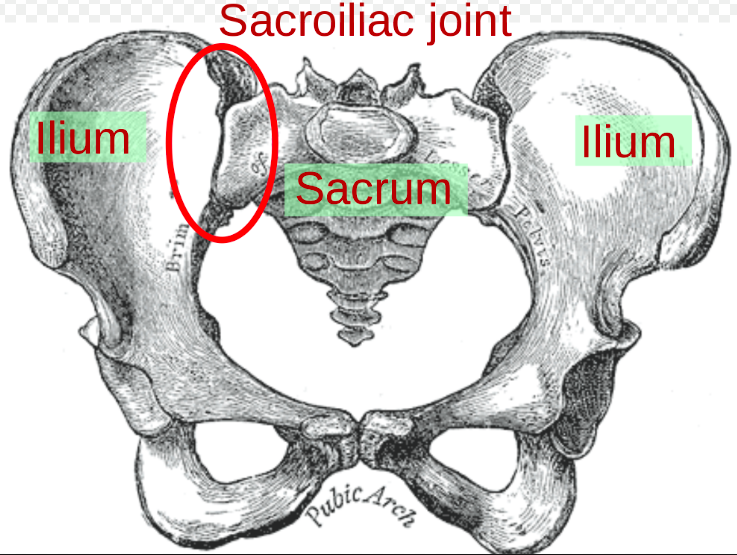
For 19 years, since a car wreck on April 24, 1996, I have had semi-chronic pain in one of my sacroiliac joints. In the accident, my lap belt held, my shoulder belt didn’t, the air bag didn’t deploy, there were two head-banging impacts that bled or turned into a goose egg, I was knocked unconscious, and my sacroiliac joints took the brunt of the trauma when my upper body was pulled away from from my lower body.

Screen Shot 2015-06-29 at 11.34.49 PM

Last week I got the help I needed to know how to fix it.  Continue reading