When obstacles become challenges

When I was in my 40s, I was diagnosed with PTSD. It was news to me, but as I learned more about it from my therapist and reading books (notably Waking the Tiger by Peter A. Levine), it was a no-brainer. Of course I had PTSD.

My family had suffered the tragic, violent loss of my charming younger sister when I was a child. In those days, PTSD did not exist as a diagnosis. The prevailing attitude was “just get on with your life”. There were no psychologists in the schools, and no one suggested counseling. 

And yet, my experiences in the days surrounding her death wired some neurons together in my brain that affected me in the ensuing years. I sometimes reacted in ways that I didn’t understand. My self-esteem was low. I was hypervigilant, depressed, grieving, and tense. I felt like the rug had been pulled out from under my feet, and there was no longer anything solid to stand on. I lost my sense of being safe in the world. 

Any kind of traumatic event like that is an obstacle in life. When I was young, it seemed insurmountable.

Getting the diagnosis was the beginning of my trauma recovery. Even though part of me really did not want to revisit that tragic time, my dreams were encouraging: finding a dusty playroom in my house that I didn’t know existed, seeing a stream of clear water running over a golden stream bed, swan-diving from a cliff into the sea to catch a fish with my bare hands to give to the king and queen.

I did a lot of processing for a couple of years, speaking with my brothers, former neighbors, and old family friends to get a broader understanding of those tragic days, to help put them in perspective. I had a timeline now, a narrative of what happened, whereas before, my memories were jumbled, with holes. 

I was wondering what was next in my life when a thought occurred to me: I’d had a stress disorder for decades, and…

I really wanted to experience what it was like to be relaxed, awake, and substance-free.

That was the real beginning of my trauma-recovery journey, when obstacle became challenge. I began exploring meditation and breathwork. I noticed my own state more. I studied NLP, worked on other health issues, got craniosacral therapy and acupuncture, and decided to go into bodywork. 

I experienced a few trauma reactivations, where I was convinced I was in imminent danger and my body responded by flooding me with stress hormones, which was not pleasant and made me isolate myself until it passed, as much as possible. 

But I learned from experience that when I started to go into that state, I needed to check whether I was actually safe and my mind was just playing tricks on me. That’s always been the case, so far. I could use breathwork, grounding, and presence (feeling my feet on the ground) to counter it.

This was not the life I had planned to have, but it’s turning out to be even better. I’ve become more myself. 

Interested in enlightenment?

Recently I listened twice to Martha Beck’s bestseller, The Way of Integrity: The Path to Your True Self, on my drives between my office in West Lake and my home in Wimberley, TX.

I’d recently seen Martha on a Huberman Lab podcast, remembered she used to write an advice column for O (the Oprah magazine), and generally had a good impression of her as funny and sharp and compassionate. I downloaded her book.

What compels me to write about it here is this: she discovered in Western literature a tale about a man’s path to enlightenment — another name for the way of integrity.

Before reading this book, everything I had read about enlightenment came out of Hindu and Buddhist traditions, which have their own cultural spins.

I’ve been interested in enlightenment since I first encountered the concept in my early twenties. Just the word — enlightenment — had a charge to it!

My understanding of it has evolved over time, from misunderstanding to mystery to moments.

I loved the book so much, I bought a paperback version, because the book includes exercises that I couldn’t do while driving.

The Way of Integrity draws on Dante’s Divine Comedy, published around 1320 AD in Italy, in which Dante (the main character as well as the author) finds himself lost in the woods, meets a guide (the ghost of the poet Virgil), and goes on a journey through hell (the inferno), purgatory, and paradise. It’s considered a great work of Western literature.

Beck believes that Dante, the writer, himself went through an enlightenment process. She refers to Dante’s journey while bringing it into context for us moderns by discussing the everyday lives of her life coaching clients, her friends, and her own path. Believe me, she did go through hell!

Martha reads the audio version herself. Her version of enlightenment is that it’s a path, we can deepen our integrity (wholeness), and it’s available. There are tasks and markers along the way.

Some of my current practices help me on the path, I’m sure: I do yoga, I meditate, and I practice craniosacral therapy, which is mostly practiced in an expanded state of awareness. These practices have made a difference…and there’s more to explore.

I’m going to read the paperback, do the exercises, and report back.

Also, I’m on BlueSky as “wellnessing” if you want to connect there.

Recovering from PTSD

Decades ago, I’d been told I had PTSD stemming from a tragic trauma that happened when I was a child, and I read up on it…enough to learn that there is no “cure”.

I found out, over time, that it’s not a life sentence.

I did a lot of processing of the trauma both with and without a therapist, recovering some forgotten memories, piecing together more about what happened way back then, talking to others who were there, having dreams that encouraged me to continuing investigating.

Experientially, I learned that I could be triggered — when something similar to my original traumatized state of shock and horror and overwhelm was reactivated, when a present-day event had some emotional resonance to an aspect of this long-ago trauma.

My whole self responded as if I was in acute danger in the present moment — when actually, I wasn’t.

The mind is powerful. Something like neurons firing together, wiring together happens with PTSD that causes this reactivation, in my understanding. It affects physiology. The present is hijacked by the past.

When triggered, I felt intense anxiety. My system became flooded with stress hormones.

I learned to ask myself if I was in actual danger. My mind deceived me. But it felt so real!

The first time after therapy that I was aware of being triggered, it took three months to fully recover. I isolated myself and focused on self-care. I still went to work, but I stayed home most of the rest of the time, seeking ways to soothe my nervous system, like listening to soothing music and guided meditations, journaling, practicing yoga and breathwork, taking Epsom salt baths, reading positive things, eating nourishing food, watching comedies, gardening, taking naps, taking supplements for adrenal fatigue.

After three months, I felt good enough to be more social again.

Each subsequent time I was triggered, I recovered more quickly. One month, then two weeks.

One night as I was falling asleep, I felt my nervous system slowly starting to go into a triggered state by some memory from the time of the traumatic event.

I pulled myself out of it by changing my focus to the safety and tranquility of the present moment before those stress hormones flooded my system.

My attention was on knowing I was safe at home in my bed, feeling the weight of my body pressing into the mattress, the warmth of being under the covers, the texture of the sheets, sleeping with my favorite pillow.

It took maybe 10 minutes.

Well done, MaryAnn. That was a major milestone in my recovery from PTSD.

I don’t know whether I’ll ever be triggered again, but I have a lot more resources now for preventing that full-blown download of stress hormones that make me feel like unfit company for anyone.

I’ve posted on this blog for nearly 14 years now, and trauma recovery was a major focus early on. I wrote about the trauma releasing exercises, shaking medicine, reading Waking the Tiger, Somatic Experiencing, and more.

I thought I would share my experience here in case it can help anyone trying to recover from PTSD. If it’s possible for me, it’s possible for you.

Check your mouthwash if you have high blood pressure

I listened to a podcast from the Huberman Lab, How to Improve Oral Health and Its Critical Role in Brain and Body Health, recently. I learned a lot, and I want to share a couple of insights that can improve health.

(The whole podcast is a good listen if you like to keep up with the latest science about health, and… it’s 2 hours long! I listen sometimes while driving into Austin for work several days a week. It’s available on YouTube, Apple Podcasts, and other venues.)

First, know that some kinds of mouthwash can actually raise your blood pressure. (Timestamp on YouTube is 1:22:38.)

Wow! That was news to me!

There’s an ingredient in antiseptic mouthwashes that you want to avoid: chlorhexidine. It’s an antimicrobial substance used to treat gingivitis.

Turns out the oral cavity (mouth) has a microbiome that includes microbes that regulate blood pressure!

Who knew, right?

Chlorhexidine in mouthwash kills these helpful microbes, leading to higher systolic blood pressure. That’s the top number.

Here’s more on this finding: https://www.medicalnewstoday.com/articles/324621#Mouthwash-may-do-more-harm-than-good

Dr. Huberman also recommends against using alcohol-based mouthwashes because they deplete the healthy oral microbiome.

Takeaway: read the ingredients, especially if you use mouthwash and have high blood pressure.

Second, xylitol is a low-calorie sweetener that streptococcus mutans bacteria eat (like any sugar). Unlike other sugars, xylitol prevents formation of an acid made by these bacteria that demineralizes the teeth and leads to cavities. (Timestamp is 1:14:23.)

So xylitol keeps teeth mineralized and prevents cavities.

It also helps the body produce more saliva, which also supports remineralization of the teeth.

When I do intraoral manual therapy for my clients with jaw tension, I ask them to swish with a little mouthwash before I put a gloved finger into their mouths. I’ve used salt water too. Although it doesn’t freshen breath, rinsing with salt water helps keep healthy mouth bacteria in balance.

I started doing this when the COVID virus was such a concern, and I still use an air filter.

I like to use Spry breath mints made with xylitol to freshen my breath, and when researching nontoxic mouthwashes, I learned that Spry makes a xylitol mouthwash that is not alcohol-based.

The Neurobiology of Connection

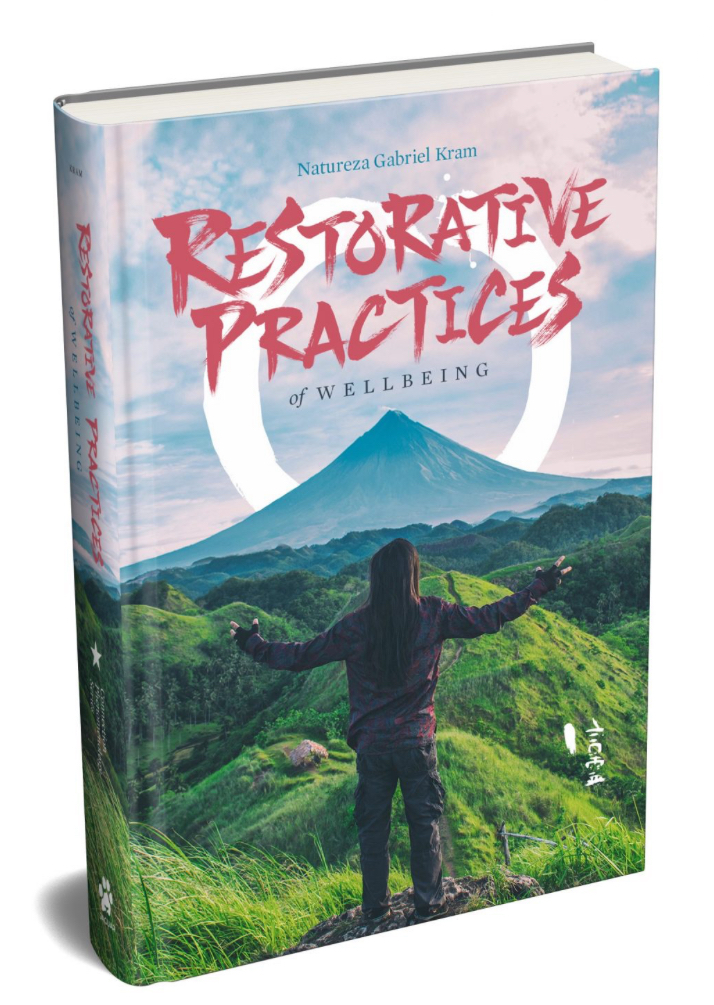
This is the name of a Substack I subscribe to. The writer, Natureza Gabriel, is releasing a book by this title chapter by chapter on Substack now, and the book itself will be published in April. You can preorder it.


To check it out for now on Substack, click this link for a free month: https://neurobiologyofconnection.substack.com?r=icpo. Tell ‘em I referred you.

This topic is fascinating to me. As a bodyworker, biodynamicist, and teacher of meditation for self-healing, I work with the autonomic nervous systems of my clients/friends in every session (how can I not?), mostly assisting them to move more deeply into a parasympathetic state where healing has more resources to happen — healing like tissue repair, better regulation of metabolic processes, better coordination of the body’s systems, reduction of pain and tension, more wholeness, and more.

People experience themselves differently after a session, and some of each session is cumulative. It lasts. Getting regular sessions changes the autonomic nervous system, reducing stress levels. People sense themselves as more whole, integrated, coherent, healthy. I experienced this myself and changed my livelihood to offer it to others.

When the body is in a more sympathetic state, it’s gearing up for action and doesn’t have resources for healing. And…many if not most people in our culture live in bodies that are more stressed than is healthy. Sometimes way more stressed. And that affects everything: health, relationships, performance, behavior, cognition, presence, intuition…

There are many more autonomic states than parasympathetic and sympathetic. It’s more of a spectrum or spiral than an either-or equation, as seen in the image of the book’s cover above of a poster of the autonomic spectrum. You can get these posters from Gabriel’s organization for your office: https://restorativepractices.com/product-category/posters/

I’m someone who years ago, after being diagnosed with PTSD and processing a major childhood trauma (that occurred before PTSD existed as a diagnosis), asked herself, “How relaxed can I get while awake and not using substances?”

As the antidote to having a “stress disorder” that’s conventionally considered incurable, I set off on a journey of meditation, movement practices, bodywork, NLP, shaking, Zen, vipassana, breathwork, stillness, perception, and craniosacral therapy. Then I trained in craniosacral therapy.

The writer Gabriel has trained in neurobiology and also with indigenous people who have maintained connections within themselves, each other, with the world around them that are not prevalent among people in today’s predominant capitalistic, technological cultures.

I’m familiar with some of these connection states as a long-time meditator and through exposure to shamanic/indigenous and Buddhist/yogic beliefs and practices.

Another book by this author is Restorative Practices of Wellbeing, which I just received and will soon be delving into. Find his books here: https://restorativepractices.com/product-category/books/ You can preorder The Neurobiology of Connection as well.

We make the world a better place starting with ourselves.

Reframing insomnia as a gift

Sometimes it seems like there aren’t enough hours in the day.

When you have days like that AND you have insomnia keeping you awake at night, maybe the insomnia is a gift.

When I experience insomnia, I wake up in the dark with a busy mind, thoughts passing through — sometimes zooming through — usually after 4 am when I’ve gotten maybe 5 hours of decent sleep but would prefer 7.

I don’t even look at the clock any more.

Insomnia seems like a big nuisance. A good night’s sleep is most restorative for how well I function the next day. I desire that.

What I’ve been doing recently when I awaken too early is work with my mind, or rather, my awareness.

To distinguish them, the mind thinks thoughts. Awareness is silent and larger. It’s more like a field that includes your mind, body, and the perceptions of your senses: sounds, sights, smells, tastes, body sensations, and thoughts.

I can think thoughts (think think think = mind), and I’m totally in that experience. I am being thought. I can also choose to think thoughts.

I can observe that I am thinking thoughts (my mind is thinking thoughts = awareness), and it’s one step removed from thinking.

When I awaken with insomnia, it seems that my mind is thinking thoughts involuntarily.

But is it?

Because I can also direct my attention to become aware not just that I’m thinking but aware of my body, of sensations.

Sometimes when my monkey mind is racing, it’s a struggle to find enough space between the thoughts to jump off that moving train, but with continued intent to sense into my body, it happens.

(I remember the first time years ago that I jumped off the fast-moving train of thoughts. I was scared and didn’t know what would happen. I somersaulted into darkness and never landed. It was so peaceful!)

Sensations are always available, and plunging into the experience of sensations from the experience of thinking is like entering a different reality.

It’s slower and calmer, like standing in calm water after being on hot, dry land.

What I experience in the sensory state is interesting. The other night, after switching my attention from thinking to body awareness, I got an image of three parallel wavy lines rising off my body and leaving.

When I woke too early this morning, after I switched to my felt sense, I became aware of an area in my abdomen that was roughly round, about 8 inches in diameter and an inch or so thick, that felt a bit denser than the surrounding area.

I stayed with the sensation. The area moved down, spread out, and became less dense.

Maybe it was my greater omentum, which is a little-known, very cool organ that can move around in the abdomen and hug whatever organ needs it.

In these cases, my brainwaves had probably shifted to theta, the irrational state that we pass through on our way into sleep. So what happens may not make sense.

I don’t believe that makes it any less “real”. There are many ways of perceiving.

“Theta waves are the dominant frequency in healing, high creative states, remembering emotional experiences (good and bad), memory retrieval, and encoding new memories into thoughts,” explains communication pathologist and cognitive neuroscientist Caroline Leaf, Ph.D., author of Cleaning Up Your Mental Mess.

“Theta wave pattern activity highlights the interaction that happens between the conscious and nonconscious mind as we think deeply,” says Leaf. “This is a pattern that we want to see in our brain because it reflects improving mind management.”

The gift is that after tuning into my body and staying with it, my mind becomes calm — and I go back to sleep.

Insomnia over.

Me at 7

I lost my baby teeth a bit later than most children. I believe this was my second grade school photo. Looks like I am missing 3 upper front teeth — and the fourth one came out soon after this photo.

I like this kid! A lot!

Perspective on reincarnation

Reincarnation. Not part of Western culture but a long-time belief in spiritual traditions coming out of India.

I don’t have any explicit, conscious memories of previous lives. So there’s room for doubt.

But what if I had implicit memories? Those are the kinds of memories that become so imbedded — wired in, you might say — that you don’t have to consciously recall them to do certain activities, like driving, reading, conversing in your native language. Or, really, anything you do often enough that you don’t have to think about it.

By the way, you can always improve the activities you do on autopilot by becoming present as you do them. Maybe you always miss a spot when brushing your teeth, and you have dental issues. Or you need to look up words in whatever you’re reading for better comprehension. Or your fancy car beeps when you cross the center line, and you learn to pay better attention.

There’s always room for learning.

Anyway, what if a relationship in this lifetime was with someone you knew in a past life, or perhaps several lives?

How would you know?

I’ve been puzzling about a certain relationship for awhile now. Sometimes I feel like I know this person well, and yet, in this lifetime, I know that I don’t. It’s a mystery.

You know how your mind can make up a story to fit your experience? We like for things to make sense. Narratives are important.

My mind did just that! An idea formed in my consciousness that we had been very close in a previous life or lives, and that I loved them very, very much. I don’t know what the relationship(s) were: life partners, parent/child, siblings, best friends, close collaborators, colleagues…maybe all of the above.

That thought felt really good. It changed my perspective, from feeling unsettled about it to appreciating so much that I get to witness some of their current life and can see some of their evolution.

They have created a beautiful life.

Wow, that might be a good perspective to take with everyone! We’re all evolving.

Also, our species has been settling on farms and in communities for 10,000 years and were nomadic hunter-gathers for many millennia before that.

If reincarnation is for real, then we’ve probably had at least 1,000 lives. Maybe twice that many. Who knows? We could have experienced almost everything.

It’s known now that we can inherit memories. Maybe the idea of reincarnation helped explain that in the eons before we knew about epigenetics.

We all have had at least 2,000 ancestors, and through them have probably experienced almost everything.

Either theory could explain the felt sense of having known and loved someone that you know you have never met before in this lifetime.

How about you?

Do you have explicit memories of past lives?

How about implicit memories?

Have you experienced anything similar?

Whole body awareness with HeartMath sensor: 88 percent high coherence!

I did something different in my Biodynamic Meditation this morning.

I stayed with whole body awareness during my 45-minute session.

I didn’t put much effort into labeling what was happening.

I just felt my life force moving within my body and field, and it felt great.

And wow! So much life force moving within me!

I noticed how pleasurable it was to simply be aware of my life force energy for that entire period of time.

I clipped my HeartMath sensor to my earlobe and set up the Inner Balance app for a session again.

I was in high coherence 88 percent of the time today.

I could see on the report that HeartMath displays after completing a session how my coherence fluctuated. It’s never a straight line. It is always changing.

I just signed up for a HeartMath training called The Resilient Heart: Trauma-Sensitive HeartMath Certification. I so love learning how we can influence the autonomic nervous system since there’s just so much unhealthy stress in most of our lives.

Let’s change that. Change that, change the world.

Change your bias toward what’s going wrong, toward what’s going right.

What’s going right in your body-mind system?

Many of us, myself included, have a bias toward noticing what’s wrong, what hurts, is tense, stiff, sluggish, numb, dysfunctional.

We may even make up stories about what’s wrong, feeling ourselves deficient, flawed, less than, unworthy.

I’m motivated to get over that!

You know, if you’re not on life support in a hospital, there’s a lot that’s going right.

A LOT.

You’re breathing.

Your heart is beating.

You’re viewing this post and reading these words.

You very likely are hearing sounds, if you direct your attention there.

The many sensations of body awareness…

Your weight pressing down into whatever you’re sitting or standing or leaning on.

The sense of where you are in space, how your body is arranged, your posture.

Warmth or coolness.

Balance.

Emotions.

Your many systems that keep you organized and alive: cardiovascular, pulmonary, nervous, lymphatic, digestive, immune, etc.

Also, your mind. Your memories and imaginations, beliefs, motivations, identity, skills, preferences and avoidances, etc.

Underlying all is your life force. Yogis call it prana. Daoists call it qi (chi, ki).

I feel it when I do Biodynamic Meditation, doing yoga or qi gong, walking in nature, having a great conversation with someone, hugging a friend, practicing Craniosacral Biodynamics, and just at random times.

I feel grateful for being alive.

That’s what this is all about. This comes even before sensing the Tide in the central energy channel.

This is Day 90 of these posts.