Roasted chickpeas, a delicious homemade snack

Think of all the commercial snacks that have been made to taste so good and have a good mouth-feel. Potato chips, corn chips, pretzels, popcorn…

Food scientists working for big corporations have engineered them to be addictive to increase profits, but they aren’t that healthy. Most of them are made of starchy ingredients, fried in unhealthy oil, and over-salted. They offer very little nutrition.

I want to please my taste-buds and mouth-feel, and I want to be healthy. The cells in our bodies live and die, and when new cells are made, what do you think they’re made of? The food we eat and drink, that’s what!

Our food choices have a lot to do with our health, and I want to be healthy. Hope you do too.

So, I have a new healthy food crush! You can convert cooked chickpeas into a tasty, healthy, salty, crunchy, not-fried snack, and you can also use them in place of croutons or other savory, crispy toppings.

When I saw the recipe and remembered I had some frozen chickpeas (because last time I made Palestinian hummus, I pressure cooked WAY too many chickpeas) I had to try it.

You could also do this with drained canned chickpeas.

The big secret is that the cooked chickpeas have to be completely dry before you roast them, or they won’t crisp up. I drained my chickpeas after they thawed and put them atop several layers of paper towels in a sheet pan and blotted the top.

To get them super dry, I put them in the refrigerator overnight.

I didn’t bother to rub the skins off each individual chickpea. Too much work for not much difference.

To roast, I preheated the oven to 425 degrees F. I put parchment paper on the sheet pan and spread the chickpeas on it. I drizzled them with a little olive oil and seasoned with salt. (I like Real salt.) I rolled them around so they were evenly oiled and salted and put in the oven.

I set the timer for 20 minutes and tried one. It wasn’t quite crispy, so I let them roast for 7 minutes longer.

Yum! Now I wish I had doubled the recipe. They don’t stay crispy long, so eat them right up!

You can add flavor if you wish, after roasting. I sprinkled some with paprika and some with Everything But The Bagel from Trader Joe’s.

I’d like to try garlic powder, curry powder, and cumin + chipotle powder.

I’m going to experiment with different oven temps, baking times, and seasonings. Will update this post with any breakthroughs in deliciousness and eas

New offering: Biodynamic Meditation

Besides this blog, I also have a WordPress website for my bodywork business, in which I practice Craniosacral Biodynamics and TMJ Relief in West Lake Hills (Austin) and Wimberley, Texas.

This is a cross-post to let a wider audience know what’s new. Biodynamic Meditation is a way to learn to experience awareness of the healing currents of life force energy within your own system, without having to become a Craniosacral Biodynamics practitioner.

Meditation

Out beyond ideas of wrongdoing and rightdoing,
There is a field. I’ll meet you there.Rumi

Meditation enhances my craniosacral biodynamics practice, and practicing craniosacral biodynamics influences my meditation experience.

The overlap between these practices is so great that I now call the way I meditate Biodynamic Meditation. 

Biodynamic Meditation is an awareness practice that develops around experiencing the life force moving in and through your own body, increasing your coherence and well-being.

I myself have found the experience to be centering and grounding and peaceful. It has increased my perception of being whole, of being connected to everything, and brought a deeper appreciation of my innate healing processes and vitality. 

I would love to teach this to others, working with one person at a time to start.

I’m looking for someone who would like to experience these benefits by learning Biodynamic Meditation — without needing to go through the process of first becoming a bodyworker, taking advanced classes, and developing a practice (although bodyworkers are welcome).

If you have some meditation experience, have received craniosacral biodynamics, and desire to explore this way to experience well-being, let’s connect. 

If you are interested, please schedule a free 15-minute discovery call so we can talk at a time that works for us both. I’m thinking at this time that a student doesn’t have to be local, that we can meet on Zoom: chat, practice, chat again about your practice, and so on.

If you’re interested but craniosacral biodynamics is new to you, I suggest first reading the book Craniosacral Therapy and the Energetic Body by Roger Gilchrist. 

Excerpts from the book:

How does meditation influence craniosacral biodynamics?

Eating for gut health, part of my healing journey

This article from the British paper The Guardian about the connection between eating certain foods and improving gut health contains some new information.

I make (and sometimes buy) fermented foods like kombucha, kraut, kimchi, and kvass (haven’t tried making kefir yet), but there are a lot of other fermented foods, including cheese, miso (which apparently you can make at home — who knew?), olives (!), and vinegars.

The article also mentions prebiotic foods, like legumes (pulses in British English), mushrooms, dark chocolate, and sourdough bread. Sourdough is fermented, so maybe it’s in the wrong category?? Cacao beans, from which chocolate is made, is also fermented.

I had no idea that mushrooms were prebiotics. There are lots of others.

Just gonna mention here that although I don’t bake bread, I do buy a sprouted sourdough made by Alvarado St. Bakery (a California co-op) and sold at Austin’s Wheatsville Food Co-op.

On my own personal healing journey, digestive health was the second episode, after trauma and its effect on my nervous system.

I got food sensitivity testing, was positive for too much candida and sensitive to 14 foods including wheat and corn (but interestingly, not gluten). I did the very strict candida diet, which came with warnings that one slip-up could allow the candida yeast to get out of control again…so I followed it strictly for two-and-a-half months.

I didn’t know what “well” felt like until then.

The secret to relaxation (aka de-stressing) is probably not what you think

My friend Duff McDuffee is a long-time hypnotherapist and coach in Boulder. I’m on his mailing list, and he recently shared an excerpt from his upcoming book, The Joy of Doing: Redesigning Work to Work for Everyone.

I loved the email I got from him this week so much that I asked him if I could share it here, and he graciously said yes.

In my bodywork practice, TMJ clients fill out an intake online when they schedule online. I ask them how they know they are stressed, how they reduce stress, and if they have a regular stress-reduction practice.

I ask about this because stress is highly correlated to tense jaw muscles, and I want my clients to be more aware of this.

Stress causes a lot of suffering, and not everyone gets the connection.

We can be quite stressed — even chronically —yet unaware of it. After I decided years ago to find out how relaxed I could get while awake and not using substances, after meditating daily for a while, my body began to feel different. I literally felt like I had softened and even expanded beyond my skin!

I realized that I had been feeling muscle tension from being guarded after a serious childhood trauma.

It was time to let go of that and enjoy my life. Being relaxed feels happier.

It’s not what you do to relax, it’s how you feel.

The title of Duff’s email, “Doing things in a relaxed way”, says it all. Many of us don’t know the difference between resting and relaxing.

I’ll let Duff explain. (Read it here or on his website).

Doing things in a relaxed way

Edmund Jacobson was an American doctor in the early 20th century.

And he was the man who practically invented “relaxation.”

Too Tense

Jacobson noticed that many of his patients had mysterious ailments.

They complained of symptoms such as insomnia, headache, fatigue, and indigestion.

Often they had high blood pressure, appeared nervous, or had angry outbursts.

But besides these symptoms, they seemed perfectly healthy.

Using a microvoltage machine, Jacobson measured the muscle tonus of these patients.

He discovered that they had more tension in their muscles, even just sitting there.

They were literally “tense.”

As a result, he called these conditions “tension disorders.”

In his poorly titled book for the public You Must Relax, Jacobson wrote,

“In non-medical terms the cause of tension disorder is excessive effort.”

Teaching Relaxation

To treat these tension disorders, Dr. Jacobson spent an hour each week with a patient, teaching them to deliberately relax their muscles.

Before Jacobson, doctors often prescribed “rest.”

But he noticed that rest was different than muscular relaxation.

For rest people often did stimulating activities that increased tension in the muscles and nervous system.

So relaxation was quite different than rest.

To teach his patients to relax, Jacobson first had them sit in a chair.

He instructed his patient to bend their right hand upwards at the wrist, noticing the feeling of tensing the forearm extensor muscles.

Then he had them relax this muscle, causing their hand to drop.

Feeling into the top of the forearm, he guided them to continue to relax more and more, feeling that muscle becoming more and more loose and limp.

He then repeated this exercise with the left hand.

And so on, for all the muscles.

Relaxing Progressively

Over many months, Dr. Jacobson slowly guided them through progressively relaxing every muscle in their body.

Hence the name of his technique, “Progressive Relaxation.”

He also gave his patients a homework assignment:

Every day, lie down for an hour in the morning and an hour at night.

For that hour, practice deeply relaxing all your muscles, one by one.

As Jacobson’s patients learned to relax their muscular system, they also relaxed their nervous system.

Then their mysterious symptoms often went away.

This was because their affliction was not caused by a bacteria, virus, or injury.

Their suffering was created by a chronic activation of the sympathetic nervous system, the “fight-or-flight response.”

Since muscles are controlled by the neuro-muscular system, relaxing the muscles relaxed the nerves.

And relaxed nerves lead to a relaxed body and mind.

Bringing Relaxation into Action

After mastering relaxation lying down, Jacobson advised his patients to practice relaxing while sitting upright.

Once they got the hang of that, he suggested trying to do simple tasks, such as reading the newspaper, while remaining totally relaxed.

The idea was to gradually extend this deep relaxation into more and more challenging activities, until they could ultimately bring it into work.

A stressful job was typically why a patient ended up in Dr. Jacobson’s office in the first place.

So he was helping people retrain their nervous systems to no longer get stressed while working.

He was linking up a profound state of relaxation with doing things that used to activate the nervous system.

Not Just for Hypnosis

Many hypnotists today use Progressive Muscle Relaxation as a way to induce a relaxed trance state.

So it’s still a valuable technique.

That said, we’ve mostly forgotten Jacobson’s original intention for his method.

The idea was to bring relaxation into activity.

Most people who do Progressive Muscle Relaxation spend five or ten minutes relaxing their muscles as a break.

This brings some minor relief.

But few people take the time to truly master relaxation, let alone learn to do difficult things in a relaxed way.

That’s a very different intention for the practice.

And it’s a way of doing things that could change your whole life.

Jacobson himself lived to 94 years old.

So maybe there’s something to this relaxation thing.

Have a relaxed week,

~Duff

Here’s a link to Duff’s Extreme Relaxation 16-minute hypnosis audio (51,000+ views on YouTube): https://www.youtube.com/watch?v=YIYhV7g_Q4Y

Get all the versions here (includes the 16-minute version, a 30-minute version, a sleep version that doesn’t take you out of the trance, and a delta wave binaural beats version — wear headphones) for as little as $2: https://boulderhypnosisworks.gumroad.com/l/extreme-relaxation

For more about Duff and all of his offerings, check out https://boulderhypnosisworks.com.

Black bean guacamole

My granddaughter shared her recipe with me. It’s a big hit at parties and potlucks!

6 ripe avocadoes, mashed
1 can black beans, drained
Fill the empty can with chopped cherry tomatoes
Fill the empty can again with chopped red onion
Add 1 tsp each of garlic powder and onion powder
Salt to taste

She adds a pinch of sugar. I don’t. I’m going to make some today for a potluck tonight, and I’m going to add either smoked paprika or chipotle powder.

Mash it all together and serve with sliced veggies like cucumbers and bell peppers for dipping. If you prefer chips, I like Siete brand non-corn chips (not sure if they are available nationwide…this brand comes from a Texas Hispanic family that developed healthy Mexican food products), or serve with blue corn chips.

Check your mouthwash if you have high blood pressure

I listened to a podcast from the Huberman Lab, How to Improve Oral Health and Its Critical Role in Brain and Body Health, recently. I learned a lot, and I want to share a couple of insights that can improve health.

(The whole podcast is a good listen if you like to keep up with the latest science about health, and… it’s 2 hours long! I listen sometimes while driving into Austin for work several days a week. It’s available on YouTube, Apple Podcasts, and other venues.)

First, know that some kinds of mouthwash can actually raise your blood pressure. (Timestamp on YouTube is 1:22:38.)

Wow! That was news to me!

There’s an ingredient in antiseptic mouthwashes that you want to avoid: chlorhexidine. It’s an antimicrobial substance used to treat gingivitis.

Turns out the oral cavity (mouth) has a microbiome that includes microbes that regulate blood pressure!

Who knew, right?

Chlorhexidine in mouthwash kills these helpful microbes, leading to higher systolic blood pressure. That’s the top number.

Here’s more on this finding: https://www.medicalnewstoday.com/articles/324621#Mouthwash-may-do-more-harm-than-good

Dr. Huberman also recommends against using alcohol-based mouthwashes because they deplete the healthy oral microbiome.

Takeaway: read the ingredients, especially if you use mouthwash and have high blood pressure.

Second, xylitol is a low-calorie sweetener that streptococcus mutans bacteria eat (like any sugar). Unlike other sugars, xylitol prevents formation of an acid made by these bacteria that demineralizes the teeth and leads to cavities. (Timestamp is 1:14:23.)

So xylitol keeps teeth mineralized and prevents cavities.

It also helps the body produce more saliva, which also supports remineralization of the teeth.

When I do intraoral manual therapy for my clients with jaw tension, I ask them to swish with a little mouthwash before I put a gloved finger into their mouths. I’ve used salt water too. Although it doesn’t freshen breath, rinsing with salt water helps keep healthy mouth bacteria in balance.

I started doing this when the COVID virus was such a concern, and I still use an air filter.

I like to use Spry breath mints made with xylitol to freshen my breath, and when researching nontoxic mouthwashes, I learned that Spry makes a xylitol mouthwash that is not alcohol-based.

Resources for chronic pain

In my years of doing bodywork, I have encountered three clients who didn’t respond well to my work.

Each one of them had chronic pain.

Keeping up with the current understanding of chronic pain, it appears that when the tissues from the original injury have healed but pain continues, or re-emerges later, the pain has become based in the brain, not in the tissues, even though that’s where people feel it. It’s called neuroplastic pain (neuro = nervous system, plastic = able to change).

Brain-based doesn’t mean “it’s all in your head,” as in “you’re imagining it.” Nope. If you feel pain, and it hurts, it’s real.

In my own understanding, when an injury is accompanied by, or occurs with or near, a trauma (stress, overwhelm, lack of resources or support), neurons in the brain can wire together and start firing together, sending pain signals long past the healing of the injured tissues.

Similar to PTSD, chronic pain can be triggered by memories and/or emotions in the present that the brain associates with the original injury and trauma.

Effective treatment of chronic pain often responds to a mind-body approach to rewire those neurons. Fortunately, the brain has plasticity. With help, people who suffer can learn to rewire those neurons and eliminate the pain.

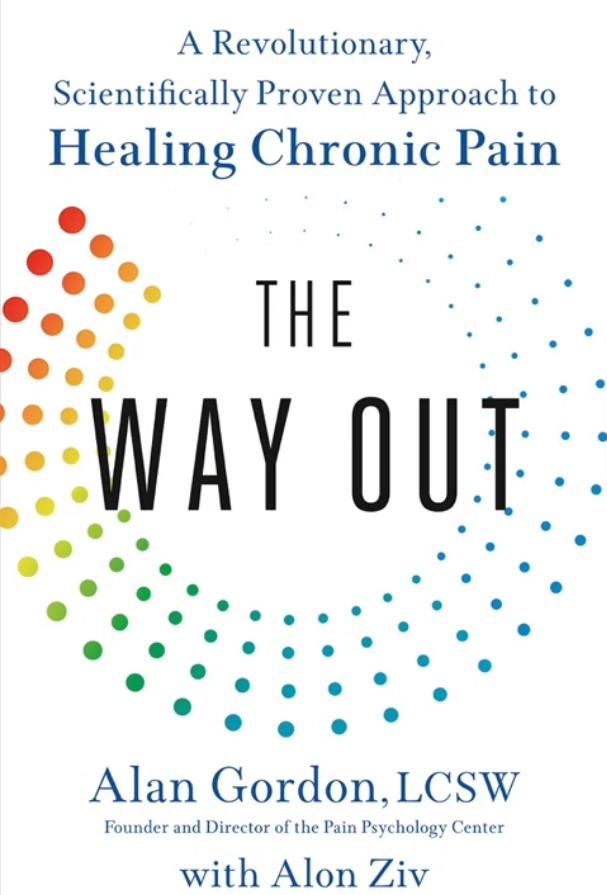
I recommend reading The Way Out: A Revolutionary, Scientifically Proven Approach to Healing Chronic Pain by Alan Gordon, LCSW. It’s available on Amazon in several formats.

Here’s a YouTube video about the book.

It’s not that bodywork can’t help. It certainly can. Over the years, I’ve helped numerous people in pain feel a lot better, and often their pain has been longstanding. Sometimes one session does wonders. Sometimes it returns, less severely than before, and we keep working until it resolves.

Sometimes a client with neuroplastic pain finally gets enough relief to resolve the residue of the trauma at the core of their pain, and it never returns.

It’s beautiful when that happens!

We know some things about chronic pain now, and there’s still a lot that’s unknown. Curiosity, inquiry, belief, and patience seem to help.

There are pain coaches who can help. I met one who gets regular craniosacral biodynamics and came in for a session when she was visiting Austin from Colorado. She works remotely. If you want a referral, please let me know. I’m sure there are many others around the country.

Deepening awareness of embodiment

This past Saturday, I provided the “ofrenda” at the monthly gathering of women dancing the 5 Rhythms (Step Into Yes) in Austin, facilitated by Lisa DeLand (dancingfirelizards.com).

Lisa and I are old friends. We met at Sweat Your Prayers, an ecstatic dance, in 1995. We have similar paths of recovery from adverse childhood experiences, and now, having worked a lot with our selves, by ourselves and with the help of others, we are in the primes of our lives in terms of creating and offering paths to wholeness and wellness for those in search.

Our paths have some overlap. We both are acquainted with the vast amount of suffering in the world, including our own, and feel moved to offer paths that liberate us and those we work with from conditioning that limits us.

My ofrenda was called Bringing Us Home To Our Existence, and I had 20 minutes between waves of dancing to teach the 28 or so women present about their inner rhythms: breath, heartbeat, and tide.

Background: In late 2022, I began posting on Instagram daily — for 100 days — my experience of what I was then calling Biodynamic Meditation. I’d actually begun practicing it many years previously, in 2013, after I took my first class in Craniosacral Biodynamics and wanted to explore how the concepts of the breath of life, primary respiration, potency, and the tides actually manifested in my own embodied existence.

I sat and sat and noticed more and more. It helped to have some direction from my training, and I could go to my teacher, describe my experience, and have him verify whether I was on track.

That’s one way of learning.

I had planned to start teaching Biodynamic Meditation in 2023, and then I learned I was going to have to move from my home of 12 years, which disrupted my plans.

The move is complete. My foundation training in Craniosacral Biodynamics (and certification) is complete. I’m spending this year learning how best to teach Biodynamic Meditation, and I dipped into in-person teaching of a large group for the first time on Saturday. It was too brief, but they got a taste of it. My take is that some people (who all gathered primarily to dance) were not deeply interested, and others came up afterward and thanked me.

I’m now considering calling it meditation for self-healing, meditation for healing, meditation for health, or simply, how to make friends with your body.

If this is a topic you are interested in, I’d love to hear from you! I’m open to working with individuals, small groups, in person, and online.

Eating 30 plants a week challenge: vegetable curry over red quinoa

I made this vegan curry a few days ago and it was so good I made it again! I like to cook big pots of tasty soups or curries, eat it for a few days (it gets even tastier), and when I want something else, I freeze what’s left and make something else. Then I have something that just needs thawing and heating when I don’t have time to cook.

The veggie count (counting each ingredient only once, because the spices and vegetable stock duplicated some):
coconut (oil and milk)
yellow onion
ginger
garlic
spices: turmeric, smoked paprika, fenugreek, coriander, cumin, red pepper, lemongrass, shallot, makrut lime peel, black pepper
vegetable stock: carrots, celery, leek, parsley, thyme, bay leaf, olive oil
veggies: tomatoes, sweet potatoes, broccoli, cauliflower, bell pepper, shiitakes, baby Bellas, oyster mushrooms, peas

That’s 30 plants, served over red quinoa, so the total is 31! In one meal!

Honestly, I’m not sure if the red pepper found in the curry powder and red curry paste and also in the vegetable stock is the same as the fresh red bell pepper chunks I added. So maybe the total is just 30…but whatever! I’m pleased with this experiment.

When you add herbs and spices and spice blends like curry powders and pastes, as well as vegetable stock, your plant count goes way up quickly.

The non-plant ingredients were: water, salt, and shrimp and barramundi because I wanted more protein. I added them at the end because they cook fast.

The recipe I used says it makes 6 servings. These are generous servings!

The variety of plants feeds a variety of good gut microbes, increasing digestive health and thus energy and overall health. Another perk: eating a variety of colors of veggies and spices — yellow, red, orange, green, white, brown, aka “eating the rainbow” — has numerous health benefits as well. (Note to self: next time add a blue or purple veggie — eggplant, cabbage, purple onions or sweet potatoes.)


Eating 30 plants a week challenge: a hearty, healthy winter breakfast

This is a challenge that’s been getting some attention, and it’s worth having fun with!

You’ll get more fiber, eat less processed foods, and it supports your healthy gut microbes. Of course, having a healthy gut influences the rest of the body, improving digestion, energy, mood, sleep, and just plain feeling good.

I didn’t used to eat breakfast, as part of an intermittent fasting regimen. Now, I eat a hearty breakfast and eat again when I feel hungry in the afternoon. Letting hunger drive your eating, and then eating slowly and chewing well until satisfied, makes a difference.

That’s often it for the day. No dinner, and it makes intermittent fasting easier.

I do know the experience of overeating because the taste of something is so satisfying. I’m working with that. Also, I used to have a leaky gut and started working to improve my gut health in 2007, so it’s been a focus for a while.

Here’s what I’ve been eating for breakfast, with minor variations:

The organic sprouted rolled oats came from Wheatsville, an Austin food coop. They cook in 5 minutes, although I changed the proportions to 1/3 cup each of boiling water and oats and immediately turn the heat down to as low as it goes.

Add to that coconut milk yogurt, pecans, dried cranberries, beautiful organic blueberries, flax seeds, hemp seeds, maple syrup, and 5 spices (Ceylon cinnamon, nutmeg, ginger, orange peel, and allspice). While the oats are cooking, add everything else to a bowl. When the oats are done, add to your bowl and stir well.

Voila! 13 plants, from Wheatsville, Costco (the pecans and maple syrup aged in bourbon barrels!), and HEB, our beloved Texas chain that does so much for Texas communities in crisis from disasters and Texas public schools.

Really, it’s pretty simple: a whole grain, nuts, seeds, berries, yogurt, a natural sweetener, and spices. Have fun improvising on that!

Next up, a veggie curry served over quinoa.

Can I consume 30 plants in two meals in one day? Stay tuned!