I’m moving my private practice!

Update: I’ll be seeing people in the new space starting August 16, 2016.

~~~

I’m leaving 827 W. 12th Street, where I’ve done my private massage and bodywork practice since October 2012, except for outcalls and occasional work at my trailer.

I’m moving my office to 5524 Bee Cave Road, Suite G1, in Westlake Hills. I’ve been offered an opportunity to relocate to a suite to be shared with two craniosacral therapists whose skills and integrity I greatly admire, Nina Davis and Christian Current.

Workwise, I find myself more drawn toward craniosacral therapy. I start the classical Upledger training in August. I’ve already completed Ryan Hallford’s trainings in classical craniosacral therapy, and the Upledger training will be an expansion on that. I plan to complete Ryan Hallford’s biodynamic training this fall, and I plan to study biodynamic CST with Michael Shea when he returns to Austin next year.

Beyond that, there’s more, but my path hasn’t become clear yet.

Continue reading
My work in May 2016: a massage therapist recounts what she actually does

I started offering my massage and bodywork clients custom sessions at the beginning of 2016. Clients choose the length of session they want, and when they arrive, we discuss their issues. I figure out how I’d like to proceed (that is, which modalities to use, in which order), run it by the client, get their input and consent, and the work begins. The client and I both know that if we need to change direction in the middle of a session, we can — and sometimes that happens.

Before 2016, clients signed up by length of session and modality (for example, 90 minutes of craniosacral therapy). Once I felt confident about mixing modalities, it made more sense to offer custom sessions, tailoring my work to the client’s needs. But without modality descriptors, I imagine that some people wonder what I actually do in a custom session — and how I work and follow up with clients, how people find me, how my practice grows. That’s the reason for this blog post. Plus, I’ve never really tried to summarize a month of work before. It seems worthwhile.

Continue reading

TMJ massage relieves jaw issues and renews the spirit

A client came to me a couple of weeks ago for 90 minutes of “Whatever Works”. During the session, she learned that I offer TMJ* care sessions and asked a lot of questions about it. She had not known previously that a trained, skilled bodyworker could relieve the symptoms of TMJ disorder – jaw pain and tightness, clenching, grinding, popping, clicking, locking, etc.

I explained to her a bit about the anatomy of the jaw, how I work, and the outcomes of my TMJ clients. Since others are likely unaware that trained massage therapists can offer TMJ relief, I’ll share that info here. Continue reading

Board certification achieved!

I just learned that I have successfully jumped through all the hoops on my way to becoming board certified in therapeutic massage and bodywork.

Board certification is a voluntary credential that means:

  • I took an exam and became nationally certified in therapeutic massage and bodywork.
  • I have received over 750 hours of approved massage and bodywork training.
  • I have over 250 hours of work experience in massage and bodywork.
  • I passed a national background check.
  • I maintain CPR certification.
  • I agree to uphold standards of practice and a code of ethics.
  • I oppose human trafficking.

Continue reading

Massage clients wanted!

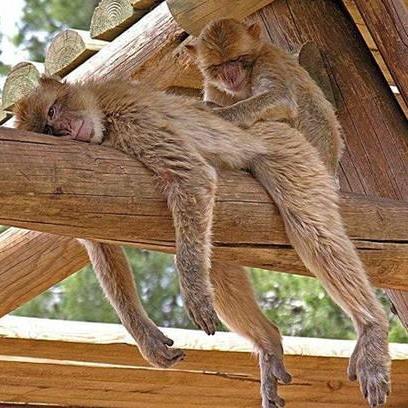
monkeymassage

Need to dump your stress, chill, release tension, move better, relieve pain, recover from an injury, treat a condition?

I can help.

I’ve been doing massage for four years now, and for the first time, a contract has fallen through. It’s nobody’s fault: my employer (a small unit in huge company) was internally audited. The audit caught some irregularities in my paperwork, and I can’t work there until it’s straightened out. Since it’s a huge bureaucracy known for its slowly turning administrative wheels, I have no idea how long that will take but I’m not holding my breath. Continue reading

Applying Cold and Heat Therapeutically

Healing an injury or treating a painful condition can be significantly impacted by the appropriate application of cold and/or heat. Both cold and heat relieve pain and help with tight muscles, but other considerations (especially inflammation and depth of injured tissue) apply.

COLD

Apply cold immediately following any muscle, joint, or bone injury to relieve swelling, reduce pain and inflammation, and decrease muscle soreness and tightness. You can use cold any time after that. Cold only penetrates about 1 cm below the surface, so it works best for initial swelling/inflammation and for superficial conditions.

Do NOT use cold on broken or irritated skin, on superficial nerves, or when circulation is impaired. Also avoid applying cold when these conditions are present: Raynaud’s disease, cold intolerance, cold allergy, any previous experience of frostbite, impaired mental ability or sensation.

How to apply: Wet a cloth in hot water, wring it to dampness, wrap it around the cold pack, and apply. Check the skin in 5 minutes. If it’s bright red or numb, add another layer of insulation. Leave cold pack in place until it warms to room temperature. Repeat if needed. Never apply a gel pack directly to skin. Continue reading

Inviting deep, restful sleep: tips for positioning and good sleep practices

Positioning for Sleep

Getting a good night’s sleep is hugely important for your well-being. Use sleep positioning to align your bones, support your limbs, and open your joints, relaxing muscles and minimizing tension and pain so that your sleep is fully restful.

Have on hand a variety of pillows of various sizes and firmness as well as towels in various sizes to prevent rolling and add support. Special pillows support the neck and head.

When preparing for sleep, scan your body for tension and adjust to relieve tension. Re-scan and re-adjust. You may need to keep doing this for a few weeks as your body responds.

Sleeping on Your Back

Support your neck and upper back. Place a pillow with the bottom edge at the level of the shoulder blades or use a cervical support cushion under the upper spine and neck. You may prefer a pillow that cradles the back of your head as well.

For leg and hip comfort, make a wedge-shaped support under the thighs with the upper edge tucked under the buttocks to create a slight bend in the knees.

Screen Shot 2015-06-10 at 8.08.29 AM

If the small of the back is not resting on the bed, support it with a small cushion or rolled hand towel. If desired, place pillows along the body to support the arms and hands. Continue reading

Orthopedic massage for injuries and conditions

In the Advanced Program at the Lauterstein-Conway Massage School, I’m currently in the segment learning Orthopedic Massage, as taught by Jan Hutchinson, PT, LMT, and assisted by Lizabeth Franklin, LMT extraordinaire.

I feel very fortunate to be able to get this training, because I’m learning how to work on specific soft tissue injuries and ailments beyond simply relieving muscle tension. It’s very different from a full-body Swedish/integrative massage in that the focus of a session is on the injured/ailing part rather than working on the full body. I’ll get a history of the injury, observe, palpate, do range-of-motion and resistance tests, and treat.

foot milagroSo far, I’ve learned techniques for working on plantar fasciitis, ankle sprains, Achilles tendonitis, shin splints, and anterior compartment syndrome.

I just learned some fabulous foot exercises to teach for homework that can help strengthen the intrinsic muscles of the feet, the ones that don’t get used much because we wear shoes and walk on hard, flat surfaces all day. Using these muscles can prevent and relieve many foot issues.

Some of you are first-hand familiar with these conditions/injuries, and I want you to know that while I am in this program, I’m offering half price sessions so I can put into practice what I’ve learned in class. I’m a pretty good student, so you’ll get your money’s worth. If you are in the Austin area, I’d sure like to see you on my table.  Continue reading

Check out my new massage therapy website!

Here’s the link: http://http://thewell.massagetherapy.com/home. And if you don’t mind, while you’re there, please click a “share” button on the left or a “follow” button at top right. It helps with search engine rankings.

The Well website

This is just a screenshot! Click the link to view the actual website!

It’s a work in progress, but it is complete enough at present to go public with it. I’ll be adding images, videos, and more as I have time.  Continue reading

Stay hydrated all the time, not just after a massage

I’ve written about this before. I tell my clients to stay hydrated, rather than asking them to drink “extra water” after a massage to “flush the toxins out.”

Water makes physiological processes, especially the brain, work better, so getting enough is important. Whatever measure you use – a gallon a day, half your body weight in ounces, until your pee is clear – most of us don’t drink enough, and we need extra to make up for sweating, diarrhea, etc.

Now New York Times health writer Gretchen Reynolds addresses the issue, interviewing an expertContinue reading