When obstacles become challenges

When I was in my 40s, I was diagnosed with PTSD. It was news to me, but as I learned more about it from my therapist and reading books (notably Waking the Tiger by Peter A. Levine), it was a no-brainer. Of course I had PTSD.

My family had suffered the tragic, violent loss of my charming younger sister when I was a child. In those days, PTSD did not exist as a diagnosis. The prevailing attitude was “just get on with your life”. There were no psychologists in the schools, and no one suggested counseling. 

And yet, my experiences in the days surrounding her death wired some neurons together in my brain that affected me in the ensuing years. I sometimes reacted in ways that I didn’t understand. My self-esteem was low. I was hypervigilant, depressed, grieving, and tense. I felt like the rug had been pulled out from under my feet, and there was no longer anything solid to stand on. I lost my sense of being safe in the world. 

Any kind of traumatic event like that is an obstacle in life. When I was young, it seemed insurmountable.

Getting the diagnosis was the beginning of my trauma recovery. Even though part of me really did not want to revisit that tragic time, my dreams were encouraging: finding a dusty playroom in my house that I didn’t know existed, seeing a stream of clear water running over a golden stream bed, swan-diving from a cliff into the sea to catch a fish with my bare hands to give to the king and queen.

I did a lot of processing for a couple of years, speaking with my brothers, former neighbors, and old family friends to get a broader understanding of those tragic days, to help put them in perspective. I had a timeline now, a narrative of what happened, whereas before, my memories were jumbled, with holes. 

I was wondering what was next in my life when a thought occurred to me: I’d had a stress disorder for decades, and…

I really wanted to experience what it was like to be relaxed, awake, and substance-free.

That was the real beginning of my trauma-recovery journey, when obstacle became challenge. I began exploring meditation and breathwork. I noticed my own state more. I studied NLP, worked on other health issues, got craniosacral therapy and acupuncture, and decided to go into bodywork. 

I experienced a few trauma reactivations, where I was convinced I was in imminent danger and my body responded by flooding me with stress hormones, which was not pleasant and made me isolate myself until it passed, as much as possible. 

But I learned from experience that when I started to go into that state, I needed to check whether I was actually safe and my mind was just playing tricks on me. That’s always been the case, so far. I could use breathwork, grounding, and presence (feeling my feet on the ground) to counter it.

This was not the life I had planned to have, but it’s turning out to be even better. I’ve become more myself. 

A week in the professional life of a biodynamic craniosacral therapist

I have a website for my private bodywork practice. It’s a big and important part of my life. I haven’t posted much here on this blog about my work (although I posted a lot about Biodynamic Meditation), so I’m going to do that occasionally, keeping my clients’ identities private but letting readers know something about what this work is like.

I had a good week last week. On Monday, I first talked to a young woman who had signed up for a free 15-minute discovery call. Her father had seen me as a bodywork client and had asked if she could get in touch with me since she was going to be a massage student. I said yes. Keep reading to learn about our session.

Also on Monday, I worked on a regular, twice-a-month client in her late 70s, who’s in the early stages of Alzheimer’s, has been a friend for years, and is one of the most conscious, loving, contemplative people I know. She loves receiving craniosacral biodynamics, and I love hearing about her experience afterwards.

When she came in for her first session a few years ago, she was feeling very anxious about her prospects with Alzheimer’s, which runs in her family. She was noticing some memory issues that were a little more serious than age-related forgetfulness.

When she came back for her second session, she said her anxiety had disappeared and she was able to find her inner peace again and accept and be grateful people who would help her.

Now, she is still quite functional and gets top-notch care from her doctors and her husband.

Our biodynamics sessions are usually about going deep into a whole-system healing state unless she has a specific issue she wants me to work with.

It’s never too late to find more health and well-being.

Then I worked with a newer client who is in her 30s and is working through issues from having a very impaired parent and its impact in her adult relationships. I’ve already seen her a couple of times. She has very good body awareness, and we talk a lot during her sessions. She has vibrant energy and has already done a lot of healing/integrating/growing using many modalities. She found me through my professional association, BCTA/NA.

Tuesday is my day off, as well as weekends.

On Wednesday, I had three new clients. The first was a fellow bodyworker, trained in Structural Integration, who drove in from a few counties away. She found me online. We worked on several issues including releasing some grief, and she had a most light-hearted beautiful response! She recommended me on Google afterward, which was a lovely surprise.

The second new client that day was referred to me by a renowned bodywork teacher that I studied with starting back in 2011. She’s a current student of his and was curious about craniosacral biodynamics. I felt honored by the referral. She also had some grief issues along with some cranial issues. She liked the experience and expressed an interest in possibly training in it should a teacher be interested in teaching in Austin.

My third new client Wednesday was a young professional man, athletic, who had been working with another biodynamic craniosacral therapist who moved away from Austin and referred him to me. I asked him to do a body scan, and he said his chest area is where most of his inertia was, stemming from a major loss in childhood and residual grief, so that’s where I focused. He said he felt a lot of energy moving in the heart area afterwards.

Wednesday turned out to be a grief day, which is a bit unusual. For grief, I work with the pericardium, the “heart protector” organ in Chinese medicine, and also the lungs, diaphragm, and thoracic inlet if time permits.

I invite the body’s palpable-to-me intelligent awareness there, and it does what will most contribute to the overall health and well-being of that person in the present moment. It takes stock, gets a reading, somehow that I don’t understand but trust. After all, it knows that person’s health/life from the inside out every moment of their life from conception.

On Thursday, I worked with a woman recently diagnosed with ALS, which impairs motor neurons and has no cure. We worked with grief and on the areas where she’s noticing the most impairment in muscle movement. She recommended a documentary, For Life and Love, about strides being made in treating ALS, and I will watch it today.

On Friday, besides the young massage student I mentioned at the start of this post, I worked with a young woman who wanted some relief from her TMJ issues. Over time, I developed an integrative protocol for working with jaw issues that stem from clenching and/or grinding the teeth or bracing the jaw muscles.

She takes meds that have jaw pain as a possible side effect. I asked her if the prescribing doctor had asked her about previous jaw issues before prescribing these, and she said they didn’t. She has tooth damage from bruxism.

There’s gotta be a better way, but I don’t know what that is.

She does a lot for herself already, but the jaw pain and tension had gotten unbearable. Her neck was very tight, and she had a knot — very hard, very old — next to her C2 spinous process on the right. I’ve seen this before in maybe 15-20% of my TMJ clients. It will take a few sessions to release.

Her lateral pterygoids were the biggest culprit. They were almost the last thing I worked on, and that made the biggest difference. She immediately felt it.

People don’t know they have jaw muscles inside their mouths.

The young woman who called me on Monday was my last client of the week. She wanted some support and guidance on her career path and a sample of my bodywork, so I acted as a kind of mentor.

I saw her on Friday. I’m glad I got to talk to her. She’s a lot younger than I am, but also on the tiny side, under 5’, not that common among bodyworkers. I shared my strategies for dealing with not being tall enough or strong enough to give people a lot of pressure when giving massage. I learned Ashiatsu (barefoot massage) to be able to do that, using my body weight. I also learned reflexology and dove into working on people’s necks, all the while I was taking classes and starting to practice craniosacral therapy.

I shared more about my evolution in bodywork, eventually finding my niche. With some inspiration, I believe she will find her own way.

My favorite tip about getting through massage school had to do with being intimidated about learning the anatomy required for massage therapy, which I had never studied before.

I told her that I convinced myself that I had been a doctor in a previous life, that I already knew all the anatomy and I was just reviewing it, refreshing my memory, in this lifetime. I savored learning every new term and image, also associating with where that muscle or bone was in my body. I am now an anatomy geek.

I thought that by posting this here on my blog, anyone interested in receiving or studying craniosacral biodynamics (here or anywhere else) would have a better idea of the kinds of issues we address.

I have a website for my central Texas practice, maryannreynolds.com, if you’re interested or want to refer someone. You can also search for Biodynamic Craniosacral Therapy Association/North America to find a biodynamic practitioner near you. The Upledger Institute offers the same referral service.

Resources for chronic pain

In my years of doing bodywork, I have encountered three clients who didn’t respond well to my work.

Each one of them had chronic pain.

Keeping up with the current understanding of chronic pain, it appears that when the tissues from the original injury have healed but pain continues, or re-emerges later, the pain has become based in the brain, not in the tissues, even though that’s where people feel it. It’s called neuroplastic pain (neuro = nervous system, plastic = able to change).

Brain-based doesn’t mean “it’s all in your head,” as in “you’re imagining it.” Nope. If you feel pain, and it hurts, it’s real.

In my own understanding, when an injury is accompanied by, or occurs with or near, a trauma (stress, overwhelm, lack of resources or support), neurons in the brain can wire together and start firing together, sending pain signals long past the healing of the injured tissues.

Similar to PTSD, chronic pain can be triggered by memories and/or emotions in the present that the brain associates with the original injury and trauma.

Effective treatment of chronic pain often responds to a mind-body approach to rewire those neurons. Fortunately, the brain has plasticity. With help, people who suffer can learn to rewire those neurons and eliminate the pain.

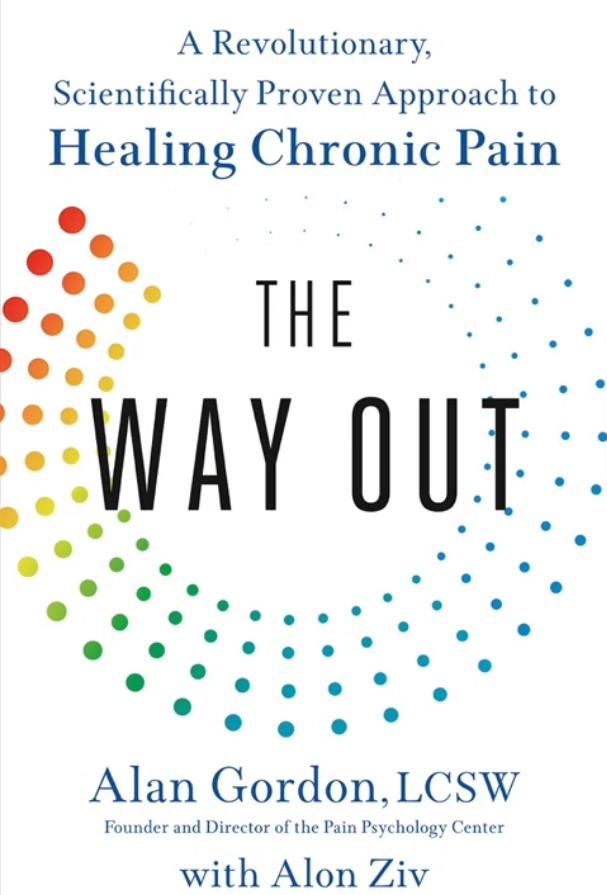
I recommend reading The Way Out: A Revolutionary, Scientifically Proven Approach to Healing Chronic Pain by Alan Gordon, LCSW. It’s available on Amazon in several formats.

Here’s a YouTube video about the book.

It’s not that bodywork can’t help. It certainly can. Over the years, I’ve helped numerous people in pain feel a lot better, and often their pain has been longstanding. Sometimes one session does wonders. Sometimes it returns, less severely than before, and we keep working until it resolves.

Sometimes a client with neuroplastic pain finally gets enough relief to resolve the residue of the trauma at the core of their pain, and it never returns.

It’s beautiful when that happens!

We know some things about chronic pain now, and there’s still a lot that’s unknown. Curiosity, inquiry, belief, and patience seem to help.

There are pain coaches who can help. I met one who gets regular craniosacral biodynamics and came in for a session when she was visiting Austin from Colorado. She works remotely. If you want a referral, please let me know. I’m sure there are many others around the country.

The Neurobiology of Connection

This is the name of a Substack I subscribe to. The writer, Natureza Gabriel, is releasing a book by this title chapter by chapter on Substack now, and the book itself will be published in April. You can preorder it.


To check it out for now on Substack, click this link for a free month: https://neurobiologyofconnection.substack.com?r=icpo. Tell ‘em I referred you.

This topic is fascinating to me. As a bodyworker, biodynamicist, and teacher of meditation for self-healing, I work with the autonomic nervous systems of my clients/friends in every session (how can I not?), mostly assisting them to move more deeply into a parasympathetic state where healing has more resources to happen — healing like tissue repair, better regulation of metabolic processes, better coordination of the body’s systems, reduction of pain and tension, more wholeness, and more.

People experience themselves differently after a session, and some of each session is cumulative. It lasts. Getting regular sessions changes the autonomic nervous system, reducing stress levels. People sense themselves as more whole, integrated, coherent, healthy. I experienced this myself and changed my livelihood to offer it to others.

When the body is in a more sympathetic state, it’s gearing up for action and doesn’t have resources for healing. And…many if not most people in our culture live in bodies that are more stressed than is healthy. Sometimes way more stressed. And that affects everything: health, relationships, performance, behavior, cognition, presence, intuition…

There are many more autonomic states than parasympathetic and sympathetic. It’s more of a spectrum or spiral than an either-or equation, as seen in the image of the book’s cover above of a poster of the autonomic spectrum. You can get these posters from Gabriel’s organization for your office: https://restorativepractices.com/product-category/posters/

I’m someone who years ago, after being diagnosed with PTSD and processing a major childhood trauma (that occurred before PTSD existed as a diagnosis), asked herself, “How relaxed can I get while awake and not using substances?”

As the antidote to having a “stress disorder” that’s conventionally considered incurable, I set off on a journey of meditation, movement practices, bodywork, NLP, shaking, Zen, vipassana, breathwork, stillness, perception, and craniosacral therapy. Then I trained in craniosacral therapy.

The writer Gabriel has trained in neurobiology and also with indigenous people who have maintained connections within themselves, each other, with the world around them that are not prevalent among people in today’s predominant capitalistic, technological cultures.

I’m familiar with some of these connection states as a long-time meditator and through exposure to shamanic/indigenous and Buddhist/yogic beliefs and practices.

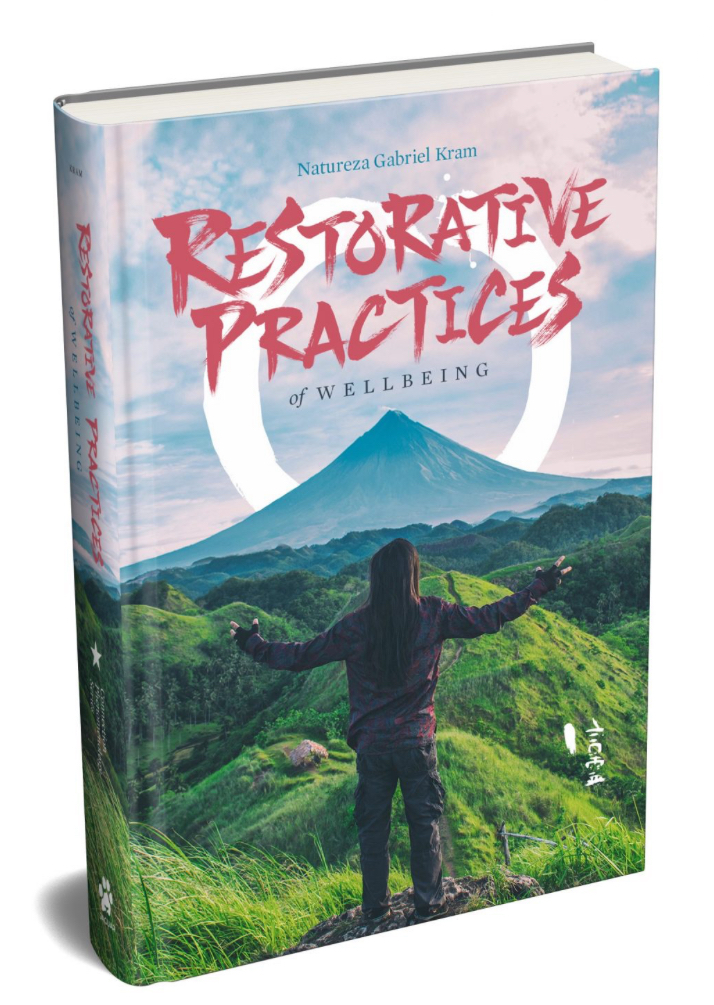
Another book by this author is Restorative Practices of Wellbeing, which I just received and will soon be delving into. Find his books here: https://restorativepractices.com/product-category/books/ You can preorder The Neurobiology of Connection as well.

We make the world a better place starting with ourselves.

Keeping the aging body hydrated

I’ve been a yogi for a long time, and also at various times, I’ve danced, biked, swum, kayaked, walked, hiked, worked with a trainer in a fitness studio, done tai chi and/or qi gong, Pilates… I’m sure there are some activities I’ve forgotten at the moment.

I love it when my body moves well, when I have full range of motion in all my joints and can move with fluidity and enough energy and strength to do these activities and get through my days with a minimum of discomfort.

I practiced the MELT Method at home, subscribing to MELT On Demand, for a while a few years ago. It gave me online access to hundreds of videos focusing on rehydrating my body parts using soft foam rollers and balls and stretchy bands.

Hydration. Rehydration. We are squishy beings. Infants are about 70 percent water, but it declines with age, to maybe 55 percent in the senior years, which is where I am now.

In other words, we kinda dry up with age, and this shows up as stiffness.

You know what? It is not inevitable! And it takes more than just consuming enough fluid.

You want those fluids to get into your soft tissues, into your muscles and fascia, bones and joints, tendons and ligaments.

You know how good you feel after you’ve received a full body massage? Well, the secret to that good feeling is the massage therapist gliding their hands with light or firm pressure on your skin. It redistributes your fluids, which relieves stiffness, aches, and pains.

The MELT Method is hands-OFF bodywork you can do by yourself, at home, with MELT equipment and videos. Sue Hitzmann, bodyworker and self-described gym rat, developed the MELT Method and continues to add to it.

Don’t underestimate Sue because she is in great shape, attractive, perky, and wears fashionable workout wear. She’s also disciplined and brainy. She has a master’s degree in exercise science from NYU. She’s participated in dissections of cadavers to learn more about fascia and belongs to the international Fascia Research Society. She’s worked with some big names in the field of fascia research: Tom Myers, Gil Hedley, Robert Scheip, Jean-Claude Guimberteau.

She is a somatic educator, bringing information and practices you can use to enhance your experience of well-being.

I stopped doing MELT for a while but just re-upped my subscription to MELT On Demand because I was feeling too stiff.

If this interests you, @MELTmethod is a YouTube channel with free material on MELT, no subscription needed.

Here Sue describes how she developed the MELT Method.

Here Sue describes the MELT Method in 3 minutes.

Here is a link to a 10-minute foot treatment. You can do this treatment on one foot and then notice the difference between each side of your body — the side you treated and the one you didn’t.

You’ll get a clear understanding of what rehydration does for you in a way that words simply can’t convey.

In some ways, it’s like reflexology. The sole of the foot maps to the entire body.

If you want to buy the MELT hand and foot therapy balls and just do that, it’s a great start. 10 minutes every day…no more morning stiffness.

As someone who sits still for long periods in my work as a biodynamic craniosacral therapist, I can’t recommend this enough. My work is oriented to fluids and energy in the body. I help my clients experience more ease in their bodies. If I could receive a session every day, I would!

MELT is the next best thing.

You are magic and can do anything!

Tuesday is magic skeleton day! You can do anything!

Did you even know that your bones are 31 percent water?

My Biodynamic Meditation this morning had a lot of Tide moving in my central energy channel.

The swirliness settled in the lower part of my sacrum and then in my sphenoid.

The sphenoid is a mostly hidden bone that many are unaware of.

Continue reading

Biodynamic Meditation posts on Instagram

I started studying craniosacral therapy in 2011 while still a massage student, after receiving it monthly for 3 years and understanding its sometimes-subtle but cumulative benefits to my health and well-being.

I started studying craniosacral biodynamics in 2013. Three days after learning it existed and hearing it described, I was in a class.

It’s a passion of mine. I’ve taken dozens of classes since, in both biodynamic and directive, Upledger-style CST. I’ve taken several classes multiple times and been a teaching assistant.

Craniosacral biodynamics works quite a bit with interoception, the “felt sense” in oneself.

A lot of the language in my classes was highly conceptual even though referring to felt states. There’s a big gap between concept and experience, between the map and the territory. It was frustrating!

What does the Breath of Life feel like? How do you distinguish the different tides? What does a still point feel like? How do you track potency? What about the different stages? What the heck is Dynamic Stillness and how do you get there?

I started experimenting with trying to sense these concepts in my meditation practice and had some pretty profound experiences, such as feeling like I was in the ocean and currents were flowing through and around me, experiencing a me-shaped hole of emptiness surrounded by dense energies holding me in place, the sense of being breathed, and the like.

But they were random experiences and I still didn’t know the names for them or how to get there. Hence pursuing more training.

Sequencing is important in a yoga class. You prepare carefully with easier poses and work up to the harder poses you didn’t think you could do — and then, wow, you’re doing them! It’s important in teaching and learning Craniosacral Biodynamics, too, guided by carefully considered preparation.

All of these states and experiences have helped me become more whole and healthy, wise and compassionate about our common human experience. They help me heal, and I do have experiences to heal from, still.

Samsara can be so rough.

I am an investigator, an Enneagram 5. I am driven by curiosity and learning and compassion. I came into this world to make a difference, and although side-lined by early difficulties, I’m doing it now.

Where I am now is this: I have a private practice in West Lake Hills, an old Austin suburb, where I offer two specialties: Craniosacral Biodynamics and TMJ Relief.

I also offer the same specialties in downtown Austin, at West Holistic Medicine.

And, I’m doing an experiment on Instagram. Every day I do a #biodynamicmeditation and post about it on Instagram. I choose images and music to accompany my words. It’s fun and growing, gaining followers, including teachers of Craniosacral Biodynamics.

If you want to follow me there, I’m @mareynolds. These posts also appear on my Facebook business page and on Tumblr and LinkedIn.

What’s behind this new endeavor? Well, if I could receive a Biodynamic session every day, I would! But I can’t afford it and don’t always have time.

However, I do have time to meditate every day. So do you, most likely, on most days.

So I practice Biodynamic Meditation and post about it, with an eye to eventually teaching it as a recognized form of meditation where the focus is on self-healing and restoring vitality. You can follow my progress.

Whatever we couldn’t process at the time gets contained energetically. Sometimes we experience releases and may or may not be aware of it. We feel more ourselves, more centered, grounded, vibrant, confident, resourceful.

Craniosacral Biodynamics greatly augments the body-mind’s ability to heal itself of dysregulation, stuckness, inertia.

When that energy is released, it returns to our overall vitality and well-being.

It accelerates wellness.

I’ve been practicing Biodynamics in meditation, in classes, and with clients for almost a decade. I am far from enlightened, though I have moments of deep presence and clarity about who I am, why I’m here, and what I want.

I am much healther, grounded, centered, aware, bigger minded, and bigger hearted than I used to be. And people who have known me for that long or longer have noticed.

This is where I am now, and I appreciate you reading about my process. There will be more to come, I’m sure. If you have questions, please ask!

Jittery about the election? Here are some simple things you can do to reduce stress

I recently completed a 4-hour continuing education class in Ethics, Communication, and Boundaries through the Lens of the Nervous System. The instructor based this course around applying polyvagal theory in a massage therapy practice.

I want to share some simple things that anyone can use to reduce stress, because many of us may be feeling jumpy and tense, especially with an election approaching. 

Experiment with these and find your favorites — and use them as needed when your stress response is activated! 

  • Making your exhalations longer than your inhalations for a couple of minutes.
  • Singing and humming. 
  • Orienting to the space you’re in by slowly gazing all around you. 
  • Lifting your gaze and imagining the sun shining on your face, neck, and shoulders. 
  • Finding something that’s pleasing and telling yourself “I am safe and happy”. 
  • Making micro movements, dancing, doing yoga. 
  • Listening to calming music. 

Do you find yourself doing any of these without a thought? My mother often hummed when she was washing dishes.

Music and dancing are important parts of my life. I created a playlist of happy music with the help of numerous friends on Facebook who made recommendations. I’m capping it at 100 songs and will post a link to it on Apple Music when I’ve finished listening to everything…a lot of it was new to me.

I have noticed already that some of the happiest-making songs are about dancing!


Jaw issues? Now you can learn to treat yourself!

I am now offering Self-Treatment for TMJ Issues on Zoom!

Most people with TMJ issues (1) don’t live near a skilled intra-oral manual therapist who can help, (2) are frustrated by TMJ treatments that don’t last, and (3) would love to learn how to treat themselves, any time, any place, for nothing but the initial cost of learning! 

Teach a man (or woman) to fish, right?

It’s not hard. If you are willing to get your fingers wet and can tell the difference between soft tissue and hard when you apply gentle pressure, I can teach you to release tension in your often-overworked internal jaw muscles that cause so many TMJ issues.

The most common reason these muscles become overworked is clenching and/or grinding your teeth. These are habitual, usually unconscious, responses to stress that create strain patterns in your body that affect your TMJs.

I can teach you how to change these habits.

First, we’ll learn about your TMJ issues — your symptoms, history, habits, and co-factors. 

Next, we’ll do some exercises to help you relax and loosen up. 

And then, we’ll slowly and gently locate your internal jaw muscles and coax the tension out of them, at your pace and comfort level. You’ll need short nails, clean hands, and tissues for this.

One of the great benefits of working on yourself is that you are in control of the pace and pressure, like this curious baby.

And then you’ll test by moving your jaw around so you can actually feel the difference between tension and relaxation.

The new spaciousness might just be a revelation.

You’ll have all the skills you need to make your relaxed jaw the new default.

I record the working part of the Zoom session and send you the video afterwards, so you’ll have it to watch the first few times you work on yourself by yourself. It takes some repetition to change this pattern and the habits.

You can also schedule a free phone consultation if you have any questions afterwards. Or, schedule one if you have questions up front…this treatment may not be of much help for those with advanced TMJ issues, but it can help prevent them.

You’ll have the support you need to treat yourself with confidence. 

More about me, besides being the writer of all these blog posts for all these years: I am a bodyworker, board certified in therapeutic massage and bodywork. I’ve been doing this for 10 years.

I’ve been working in people’s mouths since 2013, have studied intra-oral manual therapy with several teachers, and have taught self-treatment for TMJ issues on Zoom in both private sessions and classes. 

Imagine what your life would be like without jaw pain, clenching, or grinding. Would it free you up for more of what you enjoy? 

Click here to schedule your 75-minute Self-Treatment for TMJ Issues on Zoom Session for $150. 

Do you have TMJ issues?

Treating them is one of my professional specialties! I would love to share with my wellness blog readers (you!) a page from my professional website.

Learn more about TMJ issues currently includes articles on these topics:

  • Learn to treat your own TMJ issues on Zoom
  • You can learn to stop clenching
  • Stop grinding your teeth during sleep
  • The importance of a good pillow
  • Portrait of a typical patient
  • Types and causes of TMJ issues, and exercises
  • What various professions do to help
  • Choose a practitioner that works on specific muscles
  • The link between restless leg syndrome and sleep bruxism
  • The jaw-pelvis connection
  • Foods and nutrients that can make a difference
  • The role of the sphenoid bone
  • Music and meditation to heal the throat chakra
  • Asymmetries in the rest of the body can affect jaw alignment