A day in the life of a massage therapist

I’ve been doing massage since June, but I haven’t posted very much about it on this blog. I’ve been getting my bearings, gaining hands-on experience. I also maintain the confidentiality of my clients.

I’d like to write about my work, as long as my clients remain anonymous. I would have liked to read about what it’s like to work as a massage therapist, so maybe me posting about it will serve that need for someone else.

I massaged a woman who had recently had jaw surgery. She was going to physical therapy, and the PT said her neck muscles were so tight, a massage was in order.

At her request, I just worked on her back, shoulders, and neck, and I persuaded her to let me spend some time working on her feet.

It is incredibly relaxing to have foot reflexology and/or foot massage. I gave her both. There are zones on the feet that correspond to the rest of the body, so working the feet softens tense areas before I even get to them.

If you ever just want to relax and don’t have time for a full body massage, foot massage and reflexology are wonderful.

I allowed plenty of time in our session to work on her neck both when she was face down and after she turned over. I did a combination of Swedish massage and deep massage (Lauterstein method) to work on her circulatory and lymphatic systems and her structure and energy.

She told me she was having difficulty sleeping. She said she had always slept on her stomach with no pillow. Post-surgery, she was having to sleep on her back, propped up on pillows. She found it awkward and uncomfortable.

I shared with her what had helped me after I had had some major chiropractic work on my neck and was told to sleep on my back: hugging a pillow against my body. The weight of it feels comforting to a stomach sleeper.

Afterwards, she said she felt much better.

That’s one of the things I love most about being a massage therapist. What I do makes a tangible difference in people’s quality of life.

I worked on another woman who had been on her feet all weekend at an outdoor music festival. She wanted a lot of attention to her feet and legs as part of her full body massage. She booked a 90 minute massage, which is twice as relaxing as a 60 minute massage!

Truthfully, I don’t know how to quantify how relaxing a massage is. That’s a subjective measure. I just know that when I give a 60 minute massage, if the person is larger than average or has an area that needs extra attention and still wants a full body Swedish massage, the massage feels rushed, to me.

I don’t know if it feels rushed to them. Maybe that’s all they’ve ever known, and they have no idea how much more relaxed they could feel if they had a longer session. It’s their choice — and I’m not beyond suggesting that a client book a longer session next time!

I did Swedish/deep massage and reflexology/foot massage on her and was able to work at a more relaxed and relaxing pace. IMO, she did herself a huge favor by booking 90 minutes. She relaxed very deeply and looked happy when I met with her after the session.

I like using aromatherapy. It adds a nice dimension to a massage both to the client and to me.

I often put the essential oil blend Valor (from Young Living) on the client’s feet before massaging them. The way I see it, everyone needs more valor to face life, and here’s a way to get some!

When clients turn over from being face down, their breathing is often congested. When that’s the case, I like to take a drop of Eucalyptus radiata oil, rub it between my hands, and then place my hands near the client’s nose. Their eyes are covered, so they don’t see it coming. They simply smell the eucalyptus, a pleasant surprise, and it clears their breathing passages.

At the end of a massage, especially when the client has gone into a deep trance or fallen asleep, I like to rub a drop of peppermint or rosemary oil between my palms and allow the scent to help wake the client up in a refreshing way.

“The 5 rhythms are a contemporary shamanic Zen practice” ~ Gabrielle Roth

Okay, so science has recently showed us that dancers have genes for transcendence and social connection. (And if you don’t dance, maybe you have these genes too and don’t know it yet. And consider this: if stress turns on the bad genes, maybe the opposite of stress — joy? contentment? — turns on the good genes! Just sayin’….)

In this interview, Gabrielle Roth explains the connection between ecstatic dance, Zen, and shamanic practices.

The 5Rhythms are a contemporary Zen, Shamanic practice. Zen, in that they are a map to an inner journey for seekers of wisdom and freedom, the wisdom to know who we are and the freedom to get over ourselves. Shamanic, in that they address the Great Divide, the divorce of spirit from flesh that has created the loss of soul, which haunts us. We’ve rendered the soul homeless, it can’t breathe, exist, or move disconnected from the body. The body is the womb of the soul, a begging bowl for spirit, like Aretha when she sings….

The fastest way to still the mind is to move the body. All the profound spiritual teachings in this world don’t mean anything if they’re not embodied. Feeling totally high and connected to the divine mystery while sitting on a meditation pillow is fine, but how do we put the rubber to the road? As Charlie Parker said, If you don’t live it, it won’t come out your horn. So I take refuge in the 5Rhythms practice to keep my horn in tune.

There are videos of Gabrielle as well on the site. Check ’em out!

Become a living question for Halloween!


I’m adding this to my Favorite Quotes page here on my blog:


The most important part of the practice is for the question to remain alive and for your whole body and mind to become a question. In Zen they say that you have to ask with the pores of your skin and the marrow of your bones. A Zen saying points out: Great questioning, great awakening; little questioning, little awakening; no questioning, no awakening. ~ Martine Batchelor (from Tricycle Daily Dharma)


Try this: Sit in an upright posture. Chair, zafu, floor, doesn’t matter. Spine straight but not rigid. Breathe. Get yourself centered.


Zafu. Roma

Zafu. Roma (Photo credit: Roberto Poveda)


Ask yourself this question:


Who am I?


Ask very slowly and don’t expect an answer, but really, really listen.


What do you notice?


Public speaking: how to get over your fears with warmth and ease

I used to have terrible stage fright. Having to give my first speech in the required junior high speech class was something to be endured, and when I finished, I didn’t care how well I did, I was so glad I had gotten through it and would never have to do it again.

If I recall correctly, I read it aloud and (this is embarrassing) stood with my legs crossed, as if I was holding it in. I’m pretty sure my voice shook. Afterwards, I slunk back to my seat. The topic may have been “seashells.”

I did not fail, to my surprise. The teacher gave me a C. The content was good, but my presentation needed work. (I am a writer.)

I watched the kids who presented well. I remember a girl who showed us how to make “hors d’oeuvres” (including how she “about died” when told how to spell it).

Then she passed them around. She’s probably a politician now.

That was a long time ago. Over many years, classes, jobs, and activities, I got more used to speaking to groups and felt more confident that I had something worthwhile to contribute. Sometimes it even happened on the spur of the moment, and afterwards I realized I’d been so absorbed, I’d forgotten to be afraid.

Several years back, I participated in “the Alan Steinborn experience” back when Alan lived in Austin. I cannot remember now what he called these gatherings, but he hosted people in his home where part of the experience was standing in silence in front of people (most of whom were strangers), not doing or saying anything, just standing there with all eyes on you for several minutes. People applauded before and after, and in between, whatever happened happened. Some were visibly petrified and gradually relaxed. Some were comfortable the whole time. Most were in between.

It was wonderful to get up there, breathe, relax, and experience connecting with others. It became a sort of communion where fear fell away. I became curious, looking into the eyes of each member of the audience.

Also in recent years, I’ve taken a two-day class in public speaking through Austin Community College, for work. The class had a lot of lecture and required three brief presentations…and the main thing I recall now is the professor exclaiming (after my first presentation, in front of everyone) about my “charisma”.

I still don’t know exactly what charisma is and whether to be pleased or embarrassed about it. But perhaps my experience with Alan’s gatherings had something to do with that.

After all, if you can be comfortable standing silently in front of an audience, you’ll probably be okay speaking.

Recently I’ve been considering developing my public speaking skills. I could talk about health practices to counteract sedentary jobs, the benefits of massage and bodywork, self-care for massage therapists, trauma and recovery, meditation — you know, the topics that I’ve blogged about that are so close to my heart.

It’s not that I’m bad at public speaking any more. I deliver good material, include some fun stuff, and connect with the audience.

But I could be even more at ease.

A few weekends ago, I attended a workshop called “Authentic Public Speaking” from NLP Resources Austin. The presenter, Keith Fail, is a friend and teacher of mine. I’ve studied and later coached/assisted at NLP training that he co-taught, taken advanced NLP classes that he taught, and heard him speak at the NLP meetup multiple times (indeed, when I served as program chair and a speaker didn’t show up, he was able to wing it with ease, he’s that good). I’ve hung out with him and his wife, Katie Raver, a lot. We’ve traveled in Maui together. They are ohana to me: family of choice.

Keith is a warm, friendly, lovable, perceptive, smart man. He is familiar with Alan’s work and includes it, adding his own substantial and unique stamp to offer a public speaking class like no other.

He’s also an accomplished public speaker. Keith shared a story that illustrated his aplomb with public speaking even while in high school. It involved walking in just as he was being introduced and needing to pull up his zipper, with all eyes on him. Ask him about it! The man just knows how to tell a good story!

This class is not an NLP class. You don’t need any NLP training to attend, although a few of my fellow students and I had training in it. If it’s new to you, you will come away knowing more about NLP as it applies to public speaking. You may then be drawn to take NLP training — who knows?

The 11 students met in a comfortable North Austin home. (One student couldn’t make it; class size is limited to 12, and it usually fills up.) My fellow students came from a variety of backgrounds — software engineer, entrepreneur, new board member, several in real estate, insurance adjuster, academic adviser, musician/hypnotist/coach — all with an interest in improving their public speaking skills.

Our time was spent on a good mixture of Keith sharing information and stories, exercises with partners, feedback and discussion, a worksheet, a little homework, several very useful handouts, and, of course, getting up in front of everyone several times.

Yes, everyone does get up in the front of the room and stand in silence, and Keith will share how to make this easy. One woman (who said her business partners made her attend) balked at doing it, but she decided to do it anyway and was glad she did. By the end of the class, she was giving good presentations with apparent ease.

We did extemporaneous speaking illustrating one of our values. Whoa. That makes it sound very formal. Let me rephrase that: We got up and told a story about something important to us, and after everyone had spoken, we discussed what worked.

On the second day, Keith talked about the different energies that speakers experience and utilize. Keith led us through some experiential work developing and drawing on these energies. This was delightful and new to me in this context, and very useful.

Toward the end of the class, Keith pointed out that rather than being just a class about public speaking, it was actually training in perception and attention.

Keith videotapes your last presentation and afterwards, he emails it to you. Then does a follow-up call with you.

All I know is that by the end of the class, we students all felt much more at ease with each other and in the front of the room, thanks to Keith’s personal warmth and well-developed teaching skills.

It might even have felt like love, acceptance, and compassion for ourselves and for each other.

Just imagine. I will have that to draw on the next time I give a presentation. I can hardly wait!

If you are interested, Keith offers this class several times a year. You can get the details at NLP Resources Austin.

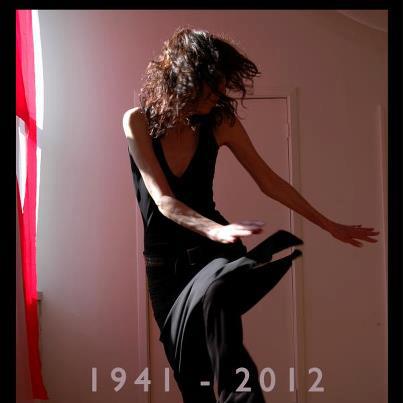
In remembrance of Gabrielle Roth: freedom is our holy work

One of the significant teachers in my life died yesterday, and I’ve struggled with writing about it. I find myself getting too heady, and yet this loss is actually so profound that when I took a nap yesterday, I dreamed I was balancing upside down on my head on a dance floor, surrounded by lively, active children.

When I woke, I could feel the pressure on the crown of my head.

Headstand is definitely about changing perspective.

I stumbled into ecstatic dance 18 years ago, first encountering the 5 rhythms of Gabrielle Roth and Sweat Your Prayers after I left church as something I could no longer take part in with integrity.

I found a tribe, a practice, and a way of experiencing myself and the world as energy.

I’m not sure, but I suspect that the latter is the change in perspective that I’m integrating with this shock of loss and review of Gabrielle’s influence on my life, that it’s all just energy all the time, and it’s always changing, always dancing. The best I can ever do is to be centered, grounded, embodied, and ready to meet it. What’s solid is awareness.

I’ve had issues and struggles at times with that tribe, practice, and worldview, and they have deeply shaped me. I keep coming back.

Here’s what ecstatic dance is to me: being free, feeling joy, being embodied, clearing, cleansing, breathing, sweating, extending myself, being aware, taking care of my body, pushing to my edge and beyond, being in the moment, sharing, delighting, inquiring, discovering, connecting, having compassion, being inspired, seeing, allowing, playing, surrendering, breaking myself open, feeling what comes up, being danced, letting go, grieving, dancing with other versions of me, dancing with the entire room including the space, letting life and everything flow through me, being totally and completely alive, being fully present, blowing all the blocks out of my energy channels.

I feel so grateful to have found this and that I am able to do this.

Thank you, Gabrielle Roth, for your life’s work. Thank you, dancing tribe.

Here’s Gabrielle in her own words.

I became a mapmaker for others to follow, but not in my footsteps, in their own. Many of us are looking for a beat, something solid and rooted where we can take refuge and begin to explore the fluidity of being alive, to investigate why we often feel stuck, numb, spaced-out, tense, inert, and unable to stand up or sit down or unscramble the screens that reflect our collective insanity.

The question I ask myself and everyone else is, “Do you have the discipline to be a free spirit?” Can we be free of all that binds and bends us into a shape of consciousness that has nothing to do with who we are from moment to moment, from breath to breath?

Dance is the fastest, most direct route to the truth — not some big truth that belongs to everybody, but the get down and personal kind, the what’s-happening-in-me-right-now kind of truth. We dance to reclaim our brilliant ability to disappear in something bigger, something safe, a space without a critic or a judge or an analyst.

Sunday morning: a little trauma release, a fine buzz, then some yoga jazz, and a tribute to a teacher

Long-time readers know I spent some time and energy on learning the trauma releasing exercises of David Berceli and practicing them. (If you’re a new reader, you can search this blog for TRE or trauma releasing exercises or Berceli to see my many posts on the topic.

If you want to learn them, I recommend Berceli’s book and video.)

I haven’t written much about them for a while. I still value them very much as a tool for releasing tension.

Sometimes at ecstatic dance, I allow my legs to shake. Nobody notices or comments, ever.

Some mornings I wake up and just know I need to do them. I may tremble for 30 seconds to a minute or two. It doesn’t have to last long to be effective.

I imagine that the more you do them and really surrender to them, the less you need to do them. Also, the more you do them, the more aware you become of tensions accumulating in your body, and you adjust sooner — taking a deep, cleansing breath to let it all out, stretching and moving the tense area.

This morning I did them for longer, because my body wanted to keep going. First my legs surrendered to the shaking, then left my arm flapped, then right my arm flapped, then my lower spine hammered, then my upper spine waved, then more legs, and so on. It’s entertaining to witness where the surrendering moves!

Then afterward, the fine buzz inhabiting my body. Mmm. Chi. Prana. Energy.

Walk to my yoga mat. Tadasana, feeling feet, upward energy. Stretching arms up into hastasana circling to anjali mudra several times to warm shoulders up, each with my gaze a little higher, a little more backbend to stretch the front fascial lines.

Then from hips, float down into uttanasana and just hang, stretching the back fascial lines. Feel my tight hamstrings. Hold. Breathe. They become like rubber bands, surrendering to the stretch. Then extend spine and re-bow.

Left leg back into lunge. Feeling the tight gastrocnemius and soleus. Push heel back and breathe. Right leg back to join it. Breathe length into calves.

Plank, with spread fingers, sturdy column arms under shoulders. Feel strength. Pressing palms and fingers evenly into mat, slowly lowering into chataranga, feeling creaks and twinges in shoulders and elbows.

Once flat, press pelvis and tops of feet into floor and lift up into bhujangasana, cobra. Imagine the fronts of my vertebrae, deep in the middle of my torso, fanning wide open to give and receive and expand my energy. This spine, this flexible column of bone, fluids, muscle, nerve, dura, this central channel, this backbone. Yes.

Turn toes under. Strongly lift my body up, elevating my pelvis as high as it will go. Push palms and fingers evenly into floor. Push heels back to stretch my soles (I’m hearing my teacher Eleanor Harris now). Lift sit bones to ceiling. Rise on tiptoes, then settle on feet, allowing spine to surrender to gravity between cranium and sacrum. Feel strong shoulders. Downward-facing dog, adho mukha svanasana.

“Enjoy your breath,” as my teacher Brigitte Edery is fond of saying. And I do.

Then bring right leg forward into lunge. Then today’s standing sequence, a vinyasa within a vinyasa: warrior two, extended side angle, reverse extended side angle, triangle, reverse triangle, ardha chandrasana, warrior one, warrior three. Nice standing vinyasa (with room for improvement in the sequencing, I notice), and I am aware of all the different stretches each pose brings where spine meets pelvis meets thighs.

I am pleased with my balance in ardha chandrasana, but I need to put my extended arms on the top of a stool to hold warrior three. There’s always an edge. Today, and probably for a few weeks (or months, who knows?), that’s mine — balancing in warrior three.

Then back to lunge, uttanasana (notice how much deeper my fold is), extending spine, and reverse swan dive up, arms circling back down into anjali mudra.

Repeat on other side.

I follow with pigeon, a deep twist (thrilling as my shoulders reached the floor), happy baby, and rock to standing.

I am in my body, ready for today, for ecstatic dance, for community, for work, for learning prenatal massage.

Feeling very grateful for my friends, and for my teacher Gabrielle Roth, whose work I knew better than I knew her personally, who was so influential in opening my awareness up to new movements, rhythms, and energies in life, who is in her own life now moving into stillness. She dedicated her life to healing the mind-body split. Amen to that.

Here’s my favorite Gabrielle quote:

After you jump, before you land is God.

I’m going to light a candle and open myself up to God.

Self-care for massage therapists, part 2 (what works for me)

In part 1, I listed various self-care methods that massage therapists use for their own aches and pains from giving massage. In part 2, I want to share what I’ve tried (so far) that works.

First, I want to say that my strength and endurance have increased with practice. I used to be in pain after giving 3 hour-long massages in a row several days in a row. Now I can do 4 hours 5 days a week with just a few twinges and aches afterwards. For several weeks, though, I was hurting and feeling some despair about having upended my life to get trained and start working in this new profession and the possibility of not being physically able to do it.

Key learnings from a newbie:

  • I no longer attempt deep tissue work, sticking to Swedish and reflexology. My Swedish massages are good and getting better. I incorporate some of David Lauterstein’s deep massage strokes into every Swedish massage, and I use pressure points, stretching, techniques from sports massage, body mobilization techniques, and reflexology, depending on the client’s issues and the amount of time I have. I cannot deliver the pressure that some clients (well-informed or not about what “deep tissue” means) seem to want. If I work within my limitations, it’s win-win for everyone.
  • I trained in Ashiatsu Oriental Bar Therapy so that I can deliver deeper pressure using my feet and body weight, controlled by holding onto overhead bars. It’s so much easier on my body and a lot of fun, too.
  • I rock with my feet and leverage my body weight strategically as I deliver Swedish massage so my arms and shoulders do less work.
  • Hydrotherapy totally rocks after a long shift. I fill my double kitchen sinks with hot water (my water heater is set to 130 degrees F. for sanitizing laundry) and cold water that I dump a quart or two of ice into. I immerse my aching forearms and hands in the water, alternating cold-hot-cold-hot-cold, for one minute each. I can barely stand it, and yet it makes a huge difference in just 5 minutes. Seems to flush toxins and swelling and pain right out.
  • I stretch my fingers and wrists, holding each stretch for 15 seconds. Good to do when driving, at red lights.
  • I press into the trigger points for the elbow and wrist (see part 1 for links).
  • I apply magnesium gel with seaweed extract topically. According to Wikipedia, symptoms of magnesium deficiency include muscle cramps, weakness, and fatigue, and fifty-seven percent of the US population does not get enough magnesium from food.
  • I love epsom salts in a bath. (Guess what? They contain magnesium!) When I was feeling a lot of pain all over, I would dump a cup or two of epsom salts into a fairly hot bath and add a few drops of lavender oil, then soak for 15-20 minutes. I felt like a new woman when I came out! I learned this years ago from dancers.
  • I use Young Living’s OrthoEase oil on clients’ painful muscles, and I use it on mine as well. Contains wintergreen, peppermint, eucalyptus, lemongrass, and more that are analgesic and anti-inflammatory.
  • I keep hydrated and have been avoiding nightshades lately. I’m already gluten-free and eat fairly healthily. I’m interested in following an anti-inflammatory diet but haven’t done the research yet.
  • I take at least a couple of days off per week, not always together, though. I’m still finding my ideal schedule.
  • I do 10-15 minutes of yoga every morning. Sun salutations stretch and strengthen my body. Plus, it’s a great check-in to do something that starts the same every day. I start slowly and really let my hamstrings lengthen in forward bend before I move on to the next pose. I add standing poses, balance poses, and pigeon as I feel the need and to keep it interesting.
  • I get at least a chair massage every week. I’m interested in setting up a weekly trade for a full-body massage with someone, too.
  • I use a foam roller on back when needed, and a tennis ball to my gluteus.
  • I have two tennis balls tied into a sock that I use when driving to massage my back. I’ve also learned to “pop” my own back while giving massage!

Here’s something that just doesn’t fit into any of the categories I’ve seen so far about self-care for MTs. It’s about how you use your attention. I’ve learned to keep some of my attention on my body most of the time.

When I focused exclusively on the client’s body, delivering what I thought they wanted, I hurt and fatigued myself. I listen more to my body now and check in verbally with the client if I am not noticing nonverbal feedback.

If I notice that I feel rigid anywhere in my body, I say to myself, “Soften,” and my body softens.

Sometimes I put my attention on the soles of my feet and their connection to the floor/earth (I massage with bare feet always for Ashiatsu and as much as possible for Swedish), making the movements of giving massage into a soft, fluid dance.

Sometimes I attend to my breath, letting it become easy and relaxing (and audible to the client, as a nonverbal suggestion that they relax too).

All of these techniques activate the inner body, subtle body, energy body, whatever you want to call it. It feels better to give massage with this “soft present alive expanded body” than not. There is definitely an aspect of being “in the flow” that seems somehow related to doing Reiki, but I don’t know how to put it into words (yet).

Another bonus: the sensations of pain and fatigue become distant as peace and love fill my awareness.

I don’t know if clients perceive the difference, but I don’t think it could hurt. I do it for me because I “in-joy” it!

It’s been four months since I got licensed and began working. I look forward to learning even more new things about self-care and sharing them here.

Your body language influences your experience

In yoga, we learn that forward bends are calming (think fetal position, child’s pose), while backbends are stimulating. In a yoga class, after backbends, students usually start chattering!

Imagine holding your body upright in a relaxed manner, with the weight appropriately divided between front and back. Let your shoulders surrender to gravity. Imagine doing this with ease and breathing freely.

This is such a simple point that it’s easy to overlook how easy, and powerful, a tool this is to keep in mind. When you’re depressed, make an effort to sit up, and relax. When you’re excited, make an effort to breathe.

Buddhism: 50% of your State of Mind is dependent on your Posture. | elephant journal

For more on how body language influences experience, here’s a TED Talk on the subject. Amy Cuddy is a researcher at the Harvard Business School who shares some fascinating findings and her own story.

I particularly like “fake it ’til you become it” and “tiny tweaks —> BIG CHANGES.

Plus, two minutes. That’s all. Two minutes is all it takes to change your state.

If inflammation is the culprit behind autism, heart disease, and more, the cure is to get parasites and eat real food

Tonight I read two articles that each blamed inflammation for serious health issues.

One, by a world-renowned heart surgeon, said that the medical profession got it wrong when it began advocating a low-fat diet to control cholesterol. It is now known that inflammation in the artery wall is the real cause of heart disease. More people will die from heart disease this year than ever. The low-fat diet doesn’t work.

And…the dietary recommendations for lowering cholesterol are responsible for the high rates of diabetes and the obesity epidemic.

Only inflammation of artery walls causes cholesterol buildup. It has nothing to do with a low-fat diet.

The biggest culprits in inflammation, according to Dr. Lundell, are highly processed carbohydrates like sugar and flour and an excess consumption of omega 6 oils like soybean, corn, and sunflower.

There is no escaping the fact that the more we consume prepared and processed foods, the more we trip the inflammation switch little by little each day. The human body cannot process, nor was it designed to consume, foods packed with sugars and soaked in omega-6 oils.

There is but one answer to quieting inflammation, and that is returning to foods closer to their natural state. To build muscle, eat more protein. Choose carbohydrates that are very complex such as colorful fruits and vegetables. Cut down on or eliminate inflammation-causing omega-6 fats like corn and soybean oil and the processed foods that are made from them…. Instead, use olive oil or butter from grass-fed beef.

What you can do is choose whole foods your grandmother served and not those your mom turned to as grocery store aisles filled with manufactured foods. By eliminating inflammatory foods and adding essential nutrients from fresh unprocessed food, you will reverse years of damage in your arteries and throughout your body from consuming the typical American diet.

Here’s a link to the original article: World Renowned Heart Surgeon Speaks Out on What Really Causes Heart Disease. And for good measure, read this to learn about the top 10 anti-inflammatory foods.


The second article was from the Sunday New York Times Magazine and showed a link between inflammation and autism. At least a third, and very likely more, of the cases of autism are linked to inflammatory diseases, including a mother’s inflammatory response to bacterial and viral infections, asthma, metabolic syndrome, autoimmune disorders such as rheumatoid arthritis and celiac disease, even allergies, during pregnancy.

Rather than blaming diet, this article blames sanitation for high levels of inflammation found in the developed world.

Scientists have repeatedly observed that people living in environments that resemble our evolutionary past, full of microbes and parasites, don’t suffer from inflammatory diseases as frequently as we do.

William Parker at Duke University has chimed in. He’s not, by training, an autism expert. But his work focuses on the immune system and its role in biology and disease, so he’s particularly qualified to point out the following: the immune system we consider normal is actually an evolutionary aberration.

Some years back, he began comparing wild sewer rats with clean lab rats. They were, in his words, “completely different organisms.” Wild rats tightly controlled inflammation. Not so the lab rats. Why? The wild rodents were rife with parasites. Parasites are famous for limiting inflammation.

Humans also evolved with plenty of parasites. Dr. Parker and many others think that we’re biologically dependent on the immune suppression provided by these hangers-on and that their removal has left us prone to inflammation. “We were willing to put up with hay fever, even some autoimmune disease,” he told me recently. “But autism? That’s it! You’ve got to stop this insanity.”

This article’s only mention of diet is that a probiotic taken during pregnancy may help prevent autism.

Read the original to learn about a medicalized parasite being tested on autistic adults. Here’s the link: An Immune Disorder at the Root of Autism.

My take? Do it all! One in 88 children now is born with autism in the U.S. The stress and difficulties of raising an autistic child are huge, not to mention who will care for (and pay for) these autistic adults who will someday have no family to take them in.

If that is due to diet and cleanliness, it’s worth eating fresh, unprocessed foods and living with some parasites. In my opinion.