I’ve updated this page with some new recommendations! New for 2018: the book How to Change Your Mind by Michael Pollan, a new online dispensary for supplements, stainless steel drinking straws, a hand/face/body lotion, and more.
Happy shopping!

I’ve updated this page with some new recommendations! New for 2018: the book How to Change Your Mind by Michael Pollan, a new online dispensary for supplements, stainless steel drinking straws, a hand/face/body lotion, and more.
Happy shopping!
When do you feel safe? When are you on guard?
If you feel safe except when there is an actual threat to your safety, then you have high vagal tone.
If you feel guarded most or all of the time, even when there is no actual threat to your safety, you have low vagal tone. Low vagal tone can be raised. Continue reading
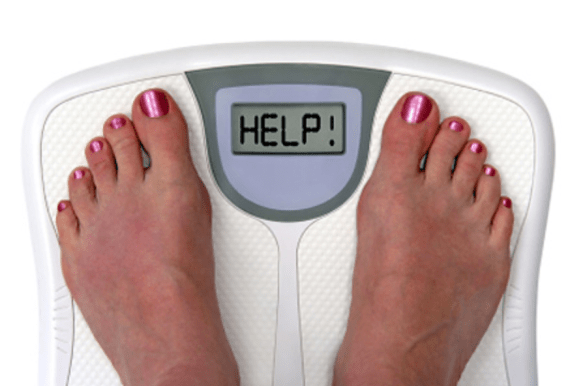
I have put on some extra weight and I want to take it off. I already eat a fairly healthy, mostly Paleo diet. I was thinking about the mindset and habits I want to cultivate. I’m looking at what’s worked for me in the past and some new best practices.
Twice since 2000, I’ve lost weight: the first time, I lost 35 pounds, of which 20 pounds crept back on for a few years, and then I lost the 20 pounds and kept it off for a few years. Those 20 pounds have crept back on over the past 7 years.
Courtesy: Diethunters.com
In my recent presentation, Investigating the Power of Silence, at Austin’s Free Day of NLP, I drew on some research done by the Center for Healthy Minds.
I love that name! And I just got on their mailing list.
You may have heard of it. It’s located at the University of Wisconsin, Madison, and is run by Dr. Richard Davidson, who was encouraged by the Dalai Lama in 1992 to study the brains of Tibetan yogis. Dozens of monks have flown into Madison over the years, been hooked up with caps of electrodes for EEGs to study their brainwaves and undergone fMRI to see where the brain is most active during meditation, rest, and tasks. These are the “professional” meditators with over 12,000 hours of practice.
 The research I mentioned in my presentation was done on the Tibetan yogi with the most meditation experience they’ve studied so far, Yongey Mingyur Rinpoche, who’s clocked an astounding 62,000 hours of meditation (and looks like he’s about 30 years old but is actually 43 in 2018).
Here’s the link to the article, and here’s a photo of the rinpoche.
Yongey Mingyur became a wandering monk for four years, leaving behind his life as a prominent teacher of Tibetan Buddhism, and then resuming it with new perspective. His story includes overcoming panic attacks as a young teenager. Read more here. To find out about his experience wandering, read this.
The Center for Healthy Minds has also improved the rigor of the science behind studies of meditation, holding it to high standards including classifying meditators as beginning, long-term, and professional and distinguishing between types of meditation.
Today is an exceptionally cold day in Austin, Texas. At noon the temperature is 27 degrees F (-2.8 C). It rained last night, then froze, sleeted this morning, and now it’s snowing. Schools are closed, and many people are staying in, staying warm, staying safe. People in cold areas may laugh, but most Austinites don’t know how to drive on ice. We don’t have snowplows. Sand on bridges is about it. So we call everything off and stay in.
Today (besides staying cozy in my pajamas and sipping hot bone broth), I’m daydreaming about an event I will attend this summer, August 10-12, 2018, when it will probably be over 100 degrees F (38 C) here. I’m going up into the southern Rockies where it will be cooler, to Taos, New Mexico, a legendary town in the high desert mountains. Continue reading
I get referrals for craniosacral therapy for people who have had concussions, and I want to help these folks heal. Not knowing what a doctor may (or may not — especially ER docs who are most concerned about intracranial bleeding and cracked skulls and not aftercare) have told them, I’m providing information here that may help those with injured brains recover more quickly.
People who’ve had concussions may report these symptoms and more: pain, dizziness or vertigo, balance issues, gait or coordination disturbance, vision changes, sensitivity to light and sound, language problems, confusion, lack of focus, forgetfulness, nausea, sleepiness, and/or emotional problems.
To clarify the language, concussions may also be called mild TBIs (traumatic brain injuries). People can get concussions from an impact, from being shaken (sudden deceleration, shaken baby syndrome), or from being close to an explosion.
To help you visualize what happens in a concussion, imagine your brain is like jello inside a closed hard container (the cranial bones) cushioned by a thin layer of water (cerebrospinal fluid), with substantial membranes (the meninges) separating the major parts (not shown in the image below).
A major impact slams the brain around inside the head, tearing brain cells. Damaged brain cells die, and recovery involves neuroplasticity — your brain grows new cells.

Research points to the corpus callosum, which connects and coordinates the left and right hemispheres, as the part receiving the most damage from concussions.
Continue readingThis “in-between-isode” in our series of posts about working together to release her forward head posture is Cate’s review of the Still Point Inducer, which I lent her to try at home for a week. Read the first post here and follow the links to read the series.
by Cate Radebaugh
Last Friday — September 30 — MaryAnn lent me a red rubber thingy called a Still Point Inducer, which I put in my purse and promptly forgot about until Sunday, when I set about exploring its properties. It is one piece, neither hard nor soft, flat on one side and shaped like two little boobs on the other.

It didn’t have any instructions with it, but I figured, since Mary Ann had been messing around with the back of my head, it would probably fit back there. After some fidgeting and fussing, I got the bumps settled at the base of my skull with the flat part on the mattress. All I had to do was move my head up or down to shift the position of the bumps, which shifted the feeling I got, which is kind of like big thumbs pressing into my head. Continue reading
UPDATE: The post below was written in October 2016. Much has changed since then! I have been making natto in my Instant Pot! I once again got frozen natto as a starter at Asahi Imports — very inexpensive, 3 servings, and you only need about a teaspoon to start a batch. I followed instructions on a YouTube video on Instant Pot natto, and it turned out great — slimy, stringy, sticky, and tasty (well, it may be an acquired taste for some people).
Still need to try the natto breakfast taco. I envision kim chi in place of salsa, some avocado, and sprouts.
You need a glass bowl that fits inside your Instant Pot. I cooked way too many soybeans to fit in that size bowl, so I froze the excess and have since thawed some, added inoculant, and made another batch of natto.
I’ve been eating a small serving most days with tamari and green onions, or with kim chi (which I’m fixin’ to make a big batch of). Fermentation freak that I am, I also made kvass — two batches, with yellow beets and red beets, and fizzy kombucha flavored with pomegranate juice. Along with sprouting seeds for salad garnish and sprouting a purple sweet potato to plant in my garden, my kitchen is a lively place!
~~~
A day after attending the Austin Fermentation Festival, where I sampled various kombuchas, krauts, a beet kvass, pickled veggies, mead, cider, raw milk cheese, and more, and thoroughly provided my gut with a wide array of probiotics, I am eating homemade natto for breakfast.
No one was selling or giving away samples of natto at the festival, which is a shame. Maybe that’s because, as one natto fan describes it, it’s like a vegan stinky cheese. I’ve heard some Japanese restaurants in the U.S. even seat natto eaters in a separate section! But I believe this crowd would have loved the opportunity to sample it and make up their own minds about it.
I got interested in making natto, a Japanese dish made of fermented soybeans, after learning it’s the highest known food source of Vitamin K2.You can also get K2 from Gouda and Brie cheeses, liver, egg yolks, butter/milk/meat from livestock eating green grass grown on good soil, fish eggs, and other sources.
Natto is apparently the only plant source. You can Google ”health benefits natto“ for more recent information than the links below.
Continue readingThis just in! Have you heard? Some (mostly dark) chocolate bars contain small amounts of lead and cadmium. CNN reports:
As You Sow, a California-based consumer advocacy group, believes that some chocolate has more lead than necessary. An updated survey released by the group this week found levels of lead in chocolate at nine times the daily amount that California considers safe to avoid reproductive harm. In addition, the group also found cadmium up to seven times the state’s maximum daily exposure.
The group had multiple samples of 50 different cocoa products analyzed by an independent lab and found more than half contained lead and cadmium levels above the state’s limits, which are more strict than federal guidelines. As You Sow won’t disclose the exact amounts of metals found in the products, in hopes of working directly with the manufacturers to help target sources of these metals, it said. [my emphasis]
I listened to a podcast earlier this week that was pretty scientific (for me), yet fascinating. The Bulletproof Exec (Dave Asprey) interviewed Dr. Stephanie Seneff, a senior researcher at MIT. For three decades she’s been doing interdisciplinary research where biology and computers intersect.
It was so full of information, I could hardly keep up with the podcast while driving. Later I went online to read the actual transcript. Here’s the link, and the page also has video of the Facetime-like conversation.
I am not a scientist, but the findings and recommendations that I found intriguing in this lengthy and wide-ranging conversation are listed below. If you want to learn more about any of this, there’s a lot of good information available online. There are open-access scientific journals and papers available on the internet that are free. And you can google “Seneff”.
 The Well: bodymindheartspirit