Resources for chronic pain

In my years of doing bodywork, I have encountered three clients who didn’t respond well to my work.

Each one of them had chronic pain.

Keeping up with the current understanding of chronic pain, it appears that when the tissues from the original injury have healed but pain continues, or re-emerges later, the pain has become based in the brain, not in the tissues, even though that’s where people feel it. It’s called neuroplastic pain (neuro = nervous system, plastic = able to change).

Brain-based doesn’t mean “it’s all in your head,” as in “you’re imagining it.” Nope. If you feel pain, and it hurts, it’s real.

In my own understanding, when an injury is accompanied by, or occurs with or near, a trauma (stress, overwhelm, lack of resources or support), neurons in the brain can wire together and start firing together, sending pain signals long past the healing of the injured tissues.

Similar to PTSD, chronic pain can be triggered by memories and/or emotions in the present that the brain associates with the original injury and trauma.

Effective treatment of chronic pain often responds to a mind-body approach to rewire those neurons. Fortunately, the brain has plasticity. With help, people who suffer can learn to rewire those neurons and eliminate the pain.

I recommend reading The Way Out: A Revolutionary, Scientifically Proven Approach to Healing Chronic Pain by Alan Gordon, LCSW. It’s available on Amazon in several formats.
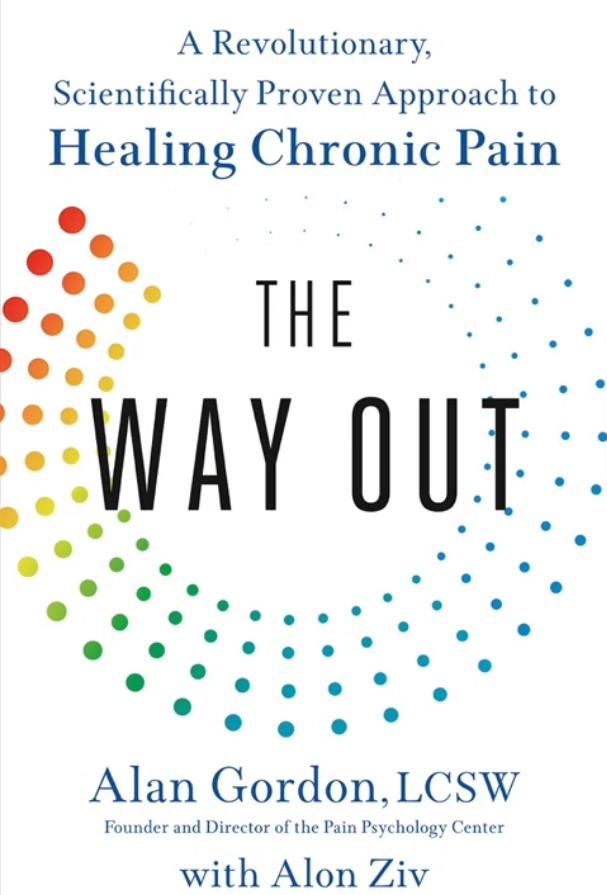
Here’s a YouTube video about the book.

It’s not that bodywork can’t help. It certainly can. Over the years, I’ve helped numerous people in pain feel a lot better, and often their pain has been longstanding. Sometimes one session does wonders. Sometimes it returns, less severely than before, and we keep working until it resolves.

Sometimes a client with neuroplastic pain finally gets enough relief to resolve the residue of the trauma at the core of their pain, and it never returns.

It’s beautiful when that happens!

We know some things about chronic pain now, and there’s still a lot that’s unknown. Curiosity, inquiry, belief, and patience seem to help.

There are pain coaches who can help. I met one who gets regular craniosacral biodynamics and came in for a session when she was visiting Austin from Colorado. She works remotely. If you want a referral, please let me know. I’m sure there are many others around the country.

The Neurobiology of Connection

This is the name of a Substack I subscribe to. The writer, Natureza Gabriel, is releasing a book by this title chapter by chapter on Substack now, and the book itself will be published in April. You can preorder it.


To check it out for now on Substack, click this link for a free month: https://neurobiologyofconnection.substack.com?r=icpo. Tell ‘em I referred you.

This topic is fascinating to me. As a bodyworker, biodynamicist, and teacher of meditation for self-healing, I work with the autonomic nervous systems of my clients/friends in every session (how can I not?), mostly assisting them to move more deeply into a parasympathetic state where healing has more resources to happen — healing like tissue repair, better regulation of metabolic processes, better coordination of the body’s systems, reduction of pain and tension, more wholeness, and more.

People experience themselves differently after a session, and some of each session is cumulative. It lasts. Getting regular sessions changes the autonomic nervous system, reducing stress levels. People sense themselves as more whole, integrated, coherent, healthy. I experienced this myself and changed my livelihood to offer it to others.

When the body is in a more sympathetic state, it’s gearing up for action and doesn’t have resources for healing. And…many if not most people in our culture live in bodies that are more stressed than is healthy. Sometimes way more stressed. And that affects everything: health, relationships, performance, behavior, cognition, presence, intuition…

There are many more autonomic states than parasympathetic and sympathetic. It’s more of a spectrum or spiral than an either-or equation, as seen in the image of the book’s cover above of a poster of the autonomic spectrum. You can get these posters from Gabriel’s organization for your office: https://restorativepractices.com/product-category/posters/

I’m someone who years ago, after being diagnosed with PTSD and processing a major childhood trauma (that occurred before PTSD existed as a diagnosis), asked herself, “How relaxed can I get while awake and not using substances?”

As the antidote to having a “stress disorder” that’s conventionally considered incurable, I set off on a journey of meditation, movement practices, bodywork, NLP, shaking, Zen, vipassana, breathwork, stillness, perception, and craniosacral therapy. Then I trained in craniosacral therapy.

The writer Gabriel has trained in neurobiology and also with indigenous people who have maintained connections within themselves, each other, with the world around them that are not prevalent among people in today’s predominant capitalistic, technological cultures.

I’m familiar with some of these connection states as a long-time meditator and through exposure to shamanic/indigenous and Buddhist/yogic beliefs and practices.

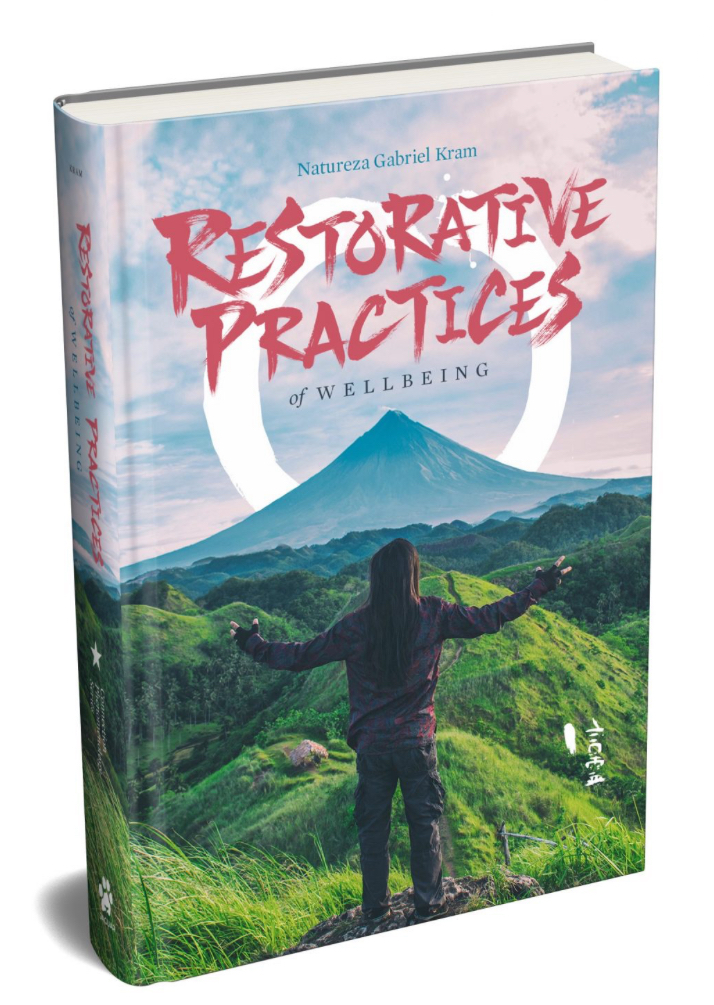
Another book by this author is Restorative Practices of Wellbeing, which I just received and will soon be delving into. Find his books here: https://restorativepractices.com/product-category/books/ You can preorder The Neurobiology of Connection as well.

We make the world a better place starting with ourselves.

Me at 7

I lost my baby teeth a bit later than most children. I believe this was my second grade school photo. Looks like I am missing 3 upper front teeth — and the fourth one came out soon after this photo.

I like this kid! A lot!

10 years after she died, a tribute to Gabrielle Roth

One of my practices is ecstatic dance. I discovered it in 1995 in Austin, and it became part of my life. Gabrielle was my primary teacher, through teachers she trained and also in person.

Gabrielle was, well, not the inventor of ecstatic dance, since I’m pretty sure it was happening the moment humans began creating rhythm, perhaps even before then in response to nature’s rhythms, shapes, sounds.

She named these rhythms and sequenced them: flowing, staccato, chaos, lyrical, stillness. A wave.

If you’re not familiar with it, ecstatic dance is not performative. It is about connecting with your own body, moving from the inside out. We dance like nobody is watching.

I have danced with several of the people in this video: Kathy, Lori, Andrea, Vincent, Ya’acov, Jo, Michael, Amara, and I met Robert.

Watch Gabrielle move at the end.

and then I met Gabrielle | memories of Gabrielle Roth, 1941-2012

Most of my ecstatic dancing has been here in Austin, which offers many choices now, though we started as Sweat Your Prayers, dancing the 5 rhythms.

I’ve danced in Dallas, Santa Fe, Taos, Mill Valley, Santa Cruz, Maui, London, Montreal, and DC.

My primary teachers have been Claire Alexander, Lisa DeLand, and Oscar Madera.

Ecstatic dance helped me get into my body and move in an authentic and pleasurable way, challenging myself to find all the movements, developing finer coordination and balance, being able to hold my space in a room full of dancers, connecting, becoming part of a community.

Over these many years through this practice, I developed an auditory-kinesthetic synesthesia, in which sound and movement are one. It gives me a lot of satisfaction to tune into my body and let what wants to move, move.

Dancers enjoy the fun of dancing. It’s not intellectual. It’s not serious. We are present and full of vitality, aware and responsive. We show up with who we are. We communicate nonverbally, inviting another to move with us, or moving into our own solo dance, with eye contact (or lack of it), using prayer hands, touch (with consent), bows, moving toward or away, expressing with body language.

We tend to hug a lot, and we’re pretty good at it.

I’m so grateful to have found ecstatic dance and to have practiced it for nearly 30 years. I believe it’s helping to keep me young, and the older I get, the younger I get!

👣💚🙏🏽

For more of Gabrielle herself, she spoke at length at the Breath of Life Conference in London in 2009, to practitioners of another one of my practices, Craniosacral Biodynamics.

Here’s the video.

Do you have TMJ issues?

Treating them is one of my professional specialties! I would love to share with my wellness blog readers (you!) a page from my professional website.

Learn more about TMJ issues currently includes articles on these topics:

  • Learn to treat your own TMJ issues on Zoom
  • You can learn to stop clenching
  • Stop grinding your teeth during sleep
  • The importance of a good pillow
  • Portrait of a typical patient
  • Types and causes of TMJ issues, and exercises
  • What various professions do to help
  • Choose a practitioner that works on specific muscles
  • The link between restless leg syndrome and sleep bruxism
  • The jaw-pelvis connection
  • Foods and nutrients that can make a difference
  • The role of the sphenoid bone
  • Music and meditation to heal the throat chakra
  • Asymmetries in the rest of the body can affect jaw alignment

Water within, water without

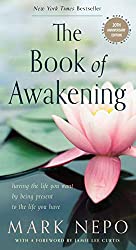
I gave myself a gift, Mark Nepo’s The Book of Awakening. The subtitle is “having the life you want by being present to the life you have”.

He’s a poet who experienced a major health challenge from which he emerged with this book of inspirations, one for each day of the year.

I’m enjoying it deeply and appreciate that the readings are about one page long. It’s not too wordy, just enough to absorb and integrate easily, early in the day, and coming from a poet, the words are well-chosen.

Today, December 8 (2020), the reading is this:

In the Source-Place

Take a pitcher full of water and set it down in the water — now it has water inside and water outside. We mustn’t give it a name, lest silly people start talking again about the body and the soul.

~ Kabir

We can’t help it. We make much of where we end and where others begin. Yet only after declaring healthy boundaries can we discover and experience the true common water of spirit that Kabir talks about. It can be confusing. But, though we are not always eloquent or clear in what comes out, everyone is clear as water in the source-place where mind and heart start as one.

As Teilhard de Chardin said, “We are not human beings having a spiritual experience. We are spiritual beings having a human experience.” Entering our days with this perspective can make a difference. It provides the ocean for our small pitcher of life.

It helps to remember that despite all our struggles for identity, despite the weight of living, there is an irrepressible ounce of spirit in each of us, a wellspring we carry within, that can be blocked but not contained. It emanates through all beings as the longing for love and peace.

When opening our longing, our honest want for love, we open the fountainhead of spirit, and then, like Kabir’s pitcher, we are water living in water, love living in love, a small thing alive in a big thing alive, a breath inside a wind.

  • Sit quietly, and as you breathe, think of yourself as Kabir’s small pitcher of water.
  • Breathe deeply and freely, and think of the unseeable world of spirit around you as an ocean that carries you.
  • Breathe slowly and cleanly, and try to feel how you and the life around you are made of the same thing.
Pitcher of water

~~~

I woke this morning feeling the expansion of energies in my feet and my hands and throughout my body. This reading resonates strongly with that.

Outside, inside, all one.

Today is a working day in my office, a day when I offer artful touch to bodywork clients. I have two craniosacral therapy sessions booked for this afternoon that I’m anticipating, and this experience of expanded energy that I experienced on awakening and often experience while giving sessions is similar to water living in water, a breath inside a wind.

Antioxidants may lessen severity of COVID in older people

My email this morning contained news from Science Daily that researchers have discovered the mechanics of why COVID tends to be more severe in the elderly and people with underlying conditions.

I’m no scientist, but this was something I wondered about. I’m 67 and although I don’t consider myself elderly, I am an elder. (Humor me.)

I wondered what exactly is it about being older that makes one more vulnerable. I know lots of people my age and older who are healthy and living active lives. They don’t have underlying conditions, and apart from wrinklier skin, graying hair, and joints that are a little bit stiffer, are pretty healthy and fit.

According to this research as I understand it, it’s cellular oxidation that gives the COVID virus something to latch onto.

“Our analysis suggests that greater cellular oxidation in the elderly or those with underlying health conditions could predispose them to more vigorous infection, replication and disease,” says co-author Rajinder Dhindsa, an emeritus professor of biology at McGill University.

…According to the researchers, preventing the anchor from forming could be the key to unlocking new treatments for COVID-19. One strategy, they suggest, could be to disrupt the oxidizing environment that keeps the disulfide bonds intact. “Antioxidants could decrease the severity of COVID-19 by interfering with entry of the virus into host cells and its survival afterwards in establishing further infection,” says Professor Singh.

Source: Science Daily article

Cells produce free radicals as the body processes food and reacts to the environment. If the body cannot process and remove free radicals efficiently, oxidative stress can result. Antioxidants can help prevent this.

It appears that over time, an excess of free radicals can do the kind of cellular damage that results in not only more severe cases of COVID, but also heart disease, cancer, stroke, arthritis, Parkinson’s, respiratory illness, and more.

How do you prevent oxidative stress? Avoiding inflammation, pollution, smoking, and too much UV exposure help.

You can also consume antioxidants from food. They are free-radical scavengers.

Antioxidant is a broad label for hundreds of substances that do the same thing: prevent or slow oxidative stress.

You’ve probably heard of some of them, like beta-carotene and lycopene. Each one does a specific thing, but all of them are plant-based, so it’s important to eat lots of fruits and veggies, especially the most colorful ones like berries, citrus, greens, beets, tomatoes, mangoes, etc.

Without knowing this, I learned that I was already doing a lot of things right.

  • I drink matcha every morning (green tea is a major antioxidant).
  • I eat lots of leafy greens.
  • I eat a small apple for a snack nearly every day.
  • I keep frozen berries on hand for smoothies.
  • I make and drink beet kvass (a fermented drink).
  • I cook with a lot of herbs and spices. I grow herbs and pick them right before cooking.

With supplements, more is not necessarily better, and some can interact with meds. You probably want to talk to a nutritionist first.

I hope that this is helpful. I hope you stay well, and if you get sick, that you recover well. If you want to know more, I found this article credible and helpful.

One Day It Stopped

Love in the time of the coronavirus

A Facebook friend posted this poem three days ago. Asenath Avinash is also a bodyworker. Her place of employment is currently closed, but if you love this as much as I do, you could ask for her when they reopen. http://www.workwellaustin.com/

It’s a good reflection of the shift in the narrative many of us are experiencing now.

And we looked around,
and we saw ourselves,
and it was so funny, so strange
to recognize, not the selves we had
built, but the ones that were buried
out in the long backyard of our lives,
forgotten, rusted, decomposing,
presumed lost, presumed even
never to have existed,
but there they were, just like the
canal-bottoms in Venice,
waiting for us, never having gone,
never having left,
and the miracle
was being able to see clearly
what was already there.

The miracle was how quickly
the pollution vanished,
and our eyes healed,
and we looked out on a world
that was fresh and different
and we saw that businesswomen
were really poets,
and that scientists were really prophets,
and that we were all vulnerable
and worth protecting,
and that toilet paper
was a kind of false security,
and that all our systems
needed a pause and
a fresh start
and that most of us
were really, very tired.

And we rested,
and our children wondered
what is happening right now?
and we couldn’t answer.
We weren’t supposed to
touch anything
or do any work
or go anywhere,
and it felt that we were
being shown something.

So we stayed at home, and
we mowed the tall grass
and listened to birds
and gave thanks
for the garbage collectors
and the grocery clerks,
and we organized our closets
and made pots of nutritious soup,
and the introverts
turned their cameras on
and taught us
how to make crafts,
and the musicians
picked up their instruments
and walked out
their front doors
and sang in the streets,
and nothing stopped them,
not cars, not fear, and no one
thought they were lunatics,
in fact, we thanked them,
we came outside to listen
standing far apart,
and feeling our interconnection.

We understood
that something so profound
was taking place,
and that if it went on
long enough, the fireflies
would come back
into our yards
and the ladybugs
and the milky way.
The earth herself
was waking up quietly,
or rather, we were,
and we saw that maybe
we didn’t need so much
after all, maybe
in this new world, we’d find
new careers
or they would find us
if we let them,
and we wanted to
stay put and be still and
feel it out
moment by moment.
We didn’t want to touch it
with our clumsy hands
or make plans or
disturb anything,
and so we just watched it
breathing softly
and steadily
like a precious newborn.

And we knew that,
at some point,
it would probably start up again,
which was confusing,
because, yes,
we did need money,
or so we had always believed.

-AAvinash, 3/24/20

2018 blog stats

Every year since 2010, I’ve written a post summarizing the year on this blog. Here are the highlights for 2018.

My posts from years past about healing my injured sacroiliac joints have gotten a lot of comments in 2018 from people who are also suffering, and that has brought the most gratification this year, to know that documenting my healing journey offers hope to others.

To summarize that journey, I saw many practitioners in various bodywork modalities for a couple of decades before finding one who truly understood what it would take to heal the injury. I followed her advice, and it worked. My final post, Sacroiliac joint healed!, published in 2017, includes links to all my previous posts on the topic.

In 2018, I had 94,239 visitors and 127,235 views. This is down a bit from 2017, even though I wrote more posts in 2018. I’m attributing the downturn in visitors and views to social media burnout.

Social media has been a fun new toy — and more people are seeking balance in their lives. I’m actually fine with it, as I’m seeking balance too. Writing fewer posts but having them be more germane to how we can live better lives works for me. Plus, I’m a bodyworker and wellness advocate by trade. Less text neck, eye strain, forward head posture, and sitting are better for your health. I want you to be healthy!

I wrote 32 blog posts in 2018, totaling 16,319 words, averaging 510 words per post, a bit shorter than I typically have written.

Of the posts I wrote this year, these have gotten the most views (listed newest to oldest):

The most-read post in 2018 was one first posted back in January 2014, How to drink water with lemon and preserve your tooth enamel. It’s gotten the most comments of any post I’ve ever written. Believe it or not, almost 5 years after it was first published, 40,960 people read that post in 2018. I hope they/you are preserving their/your tooth enamel!

At the end of 2018, I have 292 followers on WordPress, 92 on email, and 605 on social media. Thank you!

The most popular day and hour for reading my blog is Sunday at 2 pm.

And now (drum roll), where are readers from? Well, it looks like this:

  • all of North America except Greenland
  • all of South America except for one tiny country north of Brazil (French Guiana)
  • all of Europe except Svalbard islands
  • all of Asia except Iran, Uzbekistan, and Tajikistan
  • most of Africa except Western Sahara, Guinea-Bissau, Mali, Chad, Central African Republic, South Sudan, Democratic Republic of the Congo, and Somalia
  • I imagine there are some tiny island nations that don’t appear on the map with no readers

As always, it astounds me how connected the world is now because of the internet.

One of my intentions for 2019 is to improve my writing. I’d like to write a monthly post but have each be more interesting, compelling, and shareable.

Thank you so much for reading!

Making and using umami powder


The Splendid Table podcast had a guest caller who shared her recipe for umami powder, in October 2017. She’d grown up in Japan, and after returning to the U.S. as an adult, experimented and came up with this flavor-enhancing powder that you can add to American favorites as well as East Asian ones.

Here’s the episode (the umami power segment starts at 41:30 and ends at 46:30), and here’s the recipe. I thought I’d share my experience making it, as well as ways to use it.

Ingredients:

  • 1-oz. package of bonito flakes (makes 6 tablespoons)
  • 1 oz. bulk dried shiitake mushrooms (or if not available in bulk, a small package — use the rest in soups)
  • small package of kombu (with what you don’t use for umami powder, add half a sheet when cooking dried legumes — it takes the gas out, and you can fish it out before serving )

Tools:

  • coffee/spice grinder
  • medium-size bowl
  • kitchen scale
  • scissors
  • small whisk

Instructions:

  1. Fill the coffee/spice grinder with bonito flakes and pulverize into a fine powder. Empty the grinder into the bowl. Repeat until all the bonito flakes are ground up.
  2. Do the same with the shiitakes. You may need to manually break large ones up to fit into the grinder. Repeat as needed. Add the shiitake powder to the bonito flake powder.
  3. Place sheets of kombu on the scale and add/subtract to get one ounce. Use scissors to cut 1/4″ strips of kombu lengthwise, and then cut across the strips to make 1/4″ squares. 
  4. Put these into the grinder and grind to a fine powder. Add to the bonito and shiitake powder.
  5. Whisk the three powders gently to mix well. 
  6. Makes 1 cup of light, fluffy powder. I stored it in a jar, and you could also put some in a spice container for sprinkling on food.

The originator of this recipe, Erica from Seattle, recommends adding the powder to burgers, meatloaf, and “a savory oatmeal that was phenomenal”.

She also mentions adding it to seafood soups to make them taste like they’ve simmered for hours.

Other ideas:

  • Sprinkle it on food as a seasoning.
  • Use it to add flavor to sauces and broths.
  • Add it to savory porridges like congee.
  • Sprinkle it on a piece of fish before cooking. 
  • Sprinkle on chicken before baking.
  • Add to ricotta with herbs to make spread for toast or crackers.

Have you made umami powder? How have you used it?