When I was in my 40s, I was diagnosed with PTSD. It was news to me, but as I learned more about it from my therapist and reading books (notably Waking the Tiger by Peter A. Levine), it was a no-brainer. Of course I had PTSD.
My family had suffered the tragic, violent loss of my charming younger sister when I was a child. In those days, PTSD did not exist as a diagnosis. The prevailing attitude was “just get on with your life”. There were no psychologists in the schools, and no one suggested counseling.
And yet, my experiences in the days surrounding her death wired some neurons together in my brain that affected me in the ensuing years. I sometimes reacted in ways that I didn’t understand. My self-esteem was low. I was hypervigilant, depressed, grieving, and tense. I felt like the rug had been pulled out from under my feet, and there was no longer anything solid to stand on. I lost my sense of being safe in the world.
Any kind of traumatic event like that is an obstacle in life. When I was young, it seemed insurmountable.
Getting the diagnosis was the beginning of my trauma recovery. Even though part of me really did not want to revisit that tragic time, my dreams were encouraging: finding a dusty playroom in my house that I didn’t know existed, seeing a stream of clear water running over a golden stream bed, swan-diving from a cliff into the sea to catch a fish with my bare hands to give to the king and queen.
I did a lot of processing for a couple of years, speaking with my brothers, former neighbors, and old family friends to get a broader understanding of those tragic days, to help put them in perspective. I had a timeline now, a narrative of what happened, whereas before, my memories were jumbled, with holes.
I was wondering what was next in my life when a thought occurred to me: I’d had a stress disorder for decades, and…
I really wanted to experience what it was like to be relaxed, awake, and substance-free.
That was the real beginning of my trauma-recovery journey, when obstacle became challenge. I began exploring meditation and breathwork. I noticed my own state more. I studied NLP, worked on other health issues, got craniosacral therapy and acupuncture, and decided to go into bodywork.
I experienced a few trauma reactivations, where I was convinced I was in imminent danger and my body responded by flooding me with stress hormones, which was not pleasant and made me isolate myself until it passed, as much as possible.
But I learned from experience that when I started to go into that state, I needed to check whether I was actually safe and my mind was just playing tricks on me. That’s always been the case, so far. I could use breathwork, grounding, and presence (feeling my feet on the ground) to counter it.
This was not the life I had planned to have, but it’s turning out to be even better. I’ve become more myself.
Decades ago, I’d been told I had PTSD stemming from a tragic trauma that happened when I was a child, and I read up on it…enough to learn that there is no “cure”.
I found out, over time, that it’s not a life sentence.
I did a lot of processing of the trauma both with and without a therapist, recovering some forgotten memories, piecing together more about what happened way back then, talking to others who were there, having dreams that encouraged me to continuing investigating.
Experientially, I learned that I could be triggered — when something similar to my original traumatized state of shock and horror and overwhelm was reactivated, when a present-day event had some emotional resonance to an aspect of this long-ago trauma.
My whole self responded as if I was in acute danger in the present moment — when actually, I wasn’t.
The mind is powerful. Something like neurons firing together, wiring together happens with PTSD that causes this reactivation, in my understanding. It affects physiology. The present is hijacked by the past.
When triggered, I felt intense anxiety. My system became flooded with stress hormones.
I learned to ask myself if I was in actual danger. My mind deceived me. But it felt so real!
The first time after therapy that I was aware of being triggered, it took three months to fully recover. I isolated myself and focused on self-care. I still went to work, but I stayed home most of the rest of the time, seeking ways to soothe my nervous system, like listening to soothing music and guided meditations, journaling, practicing yoga and breathwork, taking Epsom salt baths, reading positive things, eating nourishing food, watching comedies, gardening, taking naps, taking supplements for adrenal fatigue.
After three months, I felt good enough to be more social again.
Each subsequent time I was triggered, I recovered more quickly. One month, then two weeks.
One night as I was falling asleep, I felt my nervous system slowly starting to go into a triggered state by some memory from the time of the traumatic event.
I pulled myself out of it by changing my focus to the safety and tranquility of the present moment before those stress hormones flooded my system.
My attention was on knowing I was safe at home in my bed, feeling the weight of my body pressing into the mattress, the warmth of being under the covers, the texture of the sheets, sleeping with my favorite pillow.
It took maybe 10 minutes.
Well done, MaryAnn. That was a major milestone in my recovery from PTSD.
I don’t know whether I’ll ever be triggered again, but I have a lot more resources now for preventing that full-blown download of stress hormones that make me feel like unfit company for anyone.
I’ve posted on this blog for nearly 14 years now, and trauma recovery was a major focus early on. I wrote about the trauma releasing exercises, shaking medicine, reading Waking the Tiger, Somatic Experiencing, and more.
I thought I would share my experience here in case it can help anyone trying to recover from PTSD. If it’s possible for me, it’s possible for you.
In my years of doing bodywork, I have encountered three clients who didn’t respond well to my work.
Each one of them had chronic pain.
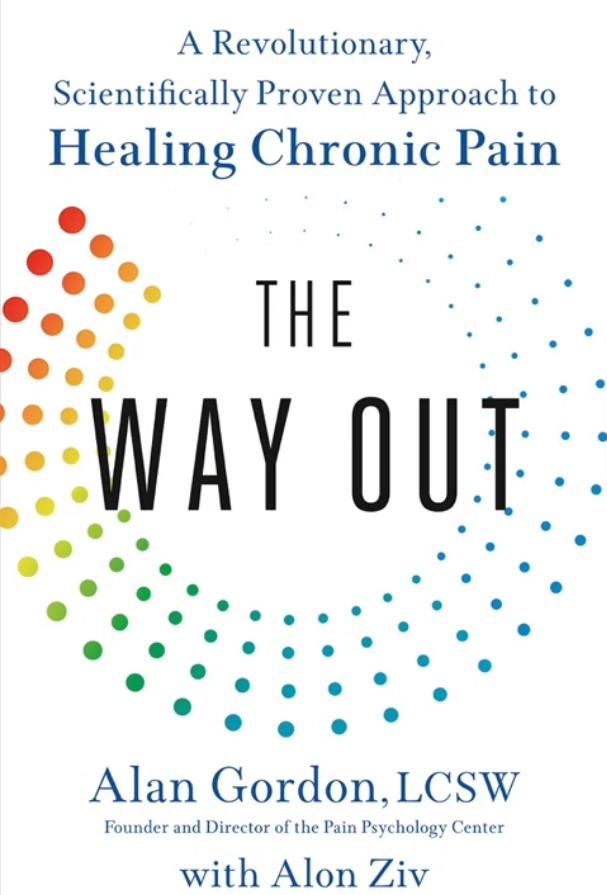
Keeping up with the current understanding of chronic pain, it appears that when the tissues from the original injury have healed but pain continues, or re-emerges later, the pain has become based in the brain, not in the tissues, even though that’s where people feel it. It’s called neuroplastic pain (neuro = nervous system, plastic = able to change).
Brain-based doesn’t mean “it’s all in your head,” as in “you’re imagining it.” Nope. If you feel pain, and it hurts, it’s real.
In my own understanding, when an injury is accompanied by, or occurs with or near, a trauma (stress, overwhelm, lack of resources or support), neurons in the brain can wire together and start firing together, sending pain signals long past the healing of the injured tissues.
Similar to PTSD, chronic pain can be triggered by memories and/or emotions in the present that the brain associates with the original injury and trauma.
Effective treatment of chronic pain often responds to a mind-body approach to rewire those neurons. Fortunately, the brain has plasticity. With help, people who suffer can learn to rewire those neurons and eliminate the pain.
It’s not that bodywork can’t help. It certainly can. Over the years, I’ve helped numerous people in pain feel a lot better, and often their pain has been longstanding. Sometimes one session does wonders. Sometimes it returns, less severely than before, and we keep working until it resolves.
Sometimes a client with neuroplastic pain finally gets enough relief to resolve the residue of the trauma at the core of their pain, and it never returns.
It’s beautiful when that happens!
We know some things about chronic pain now, and there’s still a lot that’s unknown. Curiosity, inquiry, belief, and patience seem to help.
There are pain coaches who can help. I met one who gets regular craniosacral biodynamics and came in for a session when she was visiting Austin from Colorado. She works remotely. If you want a referral, please let me know. I’m sure there are many others around the country.
What is this swirliness that I sometimes sense in my Biodynamic Meditation sessions?
Another name for it is the inherent healing process.
Synonyms for inherent include intrinsic, integral, essential, natural, innate, inborn, inner.
I believe this inherent healing process is available in all of us humans…and Biodynamic Meditation is a path to discovering it in yourself.
To sense our own self-healing, our minds need to be calm, gently focused within on our sensations to the point of familiarity, and receptive to what we notice.
This is the heart of why anyone would want to learn Biodynamic Meditation.
I took notes on Dr. Andrew Huberman’s AMA (ask me anything) — he’s the Stanford neurobiology and ophthalmology professor with a podcast on using science for many factors of well-being.
His AMAs only available to premium subscribers of the Huberman Lab Podcast. Yes, I really am that nerdy!
Dr. Huberman says that lifestyle factors can override a genetic predisposition to Alzheimer’s disease if started early enough.
He also mentioned that scientists are working on a method of early detection using visual screening.
By the way, a friend of mine defined aging as “continuing to live”. I love it.
Many of these tips are best started decades before the ages in which Alzheimer’s usually shows up, but are helpful at any age.
Avoid environmental toxins: pesticides, toxins, heavy metals are neurotoxins. They damage your brain. That means eat organic food!
Do not hit your head hard if at all possible. Give up risky behaviors, especially if you’ve already had one TBI.
Get quality sleep at least 80 percent of the time. Deep sleep helps your brain clear toxins, and you can use sleep apps to measure this. Slightly elevating your feet seems to help. Seems to me this would work best for back sleepers, not side sleepers.
Challenge yourself cognitively. It’s not just doing crosswords, it’s more like learning a new language, reading difficult material, learning new-to-you dance steps. If you don’t get frustrated, you’re not being challenged enough!
Get 3 to 3.5 hours of Zone 2 cardiovascular exercise per week to increase blood flow to the brain. Zone 2 cardio includes walking, rowing, swimming, and working out on an elliptical or stationary bike.
Do 20 minutes of High Intensity Interval Training (HIIT) to release catecholamines for alertness, turning on neuroplasticity.
Do 5-10 sets of resistance training to offset atrophy from aging.
Your brain needs acetylcholine for focus and cognition. You can get it from food (eggs, especially) or take AlphaGPC in the morning, 300-900mg. Also: nicotine gum or patches — safe nicotine. Can ask your doctor.
It’s been a good long while since I’ve posted anything here, and I have a free Monday morning, so here goes!
I just got back last night from a 3-day retreat on Biodynamics and Spiritual Embodiment taught by my colleague Christian Current. (If you don’t know already, I practice craniosacral biodynamics in Austin and Taos. Professional website: maryannreynolds.com.)
The setting was a private rural acreage 25 miles away from my home — with only the sounds of birds, wind, wind chimes, and running water from bubbling pools and fountains. No noise from traffic, sirens, planes — lovely. There were cabins, an Airstream, and a Winnebago for sleeping, and a talented young cook provided fresh healthful tasty food for the 12 of us. A pool and hot tub and gardens rounded out the amenities.
The retreat centered around the three energetic ignitions that occur in every living human before and right after birth: the conception ignition, the heart ignition, and the birth ignition.
Please note that the locations of these ignitions correspond to the upper, middle, and lower dantiens in Taoist energy physiology, to the three bony compartments of our bodies, the cranium, rib cage, and pelvis, and to three major energies we experience as humans, the energies of being, of relating, and of autonomy.
I learned a lot! Did you know that there’s a flash of light at conception, and that after the invited sperm embeds in the ovum, the sperm head dissolves and 20 minutes of complete stillness follow?
Maybe that’s why so many meditation guidelines recommend 20 minutes once or twice a day.
Did you know that the place where the sperm enters the egg becomes the third eye/ajna chakra/third ventricle of brain?
Did you know that blood is the first organ (it’s connective tissue) and it forms the heart? Not, as one might think, the container forms first and then fills.
Did you know that when the umbilical cord stops pulsing (on its own — it’s frequently severed too soon) and the first breath is taken, an ignition occurs that where the baby separates as an entity from its mother?
There was so much more. Some of it I’ve learned in previous trainings, but not in this much depth.
Oh, and it was full of great questions:
Who am I?
What do I want? What makes me happy?
What power(s) do I wield? What effects do I see I make in the world or myself?
I wanted to find the clearest truth possible in each of my answers:
I am loving awareness, which is always present as a baseline.
What I want and what makes me happy are the same: fulfillment.
One aspect of recovering from PTSD is not knowing when or if your trauma response will be activated again.
(Some people don’t like the word “triggered” and prefer to say “activated”. I’m using that term now to be more neutral. If a gun was involved in someone’s trauma, to say “triggered” in itself could be activating.)
I recently had an experience that really showed me how much progress I have made in trauma recovery, and I want to share it here in case you or someone you care about is struggling with PTSD recovery. It may give you/them confidence in the healing process.
But first, some background.
I’ve had an extreme stress response activated several times years after doing a lot of work on trauma recovery, which was many years after my childhood trauma.
These stress responses always seemed to happen out of the blue…as once again, the rug was pulled out from under my feet, and I lost my ground and was sent spinning, not knowing which way was up or down.
It’s pretty miserable to be flooded with stress hormones just because something happened in the present that in some way reminded me of the original trauma. The threat seems very real at the time.
However, I’d like to make it clear that each time I went into a stress response, I learned something. I wasn’t entirely helpless.
The most important learning was to check the situation out: just because my body and mind were all jacked up in response to an apparent immediate threat to my safety doesn’t mean there was an actual immediate threat to my safety.
I did some simple critical thinking. Am I safe in this very moment?
I was safe. No one was directly threatening me or my loved ones.
My perceptions played a trick on me because the original trauma was wired into my nervous system. That’s what PTSD is.
Even though I was grateful to be safe, I still had to deal with the cascade of stress chemicals.
When that happened, I tended to hole up by myself because I felt toxic and didn’t want to spread the toxicity. I did more self-nurturing than usual, taking soothing baths, skin brushing, giving myself manicures and pedicures and facials, listening to soothing music or recordings (Pema Chodron is great, also anything funny), taking naps and getting plenty of sleep, wearing soft fabrics, eating healthy, drinking endless cups of camomile tea.
I listened to guided meditations because it was so difficult to calm my monkey mind down when I tried doing my usual silent meditations.
My acupuncturist at the time said I had adrenal fatigue and recommended taking rhodiola and ginseng. After the first few times of being activated, I sought a Somatic Experiencing practitioner who helped me a lot.
My usual behavior was more go-go-go, hmmm, must be nice to have time for that stuff.
Was I addicted to stress? Did that make my stress response worse? I don’t know.
I made time to slow down and nurture myself and came to appreciate these activities when not activated.
I noticed that each time my trauma response was activated, it took less time to return to normal than before. The first time I was activated, it took three full months. The second time, about six weeks. The most recent, about a week.
And then just a few days ago, this happened:
I woke as I often do about 4 am. I laid in bed, in the dark, and my mind made its way back to a memory associated with the original trauma.
I started to feel activated. My back felt prickly and I felt agitated and a little panicky, like I need to do something! Now!
I realized I was at the beginning of a stress response. For the first time, it happened mildly and slowly enough that I was conscious of it beginning.
I did not want to go into a full-blown stress response.
I stopped thinking about the original trauma and brought my attention to my body, curled up safe in my bed, under the covers with my favorite pillow in the dark, in the present moment.
And the agitation and panic and chemical cascade just stopped. It seems like it took less than a minute to feel fully back to my safe and healthy self.
It seemed marvelous to me that I stopped being retraumatized simply by using my mind constructively.
I later told this to my colleague who’s helped me with trauma recovery bodywork, and he said I had agency.
Yes. I was not helpless, which seems to be a hallmark of traumatic experience. I could do something about it because I was conscious of the onset, able to distinguish present from past, able to direct my attention, and I knew what I wanted — safety and peace, not activation.
Also, there may have been some energetic guidance helping, but I don’t know for sure.
I do recall recently voicing what so many trauma survivors experience: How does one ever know that one has fully recovered from a trauma? How can one know there are no more flashbacks, no more activations?
I can’t know for sure, but this feels like a huge step forward in the direction of being free from reactivation.
I’ve been giving a lot of Biodynamic Craniosacral Therapy sessions since returning from some advanced training at the beginning of October.
I’ve also done some trades with other Biodynamics practitioners.
I love this modality of bodywork/energywork. It seems to me to be a natural extension of both bodywork and meditation: it involves light touch, perception, stillness.
I’ve found it is especially helpful for insomnia. I’ve experienced better sleep after I receive a session, and my clients report the same, even those who have difficulty falling asleep as well as difficulty staying asleep.
It helps with both.
One thing we do know about how it works is that it has a calming effect on the central nervous system — the brain and spinal cord — deep in the body.
CST is thought to improve efficiency of biological processes through boosting inherent self-regulation, self-correction and self-healing.
The Cleveland Clinic
By stimulating the rest and recovery systems of the body, the subtle work of CST allows the body to re-source its powers of rehabilitation and revival.
Sometimes I have second thoughts. My wild mind gets half-baked ideas that are so exciting, and the next day they don’t look that good. I took down my most recent post that was like that. It’s just not ready for public consumption.
So. New day, new topic. Please note I am not saying what follows to brag. I hope saying it gives those who need it encouragement.
For someone who was traumatized by a sudden, tragic, violent loss in childhood, who as a result had PTSD for decades before it was even a diagnosable malady — life can be good again.
I wake up happy to greet a new day, on most days. I feel balanced, grounded, centered, open, resilient, buoyant, strong, like a fountain constantly replenishing and renewing. I have more than enough.
Perhaps these good days are even sweeter because of the past. Trauma survivors, please savor and enjoy every good day, every good hour even, that comes your way.
It’s not as if the trauma in this bodymindfield is gone, over, done. Even when you’ve done a lot of work to remember, sort, get perspective, feel, self-soothe, reconcile, and heal that wounded self, a scar still resides in your nervous system. But it can disappear for long stretches of time.
You can work with your autonomic nervous system to rebalance it so that you read and respond to actual threats and to safety appropriately, but in reading what psychotherapists with 40 years of experience have to say, trauma is scar tissue in the psyche. Scar tissue will never be as healthy and resilient as unscarred skin. It’s more fragile. It’s not organized the same way at the cellular level. You can work with it to make it more pliable and reduce the scarring, but it will never be as if the trauma never happened, the skin unscarred.
Also, obviously, trauma resides in your memories, which are connected to your ANS. How often do you need to revisit those memories? Not that often for me, any more. I want to mention that some of the memories from the time of the trauma remained veiled from my conscious mind for a long time, and sometimes a memory shapes our behavior, unbidden.
Trauma is definitely something you want behind you on your timeline, not in the way of denial but in the healthy manner of moving on with your life, because healthy life beckons after trauma, if you let it. It may start with one peaceful hour.
Investigate peace, and savor it.
Facing forward, sometimes trauma from the past sneaks ahead and gets right in your face. Boo! Your ANS, which is instinctual and not really all that smart, interprets something as a threat that simply isn’t. Something happens in the present that unconsciously reminds the part of your brain that’s trying to keep you safe of a time when you were unsafe in the past, and you react sharply, as if past were present, get flooded with stress hormones, experience the fight-or-flight dance going on.
Hopefully, the thinking part of your brain will kick in to help you evaluate the situation! Are you actually in imminent danger? If the answer is no, then you get to wait it out while your system rebalances itself, recovering from the dump of stress hormones. Acupuncture and supplements for adrenal depletion can be very helpful.
Beautiful self-care is required when a memory hijacks the ANS and there is no actual threat. Be ever so kind to yourself. Rest as much as you can. Make beautiful cups of tea. Slow down. Light a candle and watch it burn. Take a long fragrant soak in the tub, preferably with Epsom salt. Just breathe. Listen to lovely music. Move your body with care. Do restorative yoga. Walk in nature. Spend time with a loving friend.
Afterwards, trauma resides in memories and the ANS. Build yourself a vast toolkit of self-care resources for the activated times.
Trauma can also play a huge role in your beliefs. We are run by our beliefs, and some of them are outside our awareness. Feeling cursed? Been there. Having bad luck with relationships? Been there. So many questions. Why me? Am I being punished? What did I do to deserve this? How can anyone love me? How could God let this happen? Does God love me?
What are some things you have believed about yourself, your life, your character, your worthiness, after a trauma?
At this point, all I can say about belief is to frame it in the healthiest way you can. If that means you acknowledge that you encountered misfortune — something that has happened to a lot of people throughout human history — and understand it’s just the way life as a human can sometimes be, and don’t take it personally, that seems like a great start. You didn’t cause this, you didn’t deserve it, you are not being punished, you are not cursed. You ran into some bad luck, that’s all.
This is how you build resilience and move on. If you need a little healthy delusion, I say go for it. If rocks or essential oils or photos of Ramana Maharshi soften the harshness, use them. I do.
Beliefs are about what’s important. Identity is who you are. By working with your beliefs, you start to change your identity.
NLP Neuro-Logical Levels of Change.
We live our lives inside a huge mystery. Theoretical physicists say that two thirds of all existence consists of dark energy, and no one knows what it is. I just love this, my favorite new factoid! We.Don’t.Know.What’s.Going.On.
So feel free to make something up that works for you, that gives you strength and courage and takes the weight of oppression or unworthiness off you, so you can rise up to meet the rest of your life. Why not?
By all means, take credit for and celebrate the good stuff — for taking right action, or coming to understand what that means or if that was even possible then. For persisting in the face of hardship. For recovering some of your mental health. For those who understand and accept you, or are willing to make that attempt. For self-care and self-compassion. For bonding with all of humanity through your compassion for all suffering. For finding your path.
After trauma, you get to work with your autonomic nervous system, your memories, and your beliefs. Exploring and reframing your beliefs are where you can make the most difference. Have courage. You’re worth it.
I’ve been waking before 6, lying drowsily in the dark, under the covers, all warm and snuggly, surrounded by pillows, luxuriating in not having to get up and (usually) not feeling like I didn’t get enough sleep and need to get some more shut-eye.
This daily journey from nonconsciousness to consciousness feels so good to take it slowly. Feeling my warmth, my body weight surrendered to gravity, I notice that energy is pouring out the soles of my feet — or maybe pouring in. Not even the entire sole, but a circle around K1, Bubbling Spring, where the kidney channel begins. The force is strong there.
The little part of my brain that’s always going, “But what does it meeeaaaannnn?” doesn’t know what that’s about except that it’s healthy. Am I letting out too much or being replenished? Don’t know. Maybe connected to earth element because feet, right? Powerful point, powerful channel, kidney chi.
I may doze a little, but when the light starts to return, I get up and pee and return to sit in my bed and just sit. Yeah, I have beautiful, fancy meditation gear, and I sit in my bed.
I used to think of it as meditation, but now I like to just call it sitting. Sitting with what is. I tune into breath and body, sounds, and I enter a state of integrity and subtle bliss. I notice sensations, thoughts arising and dissipating, sometimes an emotional tone. I open up and make myself available.
Sometimes my thoughts are strong and sticky. I use my will to return to stillness, over and over. Sometimes I command my unruly thinker to be still, and it actually obeys, which is amazing and gratifying. I like to go deep into the swirly energy currents and let them wash me inside and out. When I am being breathed, I’m there. No will needed. Just surrender.
After sitting, breathing. Current practice: kapalabhati, the 4-7-8 kriya that Dr. Fulford taught Dr. Weil, and nadi shodhana.
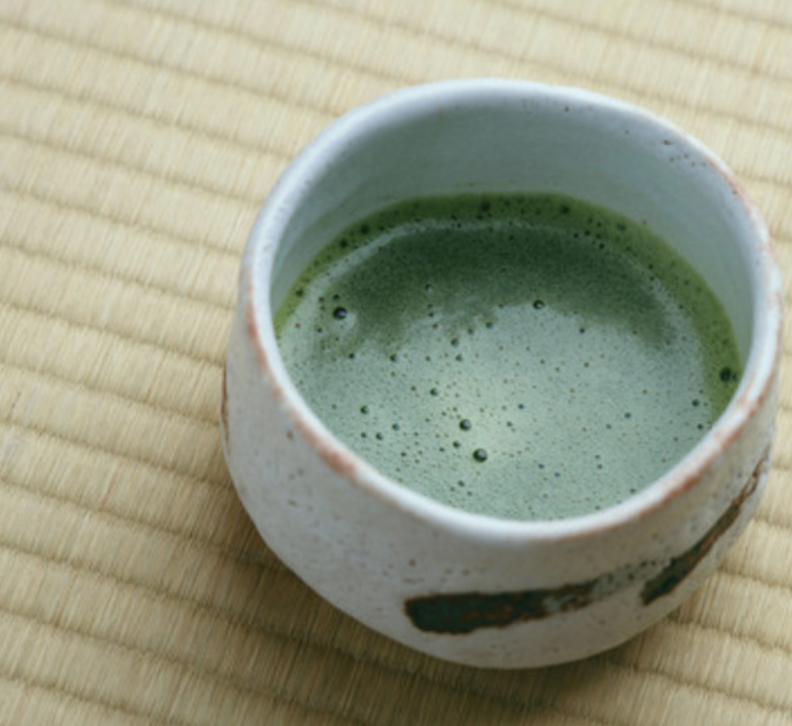
I make myself a cup of matcha (with Berkey-filtered water heated to 160 degrees F because I’m that kind of person) and return to my bed, stare out my window, hear the noise of birds, traffic, trains, and the motors and beeps of heavy construction equipment, because Austin. The city is reaching the country.
I come into some clarity, and I simply need to write and share. I’ve realized that it’s probably not a good idea to text my early morning downloads to the possibly unprepared dear ones I’m fortunate enough to have in my life, at least until I’ve had an opportunity to check in. Still, there’s that need to express.
Guess what? I have a blog, and you’re reading it! I used to post more personal writing here but haven’t for a long time. I can do that again.
So…I’m back, my people! Here we are with my new strategy: morning pages for all to see, being intimate in a way that’s safe for me and my associates in this sometimes crazy, dangerous world. You didn’t want to know the particulars anyway — you like melding minds, and here’s my contribution. This business of being human requires courage and boundaries and discernment and trust, and a whole lot more…and that’s what’s coming up today.
Some things I will be writing about: finally figuring out that I’m an empath and learning how to be a healthy empath because sometimes it is quite troubling and draining.
Also, what the fuck is right relationship and how can I be/do/create/collaborate on that?
And also, being an autodidact. Being both ordinary and extraordinary because so are you and let’s talk about it. And whatever comes up that’s appropriate to share here.
We all learning here on this bus. That’s all for today, lovelies. Be well.


 The Well: bodymindheartspirit